Scripture
So they hanged Haman on the gallows he had prepared for Mordecai. Then the king’s fury subsided.
Observation
Haman had been plotting against the Jews because of his hatred of one of them, a man named Mordecai.
After much dancing around court proprieties, Queen Esther, herself a Jew, manages to get Haman and the King together for a banquet.
There she reveals Haman’s plot against the Jews. The king, filled with rage, orders Haman hanged, ironically from the gallows that Haman had had built to kill Mordecai.
Application
The book of Esther is about God’s care for His people. He raises one of them, Esther, to a place of unrivalled influence so that she is in a position to protect His people.
God is still caring for His people, from the least to the most powerful. When danger threatens. We can still trust Him to lead us through.
Prayer
Lord God Almighty, you are my rescuer and deliverer. I will put my trust in you alone. Amen.
You regularly hear the claim that homosexual people are more likely to suicide because they aren’t allowed to marry- a strange claim but there you have it. A variation on the theme is we can’t even have a vote on the issue because the poor petals can’t stand debate about whether we should redefine marriage. Are those claims valid?
FAMILY AND SOCIETY
Vulnerable GLBT youth pawns in plebiscite game
by Terri M. Kelleher
News Weekly, September 26, 2015
There is no research to show that legalising same-sex marriage would reduce the GLBT suicide rate. It would appear to be based on an ideological assumption rather than on hard evidence.
The current Senate Committee inquiry into a popular vote on same-sex marriage has heard stern warnings against holding a plebiscite or popular vote because it “could damage young gay people”. On ABC Radio’sAMon September 11, NSW Nationals MP Trevor Khan warned against exposing young gay people to the sort of public debate that would be caused by a plebiscite because their rate of suicide and self-harm was much higher than in the general population.[1]
Beyondblue ran a full-page advertisement inThe Australiannewspaper (Tuesday, September 1, page 8) claiming that GLBT people “take their own lives at much higher rates than heterosexual people” and that the current marriage law causes them “hurt, pain, mental illness and worse”.
Although no source was provided for actual GLBT suicide figures, it is deeply concerning that GLBT people experience a higher rate of attempted suicide and suicide ideation than does the general population.
It raises the question: have countries that have legislated same-sex marriage show a reduction in attempted suicide rates for GLBT people?
Denmark legislated for Registered Partnerships in 1989, yet as a 2011 Danish study (Mathy, R.M. et al.) found that suicide risk seemed to be greatly elevated for Danish men in same-sex partnerships.[2]
In the Netherlands, where same-sex marriage was legislated in 2001, almost 64 per cent of LGBT 18–24-year-olds surveyed in 2009 still reported thinking about suicide and almost 13 per cent of them attempted suicide, higher than for their heterosexual peers (Bergen et al., 2013).[3]Legislating same-sex marriage does not appear to have reduced the rate of suicide attempts or suicidal ideation for GLBT young people in the Netherlands.
In Australia there are again no actual figures to show whether the suicide rate in GLBT people is higher than the rate in the population over all. However, of the 5,966 suicide cases examined in a 2014 Queensland study (Skerrett et al., 2014), only 0.58 per cent, or 35 people, were identified as GLBT. The more important finding was that two-thirds of the LGBT subjects had relationship problems with partners, compared with only one-third of the non-GLBT subjects.[4]
Scripture
“Whoever welcomes one of these little children in my name welcomes me; and whoever welcomes me does not welcome me but the one who sent me.”
Observation
Jesus and His disciples walk through Galilee. Jesus teaches them along the way. He tells them He will be betrayed and killed but will rise in three days. They do not understand this.
In Capernaum Jesus asks the disciples what they were arguing about on the road. They don’t want to tell Him because the argument was about who was the greatest. Jesus tells them that to be first they must be servants of all. He tells them whoever welcomes a little child welcomes both Him and the Father.
Application
Everyone wants to be the greatest, most important, best… The church is not exempt from this. It is called pride or the need for significance.
Our real significance comes not from our own importance but from the fact that Jesus counts us worth dying for. When we really understand in our hearts that our Father loves us so much, then all unhealthy forms of pride just melt away.
We have to see this in the way we treat other people. If you want to meet Jesus and the Father then show hospitality to the least important people- children, people with disabilities, refugees, the uneducated. They are the people who in some way carry the presence of Jesus. When we serve them we serve Jesus.
Prayer
Lord Jesus you came to serve, not to be served. Please help me to have the same ambition. Amen
If the preaching isn’t biblical, then it isn’t the truth. (iStock photo )
Jesus said the truth sets us free. But the opposite is also true: Lies put us in bondage—even if the lies are spoken from a pulpit by a sincere minister or a Christian celebrity.
In my international travels I’ve sat in countless meetings and heard countless examples of bad theology. While traveling in Romania, for example, I discovered that women are sometimes told they cannot receive communion if they are having their menstrual period. (No one could explain to me how this prohibition is actually enforced.) In some Nigerian churches, it is taught that a pastor shouldn’t have sex with his wife the night before he is scheduled to preach.
These are extreme examples of twisting or misunderstanding a Scripture (usually from the Old Testament) to create a religious rule. But this butchering of the Bible doesn’t just happen in developing countries. It happens everywhere, creating religious superstitions that make us look silly to the world. Some of these concepts are repeated so often that they become a part of our Christianese lexicon. People nod and say “Amen” without realizing these statements have no basis in Scripture.
It would be impossible to list all of the quirky doctrines I’ve encountered during my years in ministry, but I’ll start with these:
1. The children of ministers must carry on their parents work. David passed his inheritance to Solomon, and Solomon gave his scepter to Rehoboam. Then somewhere along the way some pastors invented the idea of a monarchy in the church—teaching that ministers must be succeeded by their sons or daughters. This certainly can happen. But nowhere in the New Testament are we told it is a rule. Leaders are appointed and anointed by the Holy Spirit, not determined by family lineage.
2. Don’t touch the Lord’s anointed. David refused to kill King Saul when he had the opportunity because he feared God and waited for Him to vindicate him (see 1 Sam. 24:6). But this verse has been manipulated to discourage church members from asking honest questions about a leader’s behavior or decisions. We are called to submit to our spiritual leaders, but it is not wrong to disagree with them as long as we have a respectful attitude.
3. Christians who commit suicide go to hell. This idea has created untold pain in the church, especially in families with loved ones who suffer with mental illness. The idea is that a person can never be forgiven of suicide since they can’t pray for forgiveness after they commit the sin. But the whole message of grace in the New Testament teaches us that God’s love is greater than our moments of weakness, depression or mental instability. If our salvation totally hinges on whether we immediately pray for forgiveness after every transgression, then we are all doomed. Jesus paid for our sins, and those who trust Him will enter heaven in spite of their frailties and bad decisions.
4. The husband is the priest of the home. I wish I had a dollar for every time I’ve heard this statement from a pulpit. Contrary to what many Christians believe, this is not a Scripture. Actually the Bible teaches clearly that we are all priests (1 Peter 1:9), and husbands and wives function together as priests for their family. It is a heresy to suggest that a wife must go “through” her husband to approach God. The Bible does say the husband is “head of the wife” (Eph. 5:23), but this implies connection and oneness, not domination or control.
5. Christians can receive “mantles” from other people. The prophet Elijah threw his mantle on his disciple Elisha so he could carry on his ministry (see 2 Kin. 2:13). Ever since this isolated incident occurred, people have been asking famous preachers to pray for them so they can “receive their mantle.” Recently it was reported that some charismatics were going to the graves of revivalists to pray for their anointing to come upon them. That’s silly. In the New Testament, the Holy Spirit imparts his anointing. Someone may lay hands on us, but they don’t have to be famous or have a big following. Let’s stop worshiping people and seek the Holy Spirit’s power instead.
6. “Jesus only” baptism. Early Pentecostals began a famous dispute during the early 1900s over the proper formula for water baptism. Some insisted that people should be baptized “in the name of the Father and the Son and the Holy Spirit,” as Jesus commanded in Matthew 28:19. But a breakaway sect of “Oneness” Pentecostals insisted then, as they do today, that people must be baptized only “in the name of Jesus,” as Acts 2:38 instructs. And Oneness believers teach that people who are not baptized according to their formula will not go to heaven. It’s time to retire this hair-splitting argument and recognize that Christians are saved by their faith in Jesus alone, not by words recited at their baptism.
7. People with strong faith don’t suffer. The oldest book in the Bible is Job—the ancient story of a faithful follower of God who endured suffering. Yet today we have dozens of famous televangelists who tell audiences they can confess their way out of trails and tribulations simply with positive thinking. Some even suggest you can buy your way out of difficulties by giving in their “miracle” offerings.
Never trust a preacher who promises you a shortcut around suffering. We must stop promoting a false gospel that offers instant success, fame and wealth. Jesus promised we would have trials (John 16:33), yet He gave us assurance that our faith in Him would help us overcome in the end. Let’s preach the truth, expose the lies and break free from Christian superstitions.
J. Lee Gradyis the former editor of Charisma and the director of The Mordecai Project. You can follow him on Twitter at leegrady. Check out his ministry atthemordecaiproject.org.
Scripture
Submit yourselves, then, to God. Resist the devil, and he will flee from you. Come near to God, and he will come near to you.
Observation
If you claim to be spiritually wise, you must show it in your deeds and in humility. God’s wisdom is not marked by bitterness or envy, but by purity, peace and mercy.
Fights and quarrels in the church are caused by fleshly desires. People covet things they cannot have because these desires are not submitted to God.
We must submit ourselves to God, resist the devil and then draw near to God, humbling ourselves before Him.
Application
Every part of the christian’s life, every desire and ambition must be submitted to God. This means dying to what we want in order to live to Christ.
Many of the problems in church communities arise because people want what they want. They put their own desires first. It might be that someone wants a leadership position held by someone else. It might be a preference for a style of worship.
If we all demand our own way, the love of God is not manifesting itself among us. If we all submit ourselves to God and to one another, the devil will not get a look in.
Prayer
Father, help me to surrender entirely to you and to your plans for me. Amen.
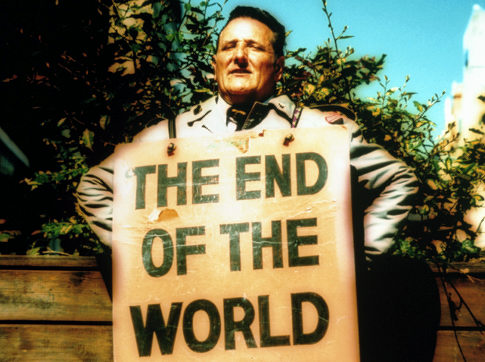
The Rapture’s In 1988? What Can Be Learned From Failed End-Times Predictions
Over the last season I’ve been pressing into worship and enjoying more of the presence of the Lord. I’ve also been having wonderful outings with my beautiful wife and children. I keep thinking, how can I bring more encouragement and assist in the expansion of the Kingdom of God in this hour?
Yet, every time things begin to advance, feet start dragging and someone “slams on the brakes.” Bible-believing Christians are supposed to be talking about “doing life together” and growing in the purposes of God. Yet, most are continually distracted by politics, fear, and apocalyptic end-time scenarios.
I sincerely desire to laugh, love, and leave a legacy, but it can be extremely difficult. Many so-called “prophets” are talking about societal breakdown and catastrophe. In their sensationalist best-sellers, they claim to have witnessed the “signs of the times.”
This is so prominent that a message of “good news” and hope is extremely difficult to find these days (and sometimes it’s even rejected).
You probably already know this, but this isn’t the only generation that has made these claims. In fact, over the last century there have been countless assertions about “harbingers” and “signs of the apocalypse.” Leaders in previous eras also insisted they deciphered the Book of Revelation and understood the alarming headlines.
So, the pessimistic, cataclysmic claims aren’t new. They’re actually part of the lengthy tradition of anxiety and failed prognostications. In fact, speculative predictions about the end have characterized American Christianity for at least three generations. One would like to think that this madness would ultimately cease, but it never really does.
I’ve found that people keep making these kinds of end-time assertions. Yet, an honest analysis would show the “track record” isn’t good. Thousands of “undeniable” claims in previous decades were proven to be wrong.
Let me remind you of some of the things affirmed in the past.
Former Prime Ministers Kevin Rudd and Julia Gillard have complained at great length about how they were undermined and ultimately removed by their challengers – who were, respectively, Julia Gillard and Kevin Rudd. Interestingly, both now identify with and support the man who undermined and ultimately removed former Prime Minister Tony Abbott:
Not a word of sympathy from either Rudd or Gillard for the latest leadership victim, presumably due to bitterness over Abbott besting both of them in direct competition. Meanwhile, the first post-spill poll is good news for Malcolm Turnbull and bad news for Bill Shorten:
A snap Morgan poll conducted today on who Australian voters think is the better PM found Mr Turnbull is preferred by 70 per cent of voters compared to 24 per cent for Bill Shorten.
The special Snap SMS poll of 1204 voters also found a majority of Labor supporters say Mr Turnbull is the better leader, with 50 per cent supporting him compared to 44 per cent supporting Opposition Leader Bill Shorten.
That result will please Turnbull, Australia’s third Labor Prime Minister since 2007.
We were blessed beyond measure last weekend when we hosted Steve and Christina Stewart of Impact Nations.
Impact Nations takes teams of people from wealthy countries such as Australia and take them to poor countries to minister healing and preach the gospel. A typical day on a Journey of Compassion, as they are called, might involve medical clinics in the day time and evangelism rallies at night. In many different settings, they pray for people to be healed and they are.
We were taught how to pray for healing and how to expect healing to happen, not because we are good but because God is good.
During the meetings we had several opportunities for people to receive healing. One person reported healing from Motor Neurone Disease, another improved peripheral vision.
The question that changes everything is very simple: “May I pray for you?” Those 5 words allow God to come into people’s lives who do not even think of God or of prayer, but recognise that they need help.
My highlight was going to a poor part of the town to knock on some doors. I normally hate that kind of thing, but somehow this seemed like fun. The assignment was to offer people a small bag of fruit- apples, oranges and mandarins- and then ask if we could pray with them. We talked with people and shared something of God’s love. Where people felt like their life was pretty good and they had nothing to pray about, we simply prayed God’s blessing on them.
What was amazing was there were no grumpy people. We had ten pairs of people armed with three bags of fruit and all reported positive responses. I think people are happy to be offered something simple and there was no attempt to coerce people to be “religious.”
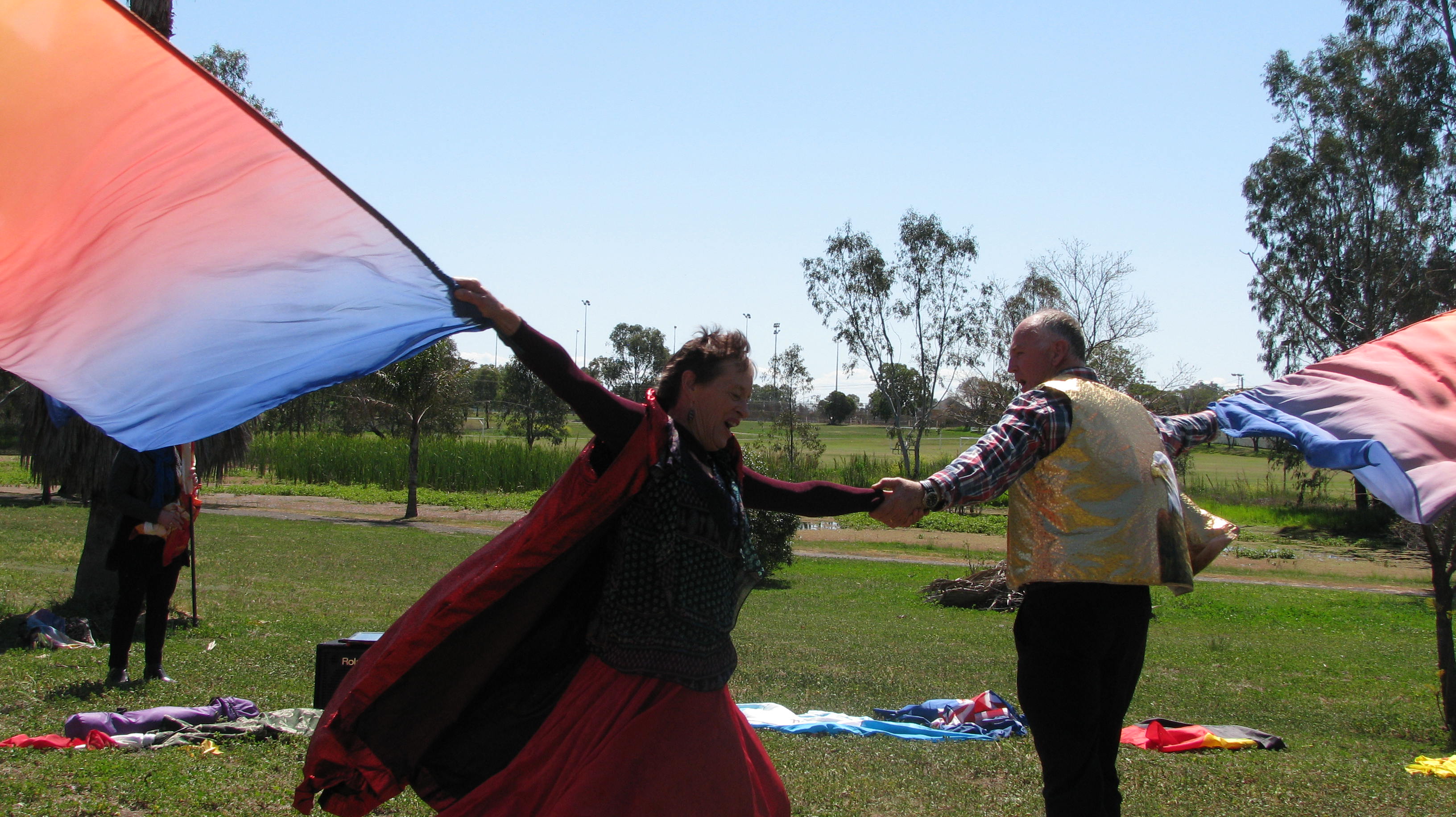
We also had some people visiting from other parts of NSW, including Dee and Mark McAllister who do prophetic dance.




 0 Comments




 New Life Narrabri