
Month: April 2018
Today’s Bible Verse

So get rid of all the filth and evil in your lives, and humbly accept the word God has planted in your hearts, for it has the power to save your souls.
James 1:21 NLT
https://bible.com/bible/116/jas.1.21.NLT
Reflection on John 10:11-18

Passage: https://www.biblegateway.com/passage/?search=John+10.11-18
Scripture
“I am the good shepherd; I know my sheep, and they know me.”
Observation
Jesus is the good shepherd who sacrifices His life for the sheep. A hired hand is in it for the money; he doesn’t care about the sheep.
Jesus is the good shepherd. He knows His sheep and they know Him. He gives His life for the sheep. He has sheep from a different sheep fold and He will bring the flocks together.
Application
Jesus is the good shepherd. He is not a faithless hireling who runs at the first sign of danger. He lays down His life for the sake of His sheep.
There is nothing that Jesus will not do for His sheep. He won’t always give us what we want, but He will meet every need that we have. He is the good shepherd.
He knows us by name. He sees us the way we really are. He knows our strengths and our weaknesses, our victories and our failures. He knows us as closely as He knows the Father. And He loves us.
He wants us to know Him also. To have the strong, unbreakable bonds of friendship. He wants us to invest time and energy in seeking His face.
It is said that in the time of Jesus, shepherds would often put their sheep in a shared sheepfold overnight. In the morning, the shepherds would call their respective sheep but name, and their sheep would hear the voice of their own shepherd and go to them.
Jesus’ sheep know their shepherd. They know when He calls their name and they follow Him.
Prayer
Jesus, you are my good shepherd. Thank you for sacrificing your life for me. Amen.
Today’s Bible Verse
Liturgy and Pentecostalism
Over on my Facebook page, I share quotes from books that I have been reading. This quote from “The Benedict Option” garnered a lot of mostly negative reaction: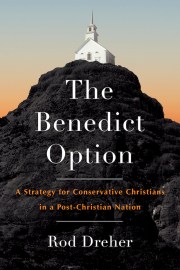
The need for liturgy is becoming clear to more and more Protestant theologians. Perhaps surprisingly for a Pentecostal, Simon Chan, a noted theologian, scholar, and writer based in Singapore, is one of a growing number of Evangelical church leaders who argue that their churches must return to the richness of liturgical worship. Evangelical ecclesiology is inadequate to the task of meeting postmodernity’s challenges, he has written. Rod Dreher
The first thing to note is that Pentecostal churches already have a liturgy, which is a fancy word for “order of service.” It is nearly always a variation of the following:
4-6 songs- 2- 3 fast songs (“Praise”) followed by 2-3 slower songs (“Worship”)
Prayer
Offering- usually preceded by an overly long exhortation to give
Communion (sometimes)- also preceded by an overly long mini-sermon
Sermon
Altar call or ministry time
If you know what is coming next than you have a liturgy, whether it is in a book or unwritten. There is nothing wrong with that because people are comfortable when they know what to expect. It doesn’t necessarily limit the Holy Spirit, but it does provide guidelines about when it is appropriate for people to pray in tongues or prophesy.
Our liturgy is a variation on this model, but when it seems appropriate we mix things up a little.
But when people talk about “liturgical worship” they usually mean a more formalised style of worship such as those found in the traditional churches. 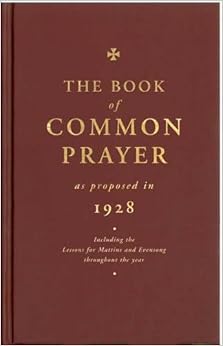
That raises the hackles of many Pentecostal and Charismatic people who see this as “dead religion.”
We can have various opinions on that, but let me share an observation about the usefulness of liturgy.
I have been to several funerals over the last few years, some of which were led by “Spirit-filled” pastors. The thing that I noticed on these occasions was that they were indistinguishable from funerals led by non-christian celebrants, except maybe there was some reference to “Jesus” or “God” and comments about the person’s contribution to the church.
The central focus in each case was the person being buried. Not Jesus. Not the Holy Spirit.
In other words the church is copying the world, and losing its unique voice in the process.
In every act of worship by the church, the gospel must be proclaimed and Jesus must be worshipped. That is why liturgical worship at these formal events of funerals and wedding, in particular, is so important.
A good liturgy keeps Jesus at the centre. The prayers, the spoken word, the music, it is all gospel proclamation. There is no waffle, no adoration of a person, no stumbled prayers,
At the other extreme where the liturgy is everything, there are issues of over formality. I remember when I first started as a pastor in a small town, someone said to me after a funeral “At least with you, we know who is being buried.” The liturgy I followed had room to thank God for the life of the person, to pray for family members by name etc. But the suggested prayers offer gospel hope and constantly refer back to the cross of Christ and His resurrection.
We can make similar observations about wedding ceremonies.
As a pastor I am always wanting to make sure that my congregation is being brought to maturity in Christ. I think that is is what the quote is getting at. The reality is that a couple of “I Love You Jesus” songs followed by a preach about “Three Ways To Boost Your Bank Balance” is not enough to impart maturity into people, even if all the sermon points start with the same letter. But knowing the Apostles Creed or The Lord’s Prayer in the kind of familiarity that comes from saying them every week can give at least a chance for the great truths of scripture to sink into the soul.
Reflection on Psalm 23:1

Passage: https://www.biblegateway.com/passage/?search=psalm+23
Scripture
The Lord is my shepherd
I have all that I need
Prayer
You, O God, are my shepherd.
I used to be a lone ranger sheep, not even knowing I was a sheep. I thought I was God, or at least, the shepherd of my own soul.
I would go where I wanted, pursuing the green meadows and fresh water myself. I made my soul sick on the excesses of the world. It would have killed me.
But then you came into my life. Now Lord you lead me in the right paths.
You are my shepherd Lord. You lead me to the best places. Sometimes it feels like I am in a desert place, but you are always there, right beside me, pointing out the green shoots.
Because of you Lord I have everything I need.
I don’t have a yacht or a plane or a fancy house. Sometimes the bank balance gets low. But Lord I do have everything I need- family and friends who love me, a purpose for my life, food on the table and a promise of eternal life.
I lack no good thing.
You are my provider, my abundance. In you there is no lack and no shortage, as long as I follow you and walk in the path you set for me.
When I wander away from you, it is into the place of danger. When I stay with you, it is joy and provision.
So Lord I will walk with you all the days of my life, knowing that you are the good shepherd.
Today’s Bible Verse
Reflection on Acts 4:1-12
Passage: https://www.biblegateway.com/passage/?search=Acts+4.1-12
Scripture
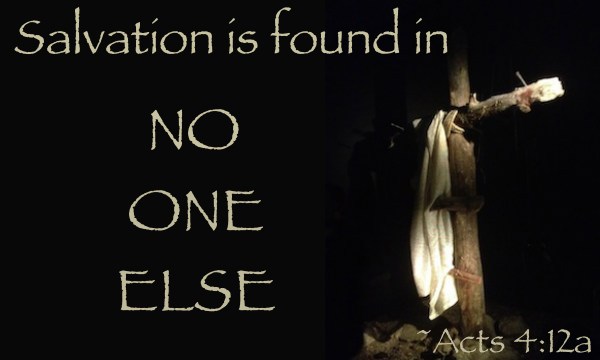
“There is salvation in no one else! God has given no other name under heaven by which we must be saved.”
Observation
After the crippled man is healed, Peter addressed the crowd. While he and John are still speaking, some priests and guards come to arrest them as the priests are disturbed by their teaching. Many in the crowd believe their message and so the number of believers has grown to 5,000 men plus women and children.
The next day, the priests question Peter and John, demanding to know by what power they had healed the man. Peter, filled with the Holy Spirit, testifies that the man was healed by the name of Jesus, whom they, the priests, had crucified but God had raised from the dead. He goes on to say that there is no other name by which people can be saved.
Application
There is healing in the name of Jesus, and salvation in the name of Jesus. There is no other name, no other salvation.
Unbelievers say that all religions lead to God. But only one name will save us from hell and bring us to heaven. Only one name will bring healing, wholeness and new life.
The name of Jesus is powerful. Demons flee when they hear the name preached. They wither in fear at the testimony of righteous men and women.
Why would we seek another name, another salvation?
Yet some people do exactly this. Some people claim to be born again but run after other gods. A little bit of Christ, a little bit of Allah and a touch of Krishna.
Salvation is not a buffet in which we can take a little of what appeals to us.
There is only one Lord, our saviour Jesus Christ.
No other name will save you. No other “god” will heal you or take you to eternal life.
Prayer
Lord Jesus Christ, your name is above all names. Thank you for saving me through your death on the cross. Amen.
Israel Folau: Faith Is Greater Than Sport
Increasingly, Christians are having to make hard decisions about standing firm in their faith or kowtowing to the secular religion. Israel Folau is stating that his faith is more important than his sport. Notice how the ABC verbals him in the article while showing his actual tweets way down the article.
From the ABC:
Israel Folau is prepared to ‘walk away’ from rugby union over beliefs
Updated

Wallabies star Israel Folau has said he is prepared to walk away from rugby if his situation becomes untenable due to his Christian beliefs.
Folau was heavily criticised for a post on Instagram two weeks ago in which he said God’s plan for gay people was “HELL”.
The 29-year-old said he was disappointed in the way Monday’s meeting with ARU chief executive Raelene Castle and NSW Rugby chief Andrew Hore to discuss his social media use was portrayed to the media by Castle.
“After the meeting I went home, turned on the TV and was really disappointed with some of the things that were said in the press conference,” Folau wrote in a column on PlayersVoice.
“I felt Raelene misrepresented my position and my comments, and did so to appease other people, which is an issue I need to discuss with her and others at Rugby Australia.”
Folau said he has “no phobia towards anyone” but refused to back down on his beliefs, revealing he told Castle he would quit rugby if those beliefs were harming the game.
“I didn’t agree with Bill Pulver taking a stance on the same-sex marriage vote on behalf of the whole organisation, but I understand the reasons behind why he did,” he wrote.
“After we’d all talked, I told Raelene if she felt the situation had become untenable — that I was hurting Rugby Australia, its sponsors and the Australian rugby community to such a degree that things couldn’t be worked through — I would walk away from my contract, immediately.”
Castle called Folau a “strong role model” after Monday’s meeting.
“We are in a negotiation with Israel to extend [his contract] and we would really like him to stay in rugby, that’s hugely important to us, he is a great player, he has delivered some great outcomes for us and has been a really strong role model in the Pacific Islander community and we would like to see he stays in rugby,” she said.
When asked if Folau understood the pain his comments could cause, Castle replied: “Yes, and I think Israel has acknowledged that maybe he could have put a positive spin on that same message and done it in a more respectful way.”
‘My faith is more important than my career’
Folau said he “could never shy away from who I am or what I believe”, and speculation he was looking for a way out of his ARU contract to take up big offers elsewhere was false.
“There have been things written about me angling to get a release from my Rugby Australia deal to pursue an NRL contract. That simply isn’t true,” he said.

“There have been rugby offers from the UK, Europe and Japan that are way above anything I could earn in Australia.
“This is not about money or bargaining power or contracts. It’s about what I believe in and never compromising that, because my faith is far more important to me than my career and always will be.”
The rugby league and AFL convert said his Instagram comment was to give someone “guidance”, not to cause offence.
“Since my social media posts were publicised, it has been suggested that I am homophobic and bigoted and that I have a problem with gay people,” he wrote.
“This could not be further from the truth.
“I fronted the cover of the Star Observer magazine to show my support for the Bingham Cup, which is an international gay rugby competition for both men and women.
“I believe in inclusion. In my heart, I know I do not have any phobia towards anyone.”
Folau has previously spoken out against same-sex marriage, after the Wallabies expressed support for the Yes campaign last year.
In a tweet posted on September 13 last year, Folau said: “I love and respect all people for who they are and their opinions but personally, I will not support gay marriage.”
Today’s Bible Verse
 New Life Narrabri