Prophecy and speaking in unknown languages and special knowledge will
become useless. But love will last for ever.
Observation
We can have all the spiritual gifts in the world, but without love it
is nothing- a noisy gong or a clashing cymbal.
Love is patient and kind. It is not jealous, boastful, proud, rude,
demanding or irritable.
The gifts of the Holy Spirit such as prophecy will pass away because
in heaven they will no longer be needed. Love lasts for ever.
We see things imperfectly now, but in eternity we will see clearly.
Application
This chapter is famously called the “Love Chapter.” It is
sandwiched between two sections of Paul’s most extensive teaching
on the spiritual gifts.
Some people try to contrast love and gifts. They claim that Paul is
saying that love is better than prophecy or speaking in tongues. But
he is not giving us a choice of one or the other. He is saying that
anything we do in the name of Christ has to be done with love. If we
don’t love the people around us, the actions we produce clash with
the motives of our heart, rendering them useless.
The gifts of the Holy Spirit will not be needed in eternity. They are
needed in this life because our relationships with God and with each
other are marred by sin. People are hurting because of sin. The gifts
will not be needed in heaven where everything is made perfect. This
does not mean we should ignore them in this life.
Some people argue that now we have the complete New Testament, the
perfect revelation of God’s will, then the partial things are now
useless. There is no place in Scripture that says the gifts will
cease.
We must pursue the fullness of the Holy Spirit- love and prophecy,
the fruit and the gifts. In this way Christ is glorified in us and
through us.
Prayer
Fill me Holy Spirit. Let every gift and all love be expressed in me.
Amen.
They delight in the law of the Lord, meditating on it day and night.
Observation
& Application
Those who refuse to walk with the wicked or with sinners are blessed.
They meditate on God’s word day and night and prosper like a tree
that bears fruit in every season. They are the tree of life for the
nations and prosper in all they do.
God’s word is life-giving. It brings us to salvation and shows us
how to live in God’s ways. The Scriptures correct us when we are
wrong and equip us to shine the light of God’s glory in every
situation,
We should meditate on God’s word day and night, delighting in His
ways.
So many christians give scant attention to God’s word, and wonder
why they can’t hear God or find His direction.
Studying the Bible is the foundation of every christian discipline.
We pray because God tells us to and we find out how to do it through
the examples of people in the Bible. We fast because God tells us to
do so in His word.
To love God is to seek His ways.. To love God means that we want to
know more about Him. We do this primarily through reading and
meditating on the Scripture.
People often think to meditate we need to empty our minds of all
thought. Biblical meditation means filling our mind with Him. We
savour the word of God, letting key thoughts, words and phrases go
around in our head until they become a part of who we are.
Prayer
Thank you Lord for your holy word. Help me to be faithful and
diligent in reading it day and night. Amen.
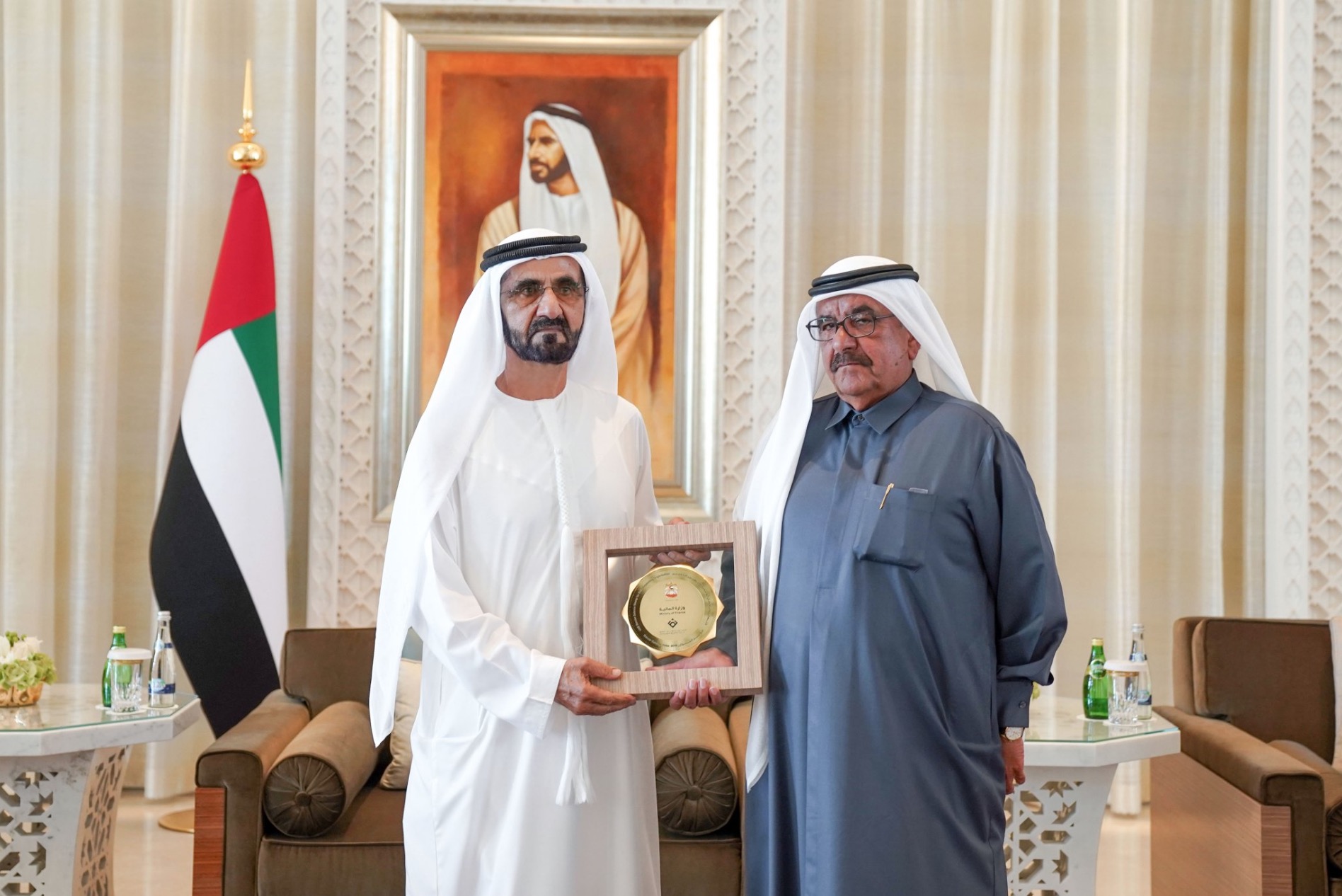
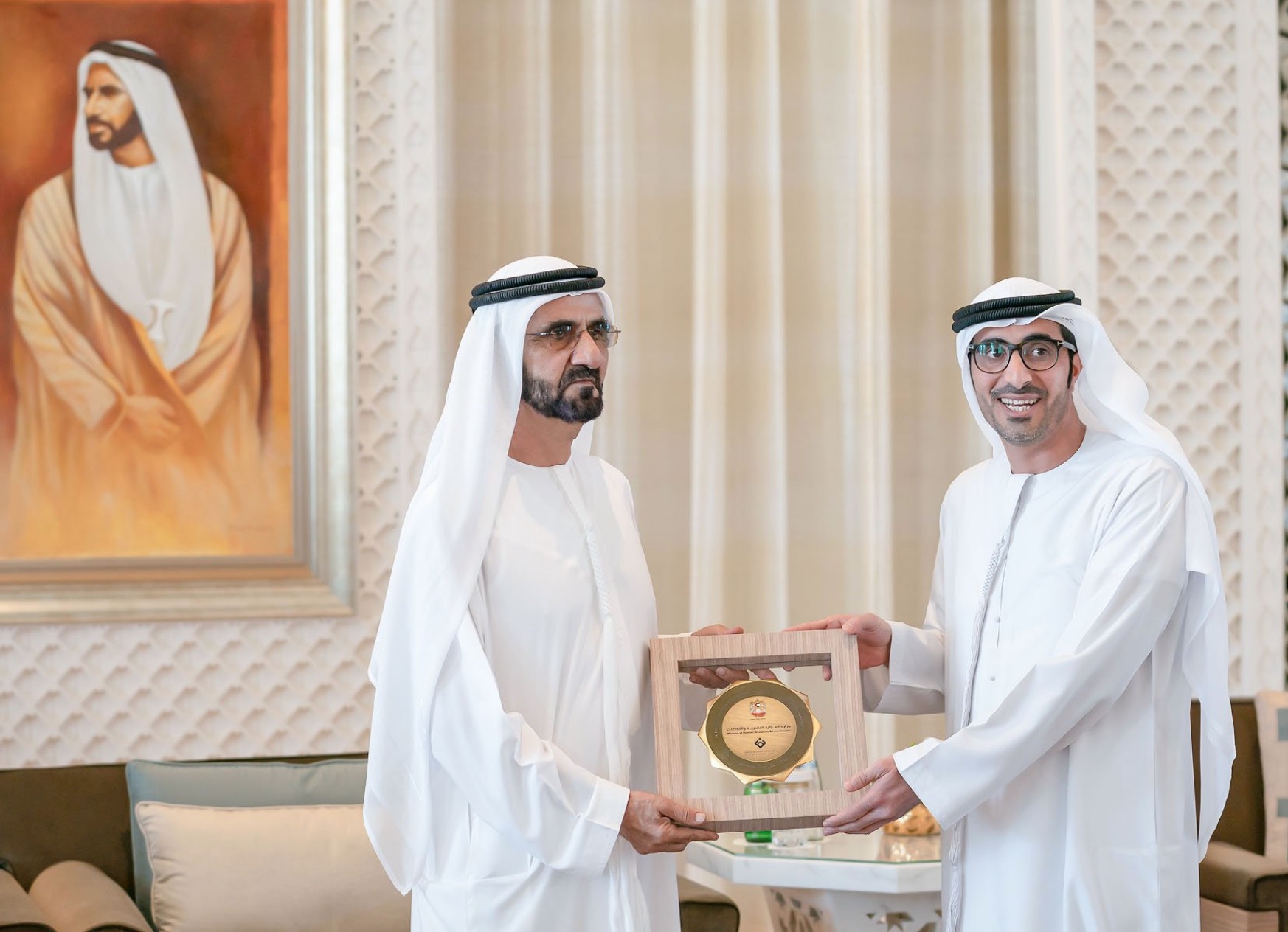
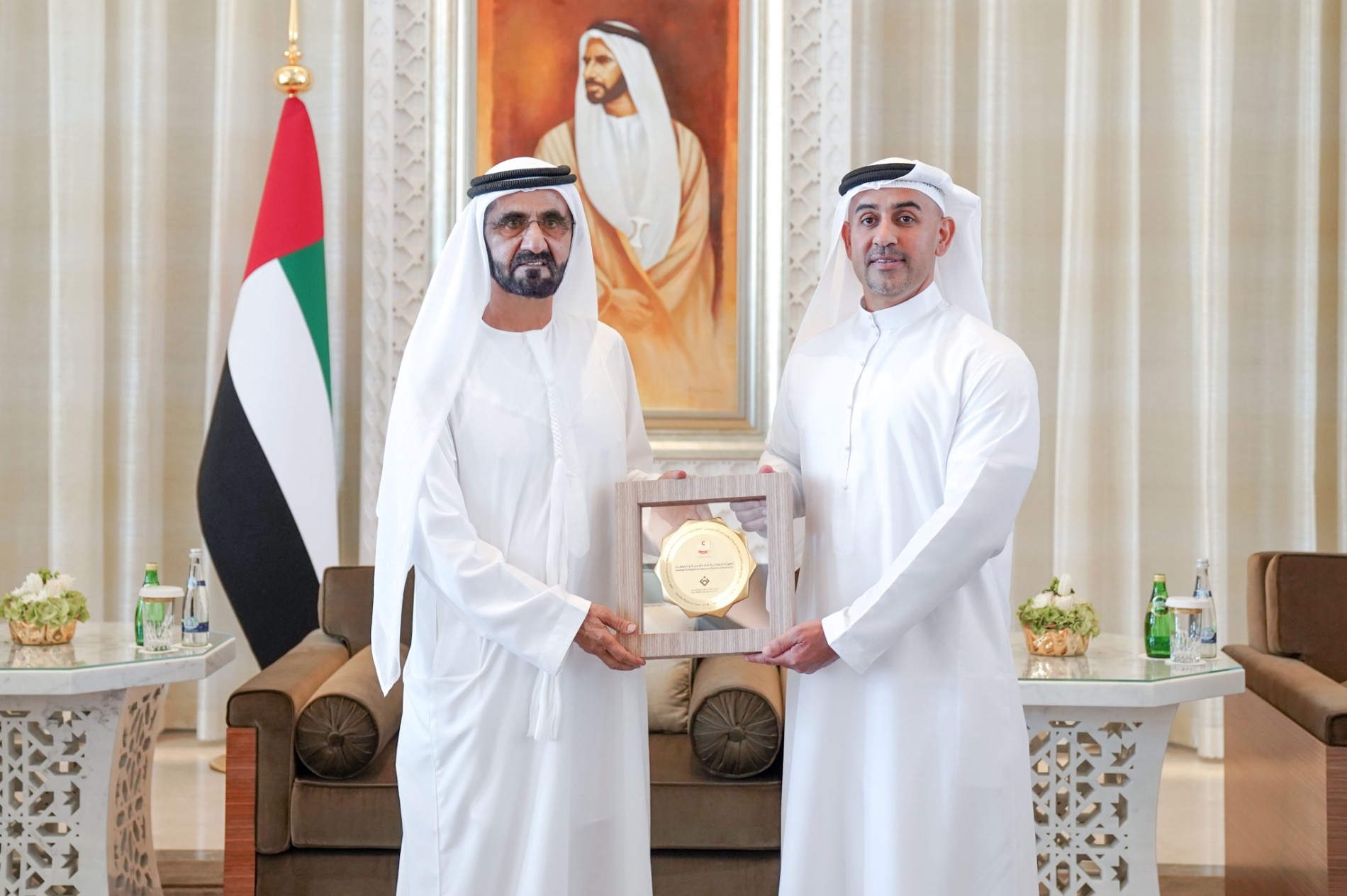
. @HHShkMohd honors the winners of the Gender Balance Index 2018. The Index features three categories: Best Personality for Supporting Gender Balance, Best Federal Entity for Supporting Gender Balance, and the Best Initiative for Supporting Gender Balance. #UAE
Barbara Kay at The Post Millennial puts her finger on what is so disturbing about the central image of the Gillette ad. The line of worthless men manning their grills symbolizes hard working married fathers. From “Toxic masculinity” in advertising: keeping women scared and men shamed:
For what does a neatly-dressed man standing behind a barbecue signify? Think of every Father’s Day ad you have ever seen. How many of them feature barbecue tools? Maybe 50%? Why? Because when men barbecue, they are usually in a back yard. If men have a back yard, it means they live in a house. If they have a house, they are generally married with children. When men barbecue, they are usually feeding their families and friends and having fun doing it. In other words, barbecue men are deeply invested in family life.
They are, in short, fathers. And what is the easiest way to produce boys who do not understand or respect the boundaries between positive and negative masculinity? Take away their fathers.
…
The barbecue men are the reason most boys with loving fathers grow up to be strong, productive men: men who will never be a threat to anyone—except to bad guys who never learned the boundaries for—or how to positively channel—aggression, because so many of them had no fathers to teach them.
Kay says that after realizing this she finally understood why the ad prompted such a visceral reaction for her. I think she is dead on here. Gillette’s ad isn’t just garden variety misandry, it is an attack aimed primarily at respectable men. I understood that at some level, which you can see from the title of my original post on the ad, but I didn’t put my finger on the meaning of the men grilling. It is the masculine equivalent of women baking apple pies.
It is interesting to see that while Christian culture has been going after married fathers for years both via sermons and films with no complaint, when Gillette crossed that same line secular culture was outraged. I also think it wasn’t a coincidence that the central theme of the movie Courageous was expressed by the Christian men complaining about their fathers while sitting in Adam’s backyard, eating the steaks he had just grilled for them. The symbolism of the barbecue is important enough in Courageous that the scene appears prominently twice in the movie’s trailer. The first time is immediately after the words “Fathers Struggling to Connect”, and the second time is when Adam hands the other men his resolution and announces “I don’t want to be a good enough father.”
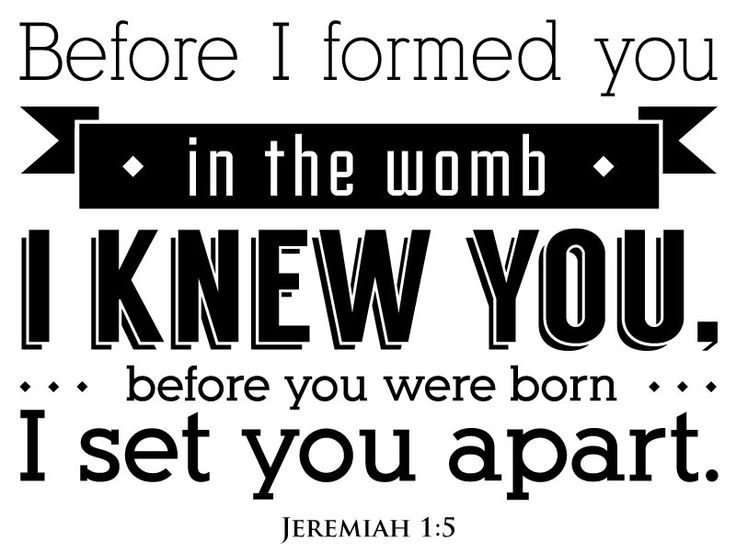
“I knew you before I formed you in your mother’s womb. Before you
were born I set you apart and appointed you as my prophet to the
nations.”
Observation
Jeremiah was a prophet called by God in the end period of the kingdom
of Judah. He carried the Lord’s message during the reigns of
Josiah, Jehoiakim and Zedekiah right through to the exile in Babylon.
The Lord called him to this prophetic ministry. The Lord knew him
before he was born and appointed him to be a messenger to the
nations.
Jeremiah says he is too young. But the Lord replies by saying that He
has put His words in Jeremiah’s mouth.
Application
The Lord’s words to Jeremiah are true of all of us. He formed us
and knew us before He made us. He sets each person apart for a task
or an assignment.
We don’t think of ourselves in these terms. We think calling and
appointment are only for the spiritual elites, the top people like
pastors, evangelists and apostles.
The fact is that each person was hand- made by God for a specific
purpose or a particular task.
Maybe it is leading a cell group, perhaps leading just one person to
the Lord, or raising our children to love the Lord.
Whether we are called to pull down and raise nations, to raise
children or visit people in a nursing home, this is God’s mission
and He appoints people to the right place.
Steve Stewart, leader of Impact Nations, a short term missions group,
has a favourite saying. “You were made for this!” It doesn’t
matter what the “this” is. You were made for a task that nobody
else can do.
Prayer
Lord God, you made the heavens and the earth. You fashioned me to be
your instrument. Help me to fulfil your mission. Amen.
Bjørn Lomborg writes on Facebook about some new and surprising data that turn climate alarmist claims upside down.
Fewer and fewer people die from climate-related natural disasters.
This is clearly opposite of what you normally hear, but that is because we’re often just being told of one disaster after another – telling us how *many* events are happening. The number of reported events is increasing, but that is mainly due to better reporting, lower thresholds and better accessibility (the CNN effect). For instance, for Denmark, the database only shows events starting from 1976.
Instead, look at the number of dead per year, which is much harder to fudge. Given that these numbers fluctuate enormously from year to year (especially in the past, with huge droughts and floods in China), they are here presented as averages of each decade (1920-29, 1930-39 etc, with last decade as 2010-18). The data is from the most respected global database, the International Disaster Database. There is some uncertainty about complete reporting from early decades, which is why this graph starts in 1920, and if anything this uncertainty means the graph *underestimates* the reduction in deaths.
Notice, this does *not* mean that there is no global warming or that possibly a climate signal could eventually lead to further deaths. Instead, it shows that our increased wealth and adaptive capacity has vastly outdone any negative impact from climate when it comes to human climate vulnerability.
Notice that the reduction in absolute deaths has happened while the global population has increased four-fold. The individual risk of dying from climate-related disasters has declined by 98.9%. Last year, fewer people died in climate disasters than at any point in the last three decades (1986 was a similarly fortunate year).
Somewhat surprisingly, while climate-related deaths have been declining strongly for 70 years, non-climate deaths have not seen a similar decline, and should probably get more of our attention.
If we look at the death risk for an individual, seen below, the risk reduction is even bigger – dropped almost 99% since the 1920s.
Nearly a billion dollars for electricity for just one day — $500 per family
The Electro-pyre conflagration escalates.
The cost of electricity on Thursday in two states of Australia reached a tally of $932 million dollars for a single day of electricity. Thanks to David Bidstrup on Catallaxy for calculating it.
As Bruce of Newcastle says ““Three days and you could buy a HELE plant with the money wasted.” That’s a power plant that could last 70 years, and provide electricity at under $50/MW. (Forget all the high charges for 30 years to pay of the capital (in red below), we could just buy the damn thing outright, paid off in full from day one.)
Cost of old coal plants in the USA. From the report by Stacy and Taylor, of the Institute for Energy Research (IER)
Burned at the stake: $500 per family
In Victoria, per capita, that means it cost $110 for one day’s electricity. For South Australians, Thursday’s electricity bill was $140 per person. (So each household of four just effectively lost $565.) In both these states those charges will presumably be paid in future price rises, shared unevenly between subsidized solar users and suffering non-solar hostages. The costs will be buried such that duped householders will not be aware of what happened. Coles and Woolworths will have to add a few cents to everything to cover their bills, and the government will have to cut services or increase taxes. No one will know how many jobs are not offered or opportunities lost. This is the road to Venezuela.
If Hazelwood had still been open, the whole bidstack would have changed, quite probably saving electricity consumers in those two states hundreds of dollars. Eight million Australians could have had a weekend away, gone to a ball, or bought brand new fishing gear. And this is just one single day of electricity. If Liddell closes, things will get worse, no matter how much unreliable not-there-when-you-need-it capacity we add to the system. Indeed, the more fairy capacity we add, the worse it gets. NSW will soon join the SA-Vic club.
This is what happens when an electricity grid is run by kindergarten arts graduates who struggle with numbers bigger than two.
This is utterly and completely a renewables fail
The socialist Labor-Greens are already trying to blame it on coal, but we ran coal plants for decades without these disasters. Right now, no one is investing in coal because of bipartisan stupidity. What company would pay the maintenance fees on infrastructure so hated by the political class? The coal plants are being run into the ground. Maintenance is even being delayed to keep the plants running through peaks like this.
No country on Earth with lots of renewables has cheap electricity. How many times do I have to repeat it? This is my mantra for 2019.
In Australia when we had mainly coal and no renewables our electricity was cheap and reliable. Now we are still mainly coal, but all it takes is a poisonous small infiltration of subsidized unreliable renewables to destroy the former economic incentives, the whole market, the system: our lifestyle.
The Liberal Party needs to grow a spine
This is surely a crisis. As long as the Liberals are a Tweedledum version of the Labor party, they can’t solve this and deserve to lose. New renewables installations must be stopped immediately — put on hold indefinitely — until they no longer need forced subsidies, until the RET is gone, the carbon taxes, the hidden emissions trading scheme and we have a proper free market. Then new renewables can be permitted to compete with all generation alternatives, though all new generators will also have to be responsible for paying for extra transmission lines, back up batteries, and any other frequency stabilization required. On net a generator must be able to guarantee that when the people call on it, it can provide, lets say, 80% of total nameplate capacity. When that day comes (thirty, fifty, years from now or maybe never) I will be happy to support renewables. Until then, we are global patsies handing over glorious profits to energy giants, renewables companies, Chinese manufacturers, and large financial institutions.
Lets have a plebescite: How many Australians would rather have a weekend away with their family or make the world 0.00 degrees cooler in 100 years in a symbolic display to assuage the Gods of Storms?
I’m seeing lots of Australians post about the abortion laws in New York where abortion is a “right” right up until birth.
Meanwhile in Victoria and Queensland abortion is a right until 20-22 weeks and right up until birth if two doctors agree it is in the mother’s interest.
In NSW, abortion is only lawful if a doctor believes that the mental or physical health is at risk from continuing the pregnancy. A bit of a huge loophole there.
“Choice” is a great idea, if you ignore the choice of the baby.
I often see human rights advocates express concern for the “most vulnerable” people in our society, but they never mention pre-birth babies who are literally the most vulnerable people in our society.
This is a great evil, a terrible blight in our society, which must be overcome.










 New Life Narrabri