From “Men Of The West”
MARTIN LUTHER KING MURDERED SELMA, ALABAMA
Economics teaches us that nothing in this broken world is free but God’s Grace. Everything has a cost. Not matter how universally good you think a thing is, there is always some price to it. Sometimes that price is obvious and well worth it. Other times that price is not so obvious. Often the costliest decisions we make are the ones with the least obvious prices.
You’ve all been indoctrinated, so I know I don’t need to recount the story of the Civil Rights Movement to you. Blah blah blah… fire hoses… marches… evil whitey being evil… noble black man being noble. What I want to point out is one small look at the price that was paid, and who paid it.
Now before we get to deep into this, I have to explain some methodology here. Any research you do on Selma is going to focus almost entirely on the Civil Rights Movement. Period. Wikipedia? The whole article is written through the context of the movement. To get the real story of Selma, you have to talk to the people that lived there, which is exactly what we’ve done.
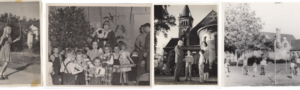
Rewind past all that, back to 1950. Selma, Alabama in 1950 is something close to idyllic. Its population of almost 23,000 was booming. It had grown 15% in just a few years before. Businesses were opening, new factories were being built, and folks were working and living in what was one of the prettiest little towns in the United States. At the time, the population of Selma was about half white and about half black. Crime was low to non-existent, and jobs were plentiful. The town had extremely high marriage rates and high birth rates.
By 1960 the population of Selma has blown up to over 28,000. The demographics are still pretty much the same, and the town is still in boom mode. More factories are showing up. More businesses are opening. Churches and shops are thriving in a gorgeous down town. The United Methodist Church has build a large children’s home that is something akin to a large orphanage, except it is a lot less like all the negative stereotypes you associate with orphanages, and a lot more like a bunch of kids living at summer camp year round. The adults around today who spent time there still get emotional when they talk about their time there. And they still get emotional when they talk about what a beautiful place Selma was back then. Before Martin Luther King came and killed their town.
Read the rest of the story here
 New Life Narrabri