Month: June 2019
Why The US Doesn’t Use The Metric System (Although It Does!)
New Study Shows Wind Farms Are Noisy
With the rush on for so-called renewable energy, you would think that there would be heaps of studies on possible side-effects of wind farms such as possible health effects of these monstrosities. Some years ago while I still believed that the ABC was capable of producing genuine information on science, there was a commentator on the Science Show who put down all the complaints to psychology, fear and climate denial.
Apparently there has now been a “world first” study on a tiny sample of houses that has discovered that even several kilometres away there are audible pulses of sound which must have some potential effect when it’s there constantly. Still, somebody has to take a shot to save the planet.
Jo Nov reports:
Finally “world first” study on nine houses shows wind towers make pulsing noise for 3.5 km
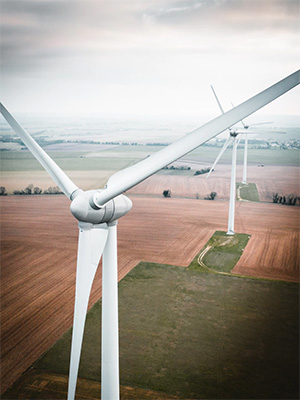
Generic wind turbine near farm. Photo: @gonz_ddl
Finally, a study looks at data on nine houses within ten kilometers of an old (probably small) wind turbine. What’s amazing about this research is not the result but that this study is so tiny, yet it’s still a “world first”.
There are already probably around400,000 wind turbinesinstalled around the world.* So you might think that there would have been scores of studies involving hundreds of people and followed up for a year or two. They would have looked at the effect of wind turbines upwind, downwind, side wind, in low wind, high wind, and at different times of day. They’d check for altered sleep patterns, lack of deep sleep, REM sleep, cognitive performance, blood pressure, cortisol levels, and school marks. Dream on. It’s like everything with climate change — who needs data?
Renewables are a$300 billion annual global industry. This work was done with a $1.4 million National Health and Medical Research Council grant. Where is the precautionary principle when we need it?
Can wind turbines disturb sleep? Research finds pulsing audible in homes up to 3.5km away
Nicola Hasham,Sydney Morning Herald
…the first results from ongoing Flinders University research into turbine noise and sleep found that low-frequency pulsing from a South Australian wind farm was audible about 16 per cent of the time inside homes up to 3.5 kilometres from a turbine, including 22 per cent of the time at night. The noise was audible 24 per cent of the time outside the homes. Recordings detected what complainants commonly describe as a pulsating, thumping or rumbling sound. The noise is technically known as amplitude modulation, and relates to a change in noise level that occurs approximately once per second as the turbine blade rotates. Field data was recorded at nine homes within 8.8 kilometres of the wind farm. Microphones were placed inside and outside homes and recorded almost 18,000 10-minute samples between 2012 and 2015. The data was recently analysed and the results published online last month in the Journal of Sound and Vibration.
In 2016 the research team was awarded a $1.4 million National Health and Medical Research Council grant for a separate wind farm noise study including lab tests and sleep measurement
If the world put just 0.5% of the annual “renewables investment” into researching the health effects that would be $15m a year.
There have been almost no studies into the health impact of wind farms. Remember the one in 2014 in Australia which was also a world first, andinvolved an eight week study on six people in three houses.It was a tiny study too — why we haven’t done this one hundred times bigger? Are we afraid of what the results might show?
Read the rest of the article here
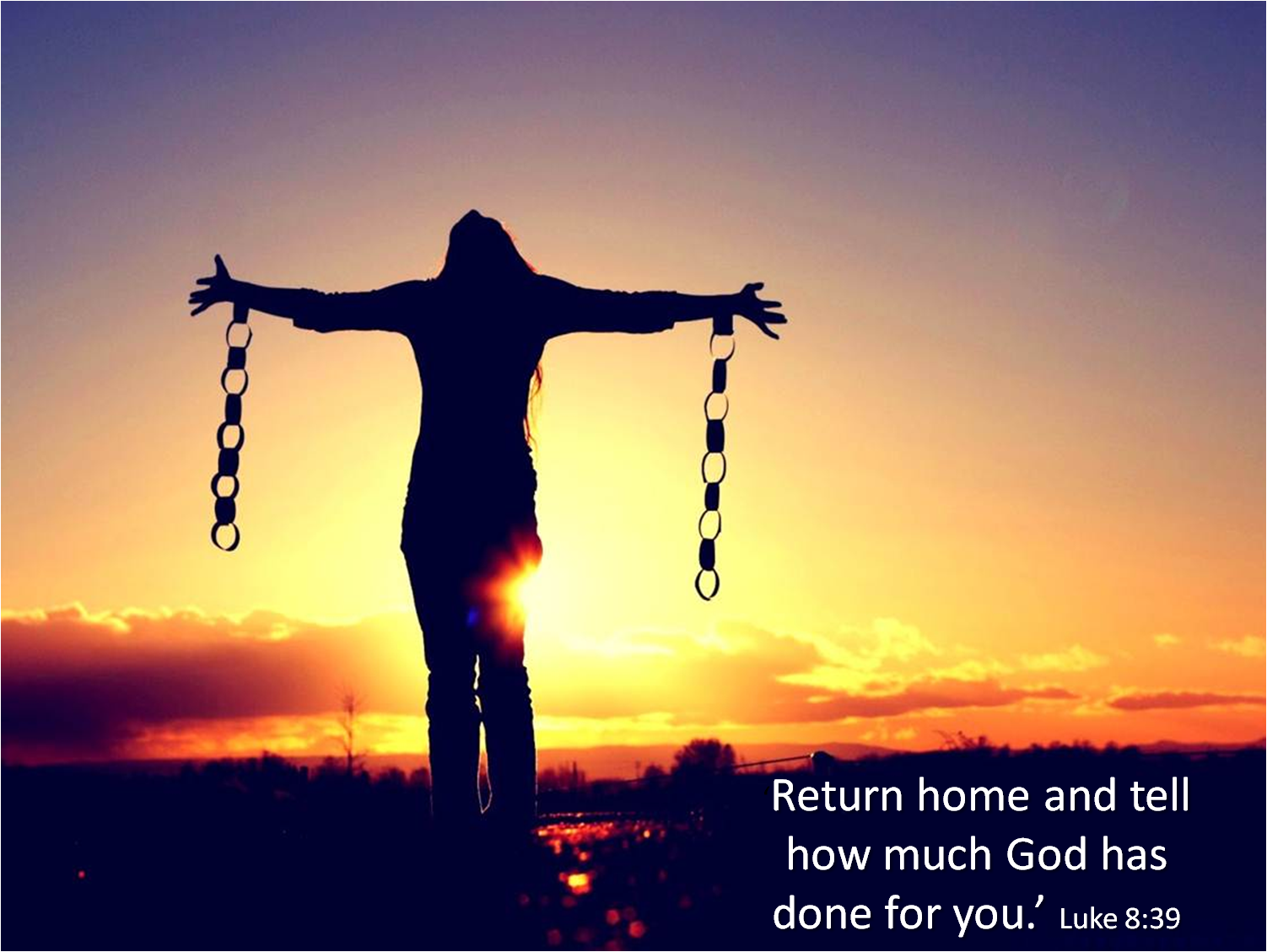
Reflection on Luke 8:26-39
Scripture
Then all the people of the region of the Gerasenes asked Jesus to leave them, because they were overcome with fear. So Jesus got into the boat and left.
Observation
Jesus and His disciples sail to the region of the Gerasenes. Jesus is met by a man possessed by a legion of demons who lived amongst the tombs.
As Jesus ministered to this man, the demons begged Him not to be sent into the Abyss. Instead, at their request, He sends them to a nearby herd of pigs.
People come to see what has happened and are amazed to see the man clothed and in his right mind. But they are filled with fear and ask Jesus to leave them. The healed man, though, asks to come with Jesus. But Jesus tells him to stay and tell people about what God has done for him.
Application
Imagine a man so tormented buy many demons that nobody knows what to do with him. Jesus comes and heals him, at the cost of the lives of a herd of pigs.
Instead of rejoicing over a man set free from years of torment, the local people were afraid of the power of Jesus.
To the Jewish person, the loss of a herd of pigs would seem inconsequential. But these were Gentiles, and it was their living that was threatened.
Perhaps the local towns people were themselves demonised, and this was the cause of their fear. in any case, they rejected Jesus. They actually asked him to leave.
When people are confronted with a choice between an immoral lifestyle and salvation, many will choose to continue their lifestyle. This is why the church is hated in so many places.
The healed man remained, and his testimony must have changed some hearts. Perhaps their fear was overcome by love.
Prayer
Lord help me to always put you front and centre in my life priorities. May I never be afraid to follow you. Amen.
Reflection on Galatians 3:23-29

Scripture
You are all sons of God trough faith in Christ Jesus.
Observation
The law was a kind of prison which held people captive until Christ came. Now that faith has come, we are no longer under the supervision of the law.
We are all sons of God, for having gone through the waters of baptism we have put on Christ. There are no identities to separate us into different groups or tribes. We all heirs of the promises given to Abraham.
Application
I am a son of God because I have clothed myself in Christ.
Paul says here that the law is obsolete because it is Christ who teaches us the was of righteousness.
Sons of God (and daughters of God) means that we have a direct relationship with God. We have been brought into God’s family, and we are heirs to everything God owns- which is everything in all creation.
I am a son of the living God! What an awesome privilege that is!
We no longer need priests and other mediators to stand between us and God. We are the priests. We are the ones who relate to the Father.
This places on us the responsibility to grow in that relationship. I need to learn who my Father is by reading the Scriptures. I need to take time to build my relationship with Him in prayer.
If my christian brothers and sisters are also sons and daughters of God, then I must express my love for our Father by loving them. There is no room for envy, gossip, back stabbing or name calling amongst the sons and daughters of God.
Prayer
Thank you Father for calling me your son. Please take hold of me and make me more like you in my character. Amen,
Was Goliath The Underdog?
An interesting take on David and Goliath from Josh Daffern
David Was Never the Underdog in David and Goliath

David said to the Philistine, “You come against me with sword and spear and javelin, but I come against you in the name of the Lord Almighty, the God of the armies of Israel, whom you have defied.
As the Philistine moved closer to attack him, David ran quickly toward the battle line to meet him. Reaching into his bag and taking out a stone, he slung it and struck the Philistine on the forehead. The stone sank into his forehead, and he fell facedown on the ground.
So David triumphed over the Philistine with a sling and a stone; without a sword in his hand he struck down the Philistine and killed him. 1 Samuel 17:45-50
And so the legend was born. But what was it that gave David such confidence? Did God give him a specific word promising him that he would kill Goliath? Not that Scripture records. So, what was it that gave David such confidence? David and Goliath is the ultimate underdog story, because here was this huge giant and all David had was a sling, but in the end I would argue that we’ve got the wrong underdog.
Let’s go back and look at the story again.
First, let’s start with David. In ancient warfare, there were three types of warriors: there was heavy infantry, which was what Goliath was. They were highly skilled in hand-to-hand combat. Then there were cavalry, men on horses or chariots. The third type was artillery, back then known as slingers. We think of the slingshots that we played with as kids in the backyard. These slingers were different. Slingers would put a projectile into a leather pouch with two long chords, they would whirl the projectile around, let one chord go and hurl the projectile at the target.
Ancient slingers could turn their sling around at 6 or 7 revolutions per second, and when they released the projectile was moving incredibly fast, probably 35 meters per second, which is substantially faster than a fastball thrown by a Major League Baseball pitcher.
Add to that the fact that the stones in the Valley of Elah, where this battle was fought, were not normal stones. They were made of Barium Sulfate, which had twice the density. If you do the ballistics of the stopping power of this kind of rock at this kind of speed, it’s the same stopping power as if you fired a 45 caliber handgun.
Ancient slingers were also famously accurate from up to 200 yards away, and in ancient battles they were known to decimate heavy infantry. And guess what David probably did during all that time while he was watching sheep? Practicing his form.
If you remember one of the opening scenes of Indiana Jones where Harrison Ford is trying to get away and a large enemy wielding a sword stops him to fight? How does Indiana Jones get out of that? He shoots him. Goliath had the sword, David had the gun. Goliath brought a sword to a gunfight.
Now, let’s go over to Goliath. Goliath was 9’9’’ tall, which is huge. A scientific theory for Goliath is that he had a condition called acromegaly, which is a benign tumor on your pituitary gland. It keeps your body growing, even after it’s supposed to stop. Robert Wadlow, the tallest person in the world in the 1800s, grew to 8’11’’ and had acromegaly. If you knew the WWE wrestler Andre the Giant, who was 7’4’’, he had acromegaly. It’s not farfetched to think that Goliath had acromegaly. Why is that important? Because one of the known side effects of this condition is poor eyesight.
We see evidence of this in the story, when Goliath was led onto the battlefield by an attendant, like he was being led by the hand. Secondly, he commands David to come to him. Why? Because his eyesight is probably poor. Third, Goliath says, “Am I a dog, that you come at me with sticks?” Sticks? David had one staff in his hand, but Goliath saw at least two.
You put all that together, and you have a picture of an undeniably large giant standing on the field with poor eyesight and weighed down by 125 pounds of armor. For him to win, he needed another heavy infantry to come close and engage in hand-to-hand combat.
Instead, he got a slinger, who was quick and nimble, who would never come within striking range and could strike him at 200 yards away. Now all of his armor made him immobile and his incredible height made him that much more of a target. Goliath stood there like a sitting duck, and David knew it.
I would argue that this legendary story is in fact an underdog story, but the underdog was Goliath.
Now, it still took incredible bravery for David to go out there and fight, but when he stepped onto the field of battle, Goliath didn’t stand a chance.
Modern Wheat More Robust Than Older Varieties
From wattsupwiththat.com:
Wheat myth debunked
The pervasive myth that intensive breeding has made modern wheat cultivars weaker and more dependent on pesticides and fertilisers is debunked by a major new study
University of Queensland

This is Kai Voss-Fels at the wheat trial site. Credit: Kai Voss-Fels
The myth that modern wheat varieties are more heavily reliant on pesticides and fertilisers is debunked by new research published in Nature Plants today.
Lead author on the paper, Dr Kai Voss-Fels, a research fellow at The University of Queensland, said modern wheat cropping varieties actually out-perform older varieties in both optimum and harsh growing conditions.
“There is a view that intensive selection and breeding which has produced the high-yielding wheat cultivars used in modern cropping systems has also made modern wheat less resilient and more dependent on chemicals to thrive,” said Dr Voss-Fels.
“However, the data unequivocally shows that modern wheat varieties out-perform older varieties, even under conditions of reduced amounts of fertilisers, fungicides and water,” he said.
“We also found that genetic diversity within the often-criticised modern wheat gene pool is rich enough to generate a further 23 per cent increase in yields.”
Dr Voss-Fels said the findings might surprise some farmers and environmentalists.
“Quite a few people will be taken aback by just how tough modern wheat varieties proved to be, even in harsh growing conditions, such as drought, and using less chemical inputs.”
Dr Voss-Fels said the findings could have potentially important implications for raising the productivity of organic cropping systems. “It’s been widely assumed that the older wheat cultivars are more robust and resilient but it’s actually the modern cultivars that perform best in optimum and sub-optimum conditions.”
Wheat is the world’s most important food crop.
However, with global wheat yields reduced due to droughts in recent years and more climate risk anticipated in the future, the hardiness of modern wheat varieties is an issue of global significance.
The study is believed to provide the most detailed description of the consequences of intensive breeding and genetic selection for high grain yield and associated traits in European wheat over the past 50 years.
It was led by Professor Rod Snowdon of the Justus-Liebig-University Gießen (JLU), who is also an honorary Professor at UQ, in collaboration with seven other German universities.
The genetic analysis was undertaken at QAAFI under the leadership of Professor Ben Hayes.
The first part of the study involved testing 200 wheat varieties that have been essential to agriculture in Western Europe in the past 50 years.
Performance was compared between those varieties in side-by-side field trials under high, medium and low chemical input conditions. The second part of the study was undertaken at QAAFI, to match the performance differences with the different varieties’ genetic make-up.
“This genetic information allows us to take the discovery to the next level,” Dr Voss-Fels says.
“We can use artificial intelligence (AI) algorithms to predict the optimal crosses needed to bring together the most favourable segments as fast as possible.”
###
The paper ‘Breeding improves wheat productivity under contrasting agrochemical input levels’ was published in Nature Plants 17 June 2019 (DOI: 10.1038/s41477-019-0445-5).
Reflection on 1 Kings 19:1-18
Scripture
“Yet I reserve seven thousand in Israel- all whose knees have not bowed down to Baal and all whose lips have not kissed him.”
Observation
After the great confrontation on Mount Carmel in which all the prophets of Baal had been killed, Jezebel vows to kill Elijah. Elijah runs away.
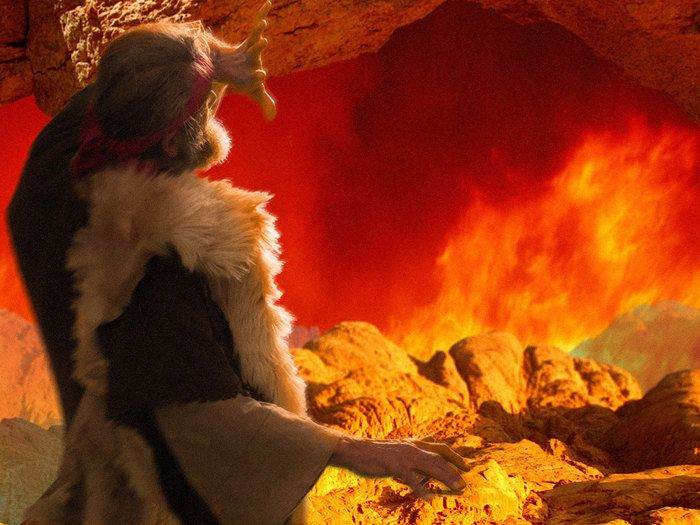
After many days journeying, he arrives at Horeb, the mountain of God where he spends the night in a cave.
The Lord comes to Elijah, asking him what he is doing there. Elijah tells the Lord that he has been very zealous for the Lord, but now he is the only one left.
Then there is a fire, a strong wind and an earthquake, in none of which is the Lord found. Finally a gentle whisper, the still sound of silence, takes Elijah’s attention.
The Lord commissions Elijah to anoint Hazael as king of Aram, Jehu as king of Israel and Elisha as the prophet to succeed him.
Application
Elijah as come to the end of his tether as the “man of God.” He feels like he is the only one left who is loyal to the Lord.
The Lord takes Elijah out of action, leads him on a journey, and refreshes his spirit and his calling.
Elijah was not done with miraculous signs and wonders. He had seen all the spectacular stuff already, and he wasn’t in a place of separation from God. The Lord was talking to him and directing him before the fire, the wind and earthquake.
What Elijah needed was to re-focus his attention onto the Lord and away from himself. Although Elijah thought he was the only saviour in Israel, there were in fact over 7000 people who remained faithful to the Lord.
Sometimes when we feel like we are the only people on God’s team, we need to re-focus and see the great and marvellous things God is doing in and through the people around us.
Prayer
Lord, sometimes I lose my focus on what is important in serving you. I centre my attention on me rather than on you. Please help me to always look to you and to serve you regardless of how I perceive my own successes, Amen.
 New Life Narrabri
5 COMMENTS