Reflection on Acts 17:1-15

Scripture

The people of Berea were more open-minded than those in Thessalonica, and they listened to Paul’s message. They searched the Scriptures day after day to see if Paul and Silas were teaching the truth.

Observation

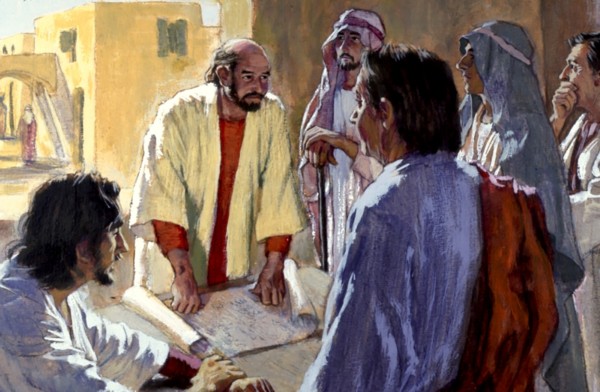
Paul and Silas travel to Thessalonica. Paul attends the synagogue service for three Sabbaths, explaining that the Messiah must suffer and rise from the dead, and that Jesus is the Messiah. Some of the Jews believe the message, but others become jealous and start to attack the believers.

Paul and Silas move on to Berea. Here, the Jews search the Scriptures, and many receive the gospel. Some of the Thessalonian Jews hear that Paul is preaching in Berea, so they go there to stir up trouble. Paul is then sent to Athens.

Application

The people in Berea listened to Paul’s message and checked out his teaching against the Scriptures. Consequently, many of them became christians.

All christians should be like the Jews of Berea- reading the Word, and checking all teaching against scripture.

The practice of daily devotions or quiet time is invaluable. It is like food for the spirit. Read a passage and ask God to speak to you through His Word. Write down any thoughts or revelations that come to you.

Reading the Bible in a more systematic way is also important. There are any number of plans to read the Bible in a year. The advantage of doing this is that it enables you to read the full context of Scripture, so that it becomes more than a collection of isolated verses.

Memorising Bible verses is important also. The Holy Spirit can use those verses, when necessary, to encourage or rebuke us, or to share with other people who might need spiritual help.

The people in Berea searched the Scriptures day after day, meaning it was an ongoing practice. When we put the Bible into our daily schedule, then we grow as disciples, no longer being blown around by every trendy teaching that emerges.

Prayer

Lord God, please help me to read and absorb more of your Word. So that I can become strong in the faith. Amen.

Reflection on Acts 16:25-40

Scripture

Around midnight, Paul and Silas were praying and singing hymns to God, and the other prisoners were listening.

Observation

Paul and Silas are in jail in Phillipi, having been beaten severely. They pray and praise God in this time.

There is an earthquake that leaves all the prison doors open and the prisoners unchained. The jailer prepares to kill himself, but Paul calls out to him that nobody has escaped.

The jailer then asks him how he can be saved. Paul tells him to believe in the Lord Jesus, which he and his whole household do.

The next morning the officials send a message that Paul and Silas should be released. But Paul refuses to go until the officials themselves come. The officials then come and apologise to them.

Application

Like the other apostles, Paul and Silas consider it an honour to suffer for Jesus.

At the time of their great suffering, imprisoned for their gospel preaching, Paul and Silas turn to the Lord.

They pray firstly. I doubt that their prayers were just for their own situation. They would have been praying for the city of Phillipi, the work of evangelists and apostles, the church, their fellow prisoners, and so on. The verse says the other prisoners were listening, so they would have got a good idea about the concerns of these men and their heart for other people.

They were also singing hymns. It is always good to praise the Lord. Singing songs of joy and love for God expresses the hope that we have in Christ.

In the midst of this, God sends an earthquake that frees them from the prison. This is a good metaphor for the situations in our own lives. Sometimes we can feel like we are locked into a prison with no way out. If we dedicate our selves to praying and praising the Lord, He will provide an escape route.

Prayer

Lord, please help me to turn to you regardless of the circumstances of my life. Amen.

Ephesians 2:8

Here is my commentary on Ephesians 2:8. I am publishing these once or twice a week, but you can read all of the available articles at our web-site, www.new-life.org.au

Ephesians 2:8

For by grace you have been saved through faith,.and this is not your doing, it is the gift of God.

It is God’s grace that saves us, setting us free from sin and death and lifting us to eternal life in the heavenly realms.

grace is God’s favour extended towards us. The same word in Greek (charis) is the root word for gift (charisma). God’s favour is a gift to us.

God loves His creation, His people, and so He is constantly pouring out his love, his gift to us.

Life itself is a gift from God. He sustains us and the whole of creation right down to the level of atoms. We are held together literally by God. He sustains us with an abundance of every necessity. He knitted us together in our mother’s womb.

Eternal life comes as a gift also. We could not earn this, and we certainly do not deserve it. Every person has sinned and fallen short of God’s glory. The wages of sin is death (Romans 6:23).

Some people say they just want justice from God. They see God as a judge who must surely punish “sinners” – which they think would be other people. But we have all sinned and we all deserve nothing less than death at God’s justice .

Salvation from the death penalty comes in the form of grace. God gifts us eternal life, not because we deserve it but because he loves us.

This grace of God – never ending, overwhelming in its nature – brings us to salvation. Salvation means to be made whole in body, mind and spirit.

To be saved is to be restored to our right state, the state we were created to live in before sin spoilt things. This is more than a legal status or a legal position of being moved from the” guilty” list to the “ not guilty” list. Salvation is not merely a legal transaction.

When Jesus healed people, the word translated as “ healed” is the same word used for salvation. On different occasions in the gospels, the same words are used for “ your faith has healed you” and for “ your faith has saved you.”

Salvation is a state of wholeness.

Sin leads to death at every part of our being because it separates us from the Father, the source of life. We are born in sin, so from the time we are born we start to die. Our bodies inherit death because sin has mutated our DNA. We are dead spiritually because we were designed for the Holy Spirit to dwell with our spirits. We are dead mentally because without the Holy Spirit to teach us, even the most intelligent person can only reach 50% of their potential.

We are in this state of death right until the time that Jesus comes in and pronounces, “Your faith has saved you.”

We still live in a broken world so that the healing we receive from Christ is partial. Our salvation is also only partial in the sense that we continue to fall short of God’s glory.

What is imperfect in this life will be made perfect in the next life when we are liberated from all the effects of sin and death forever.

Salvation is received by faith. Faith is the ability to reach out and receive God’s gift. A gift is only a gift to the extent it is received and valued by the recipient. Faith recognises the gift and its value. Faith receives salvation offered to us by grace.

A gift only comes into being at the behest of the giver. The giver must decide to make a gift before the recipient can receive it. God’s grace comes first.

Faith, then, is the act of reaching out to receive God’s gift of salvation.

Faith is often misunderstood as believing what is not true along the lines of believing six impossible things before breakfast.

Faith is rather the act of trusting that the giver of life wants to give to us what we could not get for ourselves. Faith is, in part, an assenting, a mental agreement process. But it is more an act of the will than just an intellectual exercise. I believe in my head that planes can fly. When I board a plane, I have to trust that the pilot, along with a whole community of specialist workers, can get me safely to my destination.

So I may know with my head that God is able to save people. I need to know in my heart that God is able and willing to save me. When I trust him for my eternal destiny, I don’t have to rely on good works, right doctrine, or religious practice.

My God has saved me by his work alone.

There is nothing I can add to God’s grace. There is no sense in which I can contribute to salvation. It is not my own doing, it is the gift of God.

If I can earn salvation it is not a gift. If I can substitute another path to salvation than the gift God has given, that is not faith.

Key points in this verse:

  • We are saved by grace
  • Salvation is God’s gift to us.
  • Salvation is more than a promise of eternity.
  • Salvation is wholeness of body, mind and spirit.
  • There is nothing we can add to what God has given us in Christ.

Reflection on Acts 16:11-24

Scripture

This went on day after day until Paul got so exasperated that he turned and said to the demon within her, “I command you in the name of Jesus to come out of her.” And instantly it left her.

Observation

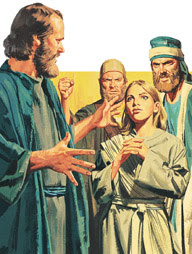
Paul and his companions move on to Phillipi, a Roman city in Macedonia. On the Sabbath they go to the river bank, expecting a prayer meeting there. They meet some women there, including Lydia who accepts the message straight away.

On another day, as they are going to the place of prayer, a demonised slave girl starts following them. The evil spirit had given her the power to tell fortunes which made a lot of money for her owners. She starts shouting out that Paul and the others have come to tell people how to be saved. Paul becomes exasperated and commands the demon to leave.

Her masters’ business plan is wrecked, so they drag Paul and Silas to the authorities, who order them beaten and thrown into prison.

Application

Not every testimony is helpful. Testimonies from demons are definitely counter-productive.

On the surface, it seems that the demonised girl was stating the truth- the men were there to tell people how to be saved. But if the words were the same ones repeated over and over, or the volume was too loud, then it would have detracted from the message that Paul was trying to speak. The text does not tell us about the tone of voice the demon was used. It could have been sarcastic or mocking, contradicting the intent of the words.

Over the years, I have heard some testimonies that just did not ring true. The person was saying one thing, but living an entirely different kind of life. I have heard testimonies that used the right words, but left the hearer confused about what it all meant.

For me, the responsibility is to make sure that my life is as good as my testimony; in other words my actions must match my words.

Prayer

Holy Spirit, I invite you to bring conviction to my heart about unconfessed sin and any other action that would detract from the activity of Jesus Christ in my life.

Reflection on Acts 16:1-10

Scripture

That night, Paul had a vision: A man from Macedonia in northern Greece, was standing there pleading with him, “Come over to Macedonia and help us.”

Observation

Paul travels to Derbe and then to Lystra, where he meets a young man called Timothy. Paul invites Timothy to come with him, and together they travel around the area instructing the believers.

They continue travelling, but it becomes clear that the Holy Spirit is preventing them from entering the province of Asia. Finally, Paul has a vision of a man from Macedonia pleading for them to come there. So they travel immediately to Macedonia.

Application

God’s direction comes in a multitude of ways.

In this passage, we have a negative direction in that the Holy Spirit is preventing them from going to the province of Asia. The description is vague. Perhaps every time they headed that way, they felt uneasy or even physically uncomfortable.. Perhaps distractions and obstacles would come their way.

Then there is the very specific positive direction. Paul has a clear vision of a man from Macedonia, and immediately they know this is the Holy Spirit saying, “Go there!”

Sometimes we have to be hemmed in, discovering every possibility is cut off until we are ready to hear the way the Holy Spirit wants us to go.

The Bible demonstrates dozens of ways that the Holy Spirit uses to direct God’s people: dreams, visions, voices from heaven, internal voices, prophecies from other people, words of knowledge and wisdom, and many more.

The important thing is not the method God uses to speak to us, but that we are listening to whatever it is that God says, and are ready to obey Him.

Prayer

Lord, please help me to discern your voice, and to obey every direction you give me. Amen.

Reflection on Acts 15:22-41

Scripture

Their disagreement was so sharp that they separated. Barnabas took John Mark with him and sailed to Cyprus. Paul chose Silas.

Observation

The apostles and elders in Jerusalem choose delegates to send to Antioch in Syria, with Paul and Barnabas to report their decision. They take a letter to confirm the decision concerning the rules for Gentile converts.

The people in Antioch rejoice when they hear the encouraging news. Paul and Barnabas stay there for some time.

After a while, Paul suggests to Barnabas that they retrace their steps to encourage the believers in the places they previously visited. They have a quarrel because Barnabas wants to take John Mark, but Paul does not want this. They ultimately go separate ways.

Application

We often see the early church through rose coloured glasses, and it can come as a shock when normal human behaviour creeps in.

Paul and Barnabas had made a great team, but now they separate over the issue of whether they should take John Mark with them. John Mark has previously accompanied Paul, but had left him at Pamphylia. Paul had felt abandoned and didn’t want to take him on again. Barnabas the encourager asked to give him a second chance.

We can hold very deep convictions that can sometimes lead to arguments; yet God can be in the midst of this. In this situation, one team was broken up and two new teams were formed, giving valuable experience to John Mark and to Silas.

When christians differ we need to make sure that we do so in a way that honours God.

Many arguments are over trivial issues. We need to ask, “is this an issue to die for?” If it is truly a trivial issue we can, and should, back off.

We need to separate issues from people. We can love those we disagree with. Let’s get past the immediate differences of opinion and love one another with the love of the Lord.

When we argue we should continue to honour our opponents. These days it seems that arguments can quickly degenerate to name calling. Jesus calls us to be better than that.

Prayer

Lord Jesus it is inevitable that there will be disagreements among your people. Please help me to love those I disagree with, and help us all to find your way through topics of diverging opinions. Amen.

Reflection on Acts 15:1-21

Scripture

“We believe that we are all saved the same way, by the undeserved grace of the Lord Jesus.”

Observation

While Paul and Barnabas are in Antioch in Syria, some men from Judea come and start teaching that to be saved, believers must be circumcised. Paul and Barnabas go to Jerusalem to settle the matter.

In Jerusalem, Barnabas and Paul report how God has been saving the Gentiles. But some believers from the Pharisees demand these believers be circumcised and follow the law of Moses.

Peter says that he has seen how God gives the Holy Spirit to Gentiles- He makes no distinction.

James says that they should not make it difficult for Gentiles who turn to God, with only some minimal requirements placed on them.

Application

There is only one way that people are saved and that is through Jesus.

There was a tendency in the early church, mainly among Jewish believers, to want to make salvation dependent on obeying the law of Moses. The apostles were convinced and unmovable on the principle that we cannot add anything to what Christ has done for us on the cross.

This statement of Peter that “we are all saved the same way” should serve as a warning to people who want to say that Jews are saved by the law and Gentiles are saved by grace. No, we are all saved by grace alone- whether Jew or Gentile.

It is God’s undeserved grace that takes away our in. We can add nothing to what Jesus has done for us.

God has removed the dividing wall between all people. There is no longer Jew and Gentile, but only those who have been saved by Jesus and those who have not.

Prayer

Thank you Lord for the cross. Thank you that we are saved by the undeserved grace of the Lord Jesus. Amen.

Faith and Healing

A frequent question that is asked is “Why does God not heal people like He did in the Bible, or still does in poor countries?”

I think a big part of the answer to those types of questions has something to do with faith.

In my devotional time today, I read this:

In Lystra there sat a man who was lame. He had been that way from birth and had never walked. He listened to Paul as he was speaking. Paul looked directly at him, saw that he had faith to be healed 10 and called out, “Stand up on your feet!” At that, the man jumped up and began to walk.

Acts 14:8-10 (NIV)

We have a lame man who has heard the gospel message from Paul, and he has faith to be healed. Paul sees this and says “Stand up!”, and the man is instantly healed.

In Acts 3 there is a similar story also involving a lame man, but it is Peter and John who are used by God to heal the man. The way the story is told, the man has no expectation of being healed, but Peter is the one with faith in the name of Jesus.

It seems to me that faith is an important ingredient in miracles generally, including healing.

But in the West, even the most miracle- believing people have more faith in the medical profession than we do in God. In Australia most procedures are readily available for free if you go through the public system or at fairly low cost if you have health insurance. We can see a doctor any time and pop a pill for many ailments.

I am not denigrating the great work of health professionals. In fact over recent months I have been greatly helped by doctors, nurses, sonographers, pathologists and many more. I thank God for these wonderful people and the excellent facilities we have in this country.

We all need to learn to call out to God first, to put our trust in Him like we say we do. Then we might start to see miracles happen.

So how do we learn to grow our faith?

There are two things here:.

Firstly, just start praying for yourself and family members. Just do it! Faith is like a muscle that gets stronger with use.

How about next time you get a headache, instead of reaching for paracetamol which takes 20 minutes to kick in, try praying for 20 minutes instead? Praise God for His goodness, praise Him for the miracles and healings you read about in the Bible, thank Him that He wants to heal you.

Secondly, as you learn to pray for more serious issues, perhaps chronic pain and disability, start to visualise what it would be like for the person to be healed. The man in Acts 14 could imagine himself walking, something he had never done. What would it be like if you were healed? What might you do that you can’t do now? Start to declare healing and to thank God for it.

It is time for all of us to rise in faith, and to learn to take hold of God’s blessings for us, for our families and for the people around us. Many of us have faith, in fact all christians have a “measure of faith,” we are told in Ephesians. Let’s go for it, believing that the God who put us together has the power to restore the parts of us that are broken.

Ephesians 2:7

Here is my commentary on Ephesians 2:7. I am publishing these once or twice a week, but you can read all of the available articles at our web-site, www.new-life.org.au

Ephesians 2:7

“In order that in the coming ages he might show the incomparable riches of his grace, expressed in his kindness to us in Christ Jesus.

God has” seated us with him in the heavenly realms in Christ Jesus” (v. 6) ”in order that in the coming ages…”

God’s purposes in seating us with Him are now revealed. It is firstly about the future.

God looks at the really, really long term outcome. From before the beginning of time He purposed to create a race of people capable of responding to His love, having first tasted the reality and consequence of sin.

The goal of this plan is expressed in the future, “in the coming ages.” The word “ages” here is the word which we derive aeon. it is a long period of time, a multi-generational period. When you are in the middle of it, it seems like it is all you have ever known, the only way things have ever been or ever will be.

There have been several such ages in history. One of them began with the death and resurrection of Jesus. It will end when Jesus returns for his church, and the new heavens and earth of Revelation are instituted.

This present age will come to an end. Nobody knows the day or the hour, except the Father. From Paul’s perspective, writing in the first century, that time was an aeon away. For us it might still be a long time away.

In the coming ages God will show the incomparable riches of his grace.

This phrase makes me think of another phrase,”trophy of grace.” Every born again follower of Jesus is a trophy, a prize won for God by his grace through the death of Christ.

We are in God’s trophy room or His treasure house as signs of His great victory in Christ. Often we don’t feel like we are rating very highly on the Christian league table. It doesn’t matter; the fact that we persevere in our walk of faith with Christ makes us his treasures.

Who is God showing the riches of his grace to?

Firstly, He is showing off to the rest of humanity what he has done for them in Christ. For as long as we live faithfully, our words and actions serve as an ongoing testimony of God’s rich grace. The Holy Spirit is constantly nudging people to see Christ in us.

On the Day of Judgement, we will each be rolled out as a testimony to God’s great love , both to those who are saved and to those who are unsaved alike.

To the saved, we will be an example of the same grace that they experienced. I used to think that Judgement Day was about God revealing all my secret and shameful sins, but now I see it as a day when God brags about all his beloved children, and his grace being on show to the universe.

To the unsaved, we will be the end of all excuses. If God could save me from my messed up life, and thousands of others who had all kinds of abuse, violence, and neglect to overcome, then there is no excuse for anyone to reject him.

Secondly, God wants to show off his grace to all the heavenly beings — the angels and seraphim , cherubim and living creatures. “These people, billions of them, were born in sin yet were saved by my love.” The miracle of salvation is something that angels have never experienced.

Finally, God wants to show off his great grace to satan, the great enemy. Satan rebelled because he wanted to be God, and he has projected that desire onto people ever since. Every believer is a testament against the deception of satan.

God desires to show the incomparable or immeasurable riches of His grace. God’s grace cannot be measured or compared to anything else.

When God was showing Abraham the destiny that God had for him, He used analogies such as the grains of sand on the seashore and the stars in the sky.

In our age we have become used to the huge numbers that scientists come up with. We know that the universe is bigger than Abraham could see. But God’s grace is greater still.

If you had all the gold in the world, all the mansions, all the privately-owned islands, all the cattle and sheep, it is just a fraction of God’s grace.

The incomparable riches of God’s grace.

His grace never gives up and never runs out. We can’t fly far enough to escape it; all we can do is close ourselves off from it.

Of course, the great tragedy is that so many people prefer to block out the grace of God rather than humble themselves to admit that they need it. The limitation is not in God, but in people.

God’s grace is expressed in his kindness to us in Christ Jesus.

Jesus did not have to die for us. He chose to do that out of love for us. You could describe that as an act of kindness.

We tend to think of kindness as a desire to give someone a treat or a gift for no particular reason other than we want to do it for that person. We might buy flowers for someone going through a hard time, forgive a small debt, buy dinner for someone.

Kindness is motivated by love, a tangible expression of love.

Our idea of kindness just fades into insignificance when compared to that of Christ.

He died for us. He received no personal benefit from the transaction except for the joy of our response. This is perfect kindness.

The reason why we are now seated in heavenly places is the kindness of Christ. He bore the brunt of our sin and our rebellion against God. He paid the price of our redemption.

He saw a need we could not fulfil ourselves, and rather than seeing us die, He died for us. The innocent died and the guilty ones were set free.

Every hope that we have for eternity is in Christ.

Key points in this verse:

  • God’s plan extends to the coming ages
  • This present age will come to an end, but God is looking to the future ages
  • We are both the riches of God’s grace and the recipients of the riches of His grace
  • God wants to brag about his children, showing us off as trophies of grace
  • God’s grace never fails and never runs out
  • We are saved by the ultimate kindness of Christ
Reflection on Acts 14:8-28

Scripture

Paul and Barnabas also appointed elders in every church. With prayer and fasting, they turned the elders over to the care of the Lord, in whom they had put their trust.

Observation

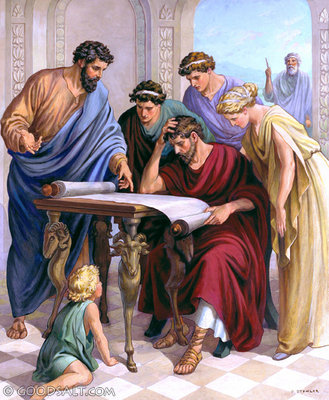
In Lystra, Paul comes upon a man lame from birth. Paul sees he has faith to be healed, so he commands the man to stand up, which he does.

The crowd sees this and proclaims that Paul and Barnabas are gods in human form. Then priests from the temple of Zeus bring sacrifices to worship the apostles. Paul and Barnabas are shocked by this, and say they are not gods but messengers of the one true God.

Some Jews from Antioch in Pisidia come and stir people up so that Paul is stoned and left for dead.

Paul and Barnabas go to Derbe then back track through the other towns they had preached in, appointing elders in each place. They finally return to their base in Antioch in Syria where they report all that God has done.

Application

One of the responsibilities of apostles, then and now, that is rarely mentioned is the grace to appoint elders in a locality.

Often apostles are seen as church planters or missionaries who go from place to place preaching the gospel before moving on. Others from different faith traditions see them as like bishops who are appointed to oversee a geographical area.

But there is more to apostles than this. Paul and Barnabas, having prayed and fasted, appointed elders in each church, then handed the work over to them.

This was no vote at a synod or an administrative decision. It was something seen as the work of the Holy Spirit, a spiritual process soaked in prayer and fasting.

The elders, once appointed, took full responsibility for God’s work in that locality. The apostles maintained a relationship of fatherly love and and advice, but the elders and the churches were autonomous.

Prayer

Thank you Father for apostles and elders, and other God- appointed leadership in the church. Amen.