Ephesians 2:20

Here is my commentary on Ephesians 2:20. I am publishing these once or twice a week, but you can read all of the available articles at our web-site, http://www.new-life.org.au

Ephesians 2:20

… built upon the foundation of the apostles and prophets, Jesus himself being the cornerstone.

The church, the household of God, is built upon the foundation laid by the apostles and prophets, but Jesus himself is the cornerstone.

If the foundation is the most important part of a building, in ancient times the cornerstone was the most vital part of the foundation. In a community where mass production of building materials is not possible, there is variation in every part. So the cornerstone was chosen to be the anchor point. It sets the direction for the whole building.

The cornerstone had to be straight, all its edges level, and its corners exactly at right angles. If it was not true then the building could not be constructed to the specifications. Worse still, the walls may lean outwards or inwards as construction proceeded.

If we use the analogy of a building to describe the community of faith called the church, then Jesus is the cornerstone for the building. All of our life depends on him- our lives together and as individuals. Our behaviour and our belief must reflect the person and the ministry of our Lord.

Any so-called church which deviates from the teachings of Jesus revealed in the scriptures ceases to be a church. This is true whether we’re talking about core issues such as judgement and salvation, or important but less spiritual issues such as sexuality.

IF we remove the cornerstone, that is Jesus, then the building collapses.

The church is built on the foundation of the apostles and prophets.

In one sense, this relates to the teachings of the Bible. The prophets refer to the Old Testament looking forward to the coming of Jesus the Messiah. The apostles refer to the New Testament in which the original apostles gave their testimony (in various forms) to the teaching and ministry of Jesus which culminated in his death on the cross .This opened the way to eternal salvation for all who put their trust in him.

The Bible, then, is the foundation for the church, the constitution on which the life and witness of the church is established. Just as the constitution of Australia describes how the nation is governed, the Bible describes how the church, the household of God, should order its life together.

Over recent decades there has been a re-discovery in the church of the ministry gifts of apostles and prophets. We are now in a time in which we have contemporaneous prophets and apostles, as was the case when Paul wrote this letter .

Space prohibits a full exploration of these ministries here, but a quick summary will help.

Apostles are men and women who are called by God and equipped by the Holy Spirit to provide covering and oversight of the church at a trans-local level. It is important to see that this is different to being appointed by an organisation. These apostles carry authority as a gift from the Holy Spirit, and other ministers willingly submit to their authority. This is not an institutional arrangement, but a spiritual ordering of ministry.

Many apostles see themselves as fathers to other people in ministry. This is a relational term, an analogy for the style of authority exercised. It is similar to the relationship that a father might have with an adult son.

Prophets are men and women who hear the voice of God in some detail. They are often described as the heart of God in the church , as they have the ability to discern God’s will in specific situations that are not always clearly spelt out in scriptures.

Often churches are planted by human organisations out of a strategy or corporate action plan with no apostolic authority or prophetic mandate. The church planters think a congregation of their brand might flourish in a town or city, so they start it, the same way that a fast food franchise might start.

If there is no prophetic or apostolic foundation for a congregation, then it will struggle because it is built on a foundation that is not Christ’s foundation.

They may preach great sermons, care for the poor, draw in thousands of people. But if the foundation is wrong the building will ultimately fail .

Those of us who called pastors and ministers in the church, together with all of Gods people, must make sure that anything we try to do carries the apostolic and prophetic mandate. It must be built on the right foundation.

Jesus must always be the cornerstone in all that we do.

Key points in this verse

  • The true church is built on a foundation laid by Jesus himself.
  • We must build with Jesus as the cornerstone.
  • Apostles and prophets, together with Jesus, form the foundation the church.
  • Any church which is built on a false foundation will fail
Joel Comiskey: The Priority of Prayer

Joel Comiskey writes:

The Priority of Prayer

By Joel Comiskey, check out Living in Victory

Most pastors and leaders are pragmatic. They want to know what will work. Immediately. Most are fascinated by techniques that promise quick growth.

Yet, the only ministry worth having is the one that God himself brings to life. And such a cell or cell church requires prayer at its very foundation—the root level. Only God can break down the barriers to growth and help the leader make disciples who make disciples. A church, in fact,  cannot survive without prayer. Norman Dowe, an experienced church planter, writes: 

I have failed at planting a church twice. My first reaction is to blame my lack of giftedness on my failure. I am a pastor/teacher not an evangelist, nor an apostle. After my last fiasco, the Lord took me to Zech. 4:6 in the context of Jerubbabel rebuilding the temple. I failed not because of my gift but because of my reliance on my experience, training, and reading. I failed because I did not rely on the Spirit. I am no longer infatuated with structures but am trying to replace that with true spirituality. I read once that Cho was asked the secret to his success. He said, “I pray and obey.”

In contrast to Norman Dowe’s church planting experience, Rob Campbell, JCG board member and frequent blogger, started his church with prayer. When he planted Cypress Creek Church in Wimberley, Texas, he made prayer his first priority. He not only exemplified prayer but hired Cecilia Belvin, the pastor of prayer, as the first staff person. Today Cypress Creek Church has one of the most vital prayer ministries in existence. God has blessed this church abundantly because they’ve placed Him first.

All of us should follow Paul’s exhortation, which he wrote from a Roman prison at the end of his life:

Devote yourselves to prayer, being watchful and thankful. And pray for us, too, that God may open a door for our message, so that we may proclaim the mystery of Christ, for which I am in chains. Pray that I may proclaim it clearly, as I should. Be wise in the way you act toward outsiders; make the most of every opportunity. Let your conversation be always full of grace, seasoned with salt, so that you may know how to answer everyone (Colossians 4:2-4).

Leading a cell or a cell church is  a spiritual battle. Satan and his demonic hordes laugh at powerless, prayerless ministers.  These same dark forces become extremely worried when we dedicate ourselves to fervent and effectual prayer.

I recommend that each leader find a group of intercessors to pray for them(Peter Wagner’s book Prayer Shield, talks about how to do this). Inform these people about what’s happening in your life and ministry. They will become your prayer shield and help provide guidance and direction in your life and ministry. They will serve as your protection and covering.

“Jesus, help us to become men and women of prayer.”

I had a heart attack at 17, wealth at 27 and was homeless at 28

From “Eternity

I had a heart attack at 17, wealth at 27 and was homeless at 28′


Return to the Eternity News Homepage

Get Stories In Your Inbox

Scott Faith Story
Scott’s story | Not what you expected

“I had a heart attack when I was 17. I’d been playing tennis at a high level … and I was in the Queensland Championships. After the match, I went home and I jumped into our backyard pool. My heart went into spasm and I woke up in the cardiac ward at Brisbane Hospital. It was full of old guys who were about to die. One of them said to me, ‘What are you doing here?’”

‘It gave me a new perspective on life. After 12 months, I was allowed to play tennis again … and I threw myself into everything. For the next ten years, I tried to be the best I could possibly be, in every part of life – in tennis, and in work. I got involved in a really successful company doing building design. I bought a house and an MG. I moved to Sydney to start up a Sydney branch. We were turning over six million dollars a year. It was ridiculous. I was only 27 years old and I had all that responsibility and stress. Eventually, it led to a mental and physical breakdown. I lost everything and I became homeless at age 28. I moved on to my mate’s lounge.

“I now think that God was trying to show me about certainty – that I was never in control, and I never had been, no matter how high I’d climbed the tree.

“A few months later, I started asking everyone I knew about the meaning of life. What did they believe in? Where was the book? How did they know? I was hungry for meaning.

“Then I met Janelle, through a friend. We went on a date, and I told her I was trying to figure out the meaning of life. She told me that she was a Christian and she invited me to church.

“I said, ‘No way, I’d never go to church. They’re a bunch of hypocrites.’

“We were very honest with each other. A few months later, she invited me to a carol sing-a-long. I went and afterwards, I talked to the minister … for two hours. I was getting all the answers I’d been hassling people for. He invited me to have lunch with him and we kept meeting, weekly. We became friends. Janelle went overseas. After a while, the minister and I started reading the Gospel of Mark together. But it didn’t really click. Then he asked me to do [evangelistic course] ‘Christianity Explained’. I said I wasn’t ready to make a commitment, but I went anyway.

“We got up to the page on condemnation. I can still remember it. There was a black and white line drawing of a group of people shunning their faces from the glory of God.

“Suddenly, I was an absolute, blubbering, out-of-control mess, on the floor. It happened in a split second. I was stripped bare before a holy God. It was an absolutely powerful encounter with the Holy Spirit. I became aware of my sin for the first time, and I totally understood the grace of God – the incredible mercy of God – that he should forgive me and save me, through Jesus. It was beautiful!

“Everything changed in an instant. The first verse I memorised was Philippians 4:6-7, ‘Do not be anxious about anything, but in every situation, by prayer and petition, with thanksgiving, present your requests to God. And the peace of God, which transcends all understanding, will guard your hearts and your minds in Christ Jesus.’

“Before that, I’d always been anxious and striving. I couldn’t cope with uncertainty. But I read that verse and I prayed and I read the Bible (all the way through, twice!) And I felt peace, every time I prayed. It transcended understanding! And now, I love uncertainty. I can’t tell you what God has done since then. It’s been exponentially better than anything I could have imagined.

“Janelle and I got married. We had two kids and we went off to Cambodia, as missionaries. And now, even in tough times, uncertainty doesn’t faze me. I know that God is sovereign. And he’s got it!”

Favourite Bible Verses From Compassion Children

From Compassion:

7 Children Share Their Favorite Bible Verses Right Now


Compassion Logo

When my daughter was growing up, the thing I wanted and prayed for most was that she would love the Lord and have a solid foundation in the truth. That’s a priority for Compassion-assisted kids, too. It warms my heart to see that these kids from Asia, Africa and Latin America have got that solid foundation based on God’s Word.

See (and hear) for yourself what some of their favorite Bible verses are — and how those words are encouraging them right now!A girl prays, standing outside

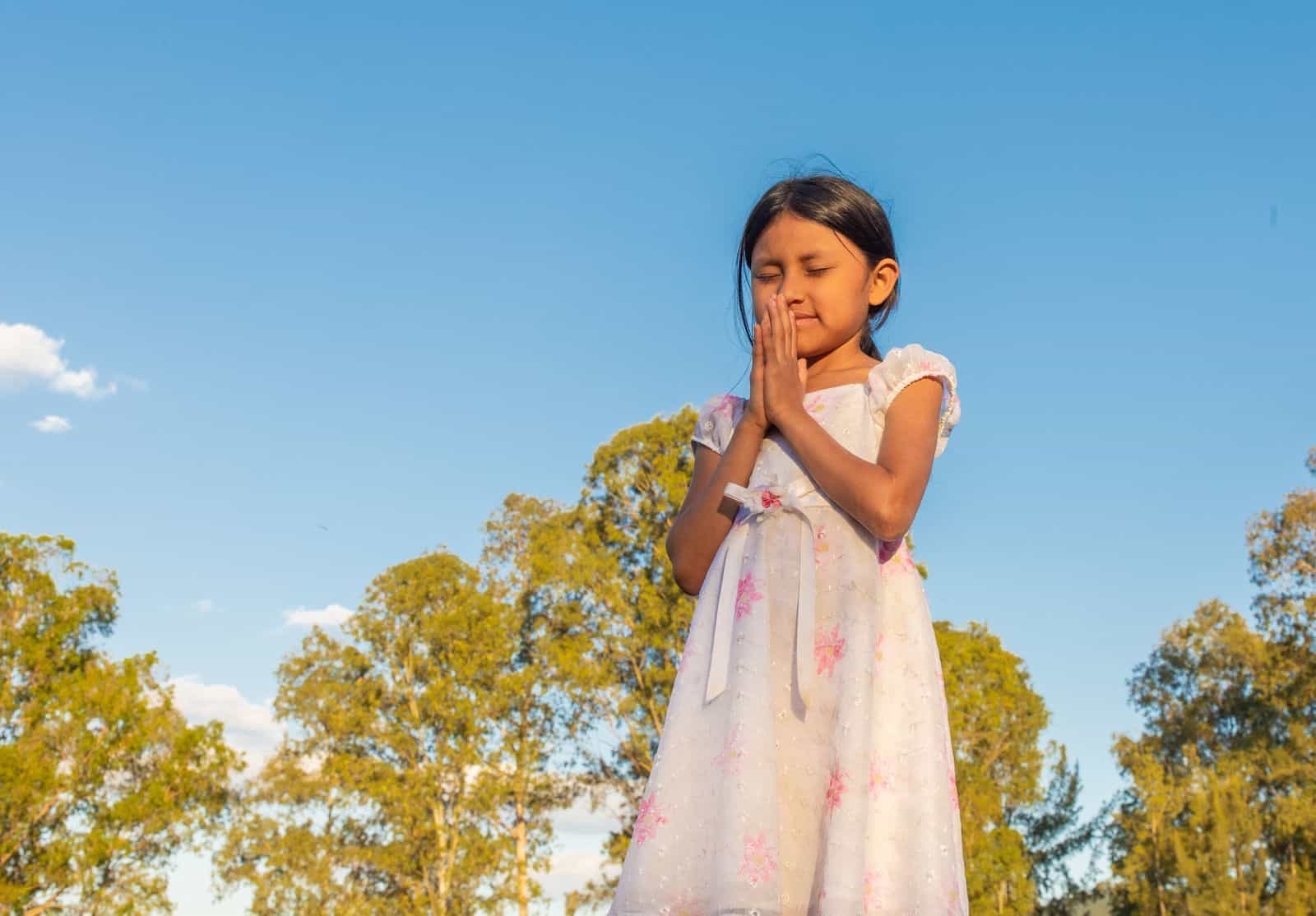
Ashly, 8, is from Guatemala. She draws strength from Psalm 23:1.

“‘God is my shepherd; I shall not want,’ is my favorite Bible verse,” says Ashly. “God will be with us during the hard times, he will give us peace and he will protect us because we are his children.”

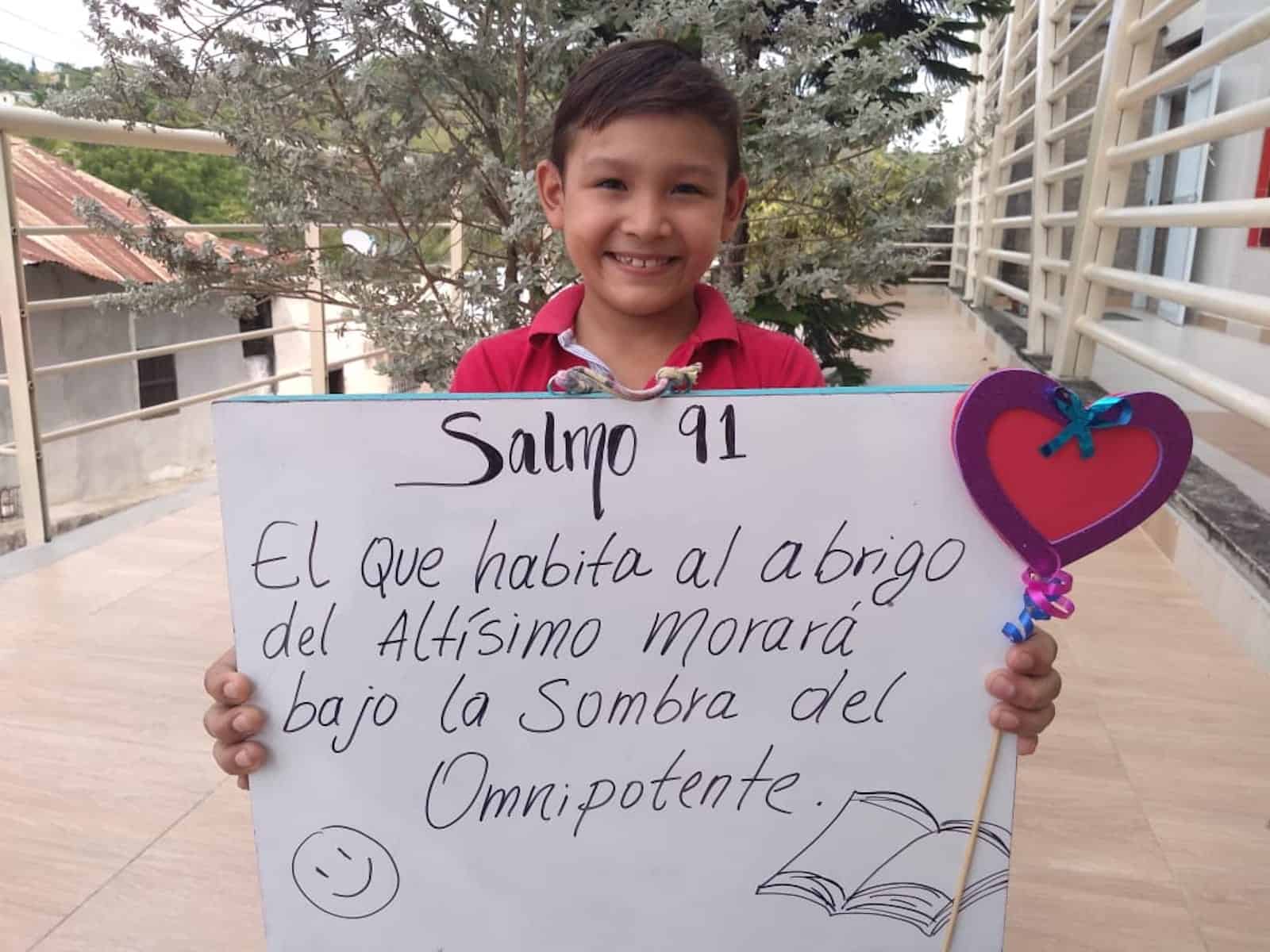
A boy holds a poster with a Bible verse written on it in Spanish.

David from Colombia, 8, made a poster of his favorite verse, Psalm 91:1, which says, “Whoever dwells in the shelter of the Most High will rest in the shadow of the Almighty.” What does that mean to him?

“This means that if we look for God, he will always protect us. I ask my Father God to protect all the families and sponsors of my child development center and around the world. May he keep them safe from this new virus. Amen.”

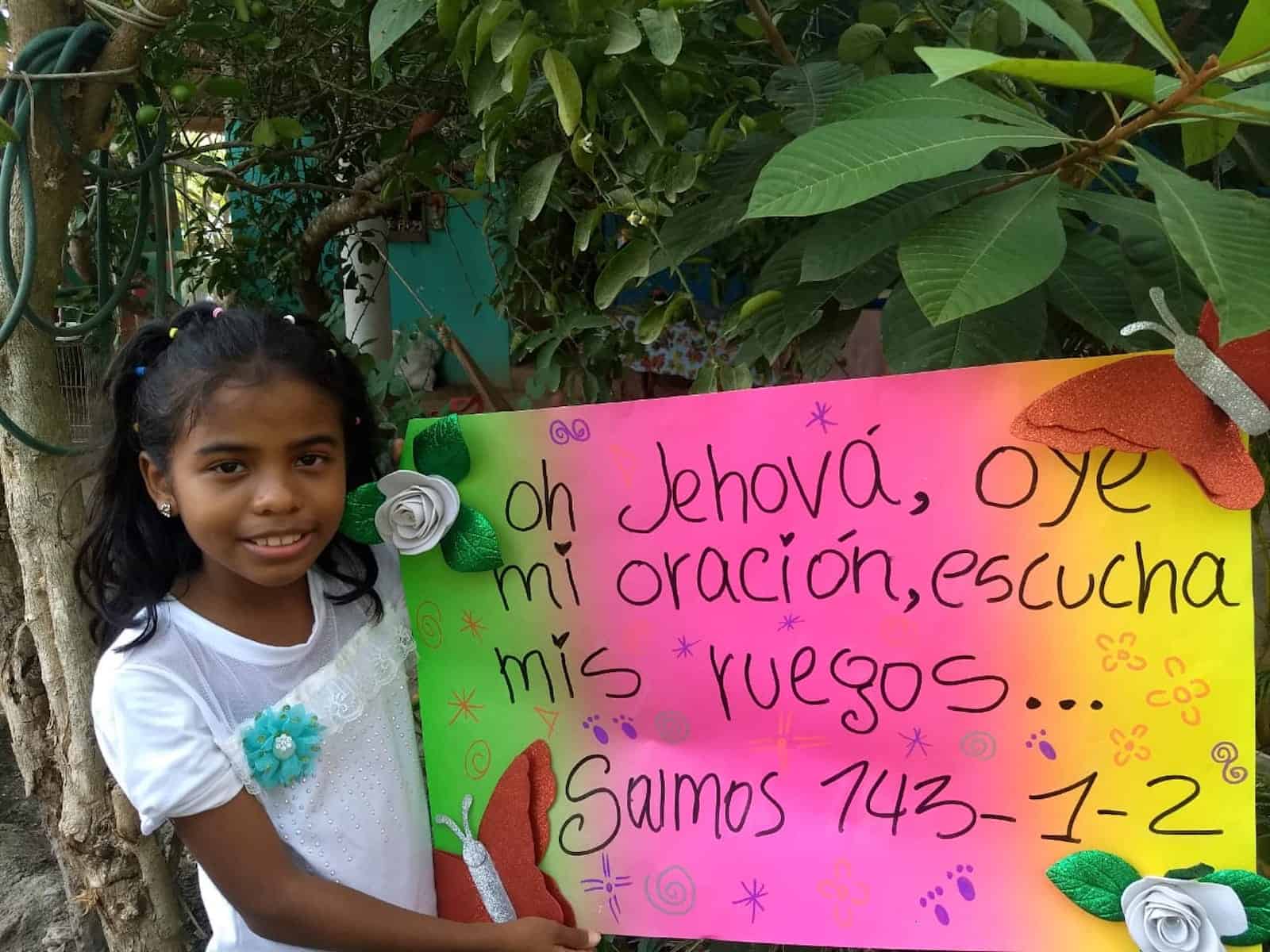
Faith like David’s surely warms the heart of God!A girl holds a poster with a Bible verse written on it in Spanish.

Here’s Nataly, 11, bravely showing the world her favorite Bible verse in front of her home in Colombia. In the face of the COVID-19 pandemic, she quotes Psalm 143:1, “Hear my prayer, O Lord, give ear to my supplications.” Her message to all of us:

“We can see here that King David had the need for his prayers to be heard. David was feeling alone, sad and worried. Many people have felt alone, sad and worried, but we have a God who listens to us. He listens to our prayers and pleas. Like the psalmist, I have also felt alone and sad, but I have prayed to the Lord and I have seen his power in my life. I motivate you to trust God and not to be afraid. Amen. God bless you!”

Two girls hug each other

Kerren (on right), hugs her best friend, Jesika. This 11-year-old girl from Indonesia knows herself and has a sense of humor.

Help Families Affected BY COVID-19

Families in poverty have no safety net in times of crisis. Help provide food, medical care and support during this pandemic.

“Proverbs 6:6 is my favorite verse: ‘Go to the ant, you sluggard; consider its ways and be wise!’ I like that it tells me not to be lazy and to be more diligent. Sometimes when my mom asks me to go get something that’s far away, I can be lazy,” she explains.

Can’t we all?!Young man wearing a gray shirt and is standing in front of an orange stucco wall.

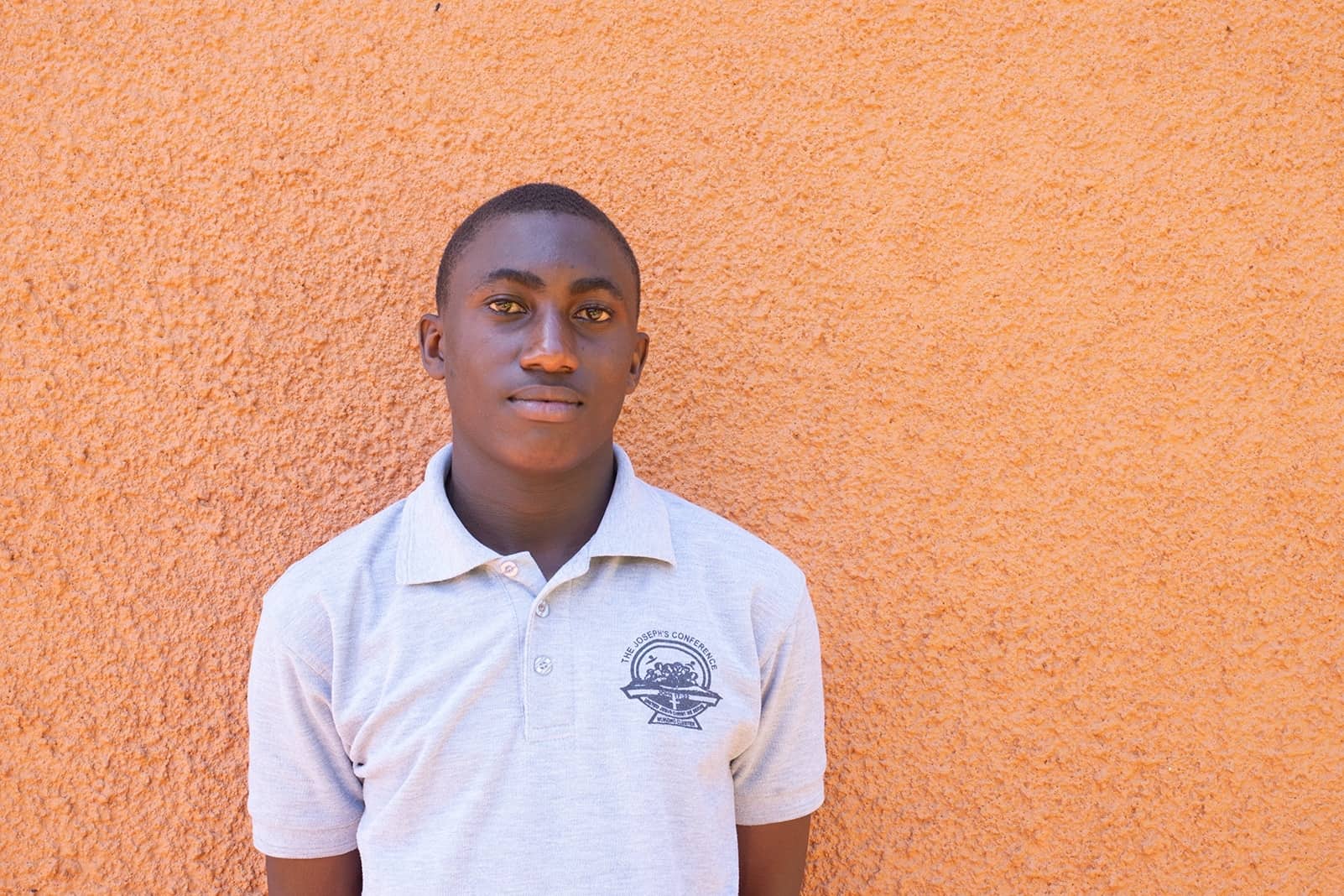
Eighteen-year-old Amon learned one of his favorite verses this past January at his student center in Uganda. “The verse that encourages me is John 16:33: ‘I have told you these things, so that in me you may have peace. In this world you will have trouble. But take heart! I have overcome the world,’” he says. He’s nailed the application as well:

“If Jesus won the world and Jesus is in me, I will also be able to overcome the world,” he says confidently.

A girl in a pink hat holds a Bible.

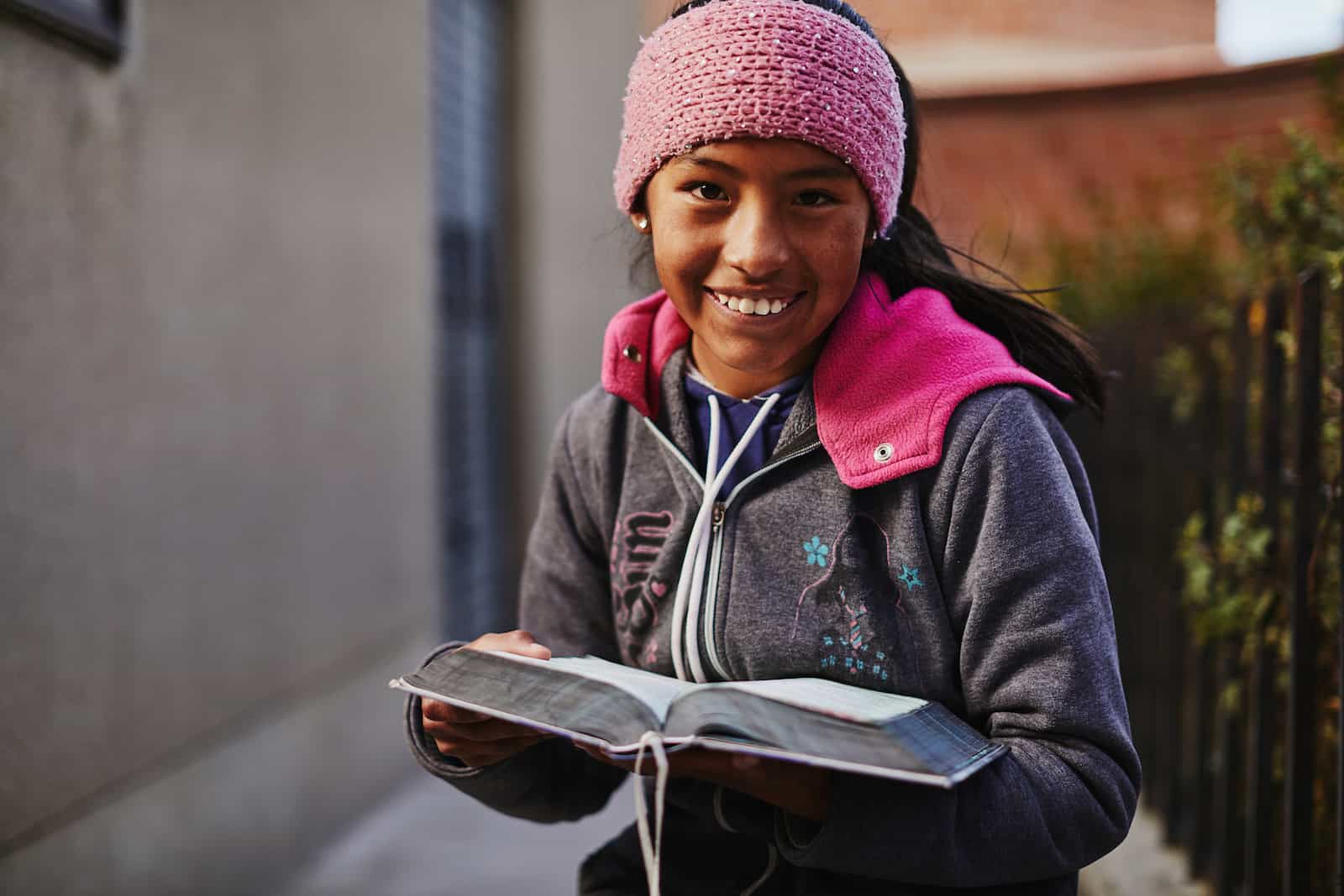
Mishel, a 12-year-old girl in Bolivia, was just 7 when she received her first Bible through her Compassion center. Scripture became her source of comfort in a very difficult time.

“Reading my Bible really encouraged me after my dad left my family. It helped me to deal with that painful moment and made me feel peaceful,” she explains. “My favorite verse is Philippians 3:14: ‘I can do all things through Christ who strengthens me.’”

Here’s a final treat. See if this doesn’t make your day! Marcos, a teenager in the Dominican Republic, proudly recites his favorite verse, James 1:27, in English. Yes, Marcus, you nailed it. Religion that our Father accepts as pure and faultless is this: to look after orphans and widows in their distress.

That sentiment, that Bible verse, shows what Compassion is all about!

Reflection on Romans 3:21-31

Scripture

For everyone has sinned, we all fall short of God’s glorious standard. Yet God, with undeserved kindness, declares that we are righteous. He did this through Christ Jesus when he freed us from the penalty for our sins.

Observation

We cannot keep the requirement of the law, but God has shown us the way to be made right apart from the law. We are made right through faith in Christ.

Everyone has sinned and falls short of God’s standard. Because Jesus has paid the price for our sins, God declares that we are righteous.

We cannot boast that we are acceptable to God because of anything we do. This is by faith not by our deeds. That does not mean that we can ignore the law because it is only when we have faith that we can truly fulfil the law.

Application

Everyone has sinned. This is the fundamental truth about human nature. We can justify ourselves and excuse our behaviour until the cows come home, but the truth remains that we are all sinners.

Because we are sinners, we fall short of God’s glory. We were created to reflect the nature of God. We are meant to be loving and holy, perfectly righteous in every way. Sin has taken the shine off that image which God planted in each one of us.

But the brilliantly good news from God is that He can fix that. Firstly, in Christ He sets aside our guilt. The power of sin to separate us form God is overcome by faith in Christ.

Then, when we have been reunited with God, the Holy Spirit sets about restoring in us the magnificence, the glory that we were created for. This is a life long process that equips us and trains us to be children of God.

Prayer

Father, I thank you for all you have done for me in Christ. Thank you for forgiving me and than you for changing me to be more like you. Amen

Chocolate is Good For You!

Photo by Nathana Rebouças on Unsplash

From The Week comes this fantastic news:

Study finds that eating chocolate is good for your heart

Eating chocolate at least once a week reduces the risk of heart disease, new research has concluded. After studying 330,000 participants, the team found that eating chocolate more than once a week reduced the risk of developing coronary heart disease by 8%. “Moderate amounts of chocolate seem to protect the coronary arteries but it’s likely that large quantities do not,” warned a researcher.

Rare Baby Sunfish

From Australian Geographic

Rare baby sunfish reveal early life of one of the ocean’s weirdest fish

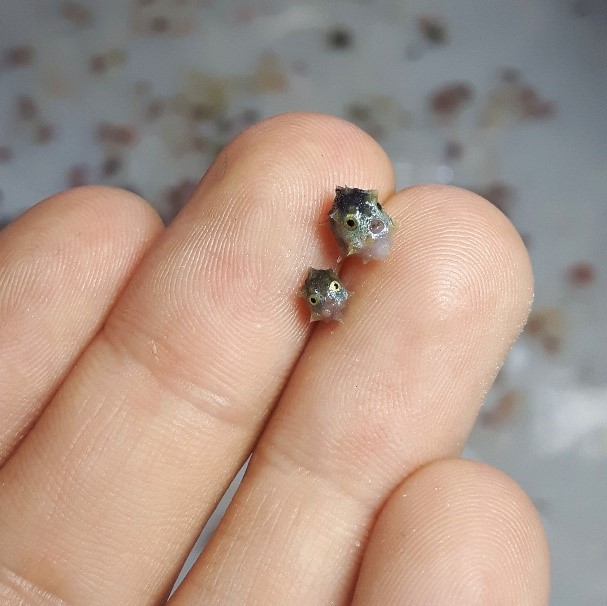
For the first time ever, scientists have been able to identify a species of sunfish larvae.
By Angela Heathcote  July 22, 2020  Reading Time: 2 Minutes

Image credit: Kerryn Parkinson/Australian Museum

LITTLE IS KNOWN about the early life of sunfish, one of the world’s most bizarre-looking marine animals. And while baby sunfish, or larvae, have been found in small numbers across the world, scientists have, until now, been unable to identify which species the larvae belong to.

Using DNA from sunfish larvae caught off the NSW coast and comparing it to sunfish larvae stored in the Australian Museum collections, scientists found it was a perfect match to the bump-head sunfish (Mola alexandrini) – one of the three known species of Mola.

The teeny-tiny larval sunfish. (Image credit: Amy Coghlan)

The scientific journey to this eureka moment has been a long one. “These sunfish larvae were being found by scientists all the way back to 1766, and they were initially described as a completely different species of fish, because they just looked so different from their adult form,” says sunfish expert Marianne Nyegaard, the lead scientist on the discovery.

The larvae also have no recognisable features that would otherwise make it simple to tell a fully developed bump-head sunfish apart from a hoodwinker sunfish. “This is one of the key reasons we’ve never been able to get it to species level. The larvae sampled in Sydney look the same as the ones in the Atlantic [Ocean].”

Another major barrier was that, up until now, no one has been able to do genetic analysis because specimens are so rare. “They’re so valuable so they’re just put away in museum collections,” Marianne says. “I was lucky a friend knew I was looking for Mola larvae.”

The genetic analysis of the sunfish larvae by the Australian Museum’s molecular biologist Andrew King was painstaking, using DNA from a single eyeball to minimise any potential damage.

Scientist Marianne Nyegaard with a sunfish.

Scientists now have their hands on 20 sunfish larvae at varying sizes, all sourced from NSW waters, and they hope to piece together their early development from these specimens.

Marianne says this new genetic ID will act as an “anchor” to better understanding what she describes as the “deepsea pokémons” of the ocean. Her goal is to identify the last two species of sunfish larvae so they can all be told apart.

Beyond identification, Marianne still has questions about this stage in a sunfish’s life. “Few Mola larvae are found around the world; where are the larvae? Why don’t we find them more often?

“We don’t really understand where or when they spawn, and how many eggs catch and which ones survive. What habitat are they living in at this stage in their life? These are the things I’m desperate to know.”

Ephesians 2:19

Here is my commentary on Ephesians 2:19. I am publishing these once or twice a week, but you can read all of the available articles at our web-site, http://www.new-life.org.au

Ephesians 2:19

“Consequently, you are no longer foreigners and aliens, but fellow citizens with God’s people [saints] and members of God’s household.”

Because of Christ we are no longer foreigners and aliens.

Before we came to Christ, we were outside of the people of God. We had no access to God’s throne. We had no fellowship with God, because because we were not Jews.

Now we are no longer foreigners and aliens. We no longer stand outside of God’s family. We once were seen as outsiders or foreigners. We were the ones with the bad customs and bad habits- commonly called sin. We lived lives that were marked by sin, controlled by our old sinful nature, and were opposite in so many ways to those of the saints, the people dedicated to God.

Because of Christ’s death on the cross, we who were far off are now in the family of God.

We are now citizens in God’s Kingdom . A citizen is a person who has full membership, all the common rights and responsibilities of a nation. If you are a migrant to Australia, you can be removed at any time by the government. You have no rights to vote, limited access to Social Security and health cover.

But once you are a citizen, nobody can force you to leave. You belong! As citizens of God’s holy nation, we who were once non-citizens, aliens with no rights, are taken in and given all the rights of God’s people.

Nothing now can separate us from God and his people (Romans 8:25-39). We belong!

We are fellow-citizens. We are not just nameless people in an impersonal society. We belong to each other- to all the other citizens. Nobody is higher or lower. No one lives remote from the others. We are in this together, building God’s Kingdom, God’s household in a common enterprise directed by God.

The word translate as “God’s people” is really the word for saints. In Grteek the word is hagios the holy ones. Holy does not necessarily mean to be righteous or heavenly minded. To be holy is to be set apart for God’s purposes.

God’s people, then, are those who have responded to God’s call to repentance, but now, having been cleansed by the blood of Christ, are seet apart for God. We no longer live for ourselves, but for God who makes us holy.

So we have joined the citizenry of the holy people, we are saints. We need to see our daily lives as holy times, always on God’s mission. This applies at work, at home, at sport, wherever we are. We are people who are called for God’s purpose, and every minute belongs to him.

We are not just citizens of a kingdom but members of God’s household . We are no longer homeless street dwellers with no place to call home. We have been adopted into God’s household, God’s family.

In the society of the Roman Empire, a household consisted of every member of the extended family, including slaves and servants. They were considered to belong together, and were in fact the units of society. Each household was ruled over by a patriarch whose job was to lead the family and to protect it.

A person’s standing in the culture was determined by the household they belonged to. If a household was shamed, every member bore the shame. Likewise, if the household was honoured, the standing of every member rose .

Now we are in God’s household. He is our patriarch- our leader and our protector. He is the one with the highest standing of any patriarch. This is the family into which we has been included!

All of this is by the death of Christ on the cross. It is more than being saved from our sins. We are people of honour and standing, citizens and members of the most honoured household of all.

Key points in this verse:

  • we were once foreigners and aliens
  • the cross of Christ has brought us into God’s Kingdom
  • we cannot be separated from God because we are citizens
  • we are saints, dedicated to God’s purposes
  • we are members of God’s household, directed and protected by him

Reflection on Romans 3:9-20

Scripture

No one is righteous – not even one.

Observation

Just because the Jews have the Law does not mean they are any better than others. All people are under the power of sin.

Paul quotes several Psalms to illustrate the point that God judges that no one is righteous. All have turned away from God and revel in foul talk, lies, murder and destruction.

The law is to keep people from excuses and to show their guilt. The law cannot make us right with God; it simply shows us how sinful we are.

Application

Our culture keeps telling us that people are basically good. We have removed sin from our vocabulary and talk instead about bad choices. We like to believe that babies are blank slates with no intrinsic tendency to sin.

Characters are flawed. Nobody is perfect. Bad people do good things and good people do bad things. Thus we like to muddy the waters about God’s standards for our lives.

God’s judgement is very different from man’s judgement. There is no one who is righteous. Not even one.

We are all marked with sin. Unless that sin is atoned for then we continue to carry it.

On the reality TV shows about the police, it is interesting to see how many people drive without a licence, often in unregistered vehicles and sometimes with outstanding arrest warrants from previous crimes. The police don’t care about your spotless driving record if you drive without a licence. You are breaking the law, and are by definition a law breaker.

This is how it is with God. We have all sinned. We all fall short of His standards. We are all law breakers.

The Good News is that when we come to Christ, our past history is removed from the record. God, in His great love for us, no longer holds our offences against us.

Prayer

Praise to you, Most High God. Your love for me has overcome my sin against you. Thank you for forgiving me and not holding my sin against me. Amen.