
Scripture
That night at midnight, the Lord struck down all the firstborn sons in the land of Egypt, from the firstborn son of Pharaoh, who sat on his throne, to the firstborn son of the prisoner in the dungeon. Even the firstborn of their livestock were killed.
Observation
The Lord instructs Moses that the current month is to be the first month in their calendar. On the fourteenth of the month, they are to take a lamb, slaughter it, and smear its blood on the doorposts of their houses.
The people are to be fully dressed and ready to leave. The Lord will strike down the firstborn son of every Egyptian, but the Israelites He will spare. This is judgement on the gods of Egypt.
So in the middle of the night, the Lord strikes down the firstborn son of every Egyptian from the Pharaoh down.
Application
The last and most devastating plague resulted in the death of every firstborn son in Egypt. The Israelites were spared by the Lord, but every Egyptian family, including Pharaoh himself, was stricken.
As the Lord stated in v. 12, this was not a judgement on the people of Egypt but on their gods. None of these gods was able to protect Egypt from the wrath of the Lord. Even Pharaoh, who claimed to be divine was not immune from this judgement.
The Lord is the only Lord, the only God. All people, all ideologies, all gods, all social and economic systems; they are all subject to the Lord. He reigns over all things, and nothing can stand in His way.
Prayer
Lord God, you are greater than all we can imagine. Yet you love your people and rescue those who seek you. Glory, praise and honour to you, Most High God. Amen.
Against Deception
This is the third article in my series on Listening to God.
The first two articles are available at http://www.new-life.org.au
Journalling and the Holy Spirit https://tinyurl.com/y34fjbu6
Journalling- Testing Your Thoughts https://tinyurl.com/y2fxnpwn
One of the biggest fears that people have with journalling is that they might be deceived into believing something that is not from God, or worse still, led into some great sin through being deceived. This was addressed in the article mentioned above, “Journalling- Testing Your Thoughts.”
I was asking the Lord about this recently, and I want to share the answer I received.
I asked: How would you know if you are being directed by satan?”
The answer:
The problem with all meditation techniques is that they open you up to the spirit you are following. If it is me, the Holy Spirit, that is great, the way it should be! But if you are being led by satan, if there are demons in your spirit, then you will be open to hearing the voices of satan.
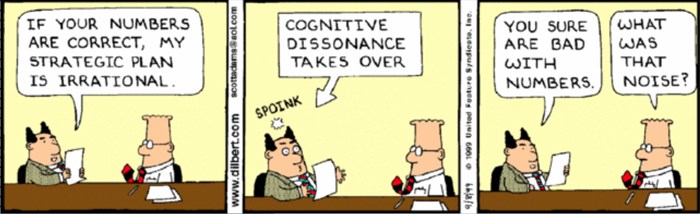
If you are deceived, but wanting to follow me, I will send you alarm bells, called cognitive dissonance. Cognitive dissonance happens when you realise that what you believe does not line up with reality.
That is why it is always essential to check your journal revelations with the Scriptures. It is also why knowledge of Scripture will never be supplanted by meditation and listening. If my words says one thing and your spirit hears another thing, you are being deceived.
Do not abandon journalling when this happens. Do not despise the gifts of my Spirit because of the possibility of being deceived.
I will always be speaking words of love to you. I will always lead you in the ways you should go.
Be still and know that I am God.
We all have a complex set of beliefs that together can be called a world view, a lens through which we view the world and our place in it. When our world view conflicts with observed reality we have to adapt to that situation by either modifying our world view or ignoring the conflict.
When we come to know Jesus, the Holy Spirit starts dismantling our world view and our resultant behaviours to ensure that our lives glorify God and reflect the person of Jesus Christ. This is a life long process, sometimes called “sanctification” (becoming holy).
If we have a sin that we are comfortable with, the Holy Spirit might start convicting us of this. To use a trivial example, suppose it is swearing. Then we will suddenly find we are finding verses in the Bible about the words we speak and so on. Perhaps friends will say things, or we will feel bad when we say certain words. Eventually we find that our behaviour is changing to reflect God’s holiness.
In journalling, it is possible that we might receive a “word” that is not from God. In that case, God sends alarm bells of cognitive dissonance to warn us that this is not from Him. We find that Scriptures contradict that thing, people say things in passing, or things happen that contradict what we thought we heard from God.
When that happens, the best thing is to lay it all before the Lord, and ask Him to show you where you may have gone wrong.
He loves you and will correct you when you inadvertently go astray.
Here is my commentary on Ephesians 3:19. I am publishing these once or twice a week, but you can read all of the available articles at our web-site, http://www.new-life.org.au
Ephesians 3:19
“… and to know this love that surpasses knowledge that you may be filled to the measure of all the fullness of God.”
Paul’s prayer continues in this verse.
After exhorting us to grasp the dimensions of the love of Christ, he now prays that we will know this love that surpasses knowledge.
Paul is piling up illustrations of the magnitude of Christ’s love for us. He is encouraging us to test the greatness of this love.
Paul wants to know this love that surpasses knowledge. As indicated in the previous verse, we only know love through experience and in relationship. We cannot truly know love as a theory.
So Paul is praying that we will know this limitless love of God; that we will know it in our spirit, deeply within.
We know this surpassing love by walking with Jesus everyday. When we worship, play, love other people, serve Jesus, and do the everyday stuff of life, we see the love of God in new facets each day. Today it might be seen in the forgiveness of my sin. Tomorrow I might receive a needed help from a christian brother or sister. Another day I might be in a position to speak a word kindness.
It is in these daily experiences of the transformative power of the gospel that we get a grasp of this love beyond knowledge.
Even if we cannot find words to explain it, we know that we love God and that he loves us.
Again Paul uses overflowing language to try to get a handle on our relationship with God. We are filled to all the fullness – not just some of the fullness of God.
God does not want us to miss out on any part of himself. He wants us to have all of him.
Sometimes we gain an unbalanced or lopsided picture of God. We might focus on His power, but overlook His vulnerability, on His holiness but overlook His grace, on His might but overlook His gentleness.
God wants us to have the full revelation, the complete package of who He is. He wants us to relate to him as He is, not a distorted or incomplete image.
This phrase, “filled to the measure” occurs several times in Ephesians. It speaks of spiritual maturity. This maturity is such that our fleshly nature has been overcome as we surrender ourselves to Christ.
As we grow in the fullness of God, we become so aware of who God is and of his desires, that we can pray with authority and conviction, and know that our prayers will be answered.
It is false humility to pray, “Let your will be done, Lord,” when we should be praying from confidence in God’s will. The goal of being filled to the measure of God’s fullness is that we have become one in spirit with Him, and we can trust Him to show us how to pray.
We can speak declaratively in decrees and proclamations because we know what God has said in His Word. Rather than praying for God’s purpose is to unfold, we declare victory in the spiritual realms because we are a son or daughter of the Most High and we have been given His authority.
To be filled with all the fullness of God means that we are like Christ. We can show God’s love to people. We can call them into the kingdom to follow Jesus. We can lay hands on the sick and have them healed. We can pray for, and experience, miracles.
As we grow in the gifts and the fruit of the Holy Spirit, we become filled with both the power and the character of Christ.
So the result of knowing the love that surpasses knowledge and being filled with all the fullness of God is that we become like Jesus.
Scripture
Moses had announced to Pharaoh: “This is what the Lord says, ‘At midnight tonight, I will pass through the heart of Egypt’”
Observation
The Lord tells Moses that He will strike Egypt once more and then Pharaoh will order the Israelites to leave.
The Israelite men and women are to ask their Egyptian neighbours for gold and silver. The Lord has given them so much favour amongst the Egyptians that they will be happy to do this.
The last plague will be the death of the first born son of every Egyptian, including the first born of their livestock.
Application
The Egyptians worshipped life above all things- not too dissimilar to our own culture which denies the reality of death. The Lord alone is the giver of life and the one who can take it away. Every person needs to be ready to meet the Lord on His terms.
Moses announced that the Lord would pass through the heart of Egypt. We tend to think of the Lord passing through as a happy event. When the Lord confronts sin, however, it can be far from happy. If the Lord comes to judge, and people are not prepared to repent of their sins, then suffering will be the result.
This applies to christians as much as anyone else. The Lord wants us to be holy and set apart for Him. To the extent that we cling to our sinful attitudes and behaviours, we too might be subject to a cleansing that ultimately brings us closer to Him.
Prayer
Lord, please help me to turn away from every form of sin, and to live only and wholly for you. Amen.
Scripture
“Very well,” Moses said. “I will never see you again.”
Observation
Pharaoh’s officials are becoming worried about the damage being inflicted on Egypt. Moses and Aaron tell Pharaoh that if he refuses to let the Israelites go to worship the Lord, there will be a plague of locusts such as Egypt has never seen before.
Pharaoh tells them that the men can go to worship the Lord, but the women and children must stay behind. So Moses raises his staff, and the locusts descend.
Next, the Lord sends darkness on the land, except where the Israelites live. Pharaoh calls for Moses and Aaron and tells them the Israelites may go, but they must leave all their livestock behind. Moses tells him they need to take their animals in order to select some to sacrifice to the Lord.
Pharaoh now tells Moses to go away. If he comes back, Moses will die. Moses replies that he will never see Pharaoh’s face again.
Application
The Egyptians believed that their god Osiris caused the plants to grow. The plague of locusts coming at the Lord’s command showed that the Lord was greater than Osiris.
Pharaoh was believed to be an incarnation of the sun god. But the Lord is the one who controls light and darkness.
Pharaoh finally reached a point where he is past relenting or repenting. The next plague demonstrates that the Lord is an existential threat to the people of Egypt.
Sometimes people’s hearts are so hardened towards the Lord that nothing will bring them to a place of repentance. No miracle or sign or revelation or disaster is big enough to take their eyes off themselves and on to God.
We cannot make the judgement about the state of another person’s heart. We should continue to pray for them and share with them when we can, but we should also be realistic.
Prayer
Father, thank you for rescuing me from my sin. May my heart never be hard towards you. Amen.
Scripture
But when Pharaoh saw that the rain, hail, and thunder had stopped, he and his officials sinned again, and Pharaoh again became stubborn.
Observation
The plagues continue, with all livestock dying, except that belonging to the Israelites. A plague of festering boils follows, and then the worst storm in history destroys the crops of flax and barley.
Pharaoh sees the destruction and pretends to repent. He pleads with Moses to stop the rain and hail. Moses agrees, but says, “I know that you and your officials still do not fear the Lord.”
Moses lifts his hands to the Lord, and the storm ends. Pharaoh again becomes stubborn, and he refuses to let the Israelites go.
Application
At the height of the storm, Pharaoh confesses that he has sinned against God and promises to let the Israelites go. But when the storm is over, so is Pharaoh’s repentance.
Many people have gone through the motions of repentance during testing times, only to walk away from the Lord when the trial is over.. They treat confession of sin as a bargaining chip to buy God’s favour.
When God’s anger seems to be overcome, they think that they can return to their normal life of self-centred pleasure.
Like Pharaoh, their repentance is not genuine, and so it does not last.
Real repentance is not about confessing our sins in order to get God off our case. No, it is an honest recognition that we have made ourselves god of our own life, and this has not worked.
To repent means to invite God to be on the throne of my life- and to let Him stay there.
Prayer
Lord Jesus, please take the throne of my life, and rule over my thoughts and feelings. I relinquish everything to you. Amen.

In the previous article I talked about using the process of Journalling to develop our ability to listen to the Holy Spirit.
It is important to test every thought and revelation against Scripture so that we understand whether we are just making stuff up or whether we really are hearing the Holy Spirit. When we come to Jesus and give our lives to Him, we receive the Holy Spirit inside us. We all have the capability to hear God. We also have the ability to deceive ourselves into believing that our own ideas are words from the Lord.
The answer to this conundrum is to test every revelation against God’s word. In 1 Thessalonians 5:19-21 Paul tells us:
Do not stifle the Holy Spirit. Do not scoff at prophecies, but test everything that is said. Hold on to what is good.
The only true measure of what is consistent with God’s purpose is the Bible. Sometimes this is not a big issue. One time I felt that God was telling me to tell someone “God loves you.” This is a very simple thing to do, and is so obviously in agreement with the Bible that it takes no effort at all to believe it is from God.
Conversely, if you are communing with God and you feel that He is saying to leave your spouse or start a sexual relationship with someone, this is so obviously contrary to Scripture that we can instantly dismiss it as coming from anywhere but God.
Sometimes, though, it isn’t that clear cut. We need to ask questions such as this:
This is what the Bible means by testing prophecy. We get our thoughts ordered and written down so we can see them clearly, and then we ask, “Is this really from God?”
Having done that, we can lay it all before the Lord again in prayer, asking Him to direct our thoughts and show us more of His love. In this sense, journalling is a circular process. We start with praying and listening, and end up in the same posture before the Lord.
The good news is that even when we get it wrong or make mistakes, the process leads us back to listening to the Holy Spirit and reading the Bible, which is never a bad thing.
Scripture
“This is the finger of God!” the magicians exclaimed to Pharaoh. But Pharaoh’s heart remained hard. He wouldn’t listen to them, just as the Lord predicted.
Observation
Three more plagues infest the land of Egypt. Increasingly, Pharaoh and his magicians recognise that God is in control and their magic cannot compete with His power.
But still Pharaoh remains stubborn, and he refuses to let the Israelites go.
Application
Frogs were revered by Egyptians because of their ability to live in both water and the land. Likewise flies seemed to be able to turn death into life as their young emerged from decaying matter. Biting insects would have made life very unpleasant for everyone.
By the time we get to the plague of flies, the Lord is exempting the land where the Israelites live. Flies do not respect lines on a map, but the Lord ensured that this supernatural plague hurt the Egyptians more than the Israelites.
Both Pharaoh and the magicians can see that a greater power than they can imagine is at work. But Pharaoh remains stubborn.
The idea of losing a large slave population must have seemed threatening to Pharaoh. Maybe he thought that he could manage the crisis, just riding out each plague until things returned to normal.
God cannot be managed, resisted or out-waited. If we are for Him, blessings abound. If we oppose Him, serious consequences will flow like a tsunami.
Whether we are rulers of great nations or humble every day people, surrendering to the Lord Is always the best way.
Prayer
Lord, please help me to surrender to you, to let you have your way in my life. Amen.

 New Life Narrabri