
The power and authority for healing and restoration is released when we speak the words that heaven speaks. When we ask that it might be on earth as it is heaven we are speaking the words that heaven spoke through Jesus. Roy Godwin
The power and authority for healing and restoration is released when we speak the words that heaven speaks. When we ask that it might be on earth as it is heaven we are speaking the words that heaven spoke through Jesus. Roy Godwin
Never stop praying, especially for others. Always pray by the power of the Spirit. Stay alert and keep praying for God’s people. Ephesians 6:18 CEV https://bible.com/bible/392/eph.6.18.CEV

Germany is a warning of where Australia will be in 10 years or less, unless we regain some sanity in electricity production.
Scripture
“Repent of your sin and turn to God, for the kingdom of heaven is near.”
Observation
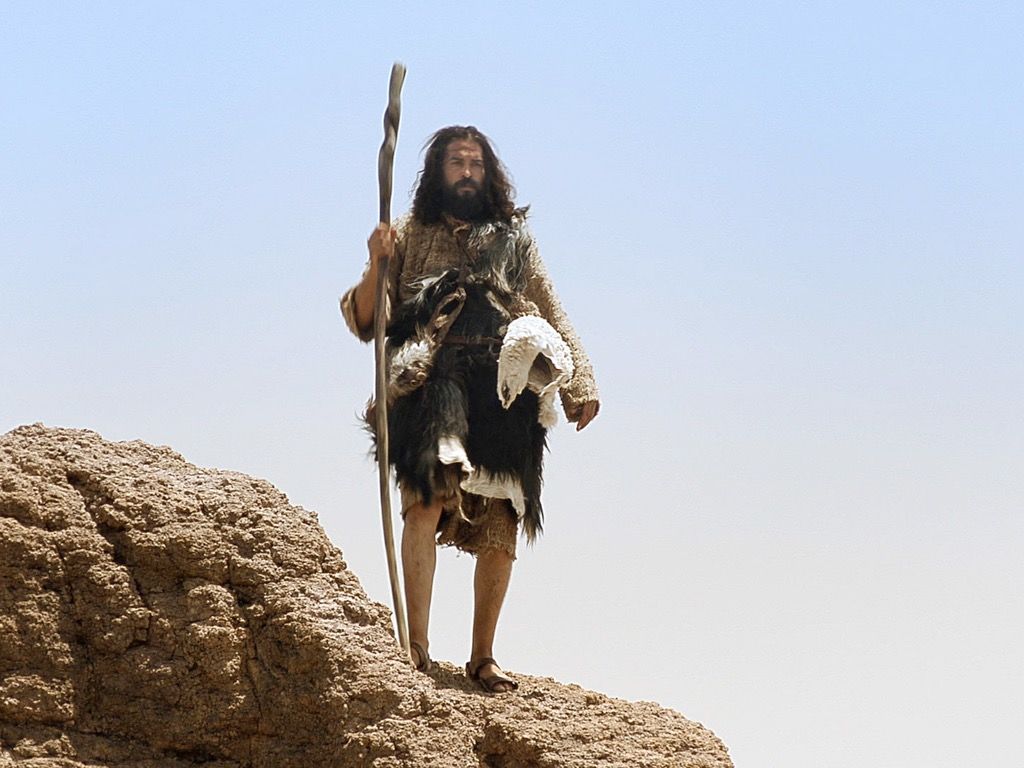
John the Baptist begins preaching in the wilderness. He preaches that people should repent and turn to God.
He is the one who was sent by God to prepare the way of the Lord. He calls the Pharisees and Sadducees vipers for their hypocrisy. He warns that the axe of God’s judgement is about to fall upon them.
John baptises with water, but someone is coming who will be far greater and who will baptise in fire and the Holy Spirit.
Application
The gospel of God’s kingdom is the same through the ages. The message in fact predates Jesus and goes back through the prophets to to Moses and right to the beginning of humanity.
The message is simple- we must repent. To repent means literally to change your mind. We must see our sin for the abomination that it is. We might have once thought that we were OK with God, but now we must recognise that He not impressed with anything that we say or do. A new heart is required, and that comes as a gift from God.
The second step is to turn to God. We no longer run our own lives as if we are our own king. We recognise that God is King. He is the one who created us and gave us life. Therefore we are to be under His reign.
To become a follower of Jesus involves a total change in our life direction and our lifestyle. It means giving up on the things which displease God and living His way instead. When we do this, we stop being God’s enemies and we become His friends.
Prayer
Lord, what an awesome privilege it is to be called your friend. Please help me to live for you in every part of my life. Amen.

Here is my commentary on Ephesians 4:7 . I am publishing these once or twice a week, but you can read all of the available articles at our web-site, http://www.new-life.org.au
Ephesians 4:7
“But to each one of us grace has been given as Christ apportioned it.”
This verse could be more accurately translated: “but grace was given to each of us according to the measure of Christ’s gift.”
By its definition, grace is a gift from God. So this gift was given to each one of us according to the measure of Christ’s gift. Paul wants to emphasise here that what you have from God is freely given by Him.
Paul has already written at length about grace in this letter to the Ephesians .
In chapter 1, he talked about the blessings that we received through Christ, having been chosen before we knew him. We have forgiveness and redemption “ according to the riches of God’s grace that he lavished on us.” (1:7).
In chapter two, Paul describes how we were lifted up from the darkness of this age and we are now seated with Christ. “ For it is by grace you have been saved through faith.” (2:8)
In chapter 3, Paul talks about the work of grace in his own life, and the mystery revealed to him. He concludes that chapter with a prayer for the Ephesians that they would receive a greater revelation of the extent of God’s love.
Grace can be defined as God’s love in action. it is freely given to us, and to all people. The heart of the idea is that it comes to us as a gift and not always a something that we seek.
Common grace is the grace that God gives to all people. Jesus said that God sends the rain to the righteous and the unrighteous alike. In other words, favour and prosperity given are to all people regardless of their salvation or otherwise.
Prevenient grace is the grace that draws us towards God before we are saved. It is God’s gift that makes us open to the gospel message before we come to know Jesus.
Saving grace is a gift that applies the power of the cross to my specific need. it comes as conviction of sin and understanding that God loves me so much that He sent His Son to die for me. My sin- addled brain and corrupted heart could never have made that connection, unless the Holy Spirit made it very simple. I could never appropriate the message without the gift of faith.
Sanctifying grace is the ability which the Holy Spirit imparts to us that enables us to cast off our old sinful nature and put on Christ’s nature. Over time, our sins are put to death, and holiness grows in us.
Finally, there is enabling grace. This grace empowers us to work in co-operation with the Holy Spirit to fulfil His calling on our lives. it is grace to love others, whether saved or not yet saved, to receive gifts of the Holy Spirit for ministry, to do ordinary things in ways that are beyond our natural ability.
When Paul says that each one of us has received grace, he is not just limiting this to salvation. It is true that unless we received saving grace we could never have been saved.
Paul is saying here that all of us have sanctifying grace and enabling grace. We have all been given the necessary grace to become all that God has called us to be.
We all have a measure of grace because we all have a measure, so to speak, of the Holy Spirit. if you are a follower of Jesus, you have received the Holy Spirit and you have received grace – indeed grace upon grace.
Each one of us has received grace according to the measure of Christ’s gift. What is that measure? The measure is “more than enough.”
Paul is telling us that each of us have grace given by someone who lavishes it on us, who piles up the superlatives and pours it out to us. Can we measure it? No, it is too big.
If I were to compare the grace on my life with the grace on your life (assuming that such a thing were possible), I might find you have received five times more grace than me. But I have received more than enough grace for my need, so I don’t need the same amount you do. There is no need to feel jealous of other believers; nor any need to feel superior because we have more grace .
We all have a measure of grace and the measure of grace is more than we need. This means that we can all pray bold and effective prayers. We can all share the gospel with our friends. We can all exercise spiritual gifts. We can all be ministers of grace .
The reason that God gives us “ more then enough” grace is that there is always plenty to share with our brothers and sisters, and also with those who do not know Jesus yet.
If grace were money, we might imagine that when we get saved we received a billion dollars. So after you buy a new house and a new car, what are you going to do? The only useful thing to do is share it with other people. We might buy them nice things to show the love of God in practical ways. We might pay for somebody’s medical procedure. Even as you give it away you can’t keep up ahead of the supply.
Grace is like that. The more of ourselves we invest in others people, and the more we access the Holy Spirit to do this, and the more that we exercise faith, then we see the kingdom grow and grace multiply.
And each of us has received this more than enough grace.

‘I bless you in the name of Jesus, that the Father may bless you. I bless you that the peace and the joy of God may come upon you and wash through every part of your being, physically, mentally, socially and spiritually’. Roy Godwin
Not long after we moved to Narrabri, a town of 7000 people in the wheat belt of Eastern Australia, the Lord started talking to us about a “new thing” that He wanted to do with us in this place. We weren’t sure what this new thing was, but in 1996, we stepped out in faith and left our denomination to start New Life Christian Fellowship.
About that time, I read Ralph Neighbour’s book, “Where Do We Go From Here?” which documents in great detail the decline of the evangelical churches in the USA since the glory days of the 1950’s. That trend has only increased into the current century, as leaders have recognised that a whole generation has left the church.
This decline has also been felt in Australia, perhaps more so. Since I became a christian in 1976, churches generally have lost their influence in the community and many people are suspicious, even hostile, towards any expression of christian faith.
Ralph goes on to describe the new- old cell church paradigm for churches that was far more effective than the Program Based Design. While PBD churches add never-ending programs to meet the expressed needs of special groups in the church, the cell church disciples everybody in small groups designed to grow disciples and reach out to the local neighbourhood.
In the traditional style of church, Bible Studies were optional extras for the committed members, but in the cell church the cell was the primary expression of the church. Later on, Ralph would coin the phrase “Christ’s Basic Bodies” to describe the primacy of cell groups.
This description of cell church hit me as a revelation of what Jesus intended the church to be. I was so excited to be planting a church at the same time that I was seeing what we needed to do.
Over the last 24 years I have devoted my time and energy as a Pastor to encouraging my cell leaders and equipping them for their task. Of course we gather on Sunday morning for worship and preaching of the word, but my thoughts are always about growing our cell groups. At times it has been exhilarating, at other times disappointing. Regardless of my feeling at the time, we know this is the path God has set for us.
When we started out, I believed that we would eventually grow to be a church of 1000 people. When I prayed into that, I would envisage a large auditorium filled with a huge crowd of people. Now I see 100 cell groups spread across the town and the surrounding farm lands, shining the light of Christ into the darkness.
Following a television promotion some years ago, our town was crowned “The Sportiest Town in Australia,” but by God’s grace I hope that one day it will be “The Godliest Town in Australia” as our cell groups take seriously the commission to make disciples.

I love the fact that Cell Church is not a recent invention, but has always been at the heart of the way God’s people have discipled one another.
The Great Commission that Christ gave the church was to “Go and make disciples of all nations” (Matthew 28:19). Evangelism is an important part of the process, but it is only the start, in the same way that child birth is just the start of parenting. Maturity is the goal in both cases.
Just as Jesus ministered to both “the crowds” and the Twelve, the church has often recognised that effective ministry has to operate as both celebration and cell.
In the New Testament we are given many commands that end in “one another.” These are the practical daily keys to growing in maturity as followers of Christ.
The most well known of these commands is Jesus’ command: “A new command I give you: Love one another. As I have loved you, so you must love one another.” (John 13:34). Love is a personal thing. You cannot love a thousand people in a large group. It is possible to love one another in a much smaller group where there is space to get to know one another and to share deeply.
In Romans 12:16, Paul tells us to “Live in harmony with one another.” I live in a town of 7000 people. We don’t need instruction to live in harmony with one another. As long as we show consideration for one another, remember to drive on the correct side of the road and don’t make too much noise at night, everyone is happy. When you need instruction to live in harmony with one another, that suggest that people are close up and personal and needing to make adjustments to their words and actions. We call that love in action.
Paul tells the church at Colossae (and us also), “Let the message of Christ dwell among you richly as you teach and admonish one another with all wisdom through psalms, hymns, and songs from the Spirit, singing to God with gratitude in your hearts. (Colossians 3:16). There is a measure of openness here that cannot be seen in a big group. Admonishing is counselling or exhorting someone to a course of action. That is very uncomfortable in a medium or large sized group. But it is what groups of 6 to 12 people do very well.
As you search through the Scriptures and find so many “one another” commands, you realise just how intimate and caring relationships in the church are meant to be.
We are called to live together in an open community where deep and loving relationships develop, but which encourages new members to feel included.

Scripture
There he made his home in a town called Nazareth so that what had been spoken by the prophet might be fulfilled, “He will be called a Nazarene.”
Observation
An angel appears to Joseph in a dream, warning him to flee with the child to Egypt because Herod is about to try to kill Jesus. Joseph and Mary immediately leave Bethlehem and travel to Egypt where they stay until Herod dies.
Herod is furious when he discovers that the wise men have tricked him. He orders that all babies born in or around Bethlehem under the age of two years be killed.
Finally Herod dies, and the angel again appears to Joseph in a dream telling him it is safe to return to Israel. So they go and live in Nazareth.
Application
All though the story of the birth of Jesus, Matthew make sit clear that God is in control. Everything that happens is done in order to fulfil ancient prophecies, whether the people involved are aware of it or not.
The last thing Herod was thinking about when he ordered the killing of the babies was how to fulfil the prophecies. Yet he did just that.
Joseph was concerned with keeping his family safe, and so he listened to the angel in his dreams. In doing so, he fulfilled the prophecies.
There is a paradox at work in our lives. God allows us the freedom to choose our actions. Yet He uses the freely chosen actions to achieve His purposes.
We can be sure that, even when our lives are spinning out of control, God is there and He is bringing His purposes to pass.
Paul writes: “All things work together for the good of those who love God and are called according to his purposes.” (Romans 8:28)
Prayer
Thank you Lord for the assurance that you are working my life for my good. Amen.

 New Life Narrabri