Like any organization, every church is a distinct culture, formed and nurtured and perpetuated by the ongoing interaction of leaders and congregants. In addition, every church culture has a life of its own. Scot & Laura McKnight

Like any organization, every church is a distinct culture, formed and nurtured and perpetuated by the ongoing interaction of leaders and congregants. In addition, every church culture has a life of its own. Scot & Laura McKnight
44 But I tell you to love your enemies and pray for anyone who mistreats you. Matthew 5:44 CEV https://bible.com/bible/392/mat.5.44.CEV



CULTURE IS IMPORTANT. The culture in which we live teaches us how to behave and how to think. We learn what is right and wrong, good and bad, by living in a culture that defines these things. We learn our moral intuitions, beliefs, convictions—whatever term you want to use—in community, in relationship with others. Culture socializes us into what is considered proper behavior. For Christians, this is true in our churches as well as in society at large. Scot McKnight
14 The Lord will fight for you, and you won’t have to do a thing.” Exodus 14:14 CEV https://bible.com/bible/392/exo.14.14.CEV


I was reading the story of Feby, the woman who married Andrew Chan, one of the Australian drug smugglers arrested and subsequently executed in Bali in 2005.
She tells how she was a christian woman drawn to ministering in the prisons where she met and eventually married Andrew. She and many others were praying for a miracle change of heart by the authorities, but just 35 hours after their wedding, he was shot by a firing squad.
She goes on to write:
“On the 27th April, I married Andrew and 35 hours later, he was executed by firing squad.
“I was crushed. I was in a dark, dark place for a long time. I felt so angry and confused. I stopped praying and worshipping God. I was despairing. Why hadn’t God answered our prayers? For a long time, I couldn’t read the Bible or worship God. I couldn’t watch the news. I kept having execution dreams.
“It went on like that for years. My friends sat with me. They gave me tea. And after some time, I went for counselling. It was good, but I knew that I needed more than counselling. I needed to worship God again. I slowly started to talk to God, again.
“I began to read the Psalms and the stories in the Bible that I knew would comfort me. I read about Mary, the mother of Jesus. It was so hard for her to be found pregnant in that society. And yet they called it ‘favour’. When the angel came to speak with Mary, he said to her, ‘Do not be afraid, Mary, you have found favour with God.’ (Luke 1:30).
“I had no idea, until then, that people could be entrusted with difficult things and it could be called ‘favour’. I had always thought that God entrusts us with good gifts, or with good things and opportunities. But I slowly began to realise that God also entrusts us with very difficult things. It was so hard for Mary. Even after Jesus was born, they had to travel from one place to another, to avoid being killed. And then she saw her son executed on a cross in front of her eyes. And they called it ‘favour’.
“Reading about Mary, and thinking about favour, helped me to pray again, and to worship God. We are all broken. It’s the human condition. But slowly, as I read the Gospels, I began to trust Jesus again.
“God’s will is not the same as mine. Sometimes he says to us, ‘Don’t be afraid to go through the darkest times, if you have Jesus with you. He will comfort you. He will be with you, always.’ That’s been true for me.”
It is true that God’s favour does not necessarily mean fame and riches.
What it does mean is that He calls us to a life of significance and He gives us the grace to live that life. It may not work out the way we would prefer but He can give us the ability to trust that He has us in the palm of His hands even though it is difficult.
Scripture
“Anyone who stumbles over that stone will be broken to pieces, and it will crush anyone it falls on.”
Observation
Jesus tells a story about a land owner who develops his land and then leases it out to some farmers. At the time of the harvest, he sends servants to collect his share. The farmers kill one of the servants and beat the others.
Finally he sends his son. He reasons that they will surely respect him. The tenants, though, think that if they kill the son, they will keep the estate. So they kill the son.
Jesus then asks the religious leaders what they think he will do to the farmers. They say that he will kill them and put different tenants in. But they know that He is speaking this parable against them.
Application
Jesus quotes Psalm 118:22-23 which says that the stone which the builders rejected has become the cornerstone. He is that stone. He adds a new twist when He says, “Anyone who stumbles over the stone will be broken to pieces, but it will crush anyone who it falls on.”
We can see in this saying that people have a choice about how they relate to Jesus, the stone.
Firstly, we can stumble up against Him and be broken. That means we allow Him to break our selfish ways, our sinful self-determination and our rebellion. In breaking us, God always rebuilds us. He recreates us in His image.
If we don’t stumble into Jesus, then the stone will fall on us, crushing us. In the end, everyone who refuses to worship Jesus will be judged by Him.
The Pharisees understood that Jesus was speaking this to them. He was offering them an opportunity to repent.
He still offers us that chance to turn to Him.
Prayer
Lord, I come to you now and acknowledge my sins. Please break me and mould me into your new creation. Amen.

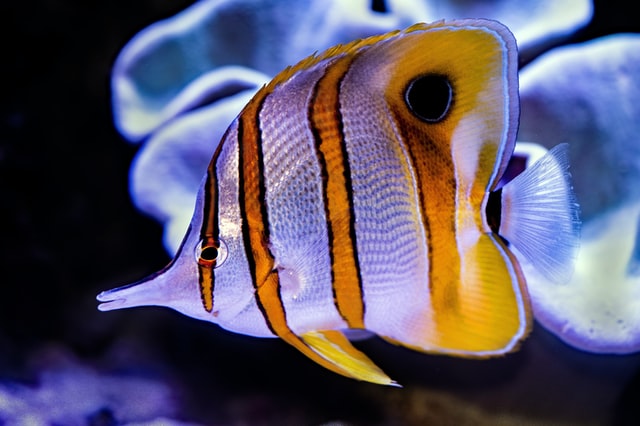
A few years back there was an alarming study out of James cook University claiming that the gradual decrease in ocean pH caused by higher levels of CO2 in the atmosphere caused fish to radically change their behaviour.
A new study says this is not true.
From wattsupwiththat.com
Lower ocean pH level affecting fish?
Earlier research beginning in 2009 by Prof. Philip Munday and Danielle Dixon of Australia’s James Cook University suggested that that “ocean acidification” was having dire effects on fish behavior, thus prompting the IPCC to claim in a 2014 report that it could lead to “profound consequences for marine diversity” and the media to put out a series of climate doomsday reports.
But the alarming research results of Munday and Dixon have since been seriously challenged by a group led by fish physiologist Timothy Clark of Deakin University in Geelong, Australia in a recent paper:

A year ago the researchers published the results of a comprehensive 3-year study in the journal of Nature in a paper titled: “Ocean acidification does not impair the behaviour of coral reef fishes“.
The paper’s abstract:
Coral reef fishes are predicted to be especially susceptible to end-of-century ocean acidification on the basis of several high-profile papers4,5 that have reported profound behavioural and sensory impairments—for example, complete attraction to the chemical cues of predators under conditions of ocean acidification. Here, we comprehensively and transparently show that—in contrast to previous studies—end-of-century ocean acidification levels have negligible effects on important behaviours of coral reef fishes, such as the avoidance of chemical cues from predators, fish activity levels and behavioural lateralization (left–right turning preference). Using data simulations, we additionally show that the large effect sizes and small within-group variances that have been reported in several previous studies are highly improbable. Together, our findings indicate that the reported effects of ocean acidification on the behaviour of coral reef fishes are not reproducible, suggesting that behavioural perturbations will not be a major consequence for coral reef fishes in high CO2 oceans.”
Die kalte Sonne reports on the new findings, noting that Clark et al repeated the trials by Munday and were unable to reproduce the results:
A team of seven scientists led by Timothy Clark of the Australian Deakin University published in the renowned journal Nature an analysis with devastating criticism of the dramatic scenarios of the Munday group.” […]
“The group of critics also expect no negative consequences in the behaviour of the coral fish also at high levels of CO2 at the end of the 21st century.”
The James Cook University however, denies sloppy science was done by Munday and his team of scientists.
The James Cook University has been caught up in controversy, especially over the firing of researcher Prof. Dr. Peter Ridd, who claims he was sacked for expressing unpopular views.
Also read more on Munday’s controversial research here.
 New Life Narrabri