
Change
Tov churches tell the truth. Tov churches do not use NDAs to prevent the truth from being told. Scot & Laura McKnight

13 I am the Lord your God. I am holding your hand, so don’t be afraid. I am here to help you. Isaiah 41:13 CEV https://bible.com/bible/392/isa.41.13.CEV


Police across the country are attempting to access personal data from mandatory COVID-19 check-in apps for reasons other than contact tracing, despite promises that the data would only be used for public health reasons.
Police in Queensland, Western Australia and Victoria have all owned up to trying to access logs of data created by Australians using check-in applications as part of their investigations, and enquiries by Crikey suggest that police in other states could also access this data using a warrant.
Privacy advocates have slammed state governments for lying to Australians about what the data would be used for.
“We were told this data would only be used for contact tracing. Police made that a lie,” Electronic Frontiers Australia’s Justin Warren told Crikey. “People will remember that next time governments want us to give them data about ourselves.”
One of the major tools in fighting the spread of COVID-19 and managing outbreaks has been contact tracing, which has been aided by various tech solutions.
When the federal government first proposed the contact tracing app COVIDSafe (which used Bluetooth to log close contacts), it responded to fears of a mass surveillance state by announcing the data would not be used by police.
But adoption of a QR code check-in system — the widely used, low-tech alternative now mandatory in many places around the country — was left to states to implement. As it turns out, these states did not assume the same protections for their citizens, meaning that data volunteered in the name of public health has been accessed for other reasons.

When a church demonizes its critics and appeals to others to avoid these people, its leaders are claiming to be on the side of the angels and God. Scot & Laura McKnight
2 I trust you to save me, Lord God, and I won’t be afraid. My power and my strength come from you, and you have saved me.” Isaiah 12:2 CEV https://bible.com/bible/392/isa.12.2.CEV


Here is my commentary on Ephesians 4:32. I am publishing these once or twice a week, but you can read all of the available articles at our web-site, http://www.new-life.org.au
Ephesians 4:32
“Be kind and compassionate to one another, forgiving each other, just as in Christ God forgave you.”
Having written about the deeds of malice, anger, and slander, exhorting us to take these things off, Paul now tells us what put on in their place.
We are to be kind to one another.
Kindness could be described as love in action. Love is not a romantic feeling or a favourable disposition to another person. It is practical.
To be kind is to see what a person needs and to help them to gain it, whether in the form of a gift, through encouraging words, or by practical help.
To be kind means to be giving. We are concerned about the needs of others just as much as we are concerned about our own needs.
Of the early church, it was said, “there were no needy people amongst them for from time to time those who owned land or houses sold them, brought the money from the sales and put it at the apostles feet, and it was distributed to anyone in need.” (Acts 4:34-35). This is kindness on a big scale, people working to ensure that nobody is left out.
We are to be compassionate to one another . Some translations render this word as tenderhearted.
To be compassionate or tenderhearted to others is to empathise with their emotions and to react appropriately.
Kindness can be performed in a mechanical way, out of duty or habit. Tenderheartedness or compassion, demands an emotional involvement. We need to feel the heart of another person, to enter into their head space.
There are many so-called caring services these days. However the caring cuts out at 5 pm or whenever the service closes. People working in these fields are coached in not getting too close, establishing boundaries, and so on.
While there is a place for professional detachment, Paul is encouraging us to go deeper with one another. He wants us to be attached not detached, to be emotive in our caring and not leave it all behind at an office, taking weekends off.
When I see a Christian brother or sister in distress, I must be kind and tenderhearted, reacting out of compassion and love.
We are to forgive each other just as Christ has forgiven us.
Forgiveness is the antidote to bitterness.
Forgiveness is letting go of offences that others have committed against us in the past.
When we come to Christ seeking forgiveness, He wipes the slate clean. There is no longer any outstanding debt. There is not even a record kept of the sin. He no longer holds anything against us.
Forgiveness means that we no longer hold a sin against the person who has offended us. We let go of the hurt, the anger, and the sense that we are owed something .
Our forgiveness of others must be unconditional, just as his forgiveness of us Is unconditional. He does not wait for us to apologise to forgive, and neither should we.
Some might ask, “What about the need to confess and repent in order to be forgiven?” The truth is that confession is for our benefit not for God’s. It brings us to reconciliation rather than forgiveness, fellowship rather than exoneration.
When we forgive someone we are not saying that the offence was not significant. We are rather conforming our own attitude to that of the Father who chooses to forgive for the sake of fellowship.
Some sins are too severe to just “ forgive and forget” because the hurt to our soul is too great. Over time, we receive healing for our pain, and one key step in that healing is to forgive.
To forgive those who sin against us is to acknowledge that we too have been forgiven much. To forgive is to recognise that we have no right to keep a record of the wrongs of others.
Scripture
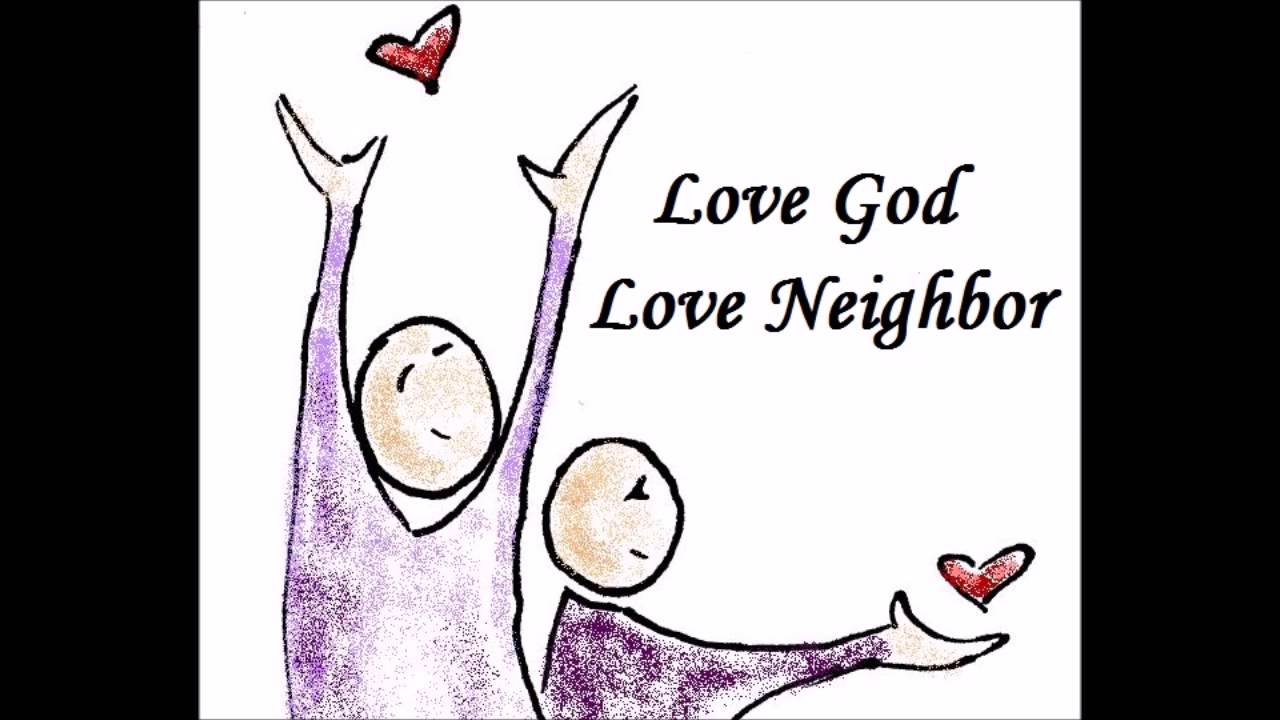
Jesus replied, “You must love the Lord your God with all your heart, all your soul, and all your mind. This is the first and greatest commandment.”
Observation
The Pharisees again come to test Jesus with a question, “What is the most important commandment in the law of Moses?”
Jesus replies with not one but two commandments: Love God with all your heart and love your neighbour. The entire law and the demands of the prophets rest on these two commandments.
Jesus then asks the Pharisees, “Who is the Messiah? Whose son is he?” They reply that he is the Son of David. Jesus asks how this can be when David himself calls him “my Lord”?
Application
The fundamental instruction at the heart of discipleship is that we love God with all that we are. Whole- hearted worship of the Lord is the only acceptable response to His love for us.
Jesus reminds us that worship of God must also lead us to love for God’s people, and so we must love our neighbours as we love ourselves.
Everything that christians do, then, must be motivated by love for God and for His people.
I must ensure that my heart is clean at this point, because it is so easy to deceive myself.
Do I really worship God with a pure motive?
Do I really serve my neighbour from love of for the approval of other people?
We shouldn’t lose ourselves in introspection, so that we end up loving neither God nor people. Rather we just need to keep our motivations clean.
A life of worship of God and serving the people around us us the life that God has planned for every person.
Prayer
Lord please help me to keep my eyes on you, to love you with all my heart and to love the people you have placed around me. Amen.

 New Life Narrabri