Giant Reef Discovered Near Tahiti

Australian media seem to have been silent about the discovery of a giant pristine reef near Tahiti, apparently untouched by “climate change.” Makes you wonder how it has coped without UNESCO World Heritage listing or environmental worriers trying to “protect” it.

From Canada’s CBC:

Scientists have discovered a pristine, three-kilometre-long reef of giant rose-shaped corals off the coast of Tahiti, in waters of the southern Pacific Ocean thought to be deep enough to protect it from the bleaching effects of the warming ocean.

The reef, which lies at depths of more than 30 metres, probably took around 25 years to grow. Some of the rose-shaped corals measure more than two metres in diameter.

“It was magical to witness giant, beautiful rose corals, which stretch for as far as the eye can see. It was like a work of art,” said French photographer Alexis Rosenfeld, who led the team of international divers that made the discovery.

Most of the world’s known coral reefs are in warmer waters at depths of up to 25 metres, the United Nations Educational, Scientific and Cultural Organization (UNESCO) said. The reef off Tahiti lies in the “twilight zone” 30 to 120 metres below the surface where there is still enough light for coral to grow and reproduce.

UNESCO says the newly discovered reef is one of the largest in the world.

Bleaching is a stress response by overheated corals during heat waves. They lose their colour, and many struggle to survive.

Perhaps the most famous — Australia’s Great Barrier Reef, a World Heritage-listed wonder — has suffered severe bleaching to an estimated 80 per cent of its corals since 2016.

The discovery off Tahiti’s shores suggests there may be many more unknown large reefs in our oceans, given that only about 20 per cent of the entire seabed is mapped, according to UNESCO scientists.

“It also raises questions about how coral reefs become more resilient to climate change,” UNESCO’s head of marine policy, Julian Barbiere, told Reuters.

More of the ocean floor needs to be mapped to better safeguard marine biodiversity, Barbiere said.

“We know more about the surface of the moon or the surface of Mars than the deeper part of the ocean.”

The BOM Adjusts Historical Data to Make the Warming Look Warmer

If you have to prop up a scientific theory by changing historical records in an unscientific way, and still claim to be doing “science” then you are having yourself on and the rest of the nation. This is the problem when taxpayer funded bodies do science for the activists.

from Jo Nova

The Bureau of Meteorology finds Australia is still getting colder a century later

Surprisingly, the World War I era temperatures are still changing. Mornings that seemed nippy at the time are now susceptible to frosts.

Someone should warn the farmers — except they’re all dead.

Thanks to Chris Gillham for independently and laboriously going through the new unannounced changes in another cycle of BOM’s hidden revamp of Australia’s history. ACORN 2.2 is the latest version of the Australian Climate Observation Reference Network of “the best” 112 weather stations across Australia.

Bureau of Meteorology ‘cools the past, warms present’

Graham Lloyd, The Australian

“The bureau has now remodelled the national temperature ­dataset three times in just nine years,” Dr Jennifer Marohasy said.

In the last five years the ACORN re-revisions by the BOM have discovered another quarter of a degree of warming that we didn’t know about from the last hundred years. It’s not clear why the BOM doesn’t want to tell the world how good they are at correcting thermometer records from 1913.  It seems like a remarkable skill.

The minima just keep getting cooler

Chris Gillham plots the longest running stations from the ACORN 2.2 set against the old raw readings:Chris Gillham, ACORN 2.2 versus Raw Temperatures
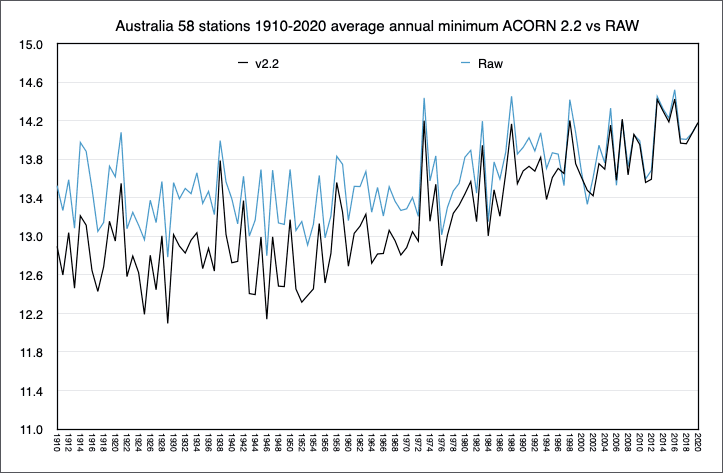
Who knew all those old thermometers were so wrong?

Graham Lloyd:

Independent analysis of the latest changes show they added 0.06C to maximum warming and 0.11C to minimum warming from 1910-19 to 2010-19.

A series of updates to the ACORN data have added 0.228C mean temperature warming if comparing 1910-19 with 2010-17 (2017 being the final year of ACORN 1)

Clearly, the cheapest way to stop global warming would be to sack everyone at the BOM.

The Bureau admitted to Lloyd that they changed 25 sites in the latest round, most of them because of statistical revelations:

The bureau said changes were made to 20 sites on the basis of statistical analysis. According to the bureau, statistical analysis is used to identify an abrupt warming or cooling at a particular site, relative to other sites in the region.

The BOM refuses to tell us exactly how they do this — admitting that they can’t train anyone outside their sacred guild. Which reminds us of the old axiom, “if it can’t be replicated, it isn’t science”.

Apparently the future of life on Earth depends on their data, but it would take too long to train someone outside BOM to check it. Tell us again, how much does climate change matter?

Here’s the BOM explanation of the need for adjustments:

“A significant change relative to other sites indicates a non-­climatic driver, which sometimes has an easily identifiable cause (e.g. a new building near a site) and sometimes does not (often these will relate to local vegetation or land surface changes)”, the bureau said. “In carrying out this statistical analysis, the bureau uses 10 years’ worth of data from multiple sites to quantify the size of the change. Adjustments are only applied where a significant change has been identified.

So instead of researching the site history as deeply as they can, the BOM use statistical trickery analysis to figure out local site changes using some other thermometers “within a thousand miles”. What they don’t do is full historical research and documentation of the sites first. (Like the ones herehere and here, thanks Bill Johnston). So it’s possible that if, say, 10 sites got similar changes at the same time (like changing to a new small screen) the other better sites in non-changing screens could be slowly “corrected” one-by-one by the junkier sites with the right statistical algorithm. Now, perhaps the BOM have ways to make sure that doesn’t happen — but they won’t tell us what they are, they don’t publish the detailed documentation of either the full site histories or the methods they use to correct them.

As Chris Gillham notes, the BOM say the new adjustments didn’t change the long term trend. But a lot of little changes in the same direction would. The new adjustments might have also made a few local hottest ever headlines much easier to get. Suddenly the modern contenders for the longest heatwave, warmest night, and hottest summer all got a head-start.

The mysterious process of homogenization

The Bureau “homogenizes” a site according to a mystical method that uses an inexplicable group of sites that are in the same region, or at least in Australia somewhere. For example, lighthouse readings off the Bass Strait have been corrected with help from Hay, 600 kilometers away, on the other side of the Great Dividing Range. A thermometer in Ballarat has been used to correct one at Bruny Island off the South coast of Tasmania.  The BOM has also corrected Alice Springs using measurements in Collarenabri nearly 1,600 kilometers away. (Thanks to Ken Stewart for that tip). When I said “a thousand miles” I wasn’t joking.Australian BOM, Bureau of Meteorology, homogenisation of sites. Map.
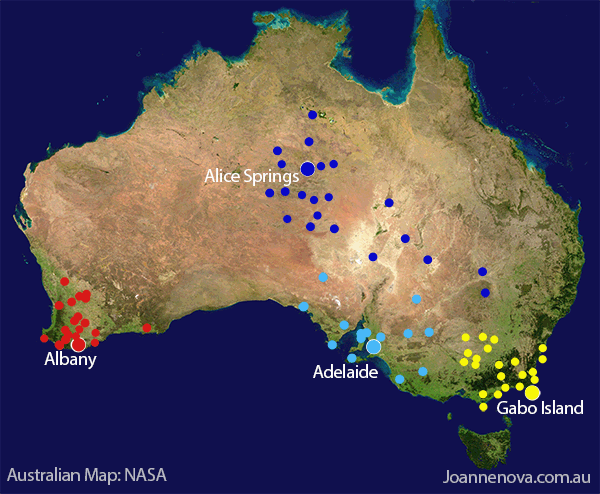
All the sites marked in black, for example, have been used to homogenize Alice Springs

Reflection on Zechariah 12:1-14

Scripture

“Then I will pour out a spirit of grace and prayer on the family of David and on the people of Jerusalem. They will look on me whom they have pierced and mourn for him as for an only son.”

Observation

The Lord will make Jerusalem like an intoxicating drink that makes the nation stagger when they come to besiege it. He will cause riders to panic. Judah will know victory in the Lord.

Then He will pour out a spirit of grace and prayer on the people of Jerusalem. They will look on the Lord whom they have pierced, and they will weep in repentance.

Application

To be touched by the Holy Spirit, to receive an outpouring, is an awesome experience. it is as if we are united powerfully with the heart of the Lord.

Here the Holy Spirit promises that a pouring out of the Spirit of grace and prayer will take place. Sometimes we need the grace of the Holy Spirit to pray as we should, to intercede with power for a pressing need.

This passage describes a solemn atmosphere of prayer. The people of Jerusalem come to a deep place of grief when they recognise that they have pierced the Lord. A spirit of grief and repentance overlays the grace and prayer.

This kind of assembly is sometimes called a “solemn assembly.” People gather in sorrow and repentance rather than in joy and celebration.

With the Lord, joy always comes in the morning, but sometimes we must pass through a long, dark night of the soul to get there.

Prayer

Lord, I recognise that my sins pierced your son. Please help me to repent honestly and thoroughly. Amen.

‘Biggest Seismic Shift’ in Christian Persecution: Watchdog Reveals Major Shakeup Involving Afghanistan, North Korea

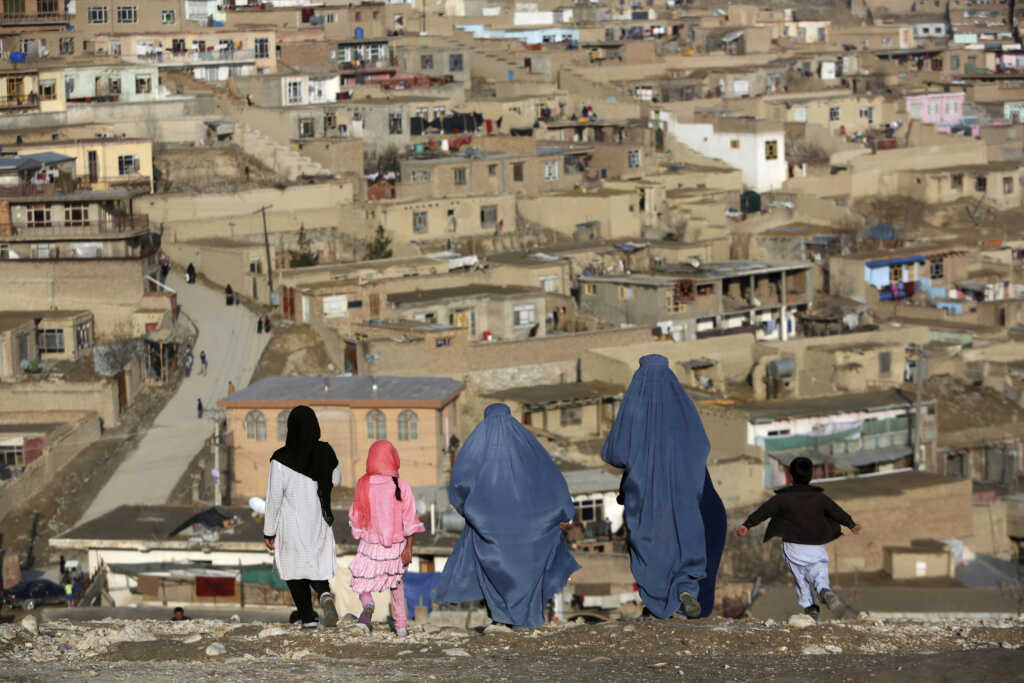
AP Photo/Rahmat Gul

Afghanistan is now the worst nation in the world for Christian persecution, according to Open Doors USA, an organization that tracks global religious maltreatment.

The shocking development is undoubtedly the “biggest seismic shift” in decades, as North Korea, the reclusive and oppressive East Asian country, was bumped from the top spot it had occupied for 20 years.

“This year’s 2022 World Watch List, we think, is the biggest seismic shift in over 20 years because Afghanistan is now the No. 1 country on the World Watch List, supplanting North Korea,” Open Doors USA CEO David Curry told Faithwire.

The Dire Situation in Afghanistan

Afghanistan has long been embroiled in chaos, but the situation devolved further when the U.S. undertook a chaotic withdrawal last August — a retreat that carried with it serious consequences.

“Many people are aware of what’s happened since August in Afghanistan,” Curry said, citing the chaos and uncertainty. “It has emboldened Islamic extremists in other parts of the world. We believe it’s going to have a ripple effect.”

Christians in Afghanistan face intensifying persecution at the hands of the resurgent Taliban, with militants purportedly arresting and possibly seeking to kill believers. Christians and Christian women, in particular, are especially vulnerable and are seen as ideological enemies.

“They are going to be targeted,” Curry said.

North Korea’s Continued Christian Persecution

Though dethroned as the top stronghold of persecution, North Korea still occupies the second spot, and there’s no sign the chaos and targeted hatred perpetuated by leader Kim Jong-un and his restrictive government will dissipate.

“For 20 years, North Korea was number one. They have a post-communist … system that has been generational,” Curry said. “They have lifted now Kim Jung Un as the dictator. People are forced to worship him.”

He continued, “It’s clear that they don’t want any other faith except the worship of their leader and the communist system…they control all the means of life.”

Government control persists over necessities like food and medical care. This systematic control has led to mass starvation for the general populace. Christians are many times the last people to get food and are sometimes put in labor camps or relegated to remote areas because of their faith in Jesus.

Curry said the “2022 World Watch List” shows, from a large scale, the “strength of extremism around the world.”

“When you look at the top 10 countries, places like Afghanistan, Somalia, Yemen, you have even India [which is] number 10,” he said. “These are there on the ‘World Watch List’ because these countries have extremist groups, which are either running the government or are influencing the government and culture in these countries in such a way that it is not safe to practice your faith.”

Read the rest of the article at faithwire.com