Very muggy morning. Our minimum was just 25 C and high humidity. Really had to work at being enthusiastic today 😀
Very muggy morning. Our minimum was just 25 C and high humidity. Really had to work at being enthusiastic today 😀

Bill Muehlenberg takes a Closer Look At Witchcraft
With all things occultish and neopagan being the rage today, it is time to examine more closely various things such as witchcraft and related practices. This can be done in different ways. Yesterday I penned a piece looking at what the Bible has to say about such things. You can see that piece here: billmuehlenberg.com/2022/01/08/the-bible-and-witchcraft/
Today I want to look at the contemporary scene a bit, and tomorrow I will provide an inspiring testimony of a former witch who is now a follower of Jesus. Her personal story will help to move all this beyond mere theory, and show us just what is really going on here.
As to what is happening in the West today, plenty can be said. And plenty of books have been penned on these matters. Many of the books I list in my bibliography on the New Age Movement would have chapters on witchcraft, sorcery, and the like: billmuehlenberg.com/2017/06/14/recommended-reading-new-age-movement/
Here I want to draw upon just one volume (although many good ones could be featured). Back in 2004 Brooks Alexander wrote Witchcraft Goes Mainstream (Harvest House). He had founded the California-based Spiritual Counterfeits Project back in 1973. This organisation is still going strong (although he stepped down from it in 1998): www.scp-inc.org/
He was once heavily involved in the occult before coming to Christ, so he knows full well whereof he speaks. This 280-page work is well documented and well written. Early on he notes four different meanings or categories of witchcraft: biblical; anthropological; historical; and modern religious. This book primarily focuses on the last category. He says this about it:
Almost 250 years after historical witchcraft ceased to exist, modern Witchcraft appeared. It was essentially the creation of one man, in England, in the 1940s [Gerald Gardner]. But as it grew, and especially when it came to the United States in the 1950s and 1960s, modern Witchcraft mushroomed into a populist magical mystery cult that has become one of the most dynamic and rapidly growing movements in America.
Religious Witchcraft was originally conceived as a goddess-centered nature religion (and given the name of “Wicca”), but in the decades since it came to America, the movement has not only increased in numbers and influence, it has also diversified far beyond its original concept.
As to what Witchcraft really consists of, it is quite difficult to pin down:
Witchcraft is individualistic to the point of being anarchic, with no centralized authority or even any agreed-upon definition of what a “Witch” is. In effect, a Witch is whoever says they are a Witch, and Witch beliefs and practices amount to whatever individual Witches actually believe and do. The problem with this approach is that the people who say they are Witches actually believe and do so many different things that no single description fits them all. In fact, the Witches themselves have been stymied in several attempts to come up with a definition.
He notes how the media explosion about witchcraft in the 1990s really gave the movement a massive boost:
In short order, Witchcraft was transformed into a pop-culture phenomenon, and “Wicca” became a teenage fad that didn’t fade, but turned into an enduring trend. Those developments swelled the ranks of Neopaganism far beyond its own “structure” (such as it was), which was based on the various self-proclaimed Witchcraft groups and other organizations making up the active core of the movement. Suddenly, all of that was overshadowed by happenings in the popular media. Suddenly, there were tens of thousands of (mostly young) people running around calling themselves “witches,” and taking their ideas about what that means, not from a tradition, or a teacher of tradition, but from the internet, or a movie, or a TV show. The movement had become a mass movement almost overnight, and it was quickly growing beyond anyone’s ability to control, or direct, or even to measure.
Read the full article here
There is a profound connection between the preaching of the Gospel and the supernatural miracles of the Kingdom. As far as Paul was concerned, signs and wonders done in the power of the Holy Spirit is the authentic preaching of the gospel of Christ. Duncan Smith


Scripture
He replied,” It is a basket for measuring grain, and it is filled with the sins of everyone throughout the land.”
Observation
Zechariah sees a flying scroll which contains a curse that goes out over every part of the land. One side of the scroll says that everyone who steals will be banished from the land, while the other side says that everyone who swears falsely will be banished from the land. The house of every thief and every liar will be cursed by the Lord.
Next, Zechariah sees a basket that is used to measure grain, but it is filled with the sins of everyone in the land. The lid of the basket is removed to reveal a woman who is named Wickedness. Two women then fly towards the basket and take it to Babylon. There, a temple will be built for the basket, where it will be placed on a pedestal, presumably to be worshipped.
Application
Our nation is filled with every kind of evil – pornography, greed, theft, lies, violence, murder, and every kind of sexual immorality. The sins are in a measuring basket, which means that God can see them, weigh them, and judge them
In Zechariah’s vision, the basket of sins is sent to Babylon, where a temple is built to worship it. We are living in Babylon, where what God declares good is trashed but, every sin is elevated and worshipped .
The solution is not merely to condemn the sins of the world. Nor is it to hide in our holy huddle, isolated from the world and waiting for Jesus to take us home .
The solution is for the church to preach the gospel widely and fearlessly. As people turn away from their sin, its ability to captivate the nation is reduced.
Prayer
Lord Jesus, I pray for my friends who do not know you. Bring them to the place of repentance and salvation. Amen
In that moment, I began for the first time to see that the Cross of Christ is not just an event through which we gain salvation; it is an invitation to walk in the way of Christ. The Kingdom message is the way of the Cross, as well as the event of the Cross. Duncan Smith
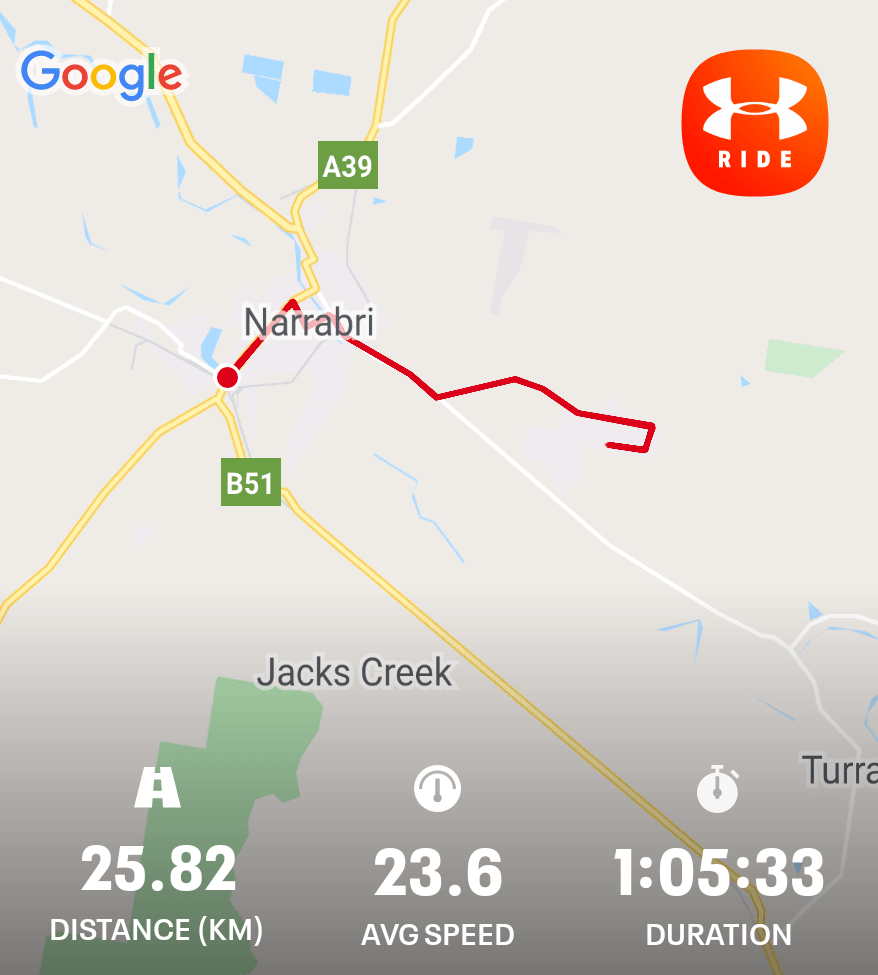
Warm and humid again this morning, but still loving the bike ride
We can all be gloriously immersed in an ever-increasing measure of His Spirit on us. We just have to ask for more. Duncan Smith
Scripture
“It is not by force nor by strength, but by my Spirit”, says the Lord of Heaven’s Armies.
Observation
The Lord brings another vision to Zechariah. He sees a lamp-stand with seven lamps, each with seven wicks. Olive trees stand on either side of the lamp.
The Lord says to Zechariah it is not might nor power but the Spirit of the Lord that will remove the mountain.
Just as Zerubbabel laid the foundation of the temple, he will be the one to complete it. They must not despise the small beginnings because the Lord rejoices in what he is doing.
Application
The way forward in our life is not by human strength nor by wisdom, but by the power of the Holy Spirit. The Spirit of God will remove the greatest mountain, if only we will submit ourselves to Him.
The problem is that often we see a problem and we think we have to fix it. We assume that whatever is in our way, we can overcome it by our own efforts.
Nearly every problem in life has a spiritual root– whether it is outright demonic attacks or generational curses we have done nothing to deserve.
We need the Holy Spirit in order to flourish in life and in our walk with the Lord.
If we can gain the victory in the spirit realm, we will find every battle becomes easier to win.
God has given us every good weapon for the warfare, but it is up to us to use them, depending on Him and His strength.
Prayer
It is not by might nor strength but by your Spirit alone that my mountains are removed. Help me, Lord, to remember this in the midst of the battle. Amen
This article from American Vision is about the U.S. but applies equally to Australia
The battle today is over lordship. The issue of politics today is the issue of sovereignty. Who is the Lord of all of life to whom man must give his total allegiance, Christ or Caesar? The answer to this question is the difference between liberty and slavery, justice and tyranny.
The critical issue of our day is the relationship of Jesus Christ and His Word to our political and legal system in the United States. Who has jurisdiction over every aspect of American society, Jesus Christ or the State? Is this to be a nation founded on the precepts of the Bible or one founded on the shifting sands of humanism? The only faithful answer that a Bible believing Christian can give is this: “Blessed is the nation whose God is the Lord” (Psalm 33:12). “For the Lord is our judge, the Lord is our lawgiver, the Lord is our king; He will save us” (Isaiah 33:22). Benjamin Franklin, addressing the Constitutional Convention, quoted Psalm 127:1: “Unless the Lord builds a house, they labor in vain who build it.”
The Christian’s study of God’s Word must bring with it the desire and the ability to make application where Scripture makes application. If Scripture speaks to civil government then civil government must be called upon to acknowledge the Lord of Scripture and be reconstructed according to His demands. A. A. Hodge’s words are to the point and just as applicable today as they were a century ago:
If Christ is really king, exercising original and immediate jurisdiction over the State as really as he does over the church, it follows necessarily that the general denial or neglect of his rightful lordship, any prevalent refusal to obey that Bible which is the open law-book of his kingdom, must be followed by political and social as well as moral and religious ruin. If professing Christians are unfaithful to the authority of their Lord in their capacity as citizens of the State, they cannot expect to be blessed by the indwelling of the Holy Ghost in their capacity as members of the church. The kingdom of Christ is one, and cannot be divided in life or in death. If the Church languishes, the State cannot be in health; and if the State rebels against its Lord and King, the Church cannot enjoy his favour. If the Holy Ghost is withdrawn from the Church, he is not present in the State; and if he, the only “Lord, the Giver of life” be absent, then all order is impossible, and the elements of society lapse backward to primeval night and chaos . . . I charge you, citizens of the United States, afloat on your wide sea of politics, there is another king, one Jesus: the safety of the State can be secured only in the way of humble and whole-souled loyalty his person and obedience to His Law.” [1]
The political choice before us is Christ or chaos. Is Jesus “the King of kings and Lord of lords”? That is the question before American Christians. The issue is anything but peripheral.

 New Life Narrabri