Quote for the Day

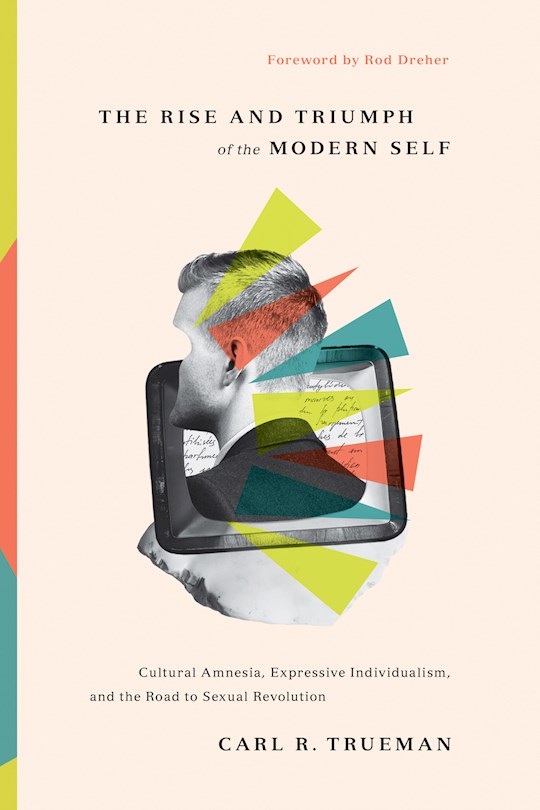
The purpose of surrealism was profoundly and aggressively political: to overthrow Christianity (and its corollaries—families and moral codes governing sexual behavior). And it was to do this via an emphasis in its various works of art on human desires and their attainment through the self-actualization of the individual. Carl Trueman

Reflection on Judges 16 :1-22

Scripture

When he woke up, he thought, “I will do as before and shake myself free.” But he didn’t realise that the Lord had left him.

Observation

Samson falls in love with a woman named Delilah. The Philistine rulers come to her and offer to pay her to entice Samson to reveal the secret of his strength.

At first, Samson lies to her about this. But after much pleading and nagging, he reveals that his hair has never been cut for he was dedicated as a Nazarite from birth. If his head is shaved, his strength would leave him.

Delilah tells the Philistines that she has finally got the truth. She lulls him to sleep with his head in her lap, and then she cuts off the seven braids of his hair.

Samson wakes up and thinks he will shake himself free as before, but the Lord has left him. The Philistines capture him, gouge out his eyes, and put him in shackles. Before long Samson’s hair begins to grow back.

Application

Eventually Samson’s character lead him into bondage. He is tricked into allowing his head to be shaved. When the Philistines come to capture him, he thinks “I will just shake myself free as I did before.” He didn’t realise that the Lord had left him.

When we sin repeatedly in any area of our life, we allowed satan and his demons to take over that part of us. We become addicted to the sin whether it be lust, greed, or power. What we don’t realise is that it is the Holy Spirit who gives us the power to shake ourselves free. We can get to the place where, like Samson, the power of the Lord leaves us and we are in bondage to that sin.

Captivity to Satan is not the end of the story. This section ends with the hopeful words, “but Samson’s hair began to grow back.”

Prayer

Thank you Lord that you do not abandon us entirely to sin, unless we completely abandon you. Please help me to stay away from captivating sin and make me strong in times of temptation. Amen

James MacPherson: Father, Forgive Labor Over the Lord’s Prayer

From the Daily Declaration, James Macpherson writes:

prayer

Father, Forgive Labor Over the Lord’s Prayer

3 AUGUST 2022

2.4 MINS

Australian Senate President Sue Lines is right to demand that the longstanding tradition of opening each day of federal parliament with the Lord’s Prayer be abolished.

The words of Jesus are dangerous and politicians should be protected from hearing them lest they startle the country by governing with wisdom and humility.

For those unfamiliar with the prayer the self-declared atheist Labor MP wants gone, let me explain the 10 nation-destabilising ideas from which our leaders must be insulated.

“Our Father who art in heaven…” is a shocking acknowledgment that the highest office-bearers in the land may not be the highest office-bearers in the universe. Should politicians realise this, they may start acting with humility and become completely unrecognisable to their own electorates.

“Hallowed be Thy name…” is the dangerous admission that we must live for something bigger than our own name or self-aggrandisement. This could lead inadvertently to politicians no longer naming pet policies after themselves. Now that would be a welcome outcome.

“Thy kingdom come, Thy will be done on earth as it is in heaven…” could cause politicians to consider if perhaps they ought to act according to noble convictions rather than simple convenience. This would throw the public service into significant confusion.

“Give us this day our daily bread…” is just plain offensive. If there is a God, he (or she) has not been distributing the bread according to the left’s favourite slogans — “equality” and “fairness”. If he (or she) were fair, the Greens would have more bread than the people the Greens don’t like, such as those making the bread.

“Forgive us our sins…” is a self-esteem-sapping admission that none of us is perfect. Even lefty senators are beset by the flaws of human nature and are therefore prone to mistakes. This is a dangerous idea that our MPs should never under any circumstances be allowed to contemplate, lest they stop thinking of themselves as our betters.

“As we forgive those who sin against us…” is a devilish promise to respect the common humanity of those with whom we disagree rather than simply demonising them. The Labor senator is right to insist MPs must never hear this, lest civility break out in parliament and those sitting in the public gallery think they are in the wrong building.

“Lead us not into temptation…” is that unflattering idea that we are all prone to wander off on tangents. Were politicians to think about this, they might start acting with caution rather than haste. Then we wouldn’t have pink batts or cash for clunkers or the National Broadband Network or Camp Wellness in Queensland.

“But deliver us from evil…” is the foolishly outdated idea that evil exists, when we know the problem is really structural issues that can be fixed by constant government interference in the affairs of free men.

“For Thine is the kingdom, the power and the glory…” is an insidious idea that may lead politicians to wonder if perhaps building monuments to themselves is mere vanity. We don’t want MPs thinking there is a cause greater than their own name or political stripe, lest they begin to work together for a greater good; and then where would we be?

“Forever and ever, amen…” is the clear suggestion our politicians soon may be gone, but that the decisions they make will echo on in the lives of our children’s children.

Should MPs have to hear such words, they may start thinking beyond the 24-hour news cycle. God, er, Labor forbid!

(This piece was first published in The Australian when the Greens were campaigning for the Lord’s Prayer to be ditched)

___

Originally published at The James Macpherson Report.

Reflection on Judges 15:1- 20

Scripture

So God caused water to gush out of a hollow in the ground at Lehi, and Samson was revived as he drank. He named that place “The Spring of the one Who Cried Out,” and it is still in Lehi today.

Observation

During the wheat harvest, Samson takes a young goat as a present to his wife. Her father explains that he gave her to his best man.

Enraged, Samson catches 300 foxes. He ties them together in pairs and fastens a torch to each pair of tails. He lights the torches and sends the foxes through the Philistines’ grainfields.

The Philistines decide to capture Samson. They set up a camp in Judah. The men of Judah find Samson and tie him up with new ropes. Samson breaks off the ropes. He then finds the jawbone of a donkey and kills 1000 Philistines with it.

Samson goes on to rule over Israel for 20 years.

Application

After all his fighting, Samson called out to God to provide him with water. The Lord caused water to gush out of the ground.

Samson was not a paragon of virtue. He was selfish, petulant, and prone to expressions of violence. Yet God used this very flawed character to deliver Israel from the Philistines.

And when Samson called to the Lord for water, the Lord brought forth a fresh spring for him.

We don’t have to be perfect before God can use us. We do not have to be perfect to receive answers in prayer. We should be growing in character as part of our daily walk with the Lord. But He will use us and provide for us at every stage of the journey.

Prayer

Thank you Lord that you can use flawed people like Samson. Use me to your glory. Amen

The Voice: We Don’t Need It

From cis.org.au

Aboriginal Australians have heard the Voice before

A national body can’t speak for Aboriginal people as a group and Aboriginal people won’t recognise it. Any representative ‘voice’ group that isn’t tied to country will have no authority

I was talking to an Aboriginal man at the Garma Festival last weekend, an elder from a community in another state. He said: “What I’ve heard about the Voice to parliament is nothing I haven’t heard before.” Einstein is credited with saying: “Insanity is doing the same thing over and over and expecting different results.”

Constitutional recognition of Aboriginal people was first proposed by then Prime Minister John Howard in 2007, passing like a baton through five more PMs before landing with Prime Minister Anthony Albanese.

Initially about symbolic recognition, since the 2017 Uluru “Statement from the Heart” the campaign has been to enshrine a First Nations “Voice” in the constitution. The campaign is championed by Australia’s elites, including corporate Australia, media figures and Aboriginal academics.

When I speak to Aboriginal people day-to-day I don’t find support, but rather indifference, confusion as to what it’s about or outright opposition. I know why. The Voice, like the representative bodies before it, is not built around Aboriginal cultures and how we look at ourselves.

This week we are told that the proposal will be to add three provisions to the constitution:

1. There shall be a body to be called the Aboriginal and Torres Strait Islander Voice.

2. The Aboriginal and Torres Strait Islander Voice may make representations to parliament and the executive government on matters relating to Aboriginal and Torres Strait Islander peoples.

3. The Parliament shall, subject to this constitution, have powers to make laws with respect to the composition, functions, powers and procedures of the Aboriginal and Torres Strait Islander Voice.

My first reaction was why amend the constitution at all? The Commonwealth government already has power to create Aboriginal representative bodies and has before including the National Aboriginal Consultative Committee, ATSIC and the National Congress of Australia’s First Peoples.

It could legislate tomorrow to create a Voice. No referendum. The previous bodies all made representations to parliament, as do many other Aboriginal bodies and individuals all the time. Recent changes to the Closing the Gap targets were made on advice from Aboriginal community bodies known as the Coalition of the Peaks.

When down in parliament, I’m always tripping over blackfellas there to talk to politicians and public servants. Aboriginal people don’t need constitutional permission to tell government what they think.

The most important thing about the Voice — its composition, functions, powers and procedures — won’t be in the constitution at all but decided by parliament.

The government of the day can make the Voice anything it wants: from a small, hand-picked committee to hundreds of elected members or anything in between. Enshrining the Voice in the constitution doesn’t depoliticise it; quite the opposite.

But the main reason I remain unsupportive is if Aboriginal Australians are to have representative bodies to speak on things that matter to us, those bodies will fail if they conflict with our own identities. There isn’t one Aboriginal group but hundreds, each with their own country, language, kinship system and culture.

A year after the Uluru Statement of the Heart I was in Mutijulu, a small community at the base of Uluru, and a local elder took me aside to tell me that the Uluru Statement of the Heart was not their culture and does not speak for them. What they were talking about is that traditional owners of a particular country are the only people who can speak for that country.

A national body can’t speak for Aboriginal people as a group and Aboriginal people won’t recognise it. Likewise a regional body that spans and has membership of different countries.

Any representative group that isn’t tied to country will have no authority to be anyone’s voice. I predict the Voice will be just another bureaucratic structure that further entrenches government in Aboriginal lives.

Despite the missions and reserves being disbanded since the late 1960s, Aboriginal people are the most over-governed people in Australia. We need less government, not more.

Nyunggai Warren Mundine AO is the Director of the Indigenous Forum, Centre for Independent Studies

Read the full article here