The number of Christians in the whole of Korea was only 300,000 or so in 1920, but this has now risen to at least 15 million, about a third of the national population. Philip Jenkins

The number of Christians in the whole of Korea was only 300,000 or so in 1920, but this has now risen to at least 15 million, about a third of the national population. Philip Jenkins
Scripture
Without the shedding of blood, there is no forgiveness.
Observation
When someone leaves a will, it is effective only after the person dies. For this reason, the first covenant was put into operation with the blood of an animal.
When Moses read the commandments, he sprinkled the book of the law and the people with the blood of calves and goats. in the same way, he sprinkled blood on the Tabernacle and everything used for worship. There is no forgiveness without the shedding of blood.
The Tabernacle, and everything in it, had to be purified with the blood of animals. But the real Tabernacle in heaven was purified with a far better sacrifice.
Application
Our salvation was purchased by the shed blood of Christ.
This is something that we can tend to forget in our nice, clean, sanitised worship. Even the celebration of communion, in which we specifically remember the body and blood of our Lord, is very well mannered.
We speak the words of atonement, but the reality rarely affects us.
Jesus Christ died for sinners. He died in a barbaric way, agonising, tortured to death.
The blood of Christ brings us forgiveness because of who He is, and not because we are in any way deserving.
Because of that death, the blood poured out for us, we are now forgiven.
Prayer
Lord Jesus, what suffering you endured for me. Thank you for laying down your life so that I can live for ever. Amen
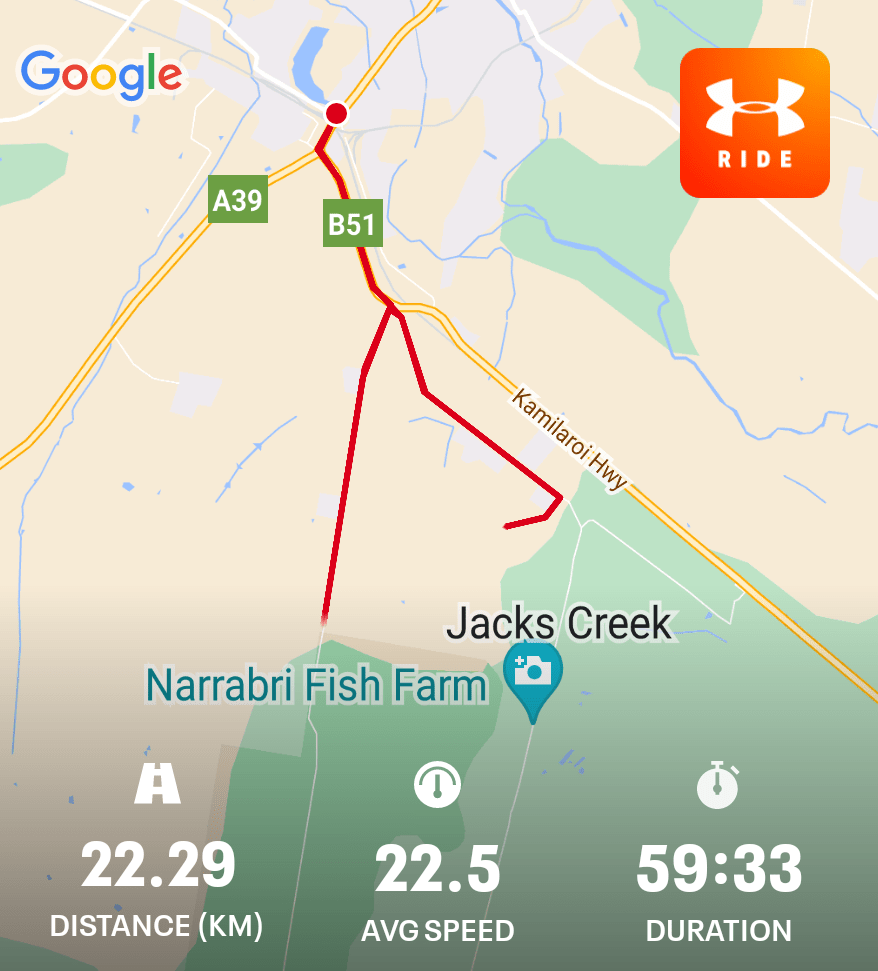
Strong Southerly wind, but a fun ride anyway 😀
Putting the Templeton and Pew materials together, we can reasonably place the number of Chinese Christians at around 65 to 70 million, around 5 percent of the population. Put another way, China has about as many Christians as it does members of the Communist Party. Philip Jenkins
Scripture
By the power of the eternal Spirit, Christ offered himself to God as a perfect sacrifice for our sins.
Observation
Christ is now the High Priest over all the good things that come from the covenant. He is in the perfect heavenly Tabernacle. He offered His own blood and now lives in the Tabernacle forever.
Under the old covenant, the blood of various animals could cleanse a person from various sins. But Christ has offered His own blood, a perfect sacrifice for all sins.
Christ now mediates a perfect covenant in which we receive an eternal inheritance.
Application
Under the old covenant, a sacrifice was required to cover various sins, even various natural occurrences which made a person “unclean.”
When a person sinned again, a new sacrifice was required because the blood of animals had a limited effectiveness.
But now Jesus Christ, the perfect Son of God, has offered His own blood to pay for our sins.
Because He is God and is perfectly good, His blood covers every sin. We don’t need to come back to God with a new sacrifice every time we transgress the law. The blood of Jesus covers it all.
While the blood of Christ has the ability to cover every person, we have to apply it to our own lives. If people want to live apart from God, and continue in their own selfish ways, God gives them that option.
To everybody who comes to Him with a repentant heart Jesus grants total forgiveness.
Prayer
Thank you Jesus for paying for my sins. Your death on the cross has set me free from the penalty of sin. Amen.
One way or another, inside the Catholic Church or outside it, Christianity worldwide is becoming steadily more charismatic. Philip Jenkins
Scripture
By these regulations, the Holy Spirit revealed that the entry to the Most Holy Place was not truly open as long as the Tabernacle and the system it represented were still in use.
Observation
In the first covenant, there were regulations for worship and for a place of worship. The tabernacle had two rooms. In the Holy Place there were a lamp-stand, a table, and sacred bread.
In the Most Holy Place, there were a gold altar and the Ark of the Covenant.
The priests regularly entered the first room, but the Most Holy Place could only be entered on one day of the year by the High Priest. This was to show that the Most Holy Place was not freely open as long as the Tabernacle remained.
Application
Under the old covenant, worship was, in many ways, determined by regulation. in particular, only priests could offer sacrifices in the holy place. Only the High Priest could enter the Holy of Holies on just one day of the year. Even then, he first had to offer sacrifices for his own sins and for those of the nation.
On the other hand, we have been cleansed by the blood of Christ, and we have free access to God’s presence all the time. Worship springs from our hearts and not just according to the law.
More importantly, we don’t come into the presence of God. The presence of God, the Holy Spirit, is in us. He leads us, equips us, and transforms us to be more like Jesus.
The new covenant, which has been mediated for us by Jesus, is far superior to the old covenant with its rules and regulations.
Prayer
Thank you Father for the privilege of worshipping you and fellowshipping with you daily. Amen.
From the IPA:

The danger in the post-lockdown era is that in our rush to move on we forget the hard lessons that have been learned about this catastrophic public policy failure.
On the basis of alarmist modelling, often commissioned by governments and amplified by sensationalist media, panicked politicians discarded all basic ideas about proportionality and the rule of law to criminalise everyday life and exert unprecedented controls over the citizenry.
From the beginning of the pandemic in March 2020, all Australian governments adopted the attitude that any public health mitigation measure was on the table, and little to no consideration was given to the costs of the measures that were adopted.
This is the subject of new research published by the Institute of Public Affairs, which for the first time in Australia calculates many of the costs of the nation’s Covid zealotry up to June 2022. In the report, Hard Lessons: Reckoning the Humanitarian, Economic, and Social Costs of Zero-Covid, we find that the total economic and fiscal cost of the Australian COVID-19 response was no less than A$938.4 billion (£550.6 billion) to June 2022. This report identifies:
In the meantime, the Victorian government should apply the new Buhler standard to all Victorians and grant an immediate amnesty to anyone who was charged or fined for exercising their basic rights and freedoms as Victorians.
$595.8 billion in state and federal Government to enforce Covid policies and stimulate the economy;
$259.8 billion in lost economic activity because of the restrictions and economic shutdowns;
$82.8 billion in inflation related costs due to expansive monetary and fiscal policies, a cost which is set to only increase more and more over the next couple of years.
The research also calculates how much children suffered in terms of schooling. Despite being the safest cohort in society when it comes to COVID-19, children were routinely sent home to learn remotely or not learn at all. We estimate children in the state of Victoria would have lost about 12 weeks of reading skills and 17 weeks of numeracy skills, something which for many will never be recovered.
Even on the most basic metric, lockdowns failed. In terms of the number of years of life, the costs of joblessness because of the initial nationwide lockdowns in March and April 2020 were about 31 times more costly than the maximum possible years of life saved by lockdowns throughout 2020 and 2021.
Even in the state of Victoria, whose Labor Government enthusiastically established a world-renowned Covid police state, politicians are no longer touting their pandemic response in the lead up to the state election in November.
Likewise, the former federal Liberal/Nationals Coalition Government, which was voted out of office earlier this year, rarely boasted of its Covid response.
Governments of the Covid era appear to have accepted the failure of the Covid-elimination approach, but rather than confront the reality of this failure are just pretending that it never happened.
This is not about living in the past, because the reality is we are still bearing the costs now. In terms of the resulting mental health crisis, lost learning, shuttered businesses, Government debt and inflation, we are not likely to know the full costs of the Covid response for many years to come.
Our future wellbeing as a society also demands that we remember the hard lessons of the Covid response.
We will need to deal with pandemics in the future, and it is critical to know what went wrong, and how these failures came to be.
Australians were subject to the harshest restrictions on their way of life in their history, and we should be demanding not that it should be forgotten, but that it should be remembered so that it doesn’t happen again.
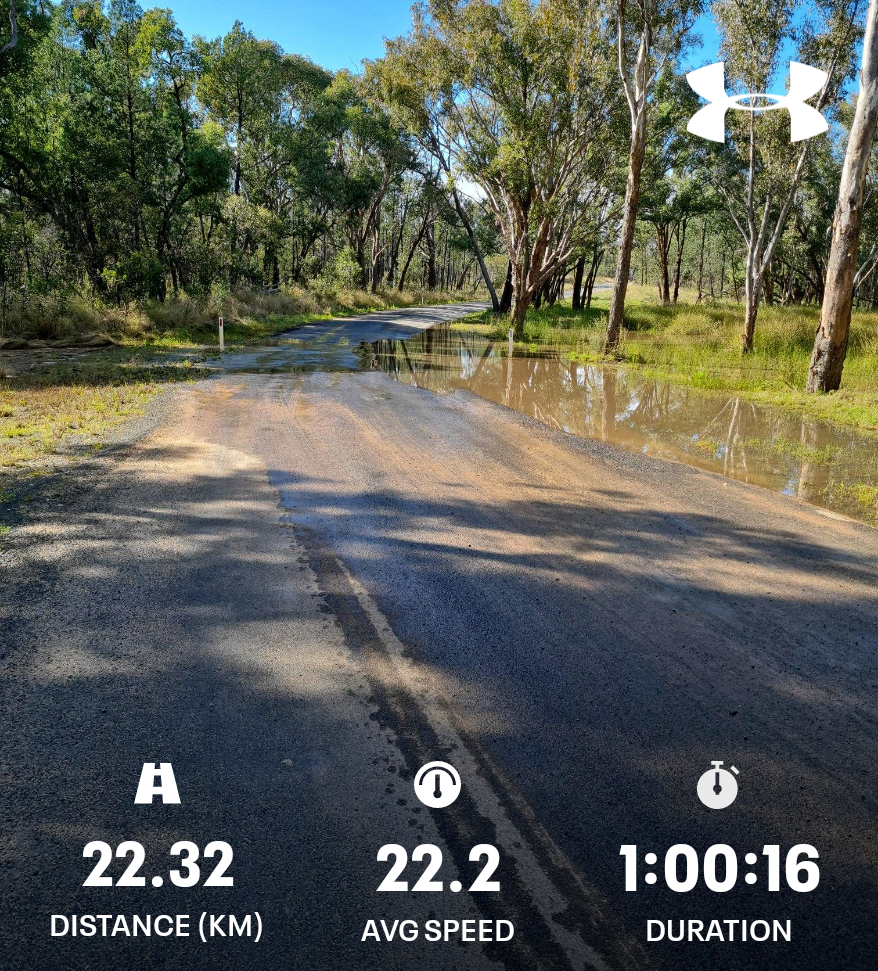
The flood waters are slowly receding, and the roads are drying out.
The Brazilian Pentecostal movement was founded in the early twentieth century by missionaries of the Assemblies of God, a church that continues to boom. The denomination might have 15 or 18 million Brazilian adherents, and there are more followers of the Assemblies of God in the greater São Paulo region alone than in the entire United States. Philip Jenkins
 New Life Narrabri