Reflection on 1 Thessalonians 1:8-10

Scripture

And they speak of how you are looking forward to the coming of God’s Son from heaven – Jesus whom God raised from the dead. He is the one who has rescued us from the terrors of the coming judgement.

Observation

The word of the Lord, Paul says, was ringing out from this church in Thessalonica to people everywhere.

Paul says that wherever he goes, people tell him about the Thessalonians. They welcomed Paul and turned away from idols. Now they look forward to the coming of Jesus, for He is the one who rescued them from judgement.

Application

Our faith and our life are ultimately about the goodness of Jesus. The Thessalonians were famous everywhere for their testimony.

Any testimony worth it’s salt involves a telling about the past. What did Jesus do in your life that made a difference?

But a testimony must involve the present. How are you living now because of Jesus?

Then there is a future dimension as well. Jesus will return one day. We will go to heaven at some time. How does this knowledge give you hope for your destiny?

Most people are rushing towards watch Paul calls “the terrors of the coming judgement.” We have been rescued from that because Jesus paid the price to set us free from sin.

Hallelujah! What’s a Saviour!

Prayer

Thank you Lord for the excellent testimony you have given me. May my church become like that in Thessalonica which was a testimony that was heard everywhere. Amen.
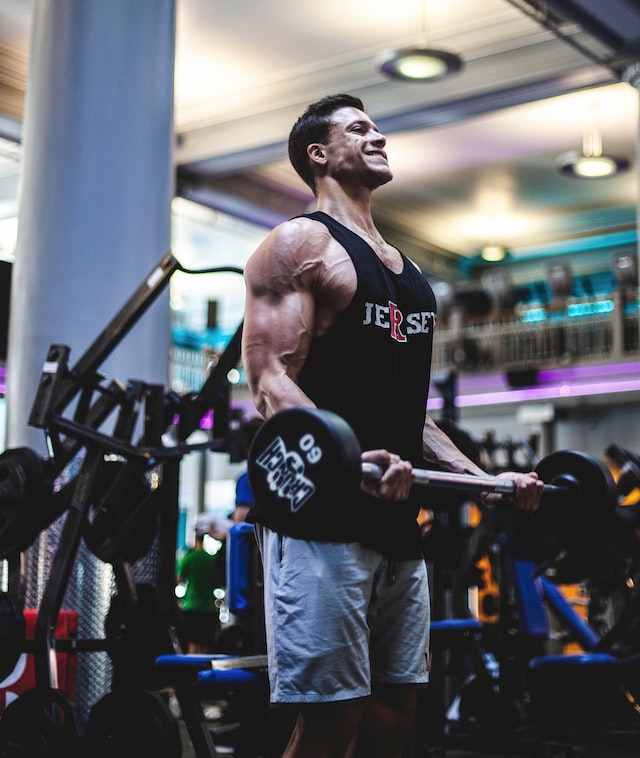
Gym Memberships And Other Failed Resolutions

Gym owners love this time of the year, I an told. So many people take out yearly memberships in January to fulfil a New Years Resolution “to get fit this year.” Add that to the people who thoughtfully buy memberships as Christmas gifts, and it’s a golden time for the gyms.

Then, the story goes, by the end of February 90% of the people with these brand new gym memberships and good intentions just stop showing up.

It’s like that with most of our resolutions and intentions to become better people. Whether it’s losing weight, giving up smoking or drinking less, it is really hard to change our behaviours and habits. It is as if we become prisoners of our own choices.

In the Bible, the apostle Paul puts it this way: “I don’t really understand myself, for I want to do what is right, but I don’t do it. Instead, I do what I hate. But if I know that what I am doing is wrong, this shows that I agree that the law is good.”

We know what we should do, but often it is really hard to do, and we end up doing the wrong thing. Even with the best will, we find it hard to resist temptation, and we give in to doing the wrong thing, even when we know we shouldn’t be doing it.

Paul goes on to says this: “So now there is no condemnation for those who belong to Christ Jesus. And because you belong to Him, the power of the life-giving Spirit has freed you from the power of sin that leads to death.”

The way out of these addictions to doing the wrong thing is to surrender them to Jesus, and ask Him to change you. Change comes from the inside and flows out to our actions not the other way around.

Now, where’s that gym card. I might just give it a go.

Cycling To Work Is Good For You

From the Conversation:

Pump action. Csaba Peterdi

Research has consistently shown that people who are less physically active are both more likely to develop health problems like heart disease and type 2 diabetes, and to die younger. Yet there is increasing evidence that physical activity levels are on the decline.

The problem is that when there are many demands on our time, many people find prioritising exercise difficult. One answer is to multi-task by cycling or walking to work. We’ve just completed the largest ever study into how this affects your health.

Published in the British Medical Journal today, the results for cycling in particular have important implications. They suggest that councils and governments need to make it a top priority to encourage as many commuters to get on their bikes as possible.

The findings

Cycling or walking to work, sometimes referred to as active commuting, is not very common in the UK. Only 3% of commuters cycle to work and 11% walk, one of the lowest rates in Europe. At the other end of the scale, 43% of the Dutch and 30% of Danes cycle daily.

To get a better understanding of what the UK could be missing, we looked at 263,450 people with an average age of 53 who were either in paid employment or self-employed, and didn’t always work at home. Participants were asked whether they usually travelled to work by car, public transport, walking, cycling or a combination.

We then grouped our commuters into five categories: non-active (car/public transport); walking only; cycling (including some who also walked); mixed-mode walking (walking plus non-active); and mixed-mode cycling (cycling plus non-active, including some who also walked).

We followed people for around five years, counting the incidences of heart disease, cancers and death. Importantly, we adjusted for other health influences including sex, age, deprivation, ethnicity, smoking, body mass index, other types of physical activity, time spent sitting down and diet. Any potential differences in risk associated with road accidents is also accounted for in our analysis, while we excluded participants who had heart disease or cancer already.

Death by bus? Genemecom

We found that cycling to work was associated with a 41% lower risk of dying overall compared to commuting by car or public transport. Cycle commuters had a 52% lower risk of dying from heart disease and a 40% lower risk of dying from cancer. They also had 46% lower risk of developing heart disease and a 45% lower risk of developing cancer at all.

Walking to work was not associated with a lower risk of dying from all causes. Walkers did, however, have a 27% lower risk of heart disease and a 36% lower risk of dying from it.

The mixed-mode cyclists enjoyed a 24% lower risk of death from all causes, a 32% lower risk of developing cancer and a 36% lower risk of dying from cancer. They did not have a significantly lower risk of heart disease, however, while mixed-mode walkers did not have a significantly lower risk of any of the health outcomes we analysed.

For both cyclists and walkers, there was a trend for a greater lowering of risk in those who commuted longer distances. In addition, those who cycled part of the way to work still saw benefits – this is important as many people live too far from work to cycle the entire distance.

Read the full article at theconversation.com

The Power Of Tongues

The power of tongues is this: it helps your spirit ta[p into the flow of the Holy Spirit. The idea of “flow” is important here. You are continually getting the “flow” of :

  • your cognitive thoughts
  • your emotions
  • Holy Spirit
  • the world
  • satan and demonic spirits

Like a social media feed, these things are scrolling past you in a constant stream.

You can be overwhelmed by this kaleidoscope of impression on your spirit.

Stop the scroll! Turn to Me. Filter out everything but My Spirit.

In quietness and meditation is your strength.

When you speak in tongues, it filters out satan and the world. When you listen to Me, it filters out your own thoughts.

There is power in verbal spoken out prayer. There is power also in praying in tongues.

There is amazing power in listening to My voice.

Hear me. Listen to Me.

Finding Jesus While Listening to Pink Floyd

From godreports.com

In Air Force barracks, he heard about Jesus while listening to Pink Floyd

0
4
 
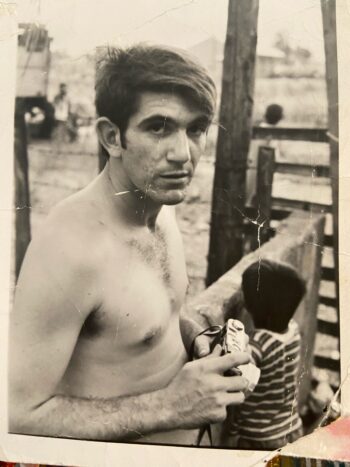
Caught ya. A friend snaps Charlie Forman’s photo in the Air Force in the Philippines when the airman was unprepared.

By Michael Ashcraft –

In high school, Charlie Forman was a chanting Buddhist. Then he took LSD, read Carlos Castaneda and hoped to meet a Yaqui Indian witchcraft guide. But because he was high or drunk every day, he joined the Air Force to clean up his act.

“Nothing really worked,” he says.

Stationed at a radar site in the Philippines, he fell back into partying. “A lot of the officers partied like we did. I got in trouble; there were some drugs in my car.”

When he returned Stateside to Nellis Air Force Base, he was supposed to report to the Social Action of the Air Force to continue his rehabilitation. But his records took forever to catch up to him, and he didn’t mind because he didn’t want to be known as a dopehead.

What he did do was work hard and steer clear of drugs and alcohol. He wanted to go straight “but life was so boring. There was no purpose,” he says.

Ever since his mom died of cancer when he was seven-years-old, Charlie was on a quest to find the meaning of life. One thing he knew for sure, “it wasn’t Christianity. It was something mystical, maybe Transcendental Meditation.”

That’s when a man came into his barracks and shared his testimony.

“I was listening to Pink Floyd, “Charlie recalls. “I wasn’t really interested. This guy started talking and was fighting with the noise, so he asked if could turn it down. He seemed like a nice guy, so I turned it off. And listened. I really related to him. He had gone through similar experiences like me.”

He accepted Jesus.

“It was incredible. I felt like I was high. I had joy and peace. Immediately I was delivered from the drugs. Whereas before I had tried to quit and fell back, I was completely delivered. I had no interest in drugs. I was sauced on Jesus.”

In the Air Force, he was given the job of keeping and clarifying bombing range scheduling for pilots, a job that required three telephone calls a day “if it was a busy day.” The rest of the time, he read his bible voraciously.

But when he married his Filipina girlfriend and brought her to the United States while he was still in the Air Force, things went sour. At first, she got “truly and wonderfully saved. God just whacked her,” Charlie says.

“But she held on to a lot of things from Catholicism. She would not let go of the idea that you shouldn’t be fanatical about God, and she was insanely jealous,” Charlie says.


Read the rest of charlie’s story here