Quote for the Day

First, most of what we claim to know about the powers of darkness does not derive from close study of the original Hebrew and Greek texts. Second, much of what we think we know is filtered through and guided by church tradition—not the original, ancient contexts of the Old and New Testaments.  Michael Heiser

Reflection on 1 Samuel 27:1-12

Scripture

Achish believed David and thought to himself, “By now the people of Israel must hate him bitterly. He will hhave to stay here and serve me forever.”

Observation

David decides to move to Gath to avoid Saul permanently. Achish the king of Gath, welcomes him, his wives, and his army.

One-day, David asks Achish if he can move to a smaller town. Achish give him Ziklak where they live for more than a year.

David and his men conduct raids on people who live down towards Egypt. They kill all the people in the villages, and take away their livestock and clothing.

David tells Achish that he has been raiding the south of Judah, causing Achish to believe that David will never be able to go home.

Application

David was a master strategist, always looking at the long-term outlook in planning his steps.

We might wonder if his wholesale taking of human life, and the lies he told to deceive Achish. The truth is said he was living in a very hostile environment, and his violence was towards the enemies of Israel.

In one parable, Jesus seem to approve of the actions of the dishonest steward who defrauded his employer for his own interests.

We should not judge the actions of Bible characters on the basis of our own comfortable lifestyles. The important thing is to seek God’s path whatever our circumstances are.

Prayer

Lord, I thank you that I live in a peaceful society. Please help me to glorify you in all I do. Amen.

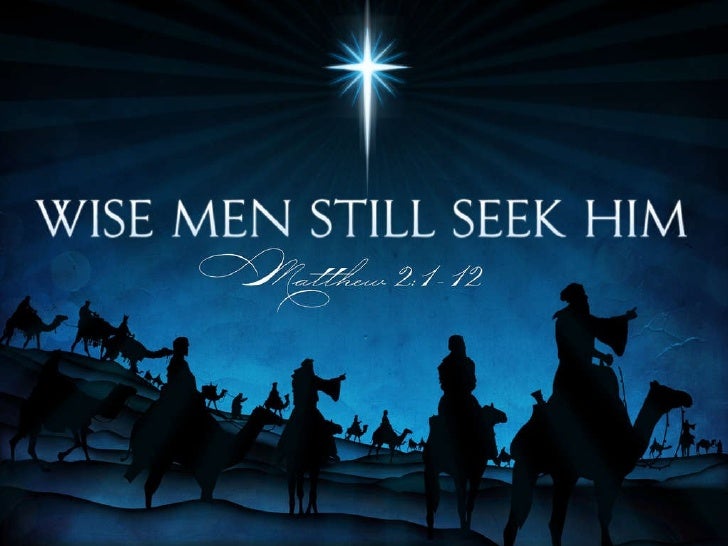
The Magi

The Magi, or Wise Men, are mysterious characters in the Christmas Story. We don’t know exactly where they came from, although Babylonia is a strong character, and we don’t know exactly how many of them there were, or even when they turned up in Bethlehem.

I was preaching abut this last Sunday as recorded in Matthew 2:1-12.

As I read the passage in church, I was struck by the NLT rendering of v. 1:

Jesus was born in Bethlehem in Judea, during the reign of King Herod. About that time some wise men from eastern lands arrived in Jerusalem, asking, “Where is the newborn king of the Jews? We saw his star as it rose, and we have come to worship him.”

Over recent years, it has been common to point out that the Magi could have taken up to 2 years to come and worship Jesus. This is based on a number of factors, including the word for “child”, the fact that the family was now in a house, not a stable, and Herod’s order to kill babies under the age of 2 years. Herod was a ruthless character who was not afraid of killing potential rivals, so the age of the babies being killed would have been arbitrary.

But then the NLT says this happened “About that time” i.e. close to the time of Jesus’ birth. What’s happening here?

Short answer is it is a poor translation choice. Most of the English translations, as well as the original Greek text, do not use this. For example the NIV has “After Jesus was born in Bethlehem…”

No translation of Scripture is perfect. We are blessed to have such an abundance of translations in English, and they mostly do a good job of making the Bible accessible to people of all reading, education and cultural backgrounds. I love the NLT as an easy to understand translation, but they got this phrase wrong.

The lesson here is never build a doctrine on a single phrase, a single verse, a single translation.

Reflection on 1 Samuel 26:1-25

Scripture

“No!” David said.” For who can remain innocent after attacking the Lord’s anointed one?”

Observation

Saul takes 3000 of Israel’s elite troops and resumes his hunt for David.

David goes over to Saul’s camp under the cover of darkness. David takes Abishai with him into the camp.

They find Saul asleep in his tent with a spear and a jug of water next to his head. David takes the spear and jug and sneaks out of the camp.

He wakes up Saul’s men and points out that he again has had a chance to kill Saul, but refuses to lift a hand against the Lord’s anointed one.

Application

This verse is often used in the context of church disputes, particularly those involving a pastor.

While there are times when it is right for a congregation to dismiss a pastor, the general principle is that we should not undermine, attack, or move against the “Lord’s anointed one.”

Even in this case, where David is being hunted down by a demon possessed King Saul, David refuses to attack the Lord’s anointed.

Rather than attacking a pastor that you disagree with, we should try to see what God is doing in the situation. Is the pastor actually doing or saying what is necessary? Is there some lesson the Lord is trying to teach us? How can I use this situation to grow in my love for the Lord?

When it does come to a point of removing a leader, the church must always act in a way that honours Christ. Everything must be done accordance with God’s order and, above all, love must reign.

Prayer

Lord, conflict is hard at times. Please help me to handle disagreements in a way that honours you. Amen.