Quote for the Day

Everywhere I went, men accepted Christ. It seemed that there was a power in me that was doing the talking for me. When I started to speak to someone, I had no idea what I was going to say, but whatever came had a new power that drew men to Christ. Merlin Carothers

Reflection on Matthew 13: 1-13

Scripture

“To those who listen to my teaching more understanding will be given, and they will have an abundance of knowledge. But for those who are not listening, even what little understanding they have will be taken away from them.”

Observation

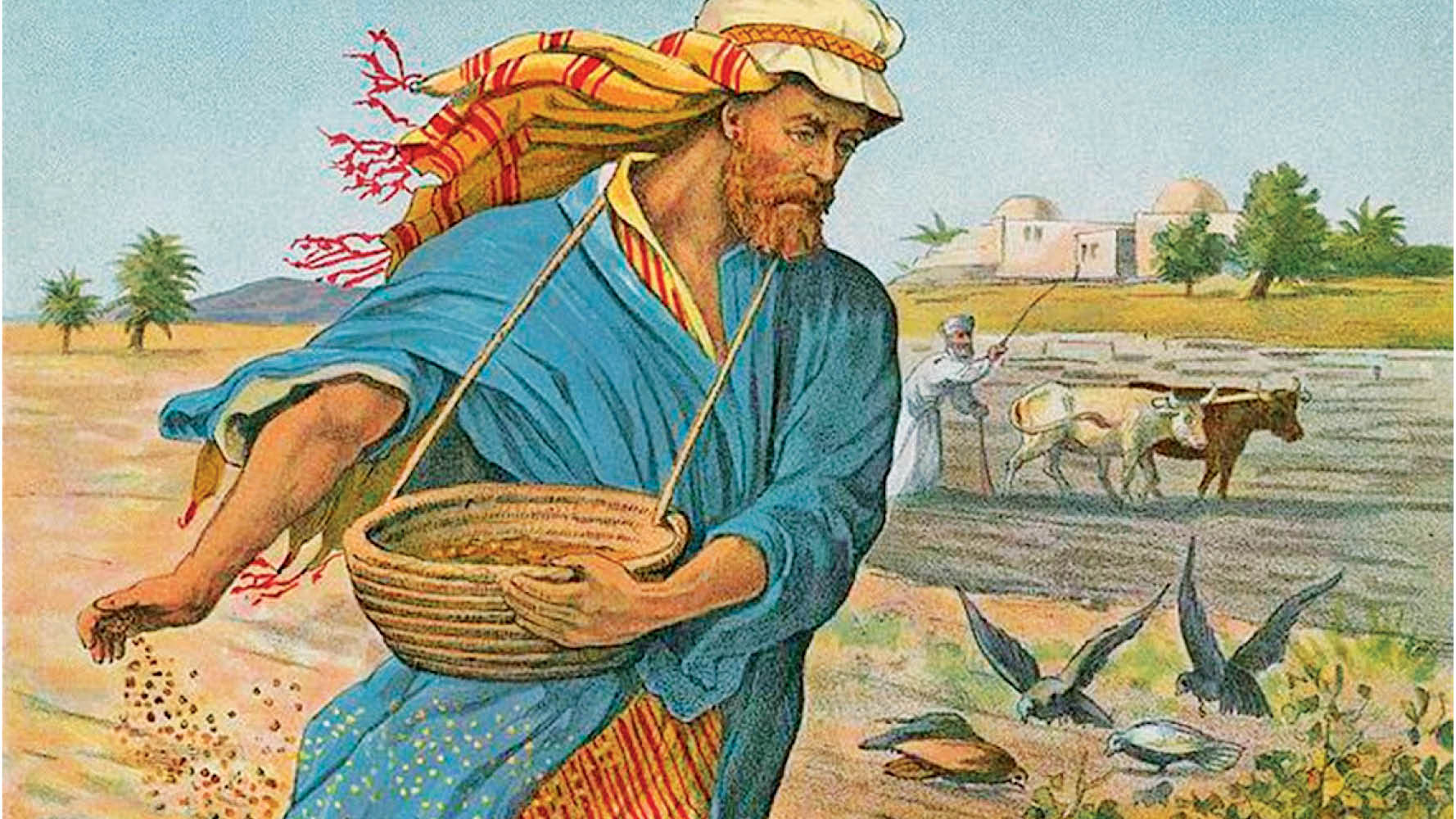
Jesus addresses a crowd from a boat while the people listen on the shore. He tells many parables. One of those parables concerns a farmer who sows seed. Some of it falls on shallow soil, where the seeds sprouts quickly, but wilts in the sun because their roots are shallow. Some seed falls on a path where birds come and eat them. Some seeds fall among thorns which choke out the tender plants. But some of the seed falls on fertile soil and produce a huge crop.

The disciples ask Jesus why He teachers in parables. He replies that they are given for those who listen to his teaching. Those people will increase in knowledge, but those who don’t listen, even the little knowledge they have will be taken away.

Application

Spiritual gifts are like muscles; the more you use them, the stronger they become. Faith, understanding, wisdom, prophecy, prayer; all require effort on our part if we are to grow in them.

Jesus used parables to separate those who are receptive to His message from those who are stubborn. Parables take effort to decode. They reveal whether the heart of a person is rocky soil or fertile soil.

Am I prepared to put in the effort to work on my relationship with the Lord? Will I spend time in prayer and reading the Bible?

To those who seek the Lord with some effort, more understanding will be given.

Prayer

Please help me Lord to be more diligent in seeking you. Amen.

Quote for the Day

Even as I saw the magnitude of my sin, I also saw Jesus Christ in all His splendor as my redeemer. I saw Him for what I’d always known deep in my heart that He was. All of my recent nagging doubts were swept away by a wave of joyous certainty. It was glorious! Merlin Carothers

Reflection on Matthew 12: 38-50

Image by Stefan Keller from Pixabay

Scripture

“Then the spirit finds seven other spirits more evil than itself, and they all enter the person and live there. And so that person is worse off than before.”

Observation

Some teachers of the law, together with some Pharisees, come to Jesus and demand a sign to prove his authority. Jesus rebuke them, saying that only an evil and adulterous generation would demand a sign.

He goes on to say that Nineveh and the Queen of Sheba will condemn these people on Judgement Day, because they have refused to listen to Him.

When an evil spirit leaves a person, it goes into the wilderness and eventually returns to the person it came from. It finds them empty and swept clean, so it goes and invites seven other spirits to join it. So the person is worse off than before.

Application

Evil spirits are real, and their ability to enter people’s lives is also real.

Jesus has given his followers authority over all demons. With a simple command spoken in faith, a Spirit-filled Christian can remove evil spirits.

But Jesus warns us that an empty person is a rich target for a person who is exorcised but does not have saving faith. This is because they have nothing to fill the space left by the departing demons. Unless the person receives salvation, and therefore the Holy Spirit, these demons may return and bring friends.

The ministry of deliverance is very powerful, but it must be used with great wisdom.

Satan is a vanquished foe, but he will use every tactic to consolidate his hold on people.

James says, “Submit to God. Resist the devil, and he will flee from you.”

Prayer

Lord Jesus, I rejoice that you have won the victory over satan. Please help me to discern evil spirits and act with your wisdom. Amen.

Jo Nova: Climate experts wrong on Australian frosts, and media say nothing

From Jo Nova:

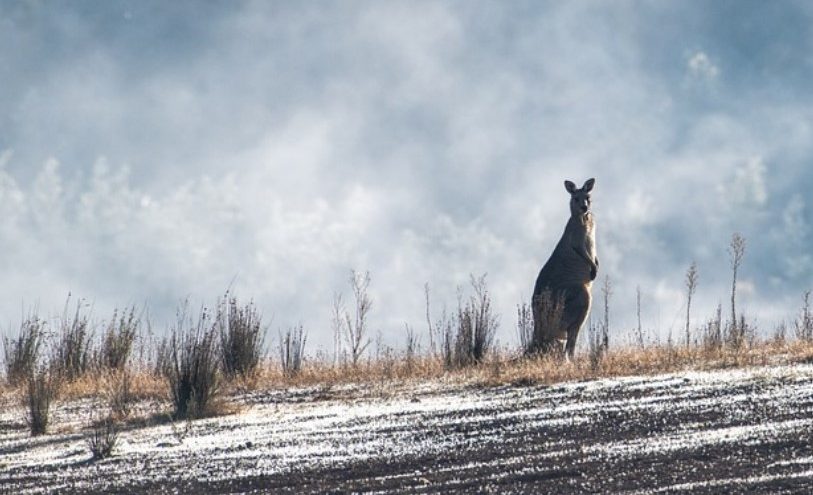
A Kangaroo on the Frost, Australia

Image by Penny from Pixabay

Climate experts wrong on Australian frosts, and media say nothing

The IPCC experts were sure would be less frosts in Australia, but buried in a government funded ABC weather report was the virtually unknown admission that the frost season is actually growing across southern Australia, not shrinking. And in some places by an astonishing 40 extra days a year. What’s more, the researchers have known about this long term trend for years but didn’t think to mention it, and the ABC didn’t have a problem with that either. (It’s not like farmers need to know these things?)

When asked for an explanation for the increase in frosts, the ANU climate expert said “I think this is one of those climate surprises,” as if the IPCC unexpectedly won a game of Bingo, instead of getting a core weather trend 100% wrong.

We note the ABC feigned journalism to cover up for the Bureau of Meteorology and IPCC failures. Where were the headlines: “Climate Change causes more frosts, not less”, or “IPCC models dangerously misleading on frosts?” Did any Australian farmers and investors buy up properties and plant the wrong crops based on the global warming misinformation repeated or tacitly endorsed by the ABC, BoM and CSIRO?

Frost damage costs Australian farmers around $400 million each year. (Perhaps if we sold the ABC we could cover that).

Frost expected across nearly every state and territory in Australia this weekend

By Tyne Logan, ABC Australia

Buried under 450 words of weather, trite caveats, and preamble the ABC journalist finally gets to a new virtually unknown climate trend that affects farmers, investors, researchers, and rural Australia:

The latest Intergovernmental Panel on Climate Change report projected, with high confidence, that frost events would decrease, in general, across southern Australia in the future with climate change.

ANU climate applications scientist Steven Crimp said some parts of New South Wales were now experiencing five more frost events on average each year, compared to 1960.

And he has known for years:

He said this was based on local weather station data between 1960 and 2018, but the trend was unlikely to have changed much in the past five years.

“I think this is one of those climate surprises,” he said.

Scientifically they are not caught unaware because climate models are useless politicized fantasies, it’s because there is more “climate-nuance” around now:

“Despite the sort of overall warming trend in our temperatures, the extremes of our temperatures, be they hot or cold, are acting in a slightly more nuanced and complex way, which can be quite surprising at times,” he said.
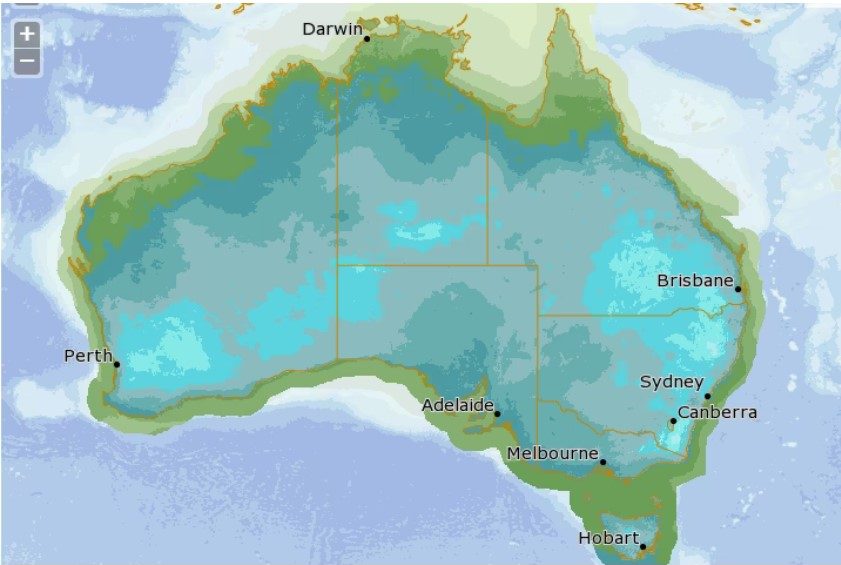
Below zero temperatures in Australia.

BOM forecast overnight minimum temperatures to fall well below zero across large swathes of the country [last] Sunday.

#302226;font-family: Candara, Verdana, sans-serif">But jokes aside, this actually seems like a trend that matters:

Dr Crimp said they had also found the frost season was lengthening across southern Australia.

“So if we think about the east coast first, we see an earlier start and a later finish to that frost window,” he said. “In some cases, the extension of that frost window is greater than 40 days.

“But in Western Australia in particular, we see that it’s less to do with the later frost occurrence, but more earlier frost occurrence.”

The frosts are due to the dry conditions, says Dr Crimp, putting in an admirable effort at scientific-word-salad to cover up for what he’s not allowed to say — that they have no idea.

Why aren’t frost days decreasing?

Dr Crimp said, ironically, the observations could be explained by the types of weather system that brought warmer, drier weather. That was high pressure systems which often produced the clear, still nights needed for frost to settle.

“As anyone knows who’s outside at night in winter, you have to have those clear night skies and the atmosphere needs to be very dry,” he said.

“That way the surface of the Earth loses heat very rapidly and any moisture in the air then condenses as a frost. “So because we are getting those dry conditions that are starting to emerge, that is more conducive for frosts to occur.”

But the truth is that, on average, and a priori — global warming would increase humidity and global cooling would  dry the air out. And carbon dioxide is supposed to work at night time too — increasing minimum temperatures. All these factors make frosts less likely.

And yet the frosts happen.