You need to curate your heart. You need to worship well. Because you are what you love. James Smith
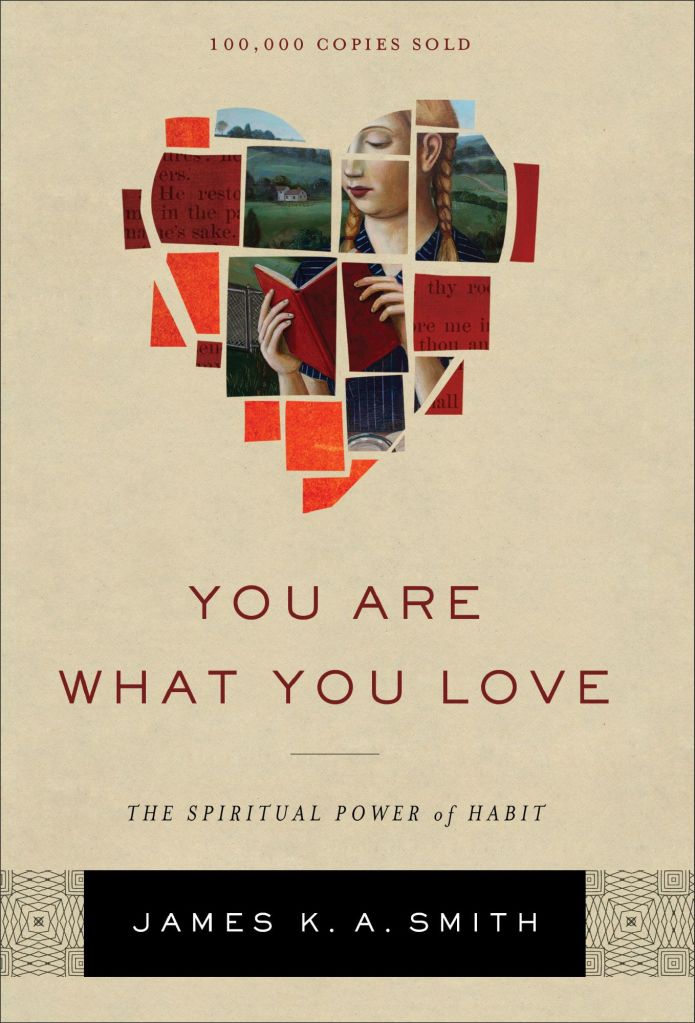
You need to curate your heart. You need to worship well. Because you are what you love. James Smith

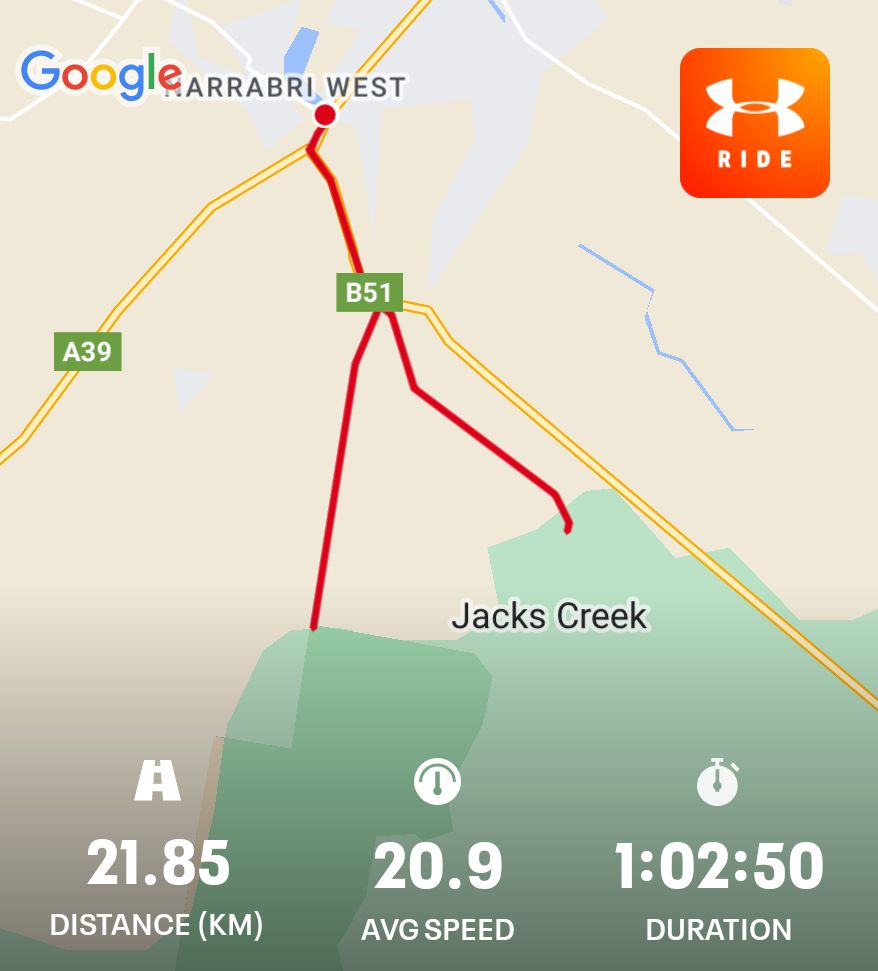
It was good to be out on the bike this morning after a few days feeling less than stellar. A beautiful morning though a little breezy. I rode to Jacks Creek and Gun Club Roads #cycling #Narrabri #Biketooter
Worship is the “imagination station” that incubates our loves and longings so that our cultural endeavours are indexed toward God and his kingdom. James Smith

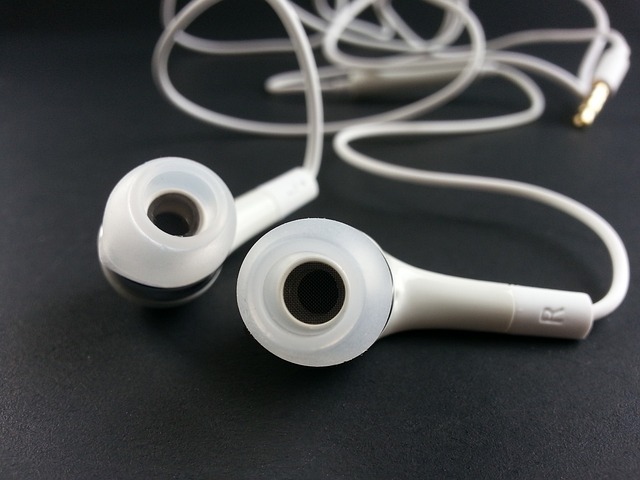
Like many people, I find that having something to listen to helps me to keep going with my exercise. I often listen to podcasts when I ride, so that my mind isn’t thinking so much about how my legs hurt. It is also an opportunity to listen to different speakers and learn new things.
The traditional method using earphones pipes the sound into your ears using a bluetooth connection to the phone. The problem is that it is then harder to hear what is going on around you. You become isolated from the environment. Not only is this inconvenient in the sense that you can’t hear bird noises and other sounds of nature, but it can be dangerous when riding on the road.
A few weeks ago, I treated myself to an overdue birthday present of bone conduction earphones, which are awesome. Instead of fitting little speakers in your ear, you have a couple of small vibrating pads that sit on the bones in front of the ear. The vibrations go through the cheek bones directly to the inner ear. It sounds weird but provides excellent quality, and you can hear what is happening around you.
Many people are tuned in to what is happening around them in the physical realms but are totally unaware of the spiritual realm. They think that living a “good life” defined by having a good job, nice things, maybe a good family is all there is. These things are good, but they are only half the story.
God has created each one of us to have a living and dynamic relationship with Him. Our self-centredness and rebellion against God have left us blind and deaf to God. We are like somebody with headphones playing very loud music that make sit impossible to hear God.
To get the full life that God wants you to have, you need to tune into His Spirit. Ask Jesus to remove the blockages that stop you from relating to Him, and make that decision to let God rule your life.
When you do that, it is like entering a whole new dimension of living.
Scripture.
“God blesses those who hunger and thirst for justice, for they will be satisfied.”
Application.
Money does not meet our needs; it does not satisfy. If we have some income, we always want more. We think, “If only I had another ten thousand dollars, then I would be happy.” But we find that a higher income opens our eyes to more to want.
Other sources of meaning also come with the same properties. We think, “more sex or more holidays, or more power, or a better job, surely these will make me happy.” But they just leave us wanting more.
Jesus tells us that those who hunger and thirst for justice will be satisfied.
We can interpret this in two ways.
Those who want the righteousness of God and pursue Him above all else, they will be satisfied. The Holy Spirit removes our desires for sin over time, and we live a holy life.
The beatitude can also be interpreted as meaning that those who hunger and thirst for justice in society, or in a community, will be also satisfied. We focus on bringing an end to unjust systems and we find that, through prayer and action, God cleanses the land of unrighteousness.
Unlike the fleshly ways of attending to our own desires, seeking God’s ways brings fulfilment of our needs for significance.
Prayer
Lord, please teach me how to hunger and first for your righteousness. Amen.

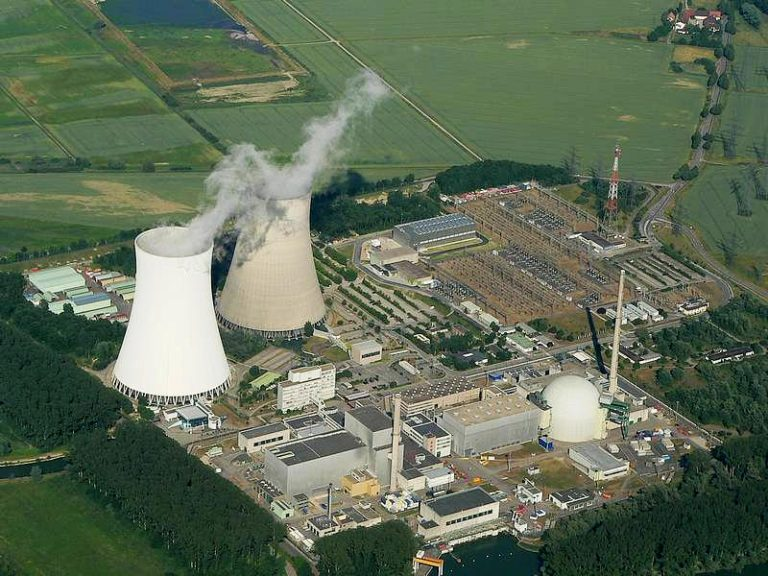
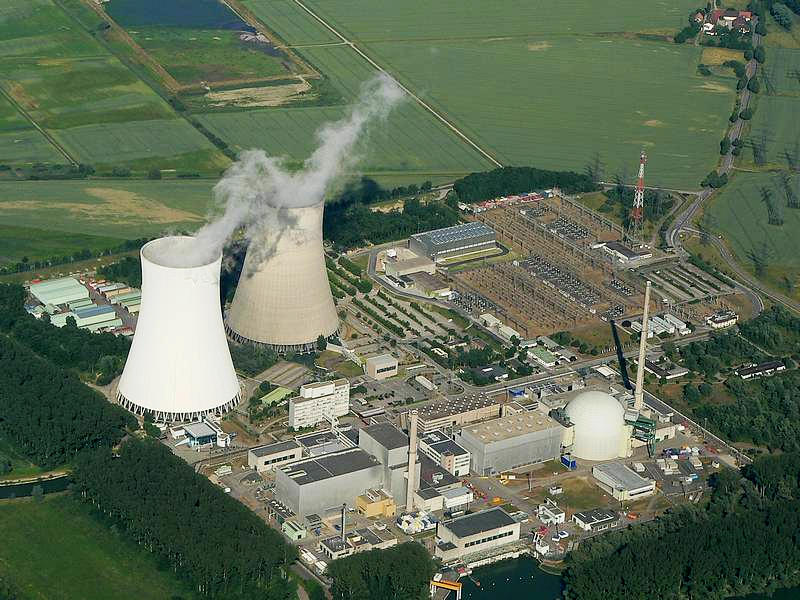
Phillippsburg Nuclear Power Plant by Lothar Neumann, Gernsbach
By Jo Nova
Germany already had nuclear power in 2002, if they just kept it and didn’t build all the wind and solar plants, they wouldn’t have had to spend 697 Billion Euro on subsidies, and would have cut their emissions by 73% more.
If ever there is a statistic that says there is something rotten in the State of Climate Panic, this is surely it. I mean, does CO2 matter or doesn’t it? Do the Greens care at all, or even a bit? If there was a climate emergency and The Greens were worried about CO2, they might have protested that the EnergieWende was a reckless experiment. Instead the But if the Greens were tools for communists, foreign states or banker-investors, then they might keep choosing options that benefit other countries, help Bankers or just make Big Government bigger.
Either the German Greens have utterly failed at the very task they set out to do, or they were really aiming at something else.
Ross Pomery writes at RealClearScience and WattsUpWithThat
At the dawn of the millennium, Germany launched an ambitious plan to transition to renewable energy. “Die Energiewende” initiated a massive expansion of solar and wind power, resulting in a commendable 25 percent reduction in carbon emissions by 2022…
In 2002, nuclear power supplied about a fifth of Germany’s electricity. Twenty-one years later, it supplied none. A layperson might think that cheap wind and solar could simply fill the gap, but it isn’t so simple.
Jan Emblemsvåg, a Professor of Civil Engineering at Norway’s NTNU just published a study comparing the ambitious German Energiewende renewable program with nuclear power:
“what if Germany had spent their money on nuclear power and not followed their policy from 2002 through 2022 (20 years); would Germany have achieved more emission reductions and lower expenses?”
Even German bureaucrats admit Energiewende “poses a threat to the German economy”:
German Federal Accounting Office (Bundesrechnungshof) writes about the German policy dubbed ‘Die Energiewende’ in German, and it concludes: ‘The Bundesrechnungshof warns that the energy transition in its current form poses a threat to the German economy and overburdens the financial capacity of electricity-consuming companies and households’ (Bundesrechnungshof Citation2021a).
A whole lot of wind (green) and solar (orange) power were added to the German grid and it was worse than useless:

Given these results, there can be no doubt whatsoever that if Germany had invested in NPPs [Nuclear Power Plants] instead of VREs [Variable Renewable Energy], Germany would have decarbonised more with far less nominal expenditures. The short conclusion is that Germany would have reached its climate goals with a substantial margin at half the expenditures of Energiewende.
Just burn that money in a pyre to the Weather Gods:
https://www.tandfonline.com/doi/full/10.1080/14786451.2024.2355642#d1e128
These costs do not included the added burden of expensive electricity on businesses and homes, the opportunity costs of money that could have been spent elsewhere, or the loss of talent, brains and industry to other countries.
The paper goes through another scenario where more nuclear plants were built with careful estimations of the costs and long times to construct plants and still concludes that the Germans would have saved $330 billion euro.
https://www.tandfonline.com/doi/full/10.1080/14786451.2024.2355642#d1e128
Not coincidentally, in 2024 Germany has some of the most expensive electricity in Europe, business confidence is low, and VW have just announced that after 87 years in production, they might have to close their German factories.
Volkswagen, which was founded in 1937, said on Monday that it could no longer rule out unprecedented plant closures in Germany as it seeks ways to save several billion euros.
Chief executive Oliver Blume said: “The economic environment has become even tougher and new players are pushing into Europe. Germany as a business location is falling further behind in terms of competitiveness.”
Volkswagen employs around 650,000 workers globally, almost 300,000 of whom are in Germany, and the threat of factory closures sparked an immediate fierce backlash …
Emblemsvåg, J. (2024). What if Germany had invested in nuclear power? A comparison between the German energy policy the last 20 years and an alternative policy of investing in nuclear power. International Journal of Sustainable Energy, 43(1). https://doi.org/10.1080/14786451.2024.2355642
 New Life Narrabri