Your hand guides me
Scripture.
“Just say a simple, “Yes, I will,” or “No, I won’t.” Anything beyond this is from the evil one.
Observation.
Jesus goes on to teach about divorce and vows.
In the Old Testament, it was permissible for a man to divorce his wife by simply giving her a written notice. Jesus now says that while this might be the law, the way of discipleship is to avoid divorce, unless a wife has been unfaithful .
In the past, people were required to fulfil vows that they made. The Pharisees found various loopholes rendering vows as unnecessary and deceptive. Jesus says, “Let your ‘Yes’ be ‘Yes’ and your ‘No’ be ‘No’. Anything beyond this is from the devil.
Application.
A vow was supposed to be a way of binding a person to fulfil what they had promised to do. To swear on the name of God was, in theory, to call down the wrath of God if you break your promise.
The Pharisees had brought in levels of binding for various vows, making the practice totally worthless. As usual, the burden of this fell on the poor and uneducated people who were prone to being defrauded.
Jesus tells us to be people of our word. If we promise to do something, we should do it.
I recently had some big renovations done on my home. The total cost was ova, $150,000. There was no contract, just the bond of trust that I would pay what was owed and the various tradesmen would not overcharge me.
When we follow Jesus’s commands to follow through with their promises regardless of legalities, everybody benefits.
Prayer
Lord Jesus, you require us to live up to the promises we make. Please help me to ensure that I am a trustworthy person in every part of my life. Amen.

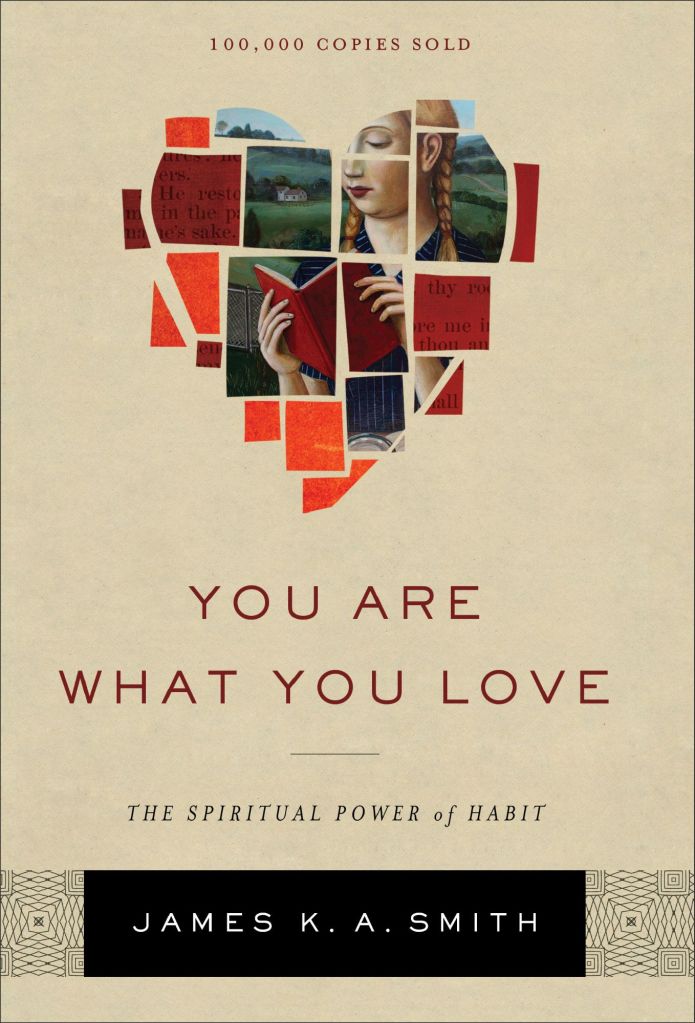
Yes, Christian formation is a life-encompassing, Monday through Saturday, week in and week out project; but it radiates from, and is nourished by, the worship life of the congregation gathered around Word and Table. James Smith

Scripture
“It is better for you. To lose one part of your body, than for your whole body to be thrown into hell.”
Observation
The law says that if someone kills another person, they are subject to judgement. But Jesus now says, that getting angry or calling someone an idiot is just as bad and may cause us to end up in hell. If we remember, when offering a sacrifice in the temple, that somebody is angry at us, we need to go and fix that relationship immediately.
If we are taken to court It is in our best interest to settle our differences before it comes to being adjudicated.
Adultery, like anger, starts in the mind. Lusting in our hearts after someone is as bad as adultery.
If our eye or hand leads us into sin, we should remove them from our body. It is better to lose a part of our body than it is to go to hell with a complete body.
Application
Eternity is real and hell is awful.
We occasionally hear of someone who has got caught in a remote location, and the only way to get out is to cut off the trapped body part. If we value our life on earth so highly, then we should value eternal life even more highly
It is easy to allow small sins to escalate. Nobody starts off running red traffic lights. We start by running the amber lights and gradually increasing the transgression. And then one day the light is red, and a car is in the intersection.
Jesus is telling us here that we don’t start off being murderous and adulterers. The sin starts in the mind and slowly escalates.
If we are serious about going to heaven, we will want to take severe action before we find ourselves in hell. Perhaps, we have to cut off the internet rather than a body part, or leave behind corrupting friends.
Eternal life is worth any sacrifice.
Prayer
Lord, please show me what parts of my life are leading me away from you. Give me the grace to cut them off. Amen..
From lifesitenews.com
The awakening of a mother who had no brainwave activity further calls into question the long-held medical understanding of so-called ‘brain death.’
 A 36-year-old mother without brain activity woke up after hearing the voice of her one-year-old daughter, one of many incidents that calls into question the long-held medical understanding of so-called “brain death.”
Father Michael Orsi, who has heard the play-by-play of the remarkable episode from one of the nurse anesthesiologists involved, told LifeSiteNews that the woman recently went to the hospital for a double endoscopy. While patients normally wake within five to 10 minutes of the end of the procedure, the mother did not wake up – hospital staff found her heart had stopped.
She received CPR, and soon her heart was beating on its own again. Believing she had suffered a stroke, they sent the mother to receive an MRI and found she had no brain waves. She was then transferred to the intensive care unit (ICU) and put on a respirator to help her breathe.
After two days in ICU, the husband told the nurse on duty that if his wife could only hear the voice of her one-year-old daughter she would be OK. Amazingly, when he prompted his daughter to speak over his cell phone to her mother, she woke up. She was “in perfect condition,” according to Orsi.
The priest has verified the details of the chain of events with the woman’s doctor, Omar Hussein, who has also confirmed to LifeSiteNews that the mother woke up upon hearing the voice of her daughter. Hussein has said there is no way he can scientifically explain what happened.
However, the longtime medical “consensus” on brain death in the U.S. has been contested by various doctors, some of whom point out that patients can indeed go on to recover consciousness after meeting what has been considered official criteria for brain death.
Dr. Heidi Klessig recently explained that such cases of recovery after flatline EEGs (no brainwaves) can likely be attributed to a condition called Global Ischemic Penumbra, or GIP:
Like every other organ, the brain shuts down its function when its blood flow is reduced in order to conserve energy. At 70 percent of normal blood flow, the brain’s neurological functioning is reduced, and at a 50 percent reduction the EEG becomes flatline. But tissue damage doesn’t begin until blood flow to the brain drops below 20 percent of normal for several hours. GIP is a term doctors use to refer to that interval when the brain’s blood flow is between 20 percent and 50 percent of normal.
During GIP, the brain will not respond to neurological testing and has no electrical activity on EEG but still has enough blood flow to maintain tissue viability – meaning that recovery is still possible. During GIP, a person will appear “brain dead” using the current medical guidelines and testing but with continuing care they could potentially improve.
subscribe to our daily headlines US Canada Catholic
Just last month, the New York Times shared the results of a large study that found at least a quarter of unresponsive patients (those diagnosed with a coma, vegetative state, or minimally conscious state) have some awareness.
During the study, teams of neurologists asked 241 such unresponsive patients to do “complex cognitive tasks,” such as imagining themselves playing tennis. Remarkably, 25 percent of the patients exhibited the “same patterns of brain activity seen in healthy people.”
“It’s not OK to know this and do nothing,” remarked Dr. Nicholas Schiff, a neurologist at Weill Cornell Medicine, the Times reported.
“This puts a whole new light on the Terri Schiavo case,” Fr. Orsi told LifeSiteNews, referring to a court’s decision to allow the husband of a cognitively disabled woman in a persistent vegetative state to have her refused nutrition and water so that she would die a slow and painful death of dehydration.
The priest pointed to the implications these findings have for the care of unresponsive patients, including in response to their capacity for mental distress.
“Imagine the terror of that, listening to what they’re going to do,” he said regarding times when the decision is made to pull the plug on an unresponsive patient. “Or hearing how it’s time to call in the organ transplant team. This is horrible.”
“Brain death” guidelines in the U.S. were revised this year to state that it occurs in individuals with catastrophic brain injury, and no evidence of function of the “brain as a whole,” a condition that must be “permanent.” Klessig has pointed out that “under the ‘brain as a whole’ formulation, people can be declared dead while parts of the brain are still working, as evidenced by electrical activity on EEG.”
Klessig has also highlighted the fact that, according to the new guideline, “(t)he panel chose to use the term permanent to mean function was lost and (1) will not resume spontaneously, and (2) medical interventions will not be used to attempt restoration of function.”
“The fact that medical interventions ‘will not be used’ implies that they might have been used and might have been successful if used. This fact alone reveals that these people are not dead, since there exists a possibility of resuscitation!” she wrote.
Klessig noted that the diagnosis of brain death becomes “a self-fulfilling prophecy: most people diagnosed with BD/DNC very quickly have their support withdrawn or become organ donors.” She is calling for AAN guidelines to be scrapped in favor of “the traditional definition of death: cessation of cardiopulmonary function.”
“Brain death is a legal fiction that removes civil rights from vulnerable brain-injured people, who, under the United States Constitution, possess an ‘inalienable right to life,’ deserve protection, and should be treated as mentally disabled persons,” Klessig maintains.
Too often we look for the Spirit in the extraordinary when God has promised to be present in the ordinary. James Smith

 New Life Narrabri