Reflection on Matthew 22:23-33

Scripture

Jesus replied, “Your mistake is that you don’t know the Scripture and you don’t know the power of God.”

Observation

Jesus is approached by some Sadducees who do not believe in the resurrection of the dead. They pose a question to Jesus that is meant to prove that he’s wrong. The question involves a woman, who marries a man who dies. She is passed along a line of brothers without producing any children. So, whose wife will she be in the resurrection?

Jesus responds by saying these people know neither the scriptures nor the power of God. Marriage is not an institution for the next life, but it is for producing children in this life, Moreover, the proof of the resurrection is seen in that God describes himself as the God of Abraham, Isaac, and Jacob, and he is the God of the living, not of the dead.

Application

The Sadducees were the liberals of the Jewish people. They basically denied everything supernatural, including the resurrection of the dead.

Like modern liberal christians, they didn’t know the scriptures and they didn’t know the power of God.

We can learn much about the Lord and His ways from studying the Bible. We find that there is much in the word of God that contradict so much of the world views of unbelievers.

The resurrection of Jesus gives us hope because it demonstrates the power of God. The same God who raised Jesus from the dead will give life to us also. What a glorious hope that is! The same God answers prayers and provides all that we need.

Let us endeavour to do all that we can to know the Scriptures and the power of God.

Prayer

Lord, you are a mighty God. Please help me to understand your Word and to have greater faith in you. Amen.

Quote for the Day

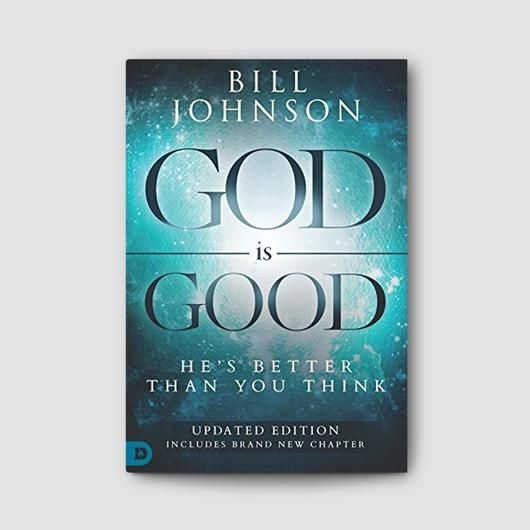
A worshiping community changes the atmosphere over the city that actually creates a realm of easy access to know Christ for those who don’t know Him. There is a profound connection in the unseen realm between our praises, His glory, His goodness, and the great harvest of souls. Bill Johnson et al

Christian Lifestyle Part 5- Pornography

Christian Lifestyle Part 5

Pornography

Pornography is probably one of the most pervasive influences in the western world today.

Consider the following statistics:

  • A 2020 report by the website Pornhub, one of the largest adult content platforms, claimed that it received over 42 billion visits in 2019, with an average of 1.3 billion visits per month.
  • A 2019 survey conducted by the Australian Institute of Family Studies found that approximately 1 in 5 Australians (21.5%) reported watching pornography at least weekly.
  • A 2018 study published in the Journal of Sex Research estimated that around 30% of internet users in the United States (approximately 90 million people) visited adult websites in a given month.

Various studies have revealed that porn use amongst teens is also widespread. This is very concerning as they are gaining an understanding of sexuality that is unrealistic and is deliberately isolated from the context of relationships.

A 2020 Australian study published in the Journal of Adolescence found that:

  • 69% of males and 23% of females aged 15-16 reported watching pornography in the past year.
  • 45% of males and 13% of females reported watching pornography at least weekly.

The purpose of pornography is to stimulate sexual desire through the use of imagery. There are complex chemical reactions that take place in the brain when exposed to pornography, but the general result of regular pornography use is that we become more fixated on the images that on real people, we seek ever greater levels of stimulation, and some get caught in a spiral that may lead to child sexual abuse material.

People often think that porn is harmless because nobody gets hurt- it is a lesser sin than sexual assault, domestic violence and child abuse.

The fact is that people are hurt badly by pornography. According to anti-pornography campaigners fightthenewdrug.org, there is no guarantee that actors are consenting to what is happening. There is often a high level of violence being portrayed. There is also evidence of links between pornography and human trafficking.

Right through the Bible there is a strong condemnation of sexual practices that are outside of life-long marriage. Prostitution, adultery, fornication, homosexuality, and much more are described as sinful and even an abomination to the Lord.

Watching pornography, though, is not condemned in the Bible, because that was not an issue in those days. Jesus did say this: “But I tell you that anyone who looks at a woman lustfully has already committed adultery with her in his heart. “ (Matthew 5:28)

Pornography essentially strips away the personhood of the actors. These people were created in the image of God, but are partaking in something that is not honouring to God’s ways. To become a channel of merely stirring desire with no essence of relationship is a violation of the humanity of the people.

For these reasons, christians should not view pornography. It debases watcher, actor and producer. Rather than stir up the works of the flesh, christians should be producing the fruit of the Holy Spirit (see Galatians 5:19-25)

Reflection on Matthew 22:15-22

Scripture

“Well, then,” he said “give to Caesar what belongs to Caesar and to God what belongs to God.”

Observation

The Pharisees decide to trap Jesus into saying something that would get him into trouble. They send a deputation of various factions to meet Him. They start with flattery to disarm him. But then ask the question, “Is it right to pay taxes to Caesar or not?”

Jesus sees through their words because he looks at the heart. He tells them to show him the coins used to pay the tax. He asks, “Whose image is stamped on the coin?” “Caesar’s”, they reply.

Jesus, then tells them to give to Caesar that which belongs to Caesar and to God that which belongs to God.

Application

Nobody likes paying tax. This was especially true in Israel where the ordinary people had to pay tax to the hated occupying Romans

By asking Jesus. if it was right to pay tax to the Romans, the Pharisees thought they had trapped Him. He couldn’t say “No” because that would be treason. But He couldn’t say “Yes” because that would discredit him in the eyes of all the people.

Jesus does not directly answer the question, but turns it into a teachable moment. He points out that the coins have Caesar’s image on them, marking them has already belonging to Caesar.

The second half of his answer, that we give to God, what belongs to God is a reminder that people are made in the image of God. If it is right for me to render tax to Caesar, then it is also right for me to give my life to God, who created me.

For this reason, our lives are not about gaining power or status over the other image bearers. Rather we are called to give ourselves to serving God and to serving others.

Prayer

Lord Jesus. Please help me to distinguish between what belongs to Caesar and what belongs to you. Amen.