
What is your mission?
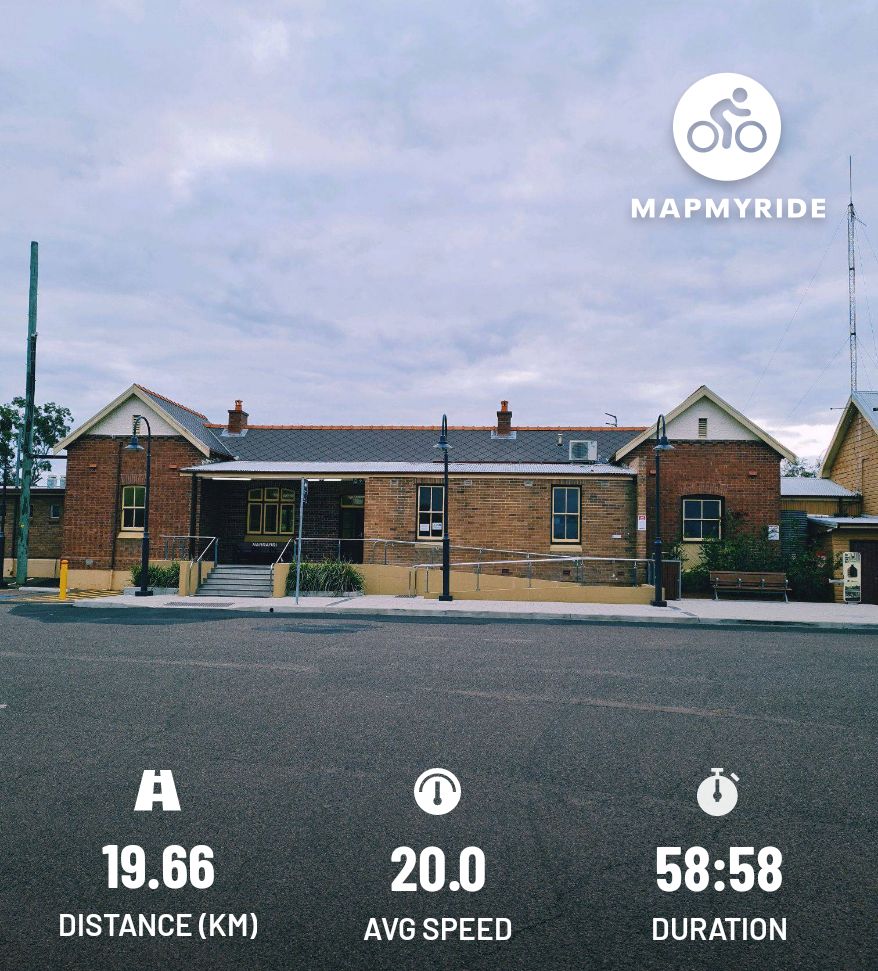
Overcast and cold this morning. I rode to Bunnings then around the edge of town and down to Riverbend Estate before heading home. #cycling #Narrabri #Biketooter
No one becomes an apostle without experiencing betrayal. John Alley



Scripture
God the Father knew you and chose you long ago and his Spirit has made you holy as a result. You have obeyed him and have been cleansed by the blood of Jesus Christ.
Observation
The letter is from Peter, and he writes to believers in the provinces in Asia Minor. He says they were known by God and chosen by Him long ago.
It is by God’s mercy that we have been born again. We live with great expectation and we have a priceless inheritance kept in heaven for us.
Through our faith, God is protecting us by his power until we receive the salvation which is ready to be revealed on the last day.
Application
It is an awesome thought that God knew us and chose us from long ago or actually, from before the world was created.
He has known me forever and will know me forever. He knew who I would be and what I would do in my life.
When times of hardship come, or even persecution, it is encouraging to know that God knew about it, and that in some way it will turn out to to His glory and for my good. This can give me a bigger perspective and rescue me from the temptations of introspection and self-pity.
Because He knows me, God has chosen me. I can’t go down the theological rabbit hole of predestination. Suffice it to say that God saw in me something He valued and that He could work on to bring me to salvation. He also saw that when the time came to be invited into the kingdom, I would say “yes.”
Prayer
You knew me and chose me from long ago. All praise and honour to you, Lord Jesus Christ. Amen.

Ryan Mallon reports:
The study, which assessed almost 500,000 participants over a 13-year period, found that cycling was associated with a lower risk of all-cause dementia compared to driving
by Ryan Mallon
Tue, Jun 10, 2025 15:57
2
Cycling regularly in midlife can help reduce the risk of dementia, as well as maintaining brain health, a new large-scale study has found.
The study, which was carried out by researchers based in China and Australia and published this week in JAMA Network Open(link is external), aimed to investigate the long-term association between how people travel and dementia risk and brain structure.
The researchers assessed data collected over a 13-year spell from 479,723 participants of UK Biobank, a long-term biomedical database containing de-identified biological samples and genetic, lifestyle, and health information.
The participants, 54 per cent of whom were women, with an average baseline age of 56.5, were all dementia-free at the beginning of the study and able to walk.
They were asked what modes of transport they had used most often to get about in the previous four weeks, excluding their commute to and from work. These responses were then grouped into four categories: non-active (car or public transport), walking, mixed-walking (a combination of non-active transport and walking), and cycling and mixed-cycling (cycling combined with other modes).
Nearly half of the participants (49.1 per cent) were inactive; while 6.8 per cent were classified as walking-only, 37 per cent as mixed-walking, and seven per cent as cycling and mixed-cycling.
Cycle to work and you’ll need fewer sick days, new study suggests — as researchers find “further reasons for employers to encourage” cycling
Over the following 13 years, 8,845 cases of dementia and 3,956 cases of Alzheimer’s disease were recorded among the participants, identified by the researchers through hospital records and death registers.
According to the study’s categorisation, travel that incorporated cycling was associated with a lower adjusted risk of young-onset dementia, late on-set dementia, and Alzheimer’s, compared to non-active transport.
Cycling, either on its own or combined with other forms of transport, was also found to have a significant connection with higher hippocampal volumes, the researchers concluding that riding a bike represents “a promising approach for maintaining brain health”.
Read the rest of the article here
A beautiful morning for riding today. I rode to the end of Haire Drive. #cycling #Narrabri #Biketooter

An apostle, therefore, must be established thoroughly in grace, made unlikely to fall, clean and holy in the Lord’s eyes, with every form of vested interest and party spirit cleaned away. Then might they be given a trust, an imbuement of the personal authority of Christ in caring for the church. John Alley

 New Life Narrabri