Keep watch…

The sermon for November 30th 2025 is now available on the New Life web site.
In this sermon, which is based on Romans 16:1-16, I talk about The Cell Is Church.
Click here to listen or to download the mp3.
Christianity is without doubt difficult and taxing, and all of us fail to emulate the perfection of Christ himself. But we are far better for trying than for not trying, and we know that there is forgiveness available for honest failure. Peter Hitchens

Scripture
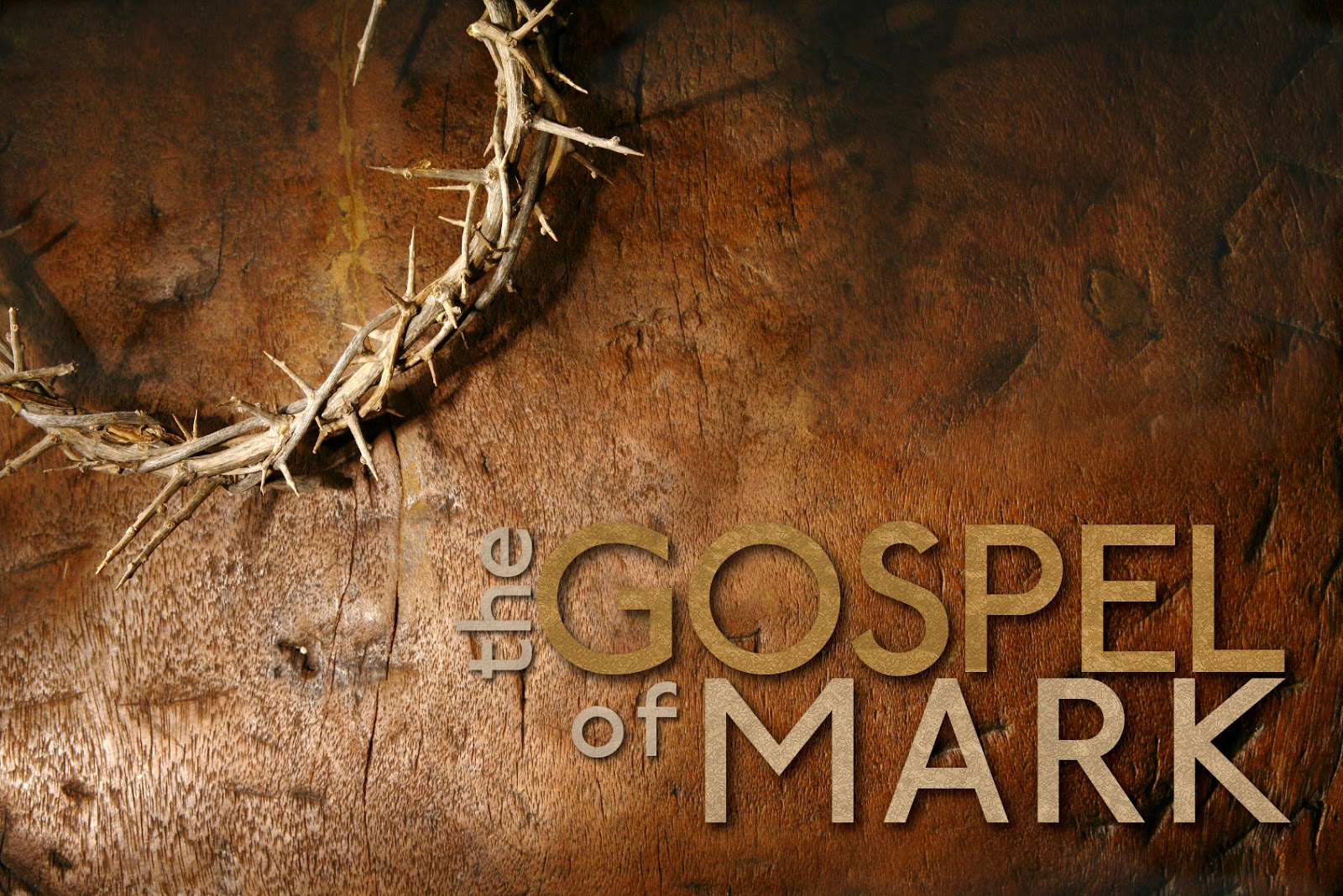
This is the Good News about Jesus the Messiah, the Son of God.
Observation
Mark’s Gospel is about the Good News about Jesus.
The message starts with John the Baptist, the prophet. He prepares the way for Jesus. John preached in the wilderness that people must repent, turn to God for forgiveness, and then be baptised.
John the Baptist was a wild figure. He wore clothes made from camel hair and ate locusts, and wild honey.
John told them that someone was coming, who was much greater than he is. John was not worthy to loosen the straps of his sandals. John baptised in water, but the Messiah would baptise in fire and the Holy Spirit.
Application
Mark’s gospel always reminds me of those videos that start “Let’s jump straight in.” He doesn’t want to waste time with stories about Jesus’s, birth, or even spend too much time in talking about John, important as he is.
This is good news, He tells us. The good news centres around the death and resurrection of Christ. Because of this, the kingdom of God is open to everyone. The war between God and people is over, and everyone who chooses the way of the Cross is able to make peace with God.
Jesus is the Messiah, He is the anointed one, the one whom Israel has been waiting for.
Jesus is the Son of God. This is a mystery that we struggle to understand, because our minds are limited. At Christmas time, we celebrate the Incarnation, God becoming a human being. God is with us. This may be beyond understanding, but it is Good News to be received by faith.
Listen
My child this mystery of salvation took place in history at a time and a place, but it was in my heart before the beginning of creation. When we planned to create a physical realm with people who are my image bearers, I knew that they would fall. But my grace and my love was such that I could not let that be the last word. I have written the Good News into the heart of every created thing from the tiniest atom, to the most distant Galaxy. Every person carries my image, but every subatomic particle expresses hints of my love.
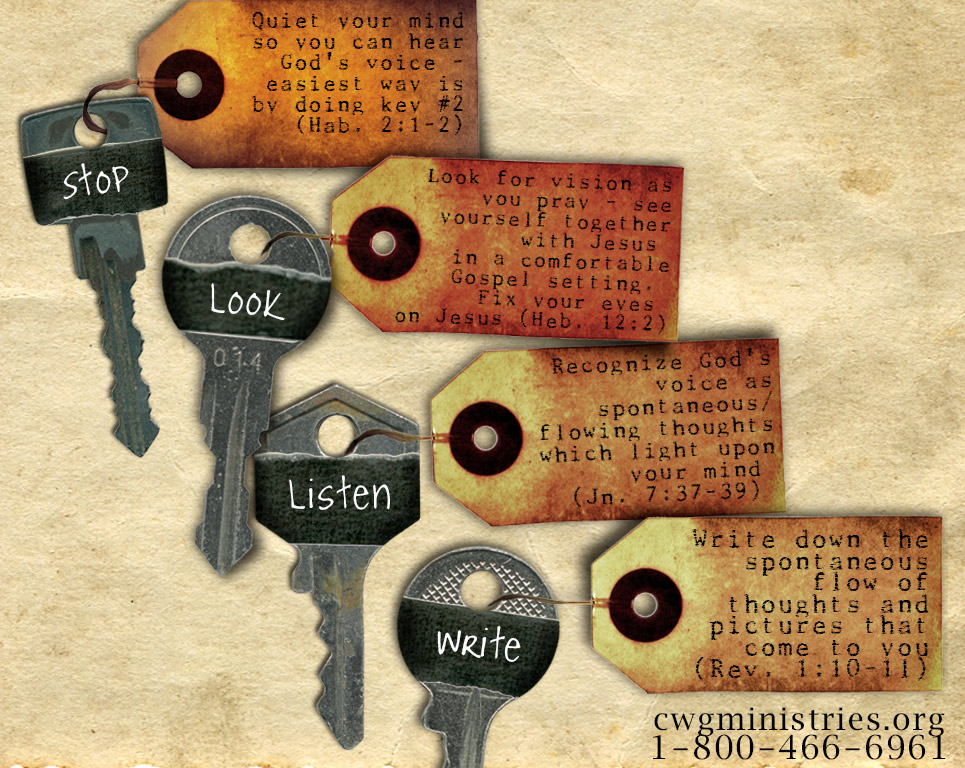
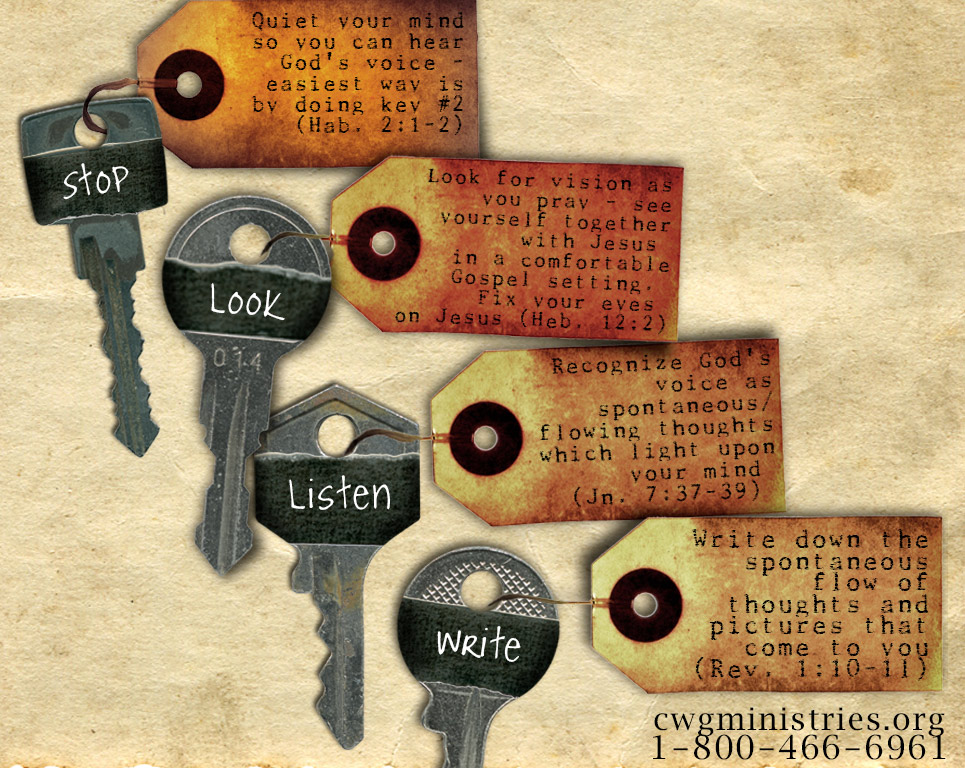
In 1979 the Lord woke me up with a booming bass voice (the only time I have ever heard God as a booming bass voice!) and said, “Mark, get up, I want to teach you how to hear My voice.” This was after six months of intense searching to answer the question of how I could hear God’s voice. I sat bolt upright in bed, wide awake. Then I lay back down and said, “You can teach me here.” He again said, “Get up and go to your office! I am going to teach you to hear My voice.”
So I got up, went to my office, and He showed me that Habakkuk did four specific, simple things to hear God’s voice (Hab. 2:1,2). They are: stop, look, listen and write.
If you think about it, this is what we naturally do when conversing with a friend. We stop thinking about other things and put our focus on them; we look at them; we listen carefully; and when it is important, we write down what they are saying so we don’t forget it. It is completely normal and accepted to record words that we consider important, as for example, a stenographer would do in a courtroom. We are simply saying why not apply these steps to our conversations with God? Are not the words of our Lord to us the most important words we will ever hear?
It is now 35 years later, and I hear the Lord speaking within me that I should take note that the four keys that Habakkuk used were used by others throughout Scripture, from Genesis to Revelation. So let’s take a look at ten individuals in the Bible who used these four keys and wrote over half the Bible.
These biblical writers composed 663 chapters of the 1189 chapters in the Bible (over 50%). That is not to say that the rest of the writers didn’t also use these four keys. If we explored the Minor Prophets and discovered they also used the four keys of stop, look, listen and write that would add another 68 chapters to the total.

It is plain even from these few recent examples that for a moral code to be effective, the code must be attributed to, and vested in, a non-human source. It must be beyond the power of humanity to change it to suit itself. If that non-human source can be shown to be false, then the moral code that it endorses cannot be absolute. It will become a matter of choice, or have to be kept in place by the threat of force, or a mixture of both, like any other code of human invention. Peter Hitchens
 New Life Narrabri