With rain forecast for the weekend, it was good to go for a ride this morning. #cycling #Narrabri

With rain forecast for the weekend, it was good to go for a ride this morning. #cycling #Narrabri
And its good and you can get a hold of the Word of God intellectually. It is quite another thing to let the Word of God reach you sympathetically; that is, your heart goes out sympathetically to the Word of God and it reaches you sympathetically. A. W. Tozer


Warm, cloudy and breezy this morning. I rode to Bunnings then around the edge of town and back home. I forgot to turn into Ugoa St, so my ride was shorter than I expected. #cycling #Narrabri

Some people would like to be filled with the Spirit for the thrill of it. They want to be thrilled and they would pay almost any price to get the thrill. However, they will not die to themselves, to the world, or to the flesh. A. W. Tozer
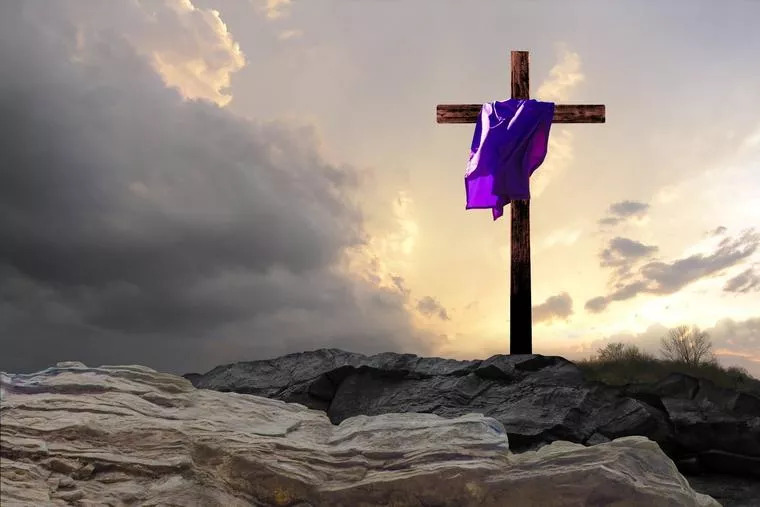
What is Lent?
Lent starts each year on Ash Wednesday, which this year falls on February 18th. The season of Lent last for 40 days (excluding Sundays) from Ash Wednesday to Holy Thursday, that is the day before Good Friday.
Lent is traditionally a time to prepare our hearts to commemorate the death of Jesus on the cross on Good Friday. It is usually marked by fasting of various forms, whether abstaining from meat, or sweet things, or complete fasts for part of the time, for example a weekly 24 hour fast.
It is our sins that required Jesus to die on the cross, so we are all complicit in His suffering. Lent is a time to humble ourselves and to examine our lives to see what sins we still need to conquer.
In the time leading up to Ash Wednesday, it is a good idea to ask God what He would like you to do to mark Lent. Perhaps it will involve fasting from food, or technology, or perhaps more prayer time.
Scripture
They were deeply offended and refused to believe in in him.
Observation
Jesus returns to Nazareth with his disciples. On the Sabbath Jesus goes to the synagogue where he teaches. At first, people are amazed at his wisdom and power to perform miracles.
The amazement turns to scepticism when they realise that he is just a carpenter’s son. They become offended.
Jesus says, to them that a prophet is honoured everywhere, except in his own hometown. Because of their unbelief Jesus can not do any miracles there, except to lay hands on a few sick people to heal them.
Application
The response of the residents of Nazareth to Jesus’s ministry goes quickly from amazement to scepticism and then deep offence.
The speed of this change, as it is narrated seems to be unusually high. Perhaps there were demons seeking to sow unbelief and even violence in the hearts of the people he grew up amongst.
We all need to check our own hearts in this regard. How open am I to the works of the Lord right now? Am I sceptical about answers to prayer or the gifts of the Holy Spirit?
Even mature Christians can harbour feelings of unbelief or anger towards God. We don’t like to talk about these feelings and thoughts because they provoke guilt and shame in us.
If we allow these things to grow in our hearts, then can we can move from amazement at the gospel to scepticism and even deep offence.
Listen
Lord, thank you for this relationship that we have. I am amazed by the facts of your great love for me.
Keith. I have loved you, and all my people with an everlasting love from before the world began. I desire that every person would turn to me, let go of their sins and receive my love. It is sad, even tragic, that many people refuse to even listen to the gospel or allow my Spirit to whisper their name.
You are a channel of my grace. Keep on serving me and you will see many people saved, more than you can imagine.
Many hearts that are hard towards me now will soften and allow the seeds of the Gospel to take root in their lives and bear fruit.
From lifestienews.com
Sentencing a frail 78-year-old Catholic to 20 years in prison is no act of justice. It is a calculated death sentence meant to terrorize Hong Kong and crush Christian resistance.
 Jimmy Lai, Apple Daily founder, arrives at the Court of Final Appeal ahead a bail hearing on February 9, 2021, in Hong Kong, ChinaPhoto by Anthony Kwan/Getty Images
(LifeSiteNews) — For Chinese Catholics, communist rule has often run red with the blood of martyrs. Now, in sentencing Hong Kong businessman and Catholic convert Jimmy Lai to 20 years in prison on fabricated crimes, the communists have created another one.
Make no mistake: sentencing a 78-year-old man in poor health to two decades behind bars is a death sentence. You know it, I know it, and the three black-robed stooges who yesterday handed down the sentence at yesterday’s Hong Kong court hearing – a sentence undoubtedly crafted by their masters in Beijing – know it.
We needn’t waste much time on the clearly fabricated charges that led to this sentencing. Lai, a newspaperman, was convicted of “colluding with foreign forces” for talking to people outside Hong Kong about the erosion of freedom under Red China’s increasingly oppressive rule. He also supported peaceful marches in favor of the self-rule that Hong Kong had been promised. Now you might think that talking to people is a newspaperman’s job, and peacefully demonstrating is a human right, but for this he was accused of “sedition.”
Jimmy Lai’s son, Sebastien, said the sentence against his father “signifies the total destruction of the Hong Kong legal system and the end of justice.”
It is that and more.
Jimmy Lai’s “trial” was a public spectacle designed by the totalitarian state that now rules China to control opinion, intimidate, and repress dissent in the once great city of Hong Kong.
It is proof positive that what the Catholic Catechism calls “the plague of totalitarian states” has now fatally infected the one-time British colony. Like China itself, the authorities in Hong Kong now “systematically falsify the truth, exercise political control of opinion through the media, manipulate defendants and witnesses at public trials, and imagine that they secure their tyranny by strangling and repressing everything they consider ‘thought crimes.’” (Para. 2499)
Everyone in Hong Kong understands that the Beijing-controlled authorities have imposed a de facto death sentence on Jimmy Lai. Not by immediate execution, of course, but by long and harsh incarceration. They intend to “kill without shedding blood” – a Chinese saying that means intentionally imprisoning someone for such a long period of time and in such harsh conditions that they do not survive.
Everyone also understands that they could easily suffer the same fate, if they openly criticise the regime. In sentencing Jimmy Lai to a slow death, the communists have, as another Chinese saying goes, “killed the one to terrorise the hundred.”
Catholics from the time of the Roman persecutions have long understood martyrdom as extending beyond the literal shedding of blood.
While many Chinese priests and laymen have been summarily executed for refusing to bow to the communist “god,” many other martyrs have been made in China’s gulags. They died from prolonged imprisonment under harsh conditions, ranging from torture and forced labour, to starvation and medical neglect. And their deaths are widely recognized as a form of red martyrdom.
While Lai has not been tortured or subjected to forced labor, he has been kept in solitary confinement for almost five years, which in itself is considered to be cruel and unusual punishment, and was intended to break his will to resist. (It failed.)
Lai is also suffering from medical neglect. He is a diabetic and has recently developed an irregular heartbeat, both conditions that have not been adequately treated during his confinement and may well hasten his death.
And now he faces two decades more of such harsh treatment.
There is no doubt that he would not be in prison today were it not for his Catholic faith and his passion for the truth, which are closely intertwined. His articles criticizing the atheistic Chinese Communist Party and its leaders dating back decades put a target on this back.
And the courage to confront the biggest killing machine on the planet – the Chinese Communist Party – came directly from his Catholic faith.
His interest in Catholicism was originally inspired by the faith of his wife, a devout Catholic, and by the faith of those Catholics he met in the course of his pro-democracy activities beginning in the 1990s, such as Cardinal Joseph Zen, then-archbishop of Hong Kong, and Martin Lee.
So it was that in 1997, within days of the communist takeover of Hong Kong, he entered the Church, baptized and confirmed by the great Chinese cardinal. As his wife noted at the time, “He knows that a fight is coming and that he will need God’s help for this fight.”
Lai continued his fight for freedom for the next 23 years, under increasingly difficult circumstances. While hundreds of thousands fled Hong Kong for the safer environs of America, Canada, and Australia, he stayed and fought and prayed.
Since his arrest in 2020, Lai has spent his time in confinement uniting his own suffering with that of Christ, mediating on His Passion, crucifixion, and incarnation. He has also produced a large number of religious sketches based on these themes, using the only drawing materials he is allowed: colored pencils and lined notebook papers.
His best-known work is a large depiction of Christ on the Cross, with blood streaming from his wounds, casting an agonized look directly at the viewer. The Cross itself is flanked by eight orange flowers, an intimation of the new life that follows Christ’s suffering and death. It was smuggled out of prison and is on display at the Catholic University of America.
The communist authorities were reportedly infuriated by the “power” of his art. They have since made certain that no additional sketches are smuggled out.
Of course, the true “power” of Lai’s art is that it is a depiction of Christ’s sacrifice on the Cross. The CCP has always found Christianity, and especially Catholicism, threatening, and sought to silence its followers.
As his art shows, Lai views his own imprisonment as a prolonged cross that he is bearing for the sake of Christ.
Those who have imprisoned him are also acting, at least in part, ob odium fidei, out of hatred for faith. That is, after all, the nature of communism. It is a grim and relentless foe of God and religion. Those who die in prison, persecuted for their faith, are honored as martyrs.
In the meantime, I was heartened to see that in October, Pope Leo XIV personally greeted Lai’s wife and daughter after the general audience in St. Peter’s Square. I pray that the Pope speaks out strongly against the unjust sentencing of not only our fellow Catholic, Jimmy Lai, but of all Christians in China.
I believe that Jimmy Lai is, day by day, offering up his life for the faith.
To date, that faith has remained strong. He asked for God’s help in this fight when he came into the Church, and that prayer has been answered.
When the three communist stooges asked him at his trial if he had anything to say for himself, he replied: “(A)t the end of the day, the truth will come out in the kingdom of heaven, in the kingdom of God, and that’s good enough for me.”
Say a prayer for Jimmy Lai, that the Holy Spirit may console him during his long years in cruel captivity to come.
Steven W. Mosher is the President of the Population Research Institute and the author of The Underground Church (forthcoming, Sophia Institute Press).
 New Life Narrabri