Mark Virkler: The Night God Chased Me Down

In 1979 the Lord woke me up with a booming bass voice (the only time I have ever heard God as a booming bass voice!) and said, “Mark, get up, I want to teach you how to hear My voice.” This was after six months of intense searching to answer the question of how I could hear God’s voice. I sat bolt upright in bed, wide awake. Then I lay back down and said, “You can teach me here.” He again said, “Get up and go to your office! I am going to teach you to hear My voice.”

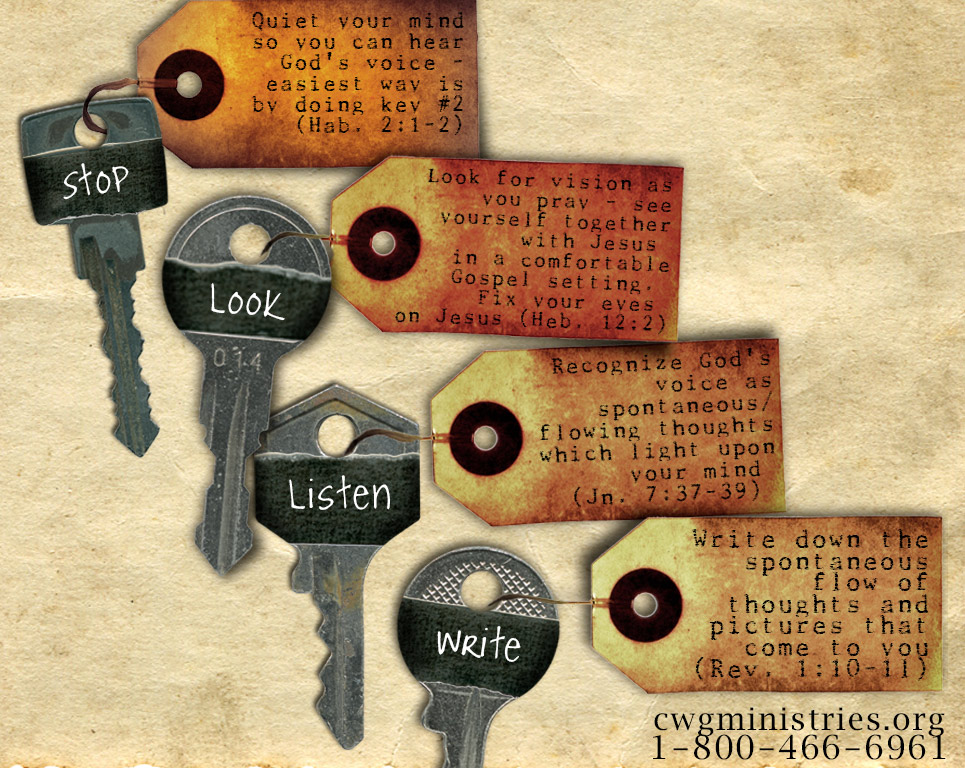
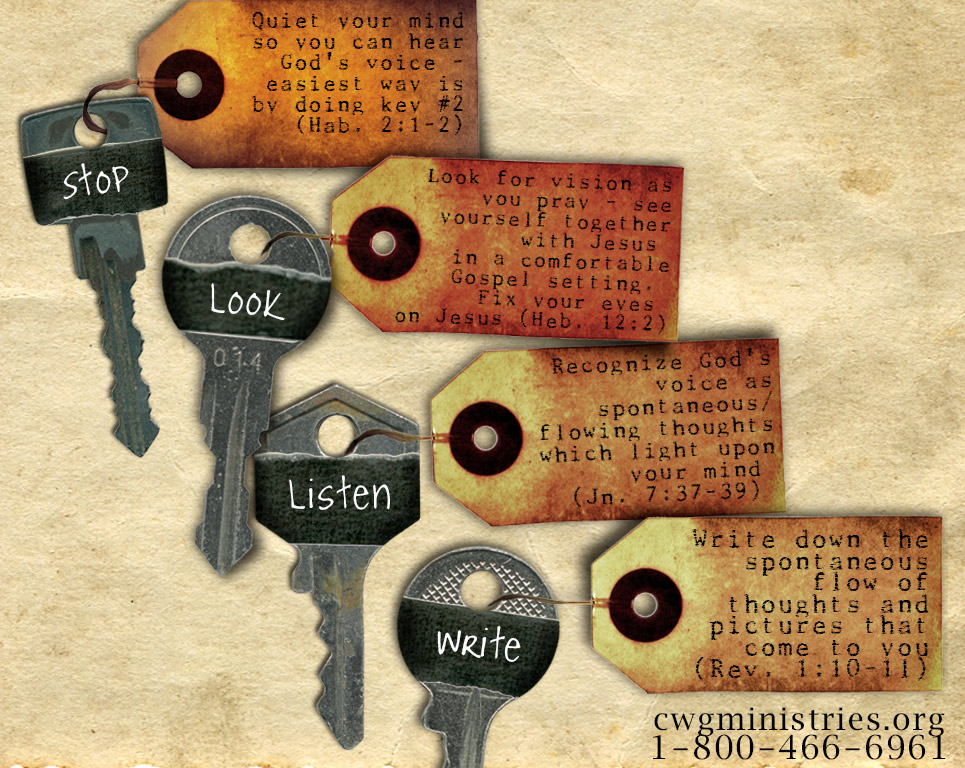
So I got up, went to my office, and He showed me that Habakkuk did four specific, simple things to hear God’s voice (Hab. 2:1,2). They are: stop, look, listen and write.

  1. Stop – Become still– “Went to my guard post” means he quieted himself down to listen and hear.
  2. Look – Look for vision – “Kept watch to see” means he was looking for vision.
  3. Listen – Recognize God’s voice as spontaneous thoughts – “What He will speak to me” means he recognized God’s voice. We define God’s voice as flowing or spontaneous thoughts, because John 7:37-39 says the Holy Spirit within is sensed as flow. Likewise God’s vision is flowing pictures.
  4. Write – Two-way journaling – “Record the vision” means he wrote down the flowing words and flowing pictures (visions) that were coming to him.

If you think about it, this is what we naturally do when conversing with a friend. We stop thinking about other things and put our focus on them; we look at them; we listen carefully; and when it is important, we write down what they are saying so we don’t forget it. It is completely normal and accepted to record words that we consider important, as for example, a stenographer would do in a courtroom. We are simply saying why not apply these steps to our conversations with God? Are not the words of our Lord to us the most important words we will ever hear?

So Who Else in Scripture, Besides Habakkuk, Used These Four Keys?

It is now 35 years later, and I hear the Lord speaking within me that I should take note that the four keys that Habakkuk used were used by others throughout Scripture, from Genesis to Revelation. So let’s take a look at ten individuals in the Bible who used these four keys and wrote over half the Bible.


The Apostle John used the same four keys when he wrote the book of Revelation. In Rev. 1:9-11 we see:
  1. Stop – “I was in the Spirit on the Lord’s day”
  2. Listen – “I heard a voice behind me saying”
  3. Write – “Write in a book”
  4. Look – “what you see”

King David was a man after God’s own heart and he certainly used the same four keys:
  1. Stop – “Be silent my soul before Him” (Ps. 62:1).
  2. Look – “I have set the LORD continually before me; Because He is at my right hand, I will not be shaken” (Ps. 16:8); “I saw the Lord always in my presence; for He is at my right hand” (Acts 2:25) means he saw the Lord with the eyes of his heart, with him constantly.
  3. Listen – After King David would quiet himself (i.e. Selah), God would speak. “Hear, O My people, and I will speak; O Israel, I will testify against you; I am God, your God” (Ps. 50:7).
  4. Write – David journaled out the details of the Tabernacle, and as he did, he said it was the Lord’s hand upon him (1 Chron. 28:19). In addition, he recorded many of his prayer times in the Psalms.

How about the Apostle Paul, did he also use these four keys?
  1. Stop – “… appeared to Paul in the night” (Acts 16:9)
  2. Look – “Was caught up into Paradise” (2 Cor. 12:4)
  3. Listen – “Heard inexpressible words” (2 Cor. 12:4)
  4. Write – Paul prayed for revelation (Eph. 1:17,18; Col. 1:9), and then wrote Ephesians and Colossians which are both FULL of divine revelation. I am convinced his epistles record the revelation Paul received from God during his prayer times.

How about Abraham, the Father of Faith – did he use the four keys?
  1. Stop – “A deep sleep fell upon Abram” (Gen. 15:12,13)
  2. Look – “The word of the LORD came to Abram in a vision…” (Gen. 15:1)
  3. Listen – “Now the LORD said to Abram, ‘Go forth from your country…’” (Gen. 12:1)
  4. Write – Since Genesis 15 was written by Moses, I am going to assume that Abraham recorded it in some way so it was available later for Moses to draw upon.

Moses used the four keys (Ex. 3:1-5).
  1. Stop – Moses said, “I must turn aside…”
  2. Look – He looked and behold the bush was burning.
  3. Listen – God called to him from the midst of the bush and said…
  4. Write – Moses wrote out this experience in the book of Exodus.

Did Isaiah use the four keys when he heard God’s voice?
  1. Stop – He wakens me morning by morning (Isa. 50:4)
  2. Look – “The vision of Isaiah the son of Amoz concerning Judah and Jerusalem, which he saw” (Isa. 1:1)
  3. Listen – For the LORD speaks… (Isa. 1:2)
  4. Write – Obviously he is writing it down, as that is how we got the book of Isaiah.

Jeremiah used the four keys to receive from the Lord.
  1. Stop – Jeremiah was a priest who was ministering before the Lord (Jer. 1:1)
  2. Look – “What do you see, Jeremiah?” … “I see a rod of an almond tree.” (Jer. 1:11)
  3. Listen – “The word which came to Jeremiah from the LORD, saying” (Jer. 30:1)
  4. Write – “’Write all the words which I have spoken to you in a book’” (Jer. 30:2)

Ezekiel used the four Keys (Ezek. 1:1-4).
  1. Stop – “While I was by the river …”
  2. Look – “As I looked, behold, a storm wind was coming …”
  3. Listen – “the word of the LORD came expressly to Ezekiel …”
  4. Write – He wrote the book of Ezekiel.

Daniel used the four keys.
  1. Stop – As he lay on his bed (Dan. 7:1)
  2. Look – “I was looking in my vision by night” (Dan. 7:1)
  3. Listen – “I approached one of those who were standing by and began asking him the exact meaning of all this. So he told me and made known to me the interpretation of these things” (Dan. 7:16)
  4. Write – He wrote the dream down (Dan. 7:1)

Peter used the four keys.
  1. Stop – “I was in the city of Joppa praying” (Acts 11:5)
  2. Look – “I saw a vision, an object coming down like a great sheet” (Acts 11:5)
  3. Listen – “I also heard a voice saying to me, ‘Get up, Peter; kill and eat.’” (Acts 11:7)
  4. Write – We have a biblical record of his encounter.

These biblical writers composed 663 chapters of the 1189 chapters in the Bible (over 50%). That is not to say that the rest of the writers didn’t also use these four keys. If we explored the Minor Prophets and discovered they also used the four keys of stop, look, listen and write that would add another 68 chapters to the total.

How To Hear God

Many christians struggle with the issue of hearing the voice of God. Some have been wrongly taught that God doesn’t speak to us. Others believe that He does speak to us but still seem unable to hear.Whole books have been written on the topic whether it is framed in terms of “Hearing God” or “Guidance” (The latter term is often used by christians who don’t believe that God speaks to His people but still want to know how to discern the will of God.)

In the 1980’s I came across this little book and it revolutionised my spiritual walk. Mark Virkler simplifies the whole business of hearing God’s voice to a few easy steps and an important concept. 

The concept is this: God speaks to us in the flow of our thoughts more often than through an audible voice.

The steps to hearing God are simple

  1. Still your mind. When our brains are racing away with our own thoughts it is very hard to hear what God might want to say to us. Some people like to use the “Jesus Prayer” to help this process.Settle your breathing into a regular rhythm. As you breathe in say slowly “Lord Jesus Christ, Son of God” and as you breathe out say “Have mercy on me, a sinner.”
  2. Ask God a question. “What do you want to say to me?””What should I do about …?”
  3. Listen to the thoughts that go through your mind in response to the question. Write them down in a notebook or journal- this process of writing your thoughts is vital, because often we start to analyse what is being revealed, but that breaks the flow.
  4. When you finish, look back over what you have written and check if it agrees with Scripture, with the things happening in your life, with other things the Lord has shown you, and so on.

This is a wonderful method to help us hear God’s voice. Like many things in life, it may seem difficult at first but with practice the process of discerning God’s voice becomes more fluent.

How to Hear God’s Voice

Photo by Michael Oeser on Unsplash

In the book “Overflow Of The Spirit”, Mark Virkler and others describe a way of tuning into God called “Two Way Journalling.” In Two Way Journalling, we write down a conversation, in which we ask God a question and then write what we believe He is saying back to us.

Virkler describes the constant stream of thoughts passing through our heads as a flow of ideas. Some of these thoughts are from our own head- “I am cold”, This is boring”, “I need to remember to buy milk”, and so on. Some of the thoughts are from satan: “You are no good”, “God would never talk to you”, etc. Then we have the voice of the Holy Spirit bringing revelation, exhortation and comfort. This flow is like the social media stream where all sorts of ideas just appear as we scroll through.

To hear God’s voice, we need to filter out what the other voices are saying to us and focus on God. Virkler describes a 4- step process to aid this.

1. Go to a quiet place and still your thoughts and emotions. Write down the things that might distract you and put them to one side. Breathe steadily and slow your body down.”Be still and know that I am God.”

2. Focus on Jesus. Play worship music, start to worship Jesus aloud with your words. Ask Him to reveal Himself to you.

3. Recognise that the voice of the Holy Spirit is heard in the spontaneous flow of thoughts. Having quieted your mind and focused on Jesus, the thoughts in your head are more likely to be the Holy Spirit speaking to you. Listen. Receive.

4. Write down your prayers and what it seems that God is saying to you. Let it be spontaneous and flowing. Don’t analyse anything. Listen and write.

Later, read over what you have written. Does it agree with Scripture? Does it sound like Jesus? Show trusted christians and ask their opinion.

We are not saying that this is the definitive way to listen to the Spirit of God. It is a way to sharpen our focus on the Holy Spirit and to learn to walk in a lifestyle of being led by the Spirit.

“Living by the Spirit means intentionally staying tuned to the flow within, which is the Spirit, the living water that flows from the throne of God.”

Jesus said that His sheep know His voice. God gives us His constant presence and regular guidance. All we need to do is learn to listen.

Journalling- Against Deception

Against Deception

This is the third article in my series on Listening to God.

The first two articles are available at http://www.new-life.org.au

Journalling and the Holy Spirit https://tinyurl.com/y34fjbu6

Journalling- Testing Your Thoughts https://tinyurl.com/y2fxnpwn

One of the biggest fears that people have with journalling is that they might be deceived into believing something that is not from God, or worse still, led into some great sin through being deceived. This was addressed in the article mentioned above, “Journalling- Testing Your Thoughts.”

I was asking the Lord about this recently, and I want to share the answer I received.

I asked: How would you know if you are being directed by satan?”

The answer:

The problem with all meditation techniques is that they open you up to the spirit you are following. If it is me, the Holy Spirit, that is great, the way it should be! But if you are being led by satan, if there are demons in your spirit, then you will be open to hearing the voices of satan.

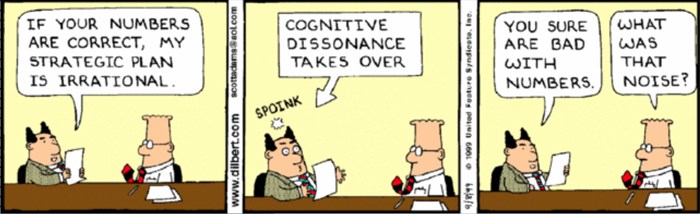
If you are deceived, but wanting to follow me, I will send you alarm bells, called cognitive dissonance. Cognitive dissonance happens when you realise that what you believe does not line up with reality.

That is why it is always essential to check your journal revelations with the Scriptures. It is also why knowledge of Scripture will never be supplanted by meditation and listening. If my words says one thing and your spirit hears another thing, you are being deceived.

Do not abandon journalling when this happens. Do not despise the gifts of my Spirit because of the possibility of being deceived.

I will always be speaking words of love to you. I will always lead you in the ways you should go.

Be still and know that I am God.

More on Cognitive Dissonance

We all have a complex set of beliefs that together can be called a world view, a lens through which we view the world and our place in it. When our world view conflicts with observed reality we have to adapt to that situation by either modifying our world view or ignoring the conflict.

When we come to know Jesus, the Holy Spirit starts dismantling our world view and our resultant behaviours to ensure that our lives glorify God and reflect the person of Jesus Christ. This is a life long process, sometimes called “sanctification” (becoming holy).

If we have a sin that we are comfortable with, the Holy Spirit might start convicting us of this. To use a trivial example, suppose it is swearing. Then we will suddenly find we are finding verses in the Bible about the words we speak and so on. Perhaps friends will say things, or we will feel bad when we say certain words. Eventually we find that our behaviour is changing to reflect God’s holiness.

In journalling, it is possible that we might receive a “word” that is not from God. In that case, God sends alarm bells of cognitive dissonance to warn us that this is not from Him. We find that Scriptures contradict that thing, people say things in passing, or things happen that contradict what we thought we heard from God.

When that happens, the best thing is to lay it all before the Lord, and ask Him to show you where you may have gone wrong.

He loves you and will correct you when you inadvertently go astray.

Journalling and the Holy Spirit

Photo by Carolyn V on Unsplash

Journalling and the Holy Spirit

For years, I have been preaching about hearing the Holy Spirit. It seems very straight forward to me that God gives us the Holy Spirit in order to guide, direct and teach us, but often we fail to hear the voice of the Holy Spirit.

People are often afraid to minister in the power of the Holy Spirit out of fear that they will get it wrong. We fear being the person who delivers a false prophecy (which is not the same as being a false prophet) or messing up a word of knowledge. Some fear being led by an evil spirit rather than the Holy Spirit.

In John 10:27 we read “My sheep listen to my voice; I know them, and they follow me.” The New Testament teaches over and over that we are meant to hear the voice of God, Yet many christians do not.

Many years ago I learned the power of journalling as a means of strategically listening to the “still small voice” of the Holy Spirit. Journalling does three things for us:

  1. It slows down our hyperactive inner voices, so that we can listen to the Voice
  2. It focuses our attention
  3. It separates the act of listening from the act of testing

Journalling slows down our hyperactive inner voices


We live in a crazy age of hyper information. We are always being bombarded with data from our phones, computers, televisions, bill boards etc. The data comes in so fast that our brains cannot process it properly.

I read once that in the seventeenth century the average person would absorb in their whole lives the amount of information in a daily metropolitan newspaper. In the last decade this has accelerated out of control, so that people now have trouble sleeping, high blood pressure and other symptoms of information overload.

The Holy Spirit is wanting to talk to us, but there is so much happening in our brains that we can’t hear Him.


Journalling focuses our attention
By choosing to tune out all the other voices and focusing on the voice of the Holy Spirit we put the Holy Spirit at the front of our thinking. We make a choice to focus on the Holy Spirit in order to write down what we believe the Spirit is saying to us. It is like taking notes in a sermon or class, or even in a TV program- the very act of writing down what we are hearing closes out other thoughts.

Journalling separates the act of testing from the act of listening.
One big fear that many christians have is that they might be listening to the devil or their own thoughts rather than God’s thoughts. So, for fear of being deceived, they avoid listening to God altogether.

We are told to “test the spirits” (1 John 4:1) and test every prophecy, holding onto what is good (1 Thessalonians 5:21).

When we journal we write down what we believe that God is saying, and then we test it. We measure it against Scripture; we see if it makes sense; we test if it is consistent with our knowledge of ourselves or other people. We can even give our writing to a trusted friend, and ask “Does this sound like God to you, or am I just making it up?”

How to Journal

  1. Find a comfortable, quiet space where you know you won’t be interrupted. Have your Bible, your journal and a pen ready. You may need a notebook also.
  2. Quieten your heart. Many of us live in a state of high stress. We are always thinking either about the things we just did, or the things we need to do when we finish up here. Part of releasing the stress is to steady our breathing so that our whole body is released from the fight or flight reaction.

One of my favourite activities is the Jesus Prayer. The prayer is very simple:
Jesus Christ
Son of God
Have mercy on me
A sinner.


As you say each line, breathe in or out
Breathing in: Jesus Christ
Breathing out: Son of God
Breathing in: Have mercy on me
Breathing out: A sinner


Repeat this several times until you are breathing slowly and your body is resting.

  1. Open your journal, start a new page and write the date. Ask God a specific question, for example, How can I represent you in this conflict at work? Now listen and write down the thoughts that come into your mind, that sound like they are not your own thoughts. Don’t over-analyse, just get the thoughts onto paper.

By getting your thoughts onto paper, I don’t mean just words. Sometimes I use mind maps; other people who are more visual sketch, or even paint, their thoughts.

  1. You may find your mind is going back to other topics. If this is the case, write them down in the other notebook. Usually it is our anxieties and worries about things that need to be done that get in the way of hearing the Holy Spirit. If you write these things down it is a promise to yourself that they will not get forgotten. If the thoughts persist, tell yourself you have written them down and you will get to them.
  2. At the end of the process, read what you have written. Now is the time to ask questions like:
    Is this God or me?
    Does this agree with the teaching of the Bible?
    Would Jesus say this?
  3. Spend time asking for wisdom and grace to discern what God would have you do next.

Like anything, this will seem difficult at first. If you persevere and make journalling a part of our spiritual discipline you will grow in your walk with the Lord. You will learn to hear the voice of the Holy Spirit, and not just when you are intentionally listening.

Listening Prayer

EarOne of the keys to effective prayer is listening to God. If we pray according to His will not just what we think, then we will see marvellous answers to prayer.

People find it hard to listen to God. It does take practice and discipline, but Jesus said “My sheep hear my voice” so we should expect to be hearing the voice of the Lord often.

For listening prayer, we first ditch the prayer list. This is about communion with God, not shopping.

I find it helpful to have a journal so I can write things down. I also find it helpful to have a piece of paper to write down all the things that my brain comes up with in the silence- that way I can train myself to accept that those things that worry me will be dealt with.

I start by saying something like ,”Lord here I am ready to listen and to enjoy your presence.” Then I stop and sit still, allowing my mind to be quiet.

Sometimes I will bring some concerns to the Lord. I will write down my prayer, and what I hear as God’s response.

Other times I will come with no agenda at all. I have learned that the things I think about (other than the trivial things that I need to do something about) are often the things that the Holy Spirit is prompting me to pray about. This morning, for example, I found myself thinking about the Prime Minister so I spent some time praying for him and the Government. This is not something I do regularly but I believe God was wanting me to do that today.

The key to all this is to approach prayer as a conversation not a list of demands.


Listening

Ear

Most mornings I get up early and spend an hour or so in prayer. Sometimes I am just too physically tired, but 90% of the time I do this.

This morning I deliberately chose to put my prayer list aside, and spend time just listening to the “still small voice.” I realised that it’s been a while since I’ve done this, despite regularly encouraging my congregation to do it. It is just too easy to get into a prayer rut where we fill up the silence with the things we want God to address- it’s certainly easier than listening to God’s list that He wants us to correct!

During this time this thought came to me: “The reason so few hear God is that we do not listen to Him.”

It takes time, physically doing nothing but listen. We are perennially busy occupied with how best to fill our hours. Sitting and waiting for God to speak seems so wasteful.

And what if God doesn’t actually say anything?

More frightening, what if God does say something? Who can stand before the voice of the Lord?

This morning, God just told me that He loves me and enjoys what I do for Him and with Him.

That certainly lifted my spirits! It put a spring in my step and a joy in my heart.