
Blessed is he…

The sermon for March 29th 2026 is now available on the New Life web site
In this sermon, which is based on Matthew 21:1-11, I talk about Palm Sunday.
Click here to listen in your browser or to download the mp3

From wattsupwiththat.com
Guest essay by Chris Morrison of the Daily Skeptic
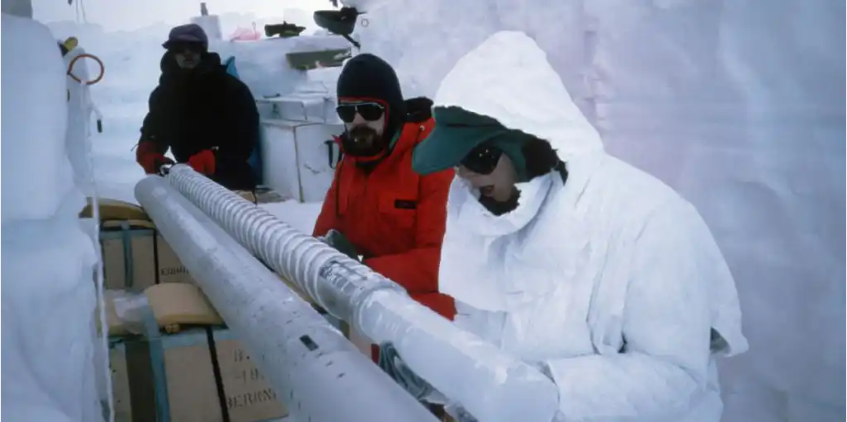
The climate science world (‘settled’ division) is in shock following the discovery in ancient ice cores that levels of carbon dioxide remained stable as the world plunged into an ice age around 2.7 million years ago. Levels of CO2 at around 250 parts per million (ppm) were said to be lower than often assumed with just a 20 ppm movement recorded for the following near three million-year period. In addition, no changes in methane levels were seen in the entire period. Massive decreases in temperature with occasional interglacial rises appear to have occurred without troubling ‘greenhouse’ gas levels, and this revelation has caused near panic in activist circles.
The assumed level three million years ago of CO2 was around 400 ppm, a convenient mark that has been used to explain the subsequent ice age and a drop to 250 ppm. Due to the recently published paper, this explanation has become more problematic and natural climate variation is correctly noted to have occurred with the temperature changes. Alas, similar explanations are mostly ignored in discussing today’s climate changes in the interests of promoting the Net Zero fantasy. Some cling desperately to a dominant CO2 role, including one of the authors of the findings published in Nature. The co-author states that the results suggest even greater climate sensitivity to the warming effect of CO2. In short, there is a great deal of applying the laws of physics and chemistry to one era, but failing to extend the same courtesy to another.
The title of the paper, produced by 17 America-based scientists, was enough to set alarm bells ringing in the ‘settled’ science, Net Zero-obsessed community: ‘Broadly stable atmospheric CO2 and CH4 levels over the past three million years.’ A related paper examining ocean heat content derived from the ice core record was also published. Carrie Lear, Professor of Past Climates and Earth System Changes at Cardiff University, claimed that the papers “don’t rewrite the role of CO2, they underline how sensitive the climate system is… that is why today’s rapid CO2 rise is so alarming”.
Ah, yes. Even if CO2 movements are minimal, probably within a margin of potential error, they are still responsible for large variations in temperature. The laws of climate science are ‘settled’ – if the trace atmospheric gas CO2 is rising, falling or generally stable, it is almost wholly responsible for large movements in global temperature. Under this rather shaky assumption, humans must stop burning hydrocarbons and return to a neo-Malthusian pre-industrial age.
Study lead author Julia Marks-Peterson noted: “We definitely were a bit surprised. If correct, the findings may suggest that even small changes in greenhouse gas levels could trigger major shifts in climate.” That’s a little bit of a scary thought, she added, possibly with an eye on future grant funding. “May suggest” is doing a lot of the work here, and it may also be suggested that more plausible opinions are available.
Quoted in New Scientist magazine, Tim Naish, Professor of Earth Science at Victoria University in New Zealand, said it was “way too early to thrown the baby out with the bathwater”. Perish the thought that baby should be given its marching orders, ending a science-lite 40-year demonisation of CO2 and related promotion of a hard-Left Net Zero dream.
Read the rest of the article here
Through the blood of Jesus, God has made a way for each of us to enter into the ‘spirit-room’ and worship Him in spirit and truth. As you enter this room blood-washed, you have access to kneel in front of the throne of grace. There you will definitely hear His voice! Retha McPherson


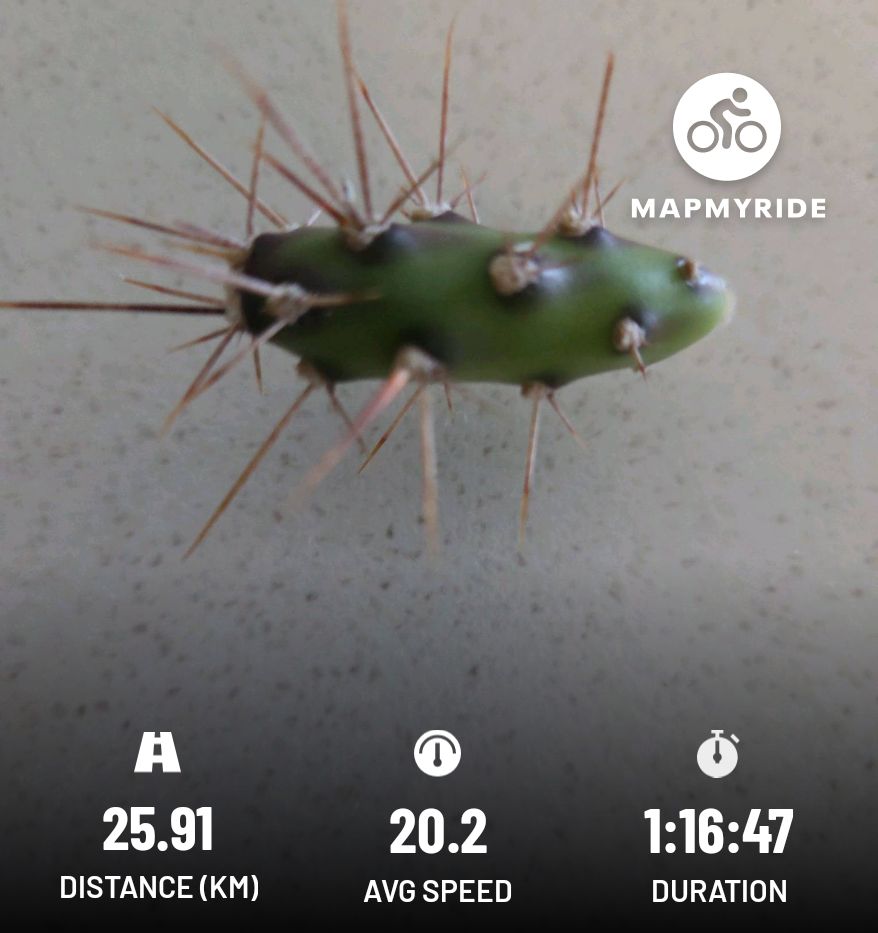
A cactus ended my ride on Wednesday. This is a small piece that attracted itself to my shoe. Another piece spiked my tyre. It is called a Tomato Pear or Jumping Cactus. Whatever you call it, those spines are very sharp and stiff. I was back on the bike today and rode in perfect conditions to Haire Drive. #cycling #Narrabri

You need to forgive in order to receive forgiveness. Forgiveness is a choice. Retha McPherson

 New Life Narrabri