Author: newlifenarrabri
Hang on!
Christians in Afghanistan.
Underground church thrives despite Taliban
From God Reports
When a church leader and his family were all killed by the Taliban in Afghanistan in 2014, it sent a shockwave of fear over the underground church.
“This fear affects people,” says Ramazan Rafee, an Afghan who became a Christian. “But at the same time when you’re thirsty, it is not matter what will happen. I know it is dangerous. I know it is it is hard for me and for my family. But it is worth it.”
Ramazan eventually escaped Afghanistan. His bears witness that the church under the iron grip of Islamic rule in his country thrives, deep underground, despite proclamations by the Taliban government that there is no Christianity in the nation.
Ramazan Rafee was born into a Hazara family who believed in the strictest application of Sharia law. His own father was a mullah, a Muslim scholar.
But Ramazan began to doubt Islam because 60% of the Hazaras have been killed by the Afghan authorities (for belonging to the Shia branch of Islam because Taliban is Sunni).
“In Islam, they give you a boundary. If you would walk other side of that red line, then they label you as infidel,” Ramazan says. “I had a lot of questions about the nature of God, human suffering and the suffering of my people. Around 60 to 62% of Hazara people were killed by the authorities. Those authorities they were Muslim as well.”
Ramazan found himself staring down the barrel of a rifle — and his dad was the on aiming it with his finger on the trigger.
“I will kill you,” his dad growled.
His mother jumped in.
“First kill me, then Ramazan,” she screamed.
Ramazan left his village for the city of Kabul. At the time, the U.S. armed forces were still in Afghanistan with the hopes of building a Westernized democracy. There was some freedom in Kabul while the U.S. was there.
Ramazan had rejected Islam but believed there was a Creator, so he embarked on a quest to learn about different world religions. The Bible was a banned book in public. But Hitler’s Mein Kampf was available. That seemed strange.
“Is the Bible that bad?” he wondered. The fact that Bible was banned made it seem like they wanted to keep the truth away from him. “I thought, there is something going on here.”
Eventually, Ramazan found a foreigner who gave him a Bible and proceeded to study it with him. Ramazan got saved in 2009. “I was on fire. I shared the gospel with my family, with friends and classmates. Within a year, we were 12 individuals and two families,” he says.
The foreigner left Afghanistan, and Ramazan was left alone with his group of Christians. He integrated in the underground church, a network of more believers. It was dangerous — especially for house church leaders.
In 2014, one friend was killed, with his family, by the Taliban, despite the U.S. supposedly controlling the city and setting up a Westernized government.
Then the U.S. left abruptly in 2021. The military withdrawal under Biden was a disaster, with much military hardware left abandoned in the country. But things were worse for the Christians. The Taliban swept in and took over Kabul.
“I woke up and everything was different. I kissed my wife and kids and said, ‘Ok, maybe today is our last day,’” Ramazan says. He and church members deleted every Christian resource on their phones and laptops. “The Taliban were here. It was chaos like in a movie.”
A pastor stopped by to pick him up with his family. He had no idea where they were going or what the future held. They didn’t make it out of the country. They were at the airport when a bomb blast prevented people from leaving. They tried leaving in car.
For 36 days, they were moving around, constantly changing their location, on the run from the authorities.
“When the last airplane left Afghanistan, I said, ‘Ok, it’s over. God wants us to die here,’” he says. “The only thing I was praying was that when the Taliban would take us, they would shoot all of us, not only shooting me and take my wife and children.”
Ramazan wrestled with God during these days of anxiety. Amazingly, God calmed him.
Finally after 36 days, a security team showed up and took Ramazan and his family in cars to the northern border. They crossed nine checkpoints. There were flown to Qatar. “When I landed in Doha, Qatar, I was reading Psalm 18 God, you are my rock.”
Many of his brothers and sisters in Christ also made it out of the country. Still others stayed and went deep underground. Not only are the Christians there, there are new converts among them too.
“It’s more dangerous than ever to be a Christian in Afghanistan, yet people are still coming to Christ,” says Jamie Dean, of Radical. “The Spirit just moves.”
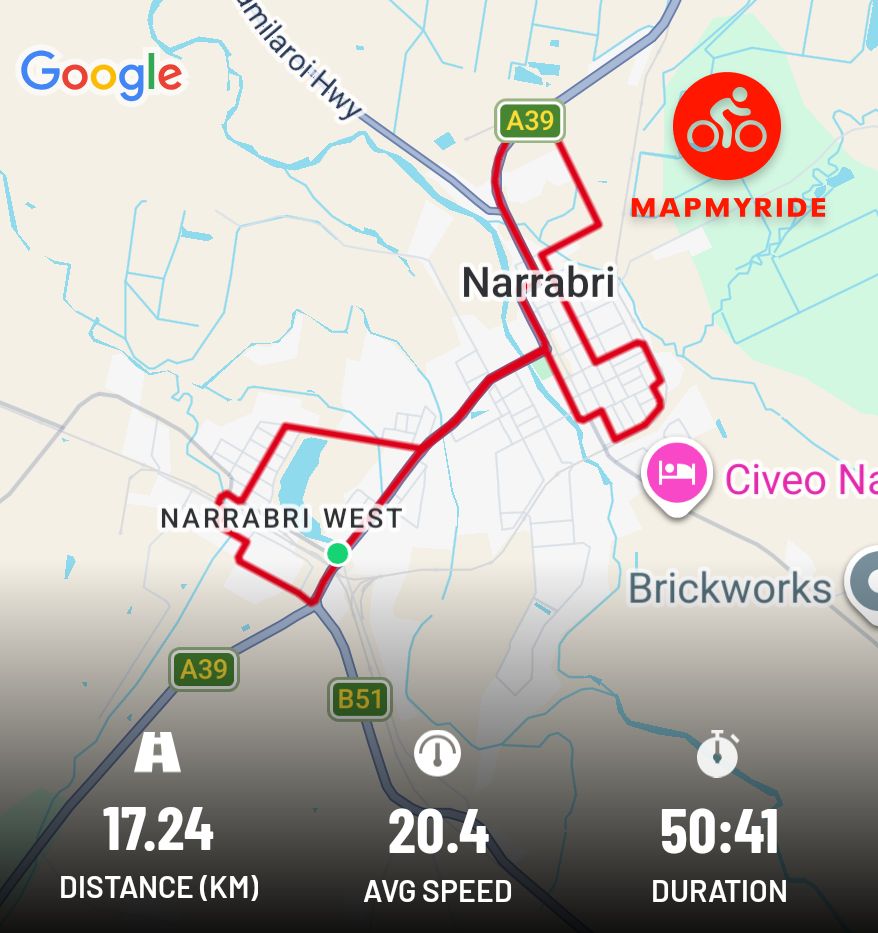
Today’s Bike Ride
Keep watch…

Today’s Sermon
The sermon for November 30th 2025 is now available on the New Life web site.
In this sermon, which is based on Romans 16:1-16, I talk about The Cell Is Church.
Click here to listen or to download the mp3.
Quote for the Day
Christianity is without doubt difficult and taxing, and all of us fail to emulate the perfection of Christ himself. But we are far better for trying than for not trying, and we know that there is forgiveness available for honest failure. Peter Hitchens

God is my salvation

Reflection on Mark 1:1-8
Scripture
This is the Good News about Jesus the Messiah, the Son of God.
Observation
Mark’s Gospel is about the Good News about Jesus.
The message starts with John the Baptist, the prophet. He prepares the way for Jesus. John preached in the wilderness that people must repent, turn to God for forgiveness, and then be baptised.
John the Baptist was a wild figure. He wore clothes made from camel hair and ate locusts, and wild honey.
John told them that someone was coming, who was much greater than he is. John was not worthy to loosen the straps of his sandals. John baptised in water, but the Messiah would baptise in fire and the Holy Spirit.
Application
Mark’s gospel always reminds me of those videos that start “Let’s jump straight in.” He doesn’t want to waste time with stories about Jesus’s, birth, or even spend too much time in talking about John, important as he is.
This is good news, He tells us. The good news centres around the death and resurrection of Christ. Because of this, the kingdom of God is open to everyone. The war between God and people is over, and everyone who chooses the way of the Cross is able to make peace with God.
Jesus is the Messiah, He is the anointed one, the one whom Israel has been waiting for.
Jesus is the Son of God. This is a mystery that we struggle to understand, because our minds are limited. At Christmas time, we celebrate the Incarnation, God becoming a human being. God is with us. This may be beyond understanding, but it is Good News to be received by faith.
Listen
My child this mystery of salvation took place in history at a time and a place, but it was in my heart before the beginning of creation. When we planned to create a physical realm with people who are my image bearers, I knew that they would fall. But my grace and my love was such that I could not let that be the last word. I have written the Good News into the heart of every created thing from the tiniest atom, to the most distant Galaxy. Every person carries my image, but every subatomic particle expresses hints of my love.
Mark Virkler: The Night God Chased Me Down
In 1979 the Lord woke me up with a booming bass voice (the only time I have ever heard God as a booming bass voice!) and said, “Mark, get up, I want to teach you how to hear My voice.” This was after six months of intense searching to answer the question of how I could hear God’s voice. I sat bolt upright in bed, wide awake. Then I lay back down and said, “You can teach me here.” He again said, “Get up and go to your office! I am going to teach you to hear My voice.”
So I got up, went to my office, and He showed me that Habakkuk did four specific, simple things to hear God’s voice (Hab. 2:1,2). They are: stop, look, listen and write.
- Stop – Become still– “Went to my guard post” means he quieted himself down to listen and hear.
- Look – Look for vision – “Kept watch to see” means he was looking for vision.
- Listen – Recognize God’s voice as spontaneous thoughts – “What He will speak to me” means he recognized God’s voice. We define God’s voice as flowing or spontaneous thoughts, because John 7:37-39 says the Holy Spirit within is sensed as flow. Likewise God’s vision is flowing pictures.
- Write – Two-way journaling – “Record the vision” means he wrote down the flowing words and flowing pictures (visions) that were coming to him.
If you think about it, this is what we naturally do when conversing with a friend. We stop thinking about other things and put our focus on them; we look at them; we listen carefully; and when it is important, we write down what they are saying so we don’t forget it. It is completely normal and accepted to record words that we consider important, as for example, a stenographer would do in a courtroom. We are simply saying why not apply these steps to our conversations with God? Are not the words of our Lord to us the most important words we will ever hear?
So Who Else in Scripture, Besides Habakkuk, Used These Four Keys?
It is now 35 years later, and I hear the Lord speaking within me that I should take note that the four keys that Habakkuk used were used by others throughout Scripture, from Genesis to Revelation. So let’s take a look at ten individuals in the Bible who used these four keys and wrote over half the Bible.
The Apostle John used the same four keys when he wrote the book of Revelation. In Rev. 1:9-11 we see:
- Stop – “I was in the Spirit on the Lord’s day”
- Listen – “I heard a voice behind me saying”
- Write – “Write in a book”
- Look – “what you see”
King David was a man after God’s own heart and he certainly used the same four keys:
- Stop – “Be silent my soul before Him” (Ps. 62:1).
- Look – “I have set the LORD continually before me; Because He is at my right hand, I will not be shaken” (Ps. 16:8); “I saw the Lord always in my presence; for He is at my right hand” (Acts 2:25) means he saw the Lord with the eyes of his heart, with him constantly.
- Listen – After King David would quiet himself (i.e. Selah), God would speak. “Hear, O My people, and I will speak; O Israel, I will testify against you; I am God, your God” (Ps. 50:7).
- Write – David journaled out the details of the Tabernacle, and as he did, he said it was the Lord’s hand upon him (1 Chron. 28:19). In addition, he recorded many of his prayer times in the Psalms.
How about the Apostle Paul, did he also use these four keys?
- Stop – “… appeared to Paul in the night” (Acts 16:9)
- Look – “Was caught up into Paradise” (2 Cor. 12:4)
- Listen – “Heard inexpressible words” (2 Cor. 12:4)
- Write – Paul prayed for revelation (Eph. 1:17,18; Col. 1:9), and then wrote Ephesians and Colossians which are both FULL of divine revelation. I am convinced his epistles record the revelation Paul received from God during his prayer times.
How about Abraham, the Father of Faith – did he use the four keys?
- Stop – “A deep sleep fell upon Abram” (Gen. 15:12,13)
- Look – “The word of the LORD came to Abram in a vision…” (Gen. 15:1)
- Listen – “Now the LORD said to Abram, ‘Go forth from your country…’” (Gen. 12:1)
- Write – Since Genesis 15 was written by Moses, I am going to assume that Abraham recorded it in some way so it was available later for Moses to draw upon.
Moses used the four keys (Ex. 3:1-5).
- Stop – Moses said, “I must turn aside…”
- Look – He looked and behold the bush was burning.
- Listen – God called to him from the midst of the bush and said…
- Write – Moses wrote out this experience in the book of Exodus.
Did Isaiah use the four keys when he heard God’s voice?
- Stop – He wakens me morning by morning (Isa. 50:4)
- Look – “The vision of Isaiah the son of Amoz concerning Judah and Jerusalem, which he saw” (Isa. 1:1)
- Listen – For the LORD speaks… (Isa. 1:2)
- Write – Obviously he is writing it down, as that is how we got the book of Isaiah.
Jeremiah used the four keys to receive from the Lord.
- Stop – Jeremiah was a priest who was ministering before the Lord (Jer. 1:1)
- Look – “What do you see, Jeremiah?” … “I see a rod of an almond tree.” (Jer. 1:11)
- Listen – “The word which came to Jeremiah from the LORD, saying” (Jer. 30:1)
- Write – “’Write all the words which I have spoken to you in a book’” (Jer. 30:2)
Ezekiel used the four Keys (Ezek. 1:1-4).
- Stop – “While I was by the river …”
- Look – “As I looked, behold, a storm wind was coming …”
- Listen – “the word of the LORD came expressly to Ezekiel …”
- Write – He wrote the book of Ezekiel.
Daniel used the four keys.
- Stop – As he lay on his bed (Dan. 7:1)
- Look – “I was looking in my vision by night” (Dan. 7:1)
- Listen – “I approached one of those who were standing by and began asking him the exact meaning of all this. So he told me and made known to me the interpretation of these things” (Dan. 7:16)
- Write – He wrote the dream down (Dan. 7:1)
Peter used the four keys.
- Stop – “I was in the city of Joppa praying” (Acts 11:5)
- Look – “I saw a vision, an object coming down like a great sheet” (Acts 11:5)
- Listen – “I also heard a voice saying to me, ‘Get up, Peter; kill and eat.’” (Acts 11:7)
- Write – We have a biblical record of his encounter.
These biblical writers composed 663 chapters of the 1189 chapters in the Bible (over 50%). That is not to say that the rest of the writers didn’t also use these four keys. If we explored the Minor Prophets and discovered they also used the four keys of stop, look, listen and write that would add another 68 chapters to the total.