Reflection on Matthew 18:21-35

Scripture

Then Peter came to him and asked, “Lord, how often should I forgive someone who sins against me? Seven times? Jesus replied, “No, not seven times, but seventy times seven.”

Observation

Peter comes to Jesus with a question about forgiveness. How many times should I forgive someone? He suggests seven times but Jesus says “No seventy times seven.”

Jesus goes on to tell a parable about a king whose servant had amassed a huge debt The king at first orders the servant to be sold with his wife and children to pay off the debt. The main falls to his knees and pleads for mercy. So the king relents.

Later, the same servant finds a fellow servant who owes him a much smaller amount. He refuses to have mercy on the man and has him thrown into prison. When the other servants hear about this, they go to the king who has the first main thrown into prison until he repays his debt.

Application

Some religious teachers taught that God would forgive a man three times and that we should not go beyond this amount of forgiveness. So, they would say you should only forgive someone three times. Peter thought his suggestion of seven times was good. But Jesus says, no, this is not enough.

We know if we are honest with ourselves that God, forgives us many more than three or even seven times. Jesus tells us that we are to be as generous in forgiving others as He is with us.

If we hold on to bitterness and refuse to forgive others when they hurt us, it is a sign that we have not truly understood the grace that God has shown us.

When we really feel the burden of seen lifted away, and when we really understand what that cost the father, we will have no choice but to forgive those who sin against us.

Prayer

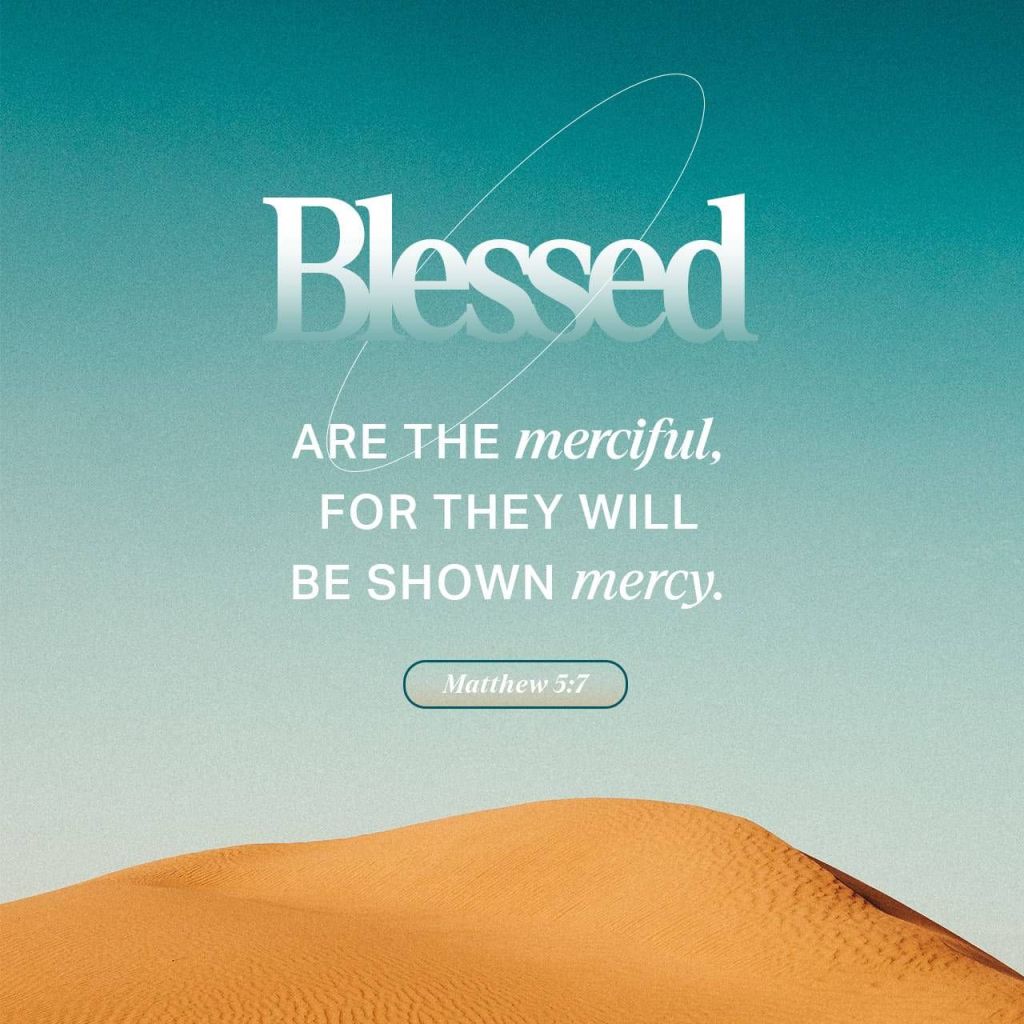
Lord, it is impossible to go through life without being hurt by others. So now Lord, I forgive those who have sinned against me. And I pray that you give me grace to continue to forgive as you forgive me. Amen.

The Christian Lifestyle- Part 1

For too long, christians have been taught that just saying a prayer will keep them safe from Divine Judgement. When we read the Scriptures, however, a different picture emerges.

We are not saved by our good deeds, but we are saved for a life of good deeds. (See Ephesians 2:10). In other words, we are saved by faith in Jesus’s completed work on the cross, and nothing we can do will impress God. On the other hand, once we are saved, the Lord expects us to live a lifestyle marked by care for other, worship to God and discipline in our fleshly desires.

Back in the day, our culture was marked by norms that basically derived from hundreds of years of church teaching and reflection on the Bible. That is not to say that everybody was christian, but it was assumed that there was a certain expectation of the way people would live.

Since the 1960’s there has been a rapid shift away from this belief that christian values should define our culture. This is shown by church attendance. In 1901, the year of Federation in Australia, approximately 95% of the population described themselves as christians, and weekly church attendance was standard. Today, less than 20% of the population attend church even once a month.

The development of the contraceptive pill in the 1960’s gave women the freedom to be as sexually promiscuous as men, with the protection of knowing they would be spared the inconvenience of a pregnancy. Sexuality was separated from reproduction and therefore marriage. Within a couple of generations, this has morphed into the expectation of freedom to have sexual activity with anyone of any sex and any number as often as desired.

In parallel with this, atheist, humanist and materialistic philosophies became adopted by the general population. After all, with our new freedom we didn’t need a God or a church to be telling us how to live our lives.

So over a period of 60 or so years, the church has gone from being able to set the agenda for the culture to being seen as “out of touch” with modern society. Many christians seem to take up the cultural values as the norm, rather than allowing Scripture to transform their thinking (Romans 12:2).

In this series of articles I will talk about the ways in which God’s standards run counter to the standards of the Bible in areas such as sexuality, possessions, lifestyle and so on.

The first principle we will cover is that all people are in a sense “owned” by God and therefore have a responsibility to live up to His plans not their own desires.

Reflection on Matthew 18:11-20

Scripture

“I also tell you this: If two of you agree here on Earth concerning anything you ask, my Father in heaven will do it for you. For where two or three gather together as my followers, I am there among them.

Observation

If a man has a hundred sheep and one of them wanders away, he will leave the 99 to rescue the one. In the same way, it is not the Father’s will that any should perish.

If a believer sins against you, there is a way to seek restoration. Firstly, try to work it out privately. If that does not work then take two others with you. If that does not resolve the issue, take the case to the whole church which might choose to remove him.

Whatever we bind in Earth is forbidden in heaven. When believers agree on discipline, it carries the weight of Christ’s authority. For whenever two or three gather in His name, He is in our midst.

Application

This section is packed with favourite texts which are taken out of context and twisted often out of recognisable shape. When we read this passage together, it shows that

1. The parable of the lost sheep is not about evangelism, but about restoring people who walk away from fellowship.

2. Jesus doesn’t give us an open order for intercession that any group of two or three christians get their payers answered. No, this is about the authority of the church when imposing church discipline.

3. The things we bind and loose on Earth are not spiritual powers, but in fact judgements placed on brothers and sisters who are sinning against other believers.

When we read the scriptures in context, rather than extracting a text from its context, our understanding of God’s word and of God Himself become much more coherent.

Prayer

I thank you, Lord, that you give us a process for when believers go astray. Please help us to trust you in these situations. Amen.

Quote for the Day

However, one pattern we see throughout history is that Satan always attempts to counterfeit and pervert everything good that God has created. One of these areas of distortion that many believers have never considered is how Satan attempts to counterfeit the gifts of the Spirit. Believe it or not, there is an inverted and distorted counterfeit for each of the gifts of the Spirit. Darren Stott