
Who is wise?

Joseph Matters writes:
One of the most serious theological crises in the contemporary church is the growing separation between the message of the kingdom and the way of the cross. Whenever these two are divorced, the kingdom becomes distorted, and the church loses its prophetic witness. Scripture reveals that the kingdom Jesus preached is inseparable from the cruciform life He modeled. The cross is not only the entry point into salvation—it is the shape of Christian leadership, influence, and spiritual authority. When we remove the cross, we remove the very character of Christ from the mission of the church. What follows are twelve negative consequences that arise when believers pursue the kingdom without embracing the cross.
When the cross is removed from kingdom theology, the kingdom becomes a tool for building personal brands, expanding organizations, and consolidating influence. Leaders begin constructing towers instead of washing feet. The movement of Jesus becomes an enterprise run by human strategy rather than a spiritual family shaped by sacrifice. Empire-building replaces servant leadership, and ministry becomes more about the greatness of the leader than the greatness of Christ.
A kingdom taught without the cross inflates human ego. Calling becomes confused with status; influence becomes a competition; ministry becomes a platform for gifted but unbroken leaders. Instead of dying to self, people pursue the kingdom as a path to personal fulfillment, visibility, and significance. The cross confronts ambition, but without it, ambition runs wild under the disguise of “taking mountains” and “walking in destiny.”
Jesus explicitly rejected the power structures of the Gentiles, yet when kingdom teaching loses its cruciform core, leaders unconsciously imitate worldly models of control. Authority becomes positional instead of relational. Leaders command from above rather than serve from below. Hierarchy replaces humility, and people become managed instead of discipled. Without the cross, leadership becomes about exerting power rather than empowering people.
When the cross is absent, leaders become image-driven, platform-centered, and hypersensitive to criticism. Ministry becomes a stage upon which leaders perform rather than an altar upon which they die. Narcissism masquerades as vision, and spiritual language is used to project ego and reputation. The cruciform life forms “decreasing” leaders; a crossless kingdom forms entitled leaders who must constantly “increase” and be the center of attention.
A kingdom divorced from the cross often becomes coercive, imposing culture, preferences, and systems onto others. Instead of practicing incarnational mission in the way of Christ-leaders solely adopt conquest mentalities—seeking to “take over” rather than influencing through serving.” The cross breaks superiority and produces servants; a crossless kingdom produces conquerors who mistake domination for discipleship.
The kingdom does speak to culture and government, but when the cross is removed, believers pursue civic roles without cruciform formation. Ambitious personalities, lacking spiritual depth, enter arenas of power and are quickly discipled by the systems they hoped to influence. They may speak kingdom language but operate in worldly spirit. Without the cross, we raise influencers instead of Daniels.
A crossless kingdom elevates gifting over character and charisma over spiritual depth. People who have never endured the refining fire of the cross ascend into leadership prematurely. This results in emotional instability, shallow discipleship, and wounded congregations. Without the cross, leadership formation becomes about speed, not depth; visibility, not maturity.
Jesus taught that only the humble will be exalted. The cross is God’s means of preparing leaders for sustainable influence. When the cross is removed, leaders grasp for roles, titles, and opportunities instead of waiting for God’s timing. Ministry becomes a competition of self-promotion, and influence becomes disconnected from intimacy with God. Without the cross, crowns are seized by men rather than bestowed by Jesus.
Remove the cross, and Christianity becomes a program of moral improvement rather than spiritual regeneration. Sermons focus on ethical principles without resurrection power. People are taught how to behave but not how to die and rise with Christ. The kingdom becomes a list of virtues rather than a transformed life empowered by grace. The cross alone enables the Spirit’s work of new creation.
A crossless kingdom leads to churches built on talent, marketing, systems, and strategy—yet lacking the anointing. Leaders become exhausted because they are trying to accomplish spiritually impossible tasks through human effort. Prayer becomes optional. The gifts of the Spirit go dormant. Without the cross, there is no Pentecost; without surrender, there is no power.
When the cross is absent, authority becomes confused with control, intimidation, and positional dominance. Leaders wield authority instead of embodying it. Biblical authority is cruciform—it flows through brokenness, sacrifice, and love. A crossless leader may hold a hierarchical title but lacks spiritual traction. Without the cross, authority becomes a weapon rather than a stewardship.
Perhaps the greatest consequence of divorcing the cross from the kingdom is that the church loses sight of Jesus as the Lamb at the center of the throne (Rev. 5:6). The Lamb reveals the nature of kingdom power—self-giving love, sacrifice, humility, and forgiveness. When the Lamb is eclipsed, the church becomes political, anxious, aggressive, and triumphalist. Without the cross, we imitate worldly kings instead of the Crucified King.
The kingdom without the cross produces gifted people without godliness, influence without integrity, and movements without the presence of God. But the kingdom shaped by the cross produces leaders who look like Jesus—humble, sacrificial, Spirit-filled, and faithful.
The future belongs to the cruciform church.
The Lamb still reigns.
And His kingdom still advances through the cross.
A great many Christians, even gospel Christians, are facing two directions at once and they are not willing to go along one way. They want some of the world and some of Christ. They allow the Lord to disturb their way, but they also disturb the Lord’s way. A. W. Tozer

Scripture
Jesus overheard them and said to Jairus, “Don’t be afraid. Just have faith”
Observation
After healing the woman, Jesus gets ready to move on to Jairus’s house, but messengers come with the news that the girl has died.
Jesus tells Jairus, “Don’t be afraid.”
Then Jesus stops the crowd from going any further, and He just takes Peter, James, and John with Him.
A crowd has gathered around Jarus’s house, mourning and weeping. Jesus goes inside and tells them that child is not dead, just asleep. He then takes the girl’s mother and father and the three disciples into the room where the girl is lying. He commands the girl to get up, and immediately she stands up and walks around.
The family are amazed. Jesus tells him not to tell anyone about what has happened.
Application
Jesus told Jairus, Don’t be afraid. Just have faith.”
Faith and fear are opposite forces in our spiritual lives. They oppose each other seeking to pull our minds in different directions.
Faith means that we put our trust in our loving Father and believe that He will meet us at our point of need
fear is the belief that the the worst outcome will happen. We fear because we do not trust God.
Is your faith in a loving God, or in circumstances you cannot control?
God is bigger than the things that we are afraid of. He loves us with an unfailing love, and so we can trust Him in every situation.
Listen
Lord, what do you want to say to me today about faith and fear?
Keith, when a person really experiences my love, then fear is pushed out of their heart As it says, in one John 4, perfect love casts out fear.
Fear and faith cannot coexist in any heart at the same time.
My children who faced, and still face, suffering and death for my sake experience this. They trust me and are determined to follow me, regardless of what people do to them.
They know that to die is to be with me and to suffer is a blessing because it deepens their faith and their knowledge of me.
Do not be afraid. Just trust me.
From joannenova.com.au
Cynics are wondering what, exactly Australia got for spending $1.6 million sending 75 people on a two week junket in Brazil last year?
Australia, of course, got nothing, but this is the bread and butter currency for The Blob. How else can you convince bored bureaucrats to pretend warming causes cooling, and maintain the righteous indignation!
Getting a free trip to Brazil surely ranks pretty high on bragging lists at Saturday night dinners. That shine helps make up for the mental effort of selling your soul and pretending that Sunday night’s pot roast causes floods in Dhaka.
It also provides the inspiration to keep the next generation of Blobocrats focused. The underlings learn that people who shed tears about climate change get rewarded, while the critics don’t. Just one ill advised remark, one careless joke, could compromise the plane tickets.
Responses to Senate estimates questions on notice have revealed Department of Climate Change and Energy sent 32 officials, the Department of Foreign Affairs and Trade sent nine officials, and the Department of Agriculture sent one official to Belém, Brazil in November last year for the UN Conference of the Parties summit.
And the Department of Climate Change budgeted $1.6m for their 32 officials to fly to Brazil, it said.
And this $395,000 — it’s just an investment for the future. One day a Youth Climate Coalition leader will end up in a heavily edited documentary promoting your Department. Think of this as advertising money and it all makes sense….
The department also revealed it disbursed a $395,000 grant program for other organisations to attend the COP30 summit. This included groups like the Aboriginal Carbon Fund, Australian Youth Climate Coalition, United Nations Youth Australia, and Women’s Environmental Leadership Australia.
Remember, even as the Departments of Fisheries, Forestry and Agriculture enjoy their tours of the Amazon, that some fishermen, farmers and foresters have lost their jobs in Australia due to whimsical policy changes. Labor has recklessly damaged these industries, while the Departmental Chosen Ones use their tax dollars to party in Latin America.




Family Cell restarted on Sunday after the summer break. As we are looking at the kings of Israel and Judah, the first activity of the year is to build palaces.
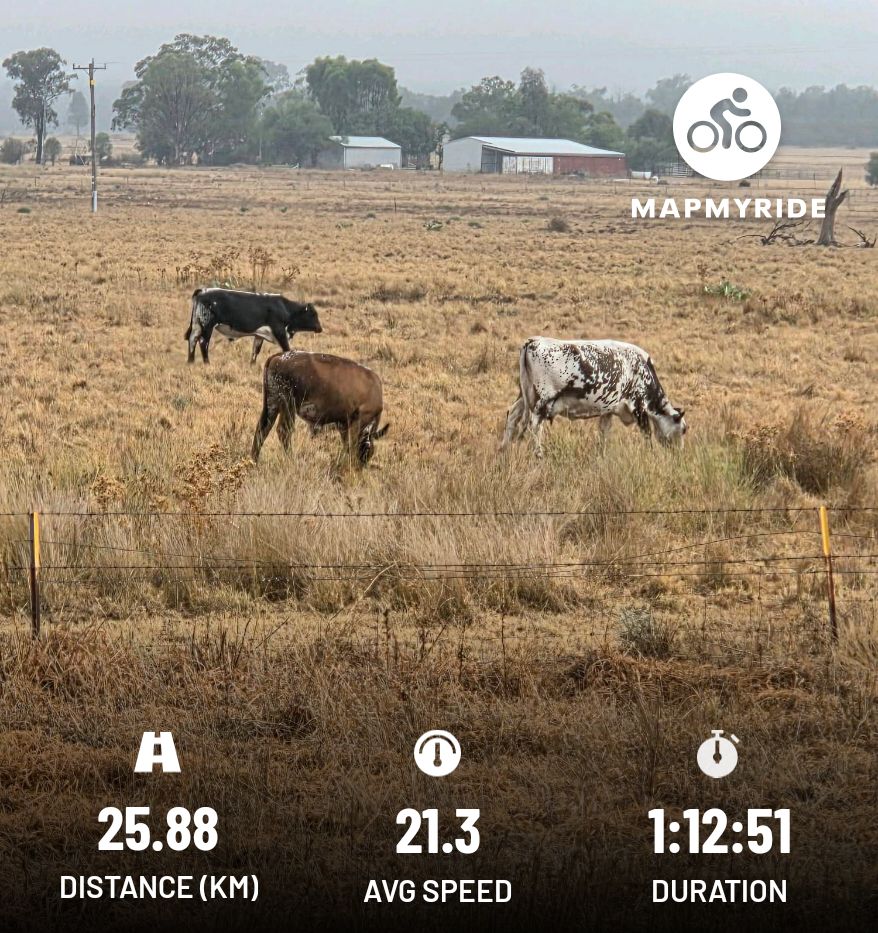
We generally don’t expect fog in summer in Narrabri, but there was some humidity around from yesterday’s rain. I rode to Haire Drive. #cycling #Narrabri

Most people would like to have the power and the peace of the Spirit with a lot of other qualities, and gifts and benefits the Holy Spirit may bring. Now the question is: can we afford to walk with the Spirit? And, are we going to walk with Him? A. W. Tozer
 New Life Narrabri
