
Even in death’s valley…

The sermon for November 23rd 2025 is now available on the New Life web site.
In this sermon, which is based on 2 Corinthians 10:1-10, Troy talks about Spiritual Strongholds.
Click here to listen in your browser or download the mp3.
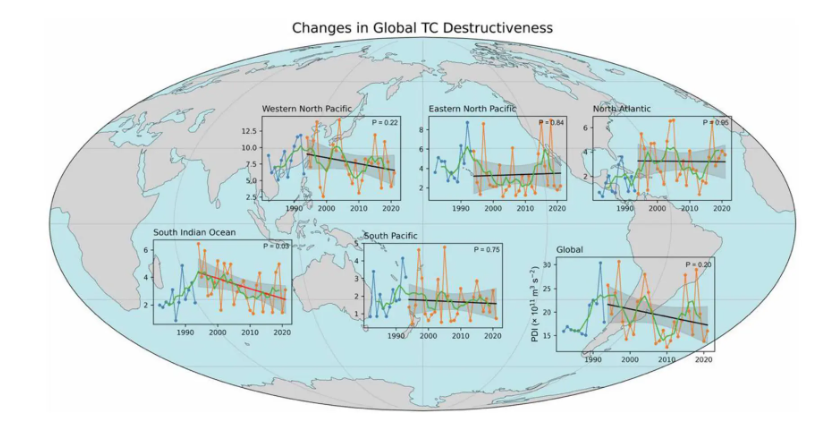
From wattsupwiththat.com
By Andy May
In a new paper by Gianluca Alimonti and Luigi Mariani, they argue that the public needs a proper definition of precisely what a climate crisis is to make rational decisions about how to address potential climate change threats (Alimonti & Mariani, 2025). They propose a set of measurable “Response Indicators” (RINDs) based on the IPCC AR6 Climate Impact drivers (IPCC, 2021, pp. 1851-1856).
Their intent is to switch from subjective perceptions of possible dangers to quantifiable metrics. Potentially this could put climate change debates on track and ensure that both sides are arguing about the same thing as opposed to talking past each other due to each of the debaters arguing from different definitions. It might also lead to real solutions to real problems, rather than flights of ideologically-based fancy.
The IPCC defines climate impact drivers (CIDs) as climate events that affect society. The impact on any affected society can be detrimental, beneficial, or neutral (IPCC, 2021, p. 1770). They define 33 categories of CIDs and have found that most of them have not emerged from the expected range of natural variability.
Alimonti and Mariani examined the EM-DAT disaster database, managed by the Centre for Research on the Epidemiology of Disasters from the year 2000 to the present. In this period, they detected no trend in deaths due to weather-related disasters. Just as important, there were clear improvements in global health over the period, once the growth in population was accounted for.
Temperature-related mortality accounts for 8% of the total weather-related deaths, of these 91% were due to cold and 9% to excess heat. From 2000-03 to 2016-19 cold related deaths decreased by 0.5% and heat related deaths increased by 0.2%, very small changes.
As Alimonti and Mariani’s Table 1 indicates, most measures of their climate change response indicators show no change, including cyclones, drought, floods, and wildfires. They show global GDP is improving, as is food availability.
The paper emphasizes that the reduction in climate-related deaths can be partially attributed to improvements in civil protection systems (levees, seawalls, forest management, etc.) which demonstrates that adaptation to climate change often proves more effective than mitigation. Most objective measures of the human-welfare impact of climate changes show no change, and most of the rest show improvement or an ambiguous impact, rather than detrimental effects.
The paper is worth the time to read; it is time for less subjectivity and more harder objective measures of the impact of climate change.

No doubt I should be ashamed to confess that fear played a part in my return to religion. I could easily make up some other, more creditable story. But I should be even more ashamed to pretend that fear did not. I have felt proper fear, not very often but enough to know that it is an important gift that helps us to think clearly at moments of danger. Peter Hitchens


The sacred fabric of the climate religion is unravelling by the day. The COP30 deal is being hammered out in Brazil — but in the draft any mention of “fossil fuels” has been dropped.
Apparently the rich oil nations have formed a block that objects to a sentence committing countries to stronger, faster, action to reduce their use of fossil fuels. The UK, France and a few other nations have rejected this but the same small island nations that are frightened of drowning have joined the oil block.
Apparently they were offered more money to adapt to climate change.
By Georgina Rannard, BBC
All mention of fossil fuels, by far the largest contributor to climate change, has been dropped from the draft deal under negotiation as the COP30 UN climate talks in Belém, Brazil enter their final stretch.
Brazil’s President Luiz Inácio Lula da Silva and some countries including the UK want the summit to commit countries to stronger, faster action to reduce their use of fossil fuels.
An earlier text included three possible routes to achieve this, but that language has now been dropped after opposition from oil-producing nations.
French Environment Minister Monique Barbut said the deal is being blocked by “oil-producing countries – Russia, India, Saudi Arabia, but joined by many emerging countries.” She suggested that small island nations may agree to a weaker deal on fossil fuels if they secured more finance to adapt to the changes in their countries caused by rising temperatures.
The big question here (if this sticks) is why the oil block didn’t do this years ago?
The even bigger question is whether the oil block have found a way to circumvent The UN Blob? If they are paying the small countries off directly behind the scenes, the UN will miss out on collecting its share of the cash flow. The travesty!
The irony is that if “man-made climate change” was really a crisis, it makes more sense for the oil giants to pay the islands to build sea-walls — instead of rearranging the global economy to try to control the clouds and the ocean. But this unthinkable sacrilege cuts out the middlemen Blob-o-crats and stops the whole totalitarian power game.
The UN will not give up its aim to be the One World Government so easily.
The French Environment Minister was not happy:
On France’s position she said:”At this point, even if we don’t have the roadmap, but at least a mention of the fossil fuels, I think we would accept it. But as it stands now, we have nothing left.”
Expect The Blob to fight this all the way. There will be wrangling and then possibly “euphoric joy” about a “historic agreement” ready for cameras on the nine o’clock news.
From Jo Nova

56
In fact, I think it safe to say that the two great victorious wars of the twentieth century did more damage to Christianity in my own country than any other single force. The churches were full before 1914, half-empty after 1919, and three-quarters empty after 1945. Peter Hitchens
 New Life Narrabri