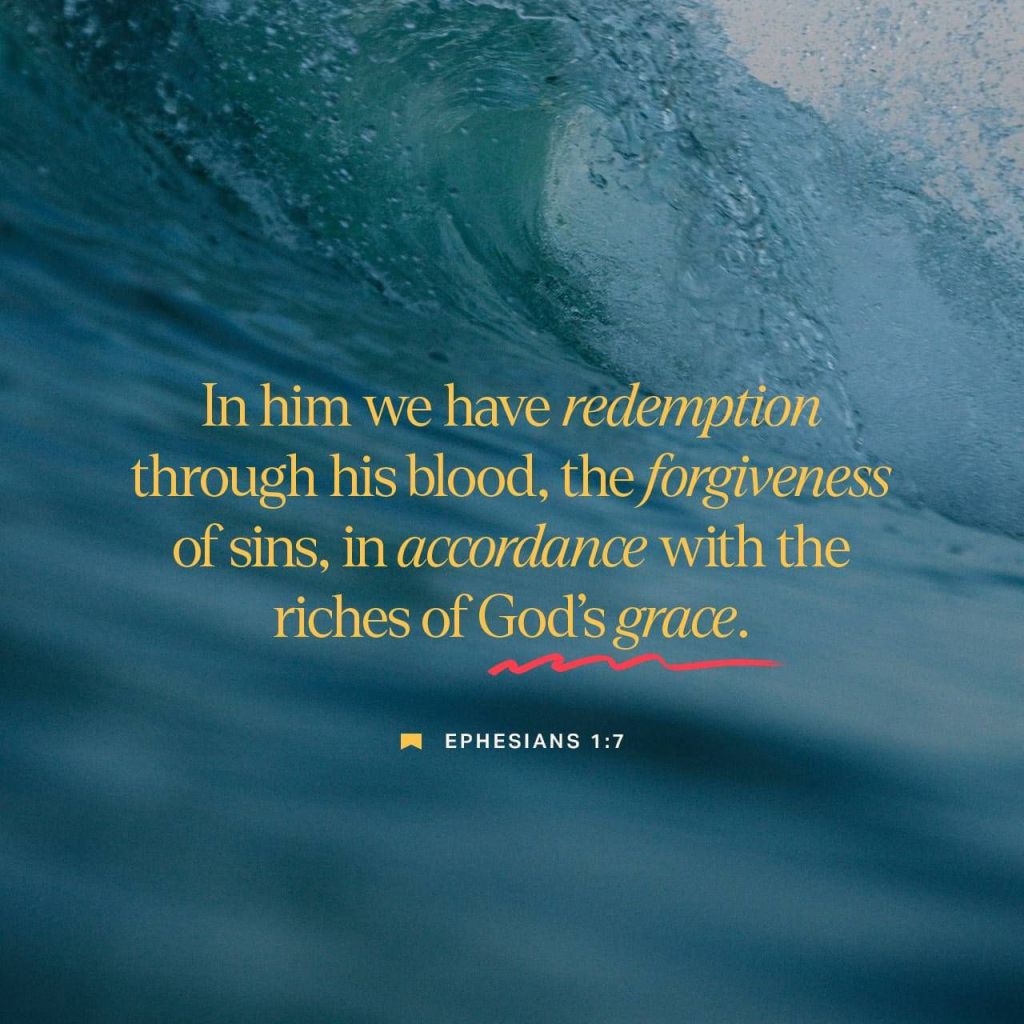
In Him we have forgiveness
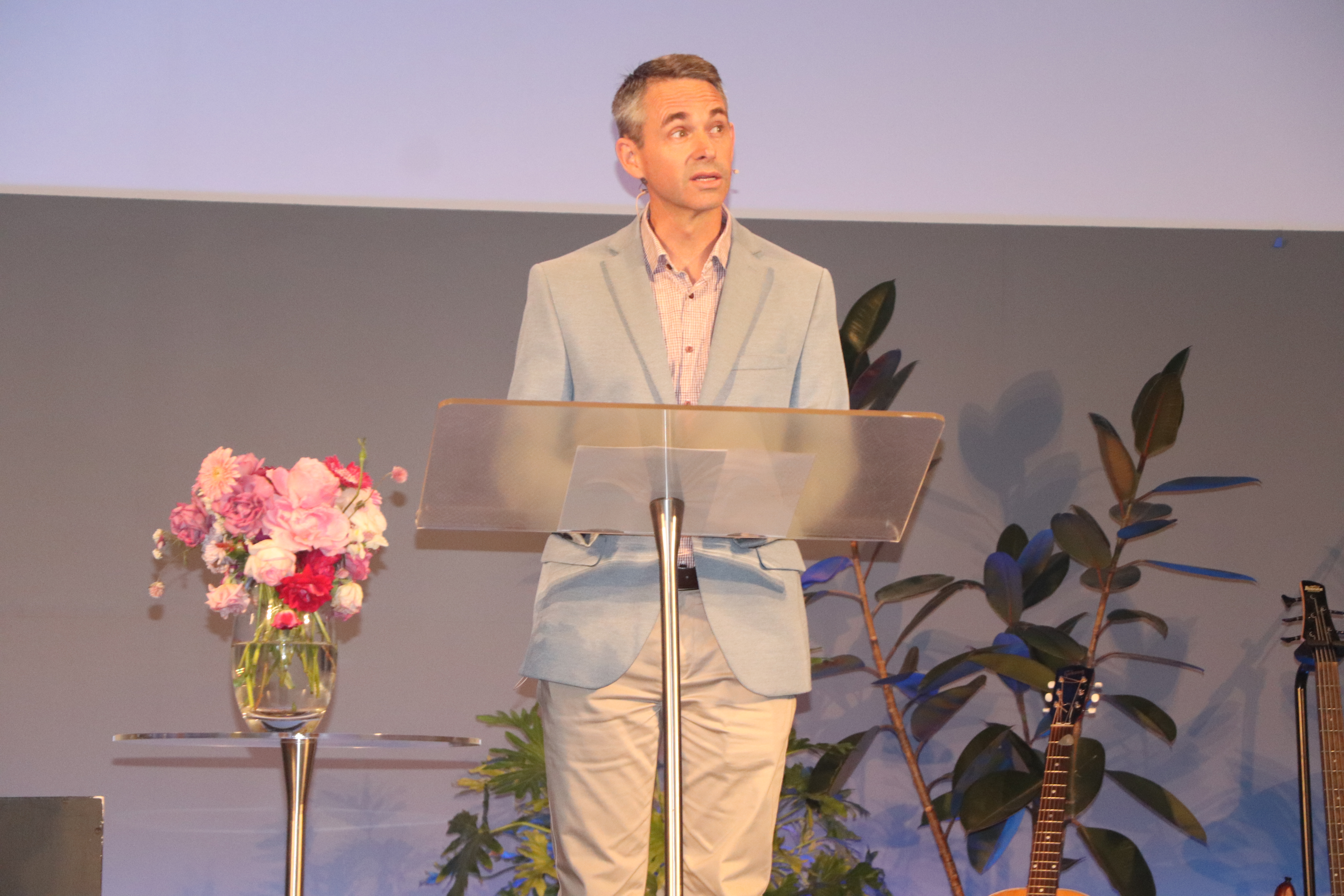
The final session of the Apostolic Summit is Sunday morning, when the Summiteers combine with the standard Peace Apostolic Church congregation. During the service there was a celebration of 50 years of ministry by John & Hazel.
David Alley, John’s eldest son, brought the message, which was a sort of summing up of the weekend.
John 21
Third time Jesus appeared to the disciples after the resurrection.
Vs. 1-7
“It is the Lord!”
The Lord directs everything
When Luther nailed the theses to the door, Zinzendorf took in the refugees, William Carey went to India, John Wesley heard the gospel, William Booth started preaching, it was the Lord!
In the early 1990s when John Alley sat down with Chuck Clayton for lunch in Sizzlers that was the Lord.
When the disciples first saw Jesus they didn’t recognise him. Sometimes things happen that don’t like the Lord, they are.
He is at work doing things among us.
If the Lord is not with us, nothing happens.
Vs. 8-14
Everything is about Jesus.
What’s the point of building the biggest church or visiting pastors in Africa, if it’s not about the Lord?
Vs. 15-24
Jesus is the focus
Jesus tells Peter three things
Look to Jesus, not what other people are doing. He is the Lord! Don’t compare self to others. Don’t be grumpy because you aren’t getting what you want.
The session started with an invitation for people to share a testimony about what God has been doing in them during the Summit.
Many years ago David Smethurst prophesied that God was doing something here at Peace but it would be a slow, gradual process. It would be strong, but pure.
God is relational. One God but three persons – a community so bound together that it is one God.
If God was anything other than 3 person He could not be love, nor holy nor perfect.
If God was only one person prior to creation, there would be no love. Likewise if there were only 2, it would be just a mutual admiration society.
Here is the perfection of Holy love. Our responsibility is to become a community like the Trinity.
This mature community is supposed to be attainable in God’s grace.
John 17. Prayer in 3 parts
V.11 He asks that the people following Him then, be one as Jesus and Father are one.
This is meant to be on the earth, not for heaven only. This is why apostles are being released, so the community can be established.
V. 21 Jesus prayed that the ones to come will all be one… so that the world may know (v. 23).
Ephesians 4. A prophetic statement that Christ continues to give apostles etc until we all cone to the unity of the faith, measuring up to the fullness of Christ. What is this measure? That we are one with Him and with each other.
John 17:20-24. Christ has given us His glory,so that the world will see that God loves them.
A lot of people are happy with an ordinary salvation – happy life, no problems, no suffering. This is not salvation. We are to be raised above the angels with a kind of fellowship with God that is more profound than we can imagine.
He wants to transform us to lift us into this unity with God.
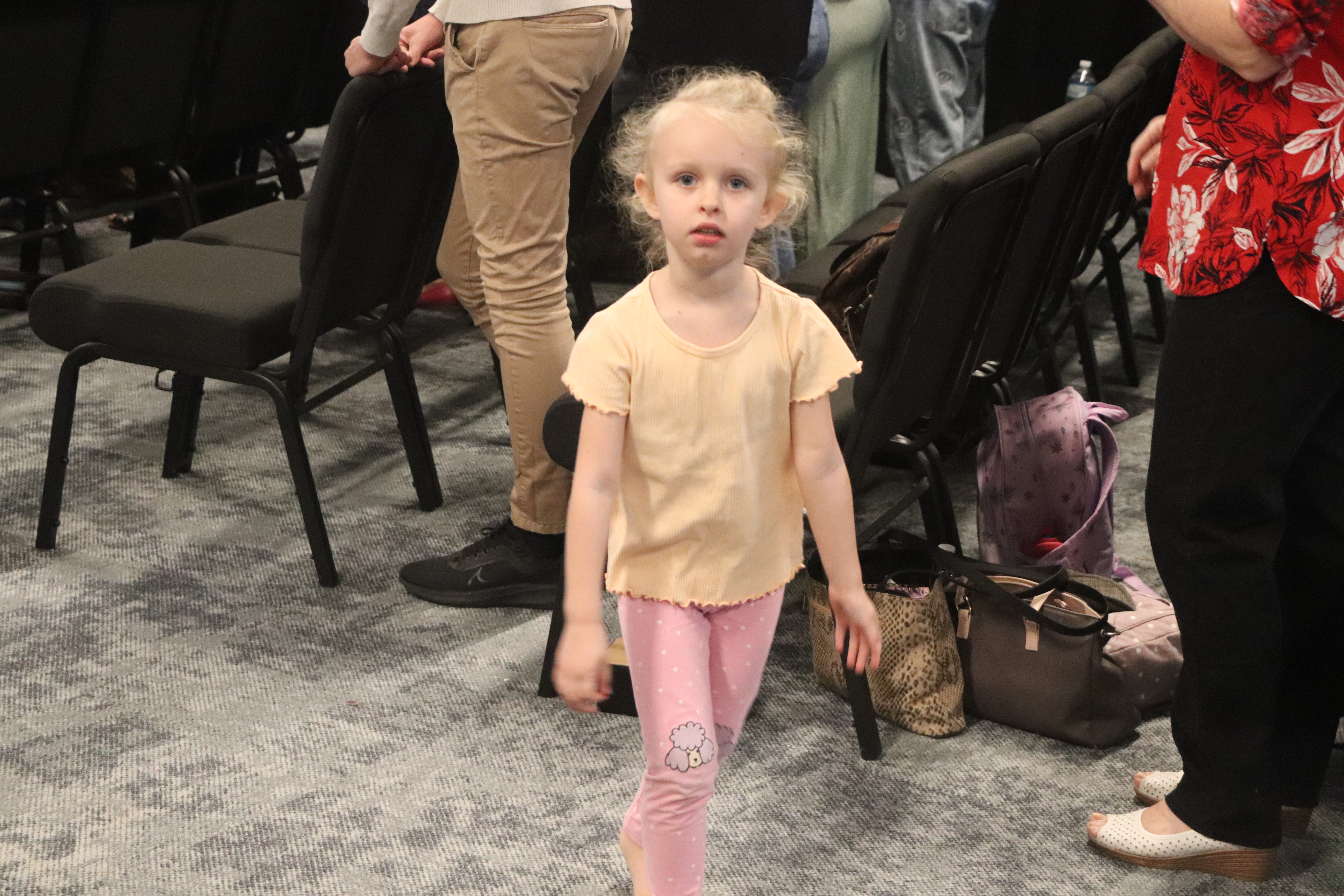
In Session 5, Apostle John Alley picked up some of the themes from the previous session, before moving on to talk about the Rapture and the General Resurrection.
God uses our bodies to get our attention. Most things in our bodies are spiritual. We are connected to the spiritual realm.
The body is used to communicate spiritual messages to us.
Example. Pain in the body during worship could be a sign of witchcraft, accusation from other churches. Nausea can be a call to intercession.
Pay attention to the body as a communication channel.
Security in the house of God comes from a pastor who is a son to a father.
George Stormwald, personal friend of Smith Wigglesworth, had such a presence of Christ that people would weep when he preached. His secret was that he would meditate on Revelation 1 before he preached.
Every truth about apostles is about Christ. It is never about ambition of man. People can build things and claim to be apostolic but be slightly off because it is about their efforts.
Resurrection
We assume that Jesus did not go to heaven and be glorified until Ascension Thursday. There were bodily appearances in that period. He was taken up to heaven on Easter Sunday.
He could appear but He was already taken up to heaven.
Daniel 7:13-14. Cf. Revelation 5. When did this happen?
John 20:17. Easter morning, he says “Don’t cling to me. I have not yet ascended.”
Luke 24:39. That evening, “Touch me.” He had already gone to heaven, received the authority of the “scroll”
Rapture
We have been hoodwinked by the Rapture boosters.
Overall teaching of Scripture is there is a single General Resurrection. That is, sinners and the redeemed are raised at the same time. Majority of church teaches this.
This is in all the early confessions, including Apostles and Nicene Creeds.
Matthew 25:31-33. All the nations gathered before the Son of Man, He will separate the sheep from the goats.
Matthew 13:30. Harvest then separation of weeds.
Matthew 13:37-43. Interpretation is that the harvest is the end of the age.
John 5:21-29. Believe Jesus pass from death to life. First resurrection. In v. 28, He shifts to the future. All who are in the tombs will be raised to the resurrection of life or to the resurrection of judgement.
We believe in a general resurrection, not in a rapture of the believers before the resurrection of the sinners.
John 6:37-40, 44.
Revelation 20:5-6. Those who share in the first resurrection, that is are born again, will not taste the second death. They will reign with Him for 1000 years – an unlimited period of time. Not a literal 1000 years time.
Ephesians 1:17-23. We are already resurrected beings. We need to pray for revelation and wisdom. 3 things that Paul thinks we need Revelation.
Christ is the head over all things in heaven and earth and he is giving this authority to His body the church.
Ephesians 3:8-11. Paul preaches to us to bring to us the plan of the mystery hidden in God. The church teaches the angels and demons about God’s wisdom. We have the task of taking authority over the powers in order to change the world. Over time the church breaks bondage.
Session 6
Most of this session was an interview with Lloyd Gill, John’s apostle to Africa, Lloyd talked about his many ministry trips to Ghana, Kenya, Uganda and Tanzania, and about what God is doing there.
Te session concluded with John sharing some prayer points to pray for people in ministry before he prayed for Lloyd and those in ministry in the conference.
Prayers for ministry
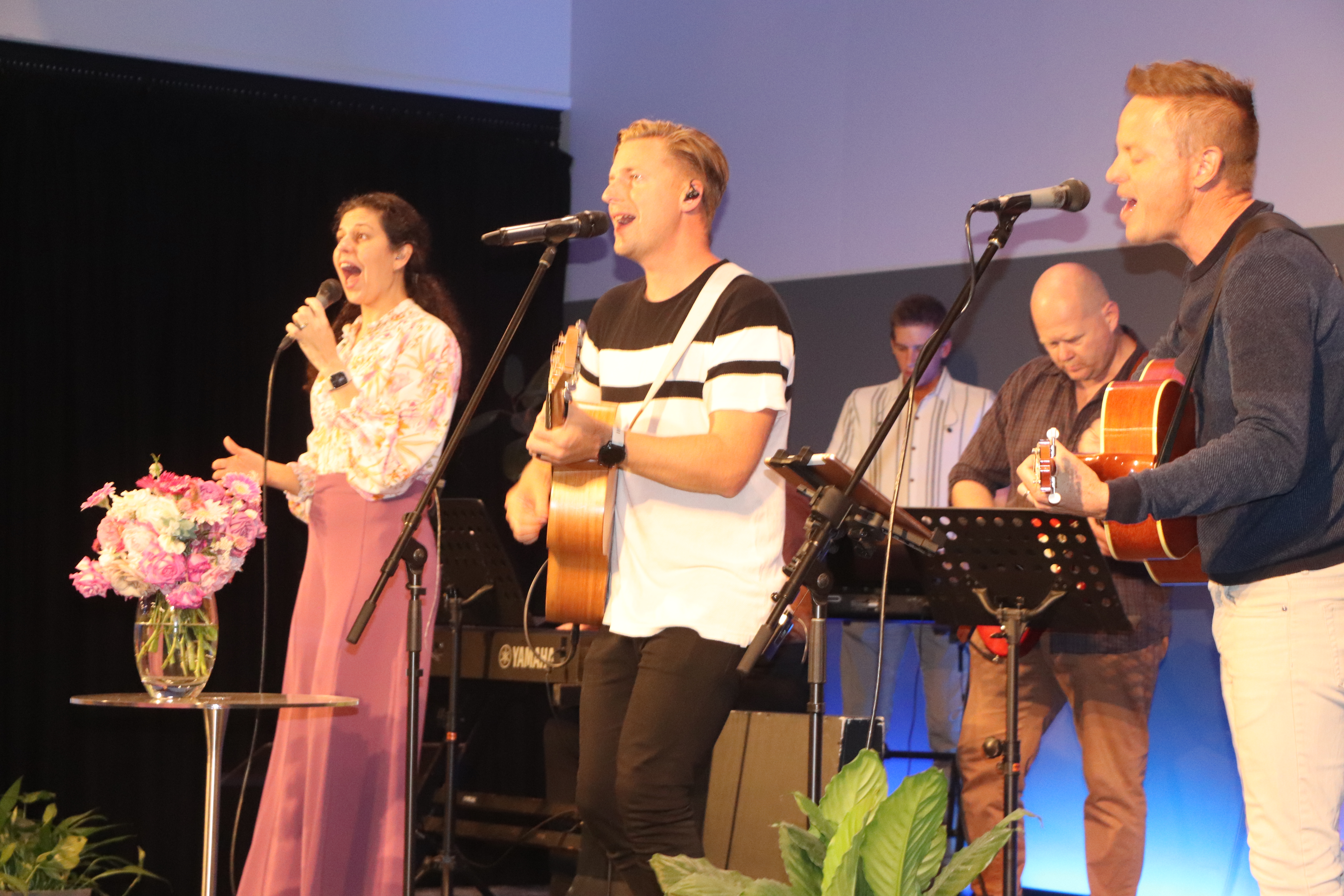
In this session, John shares the history of how he came into the apostolic ministry.
From 2002, anywhere John went to preach the Apostolic message, it would rain, even in places that are normally very dry.
In 1994, John started a relationship with Chuck Clayton. Although the Lord was raising John as an apostle, he himself needed an apostle for spiritual covering.
He was teaching father/son relationships, but it was just theory. Formalised the relationship, declared they had apostolic covering, but it was still theory.
In 2002, at Family Camp, they had a strong move of the Holy Spirit. God revealed what it means to relate to God as Father.
Later that year, Chuck came to preach. John was behind in his tithes to Chuck. John gave him cash on his arrival. First meeting was at Oakey. John declared him the apostle. It started to rain, and the rain kept up until the end of the Summit, the following Sunday.
During the Summit, John received an outpouring of love for Chuck. It was a work of the Holy Spirit. John had become a son to a father. Tony Ponicke received the same breakthrough in his relationship with John.
Important steps
John was changed. He received grace and confidence to preach with power all over the world.
The Lord gave John a download about the relationship between Elijah and Elisha. The thing that made it possible for Elisha to receive the double portion from Elijah was that he longed to be with him.
Chuck had much more to offer John, but it wasn’t until John’s heart was changed so that he could see what Chuck had that he could receive it.
Father /son relationships (wholehearted, love for leaders) are the key for ministry. You have to love your pastor. Senior ministers must have proper apostolic covering.
As John Alley says, “We are Australian and we are civilised people. We do not skimp on morning tea.”
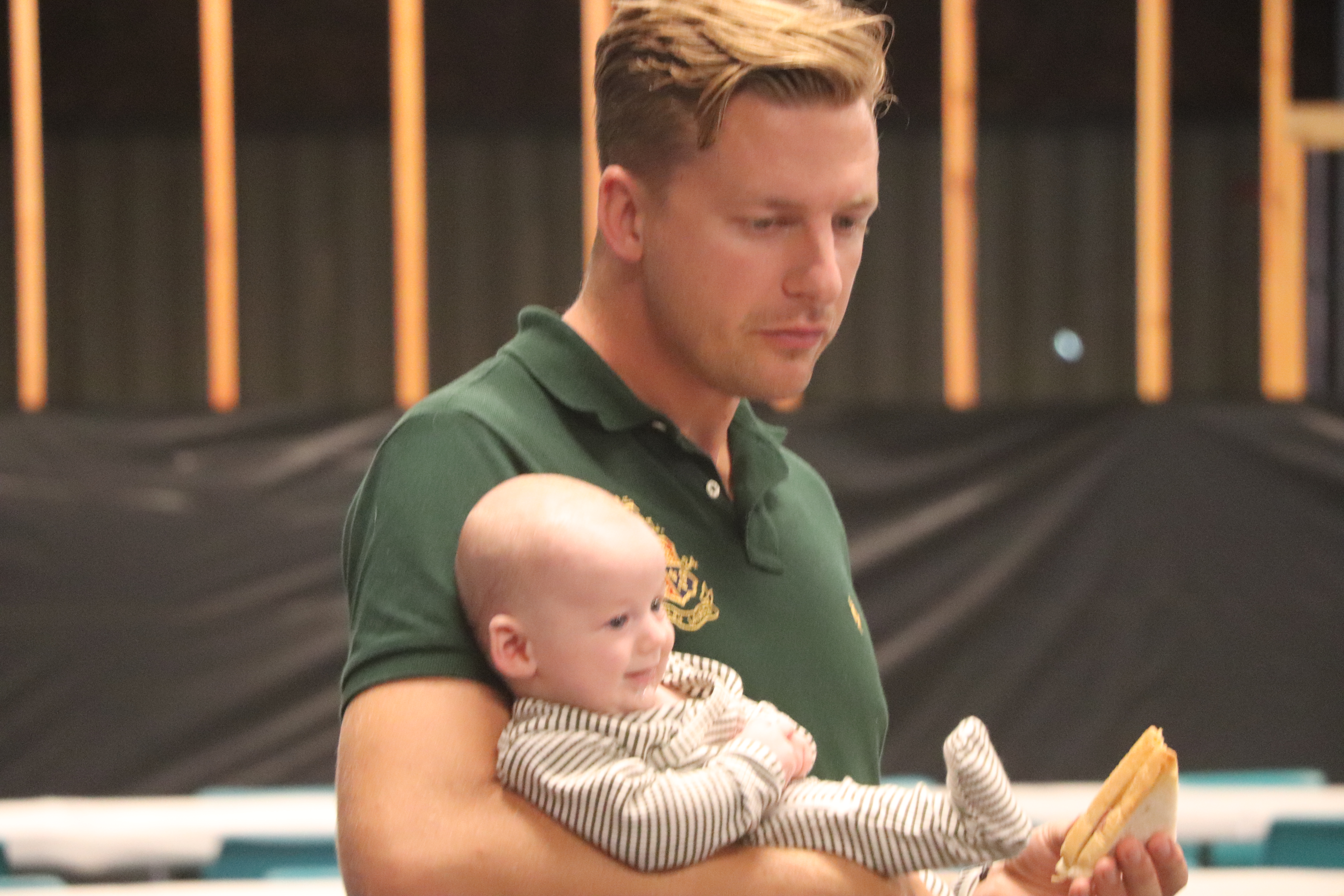
Morning tea is a good time to hang out with your mates, no matter how young they are.
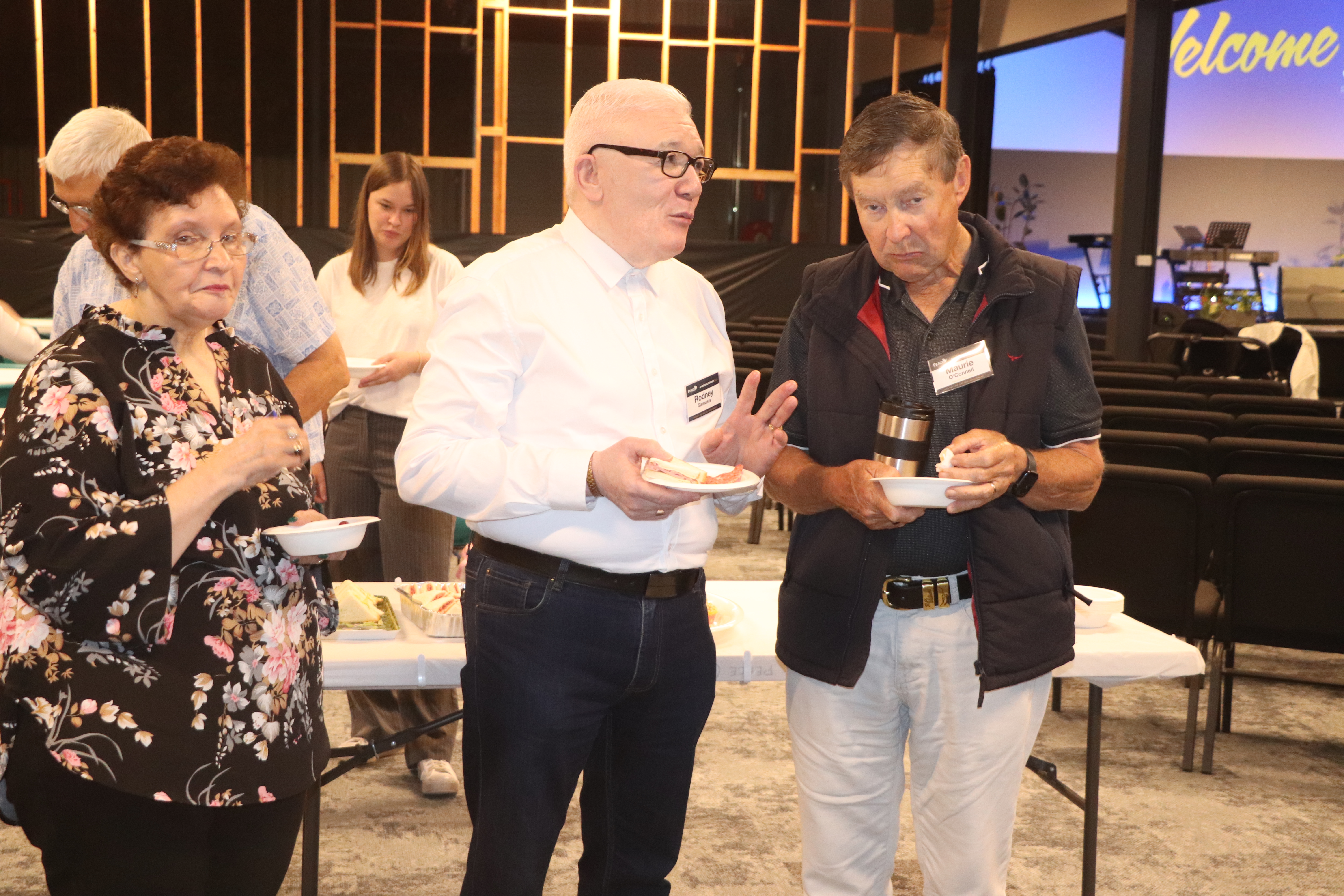
After the break, Apostle John continued the teaching.
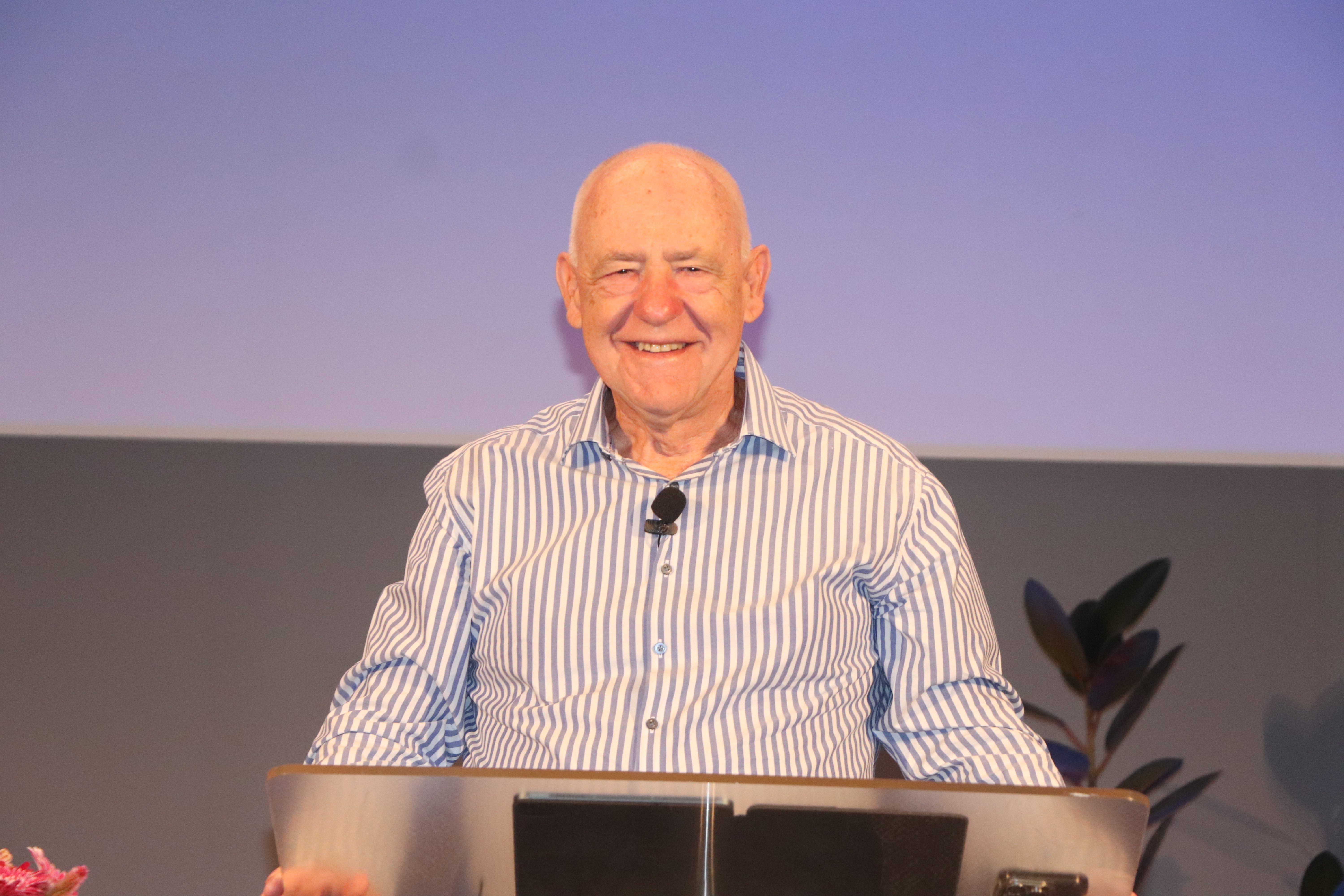
The soul is the command centre of the whole being. It is the soul that is either soaking in or rejecting.
The heart grows at the root of the soul. That is where the values are. The words of the mouth come from what is in the heart.
“The worth and excellency of a soul are to be measured by the object of its love .” Henry Scougal, The Life of God in the Soul of Man
What we love shows the value or worthiness of our soul.
Hebrews 4:12. The word of God is living and active.
We have to seek the word of the Lord
We read the word because we have a yearning to know the Lord.
While we are doing that, God intervenes in our hearts to remove the sins and thoughts that beset us
We need to seek ever increasing maturity in the Lord.
1 Peter 1:3-23
The prophets searched and inquired carefully but they received revelations in the searching.
We must not be conformed to the passions of our former ignorance. We must purify our souls by obedience to the truth. Love one another earnestly.
2 Peter 1:3-11
If we are diligent in pursuing the Lord, there will be richly provided for us an entrance into the eternal kingdom. If we do these things we will not fail.
In Session 2 of the Summit, Apostle John Alley spoke about what the Bible says about human nature. WE are body, soul and spirit. The bible speaks about the heart and the conscience. How do these all fit together?
When you are eager to promote a gift or idea, you need to make sure that you are not inadvertently undermining other important things. Example of a man who promoted miraculous signs but in doing so downplayed the teaching of the word.
Jn 6:63 It is the Spirit who gives life ; the flesh is no help at all. The words that I speak are life
We are body, soul and spirit. Cannot separate the three.
1 Thess 5:23-24. “may your whole spirit and soul and body be kept blameless
Heb, 4:12 Word of God divides soul and spirit.
What about words like heart, conscience, etc? How do they fit?
Soul- contains mind, memory, will, emotions
Body- 5 senses, pain, adrenalin, Gut, Chemicals, fitness, sickness
Lot of interaction between body and soul
Spirit- knowledge, memory, revelation, spiritual gifts, discernment, conscience, inner witness, emotion… your spirit can rejoice or have dread
We are designed with this complexity because we have to live in the spirit realm and the physical realm.
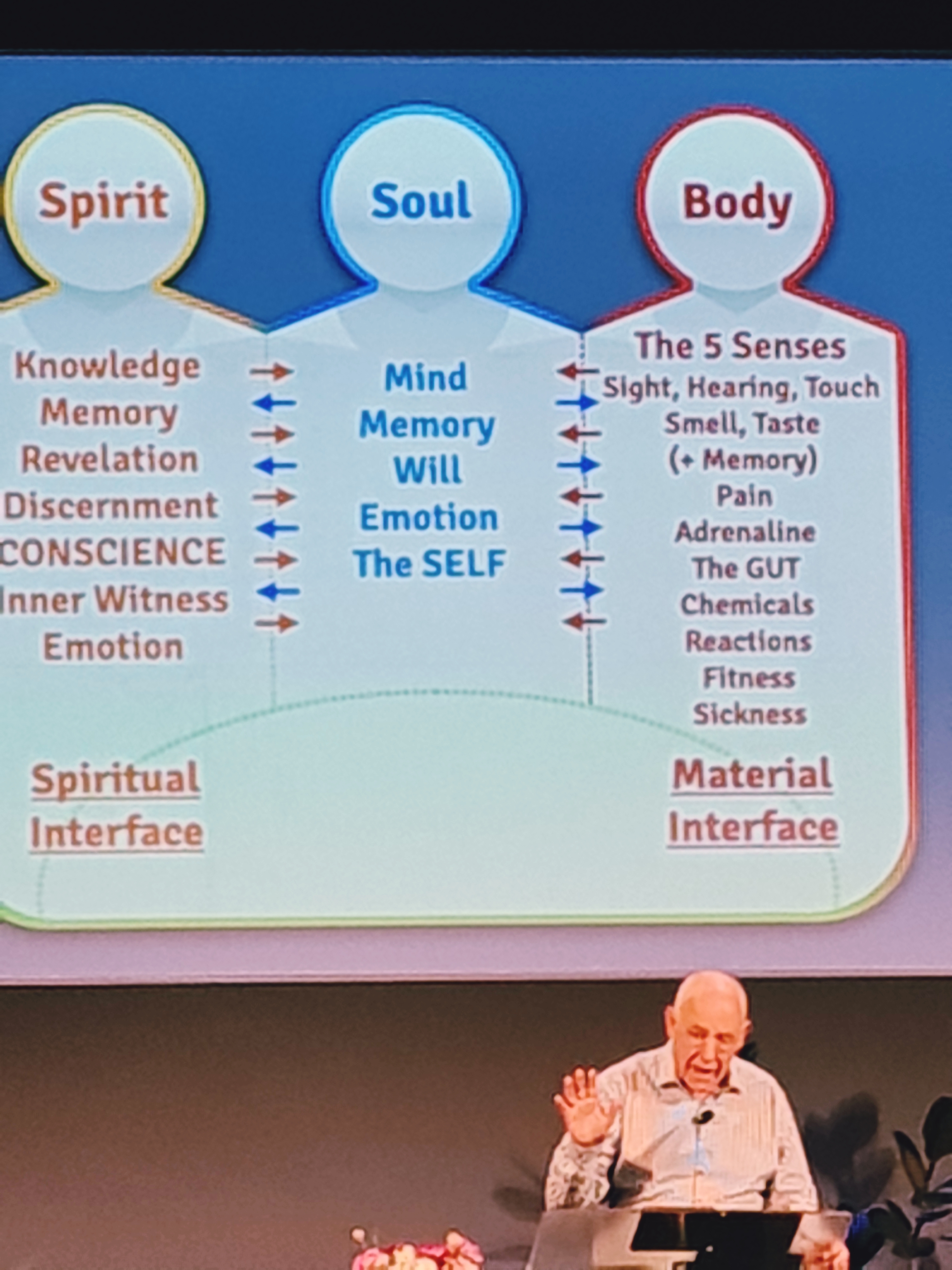
Lots of interaction between spirit and soul.
Unbelievers are dark in their spirit. They have a conscience for example. The spirit is alive but separated from God until they are born again.
God can speak to sinners. eg Cain.
Your spirit can be weak or strong, bound or free. We need to work on our relationship with God. Ephesians 3:14-16
Psalm 139. I am fearfully and wonderfully made.
Romans 2:14-16. Gentiles do not have the law, but their consciences lead them towards righteousness
2 Corinthians 4:2.The conscience provides the inner witness.
2 Corinthians 5:11 Conscience provides confirmation of Paul’s message
1 Timothy 4:1-3 A seared conscience.
New heart when born again:
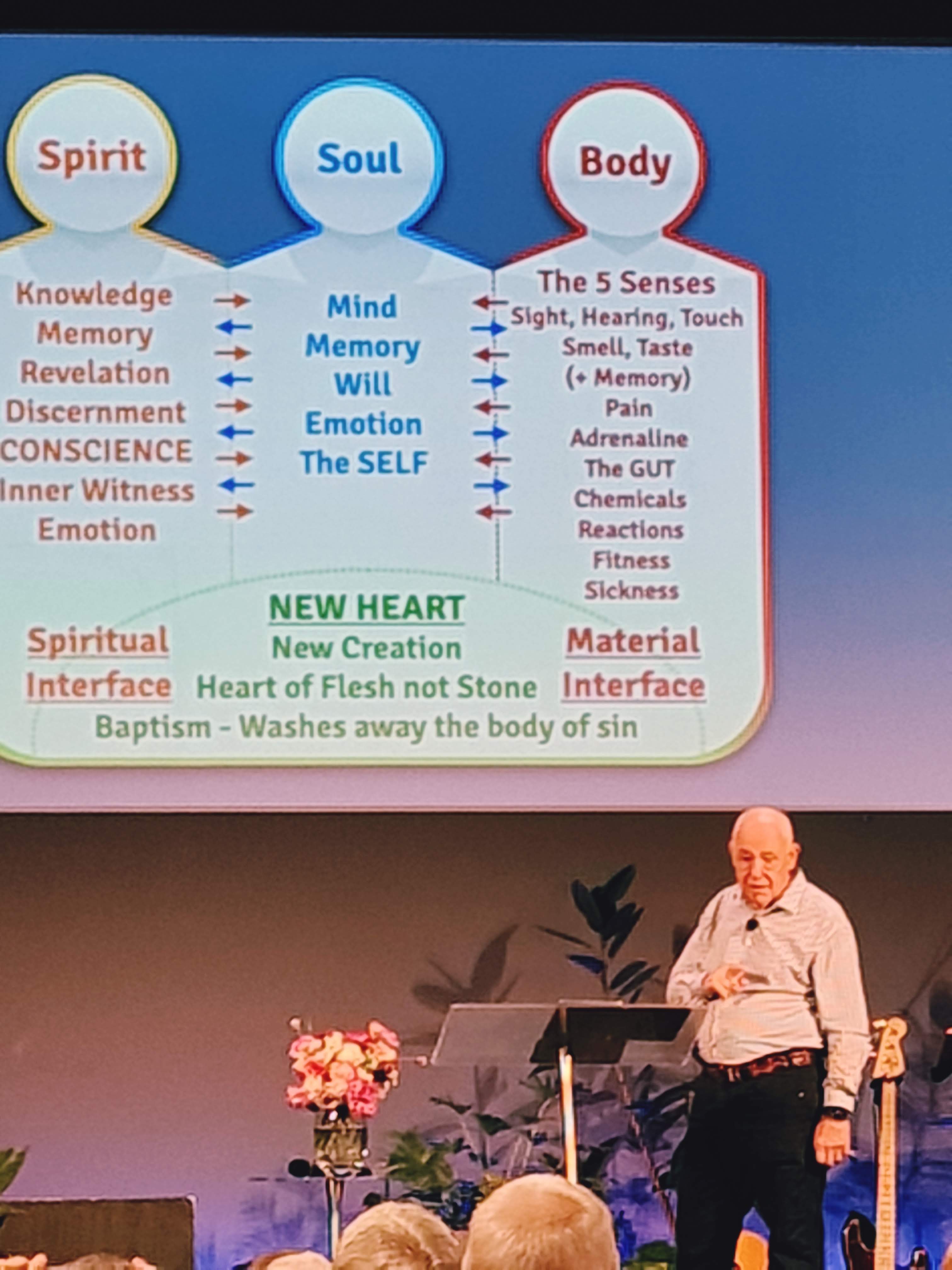
The heart is the sum of all the parts- body, soul, and spirit. It’s what is at the bottom of it all.
Our heart gives us longing for good things as well as sinful things. The Lord will give us the desires of our heart. That is why he tells us to fix our eyes on Jesus.
Romans 12:2. Be transformed by the renewing of the mind.
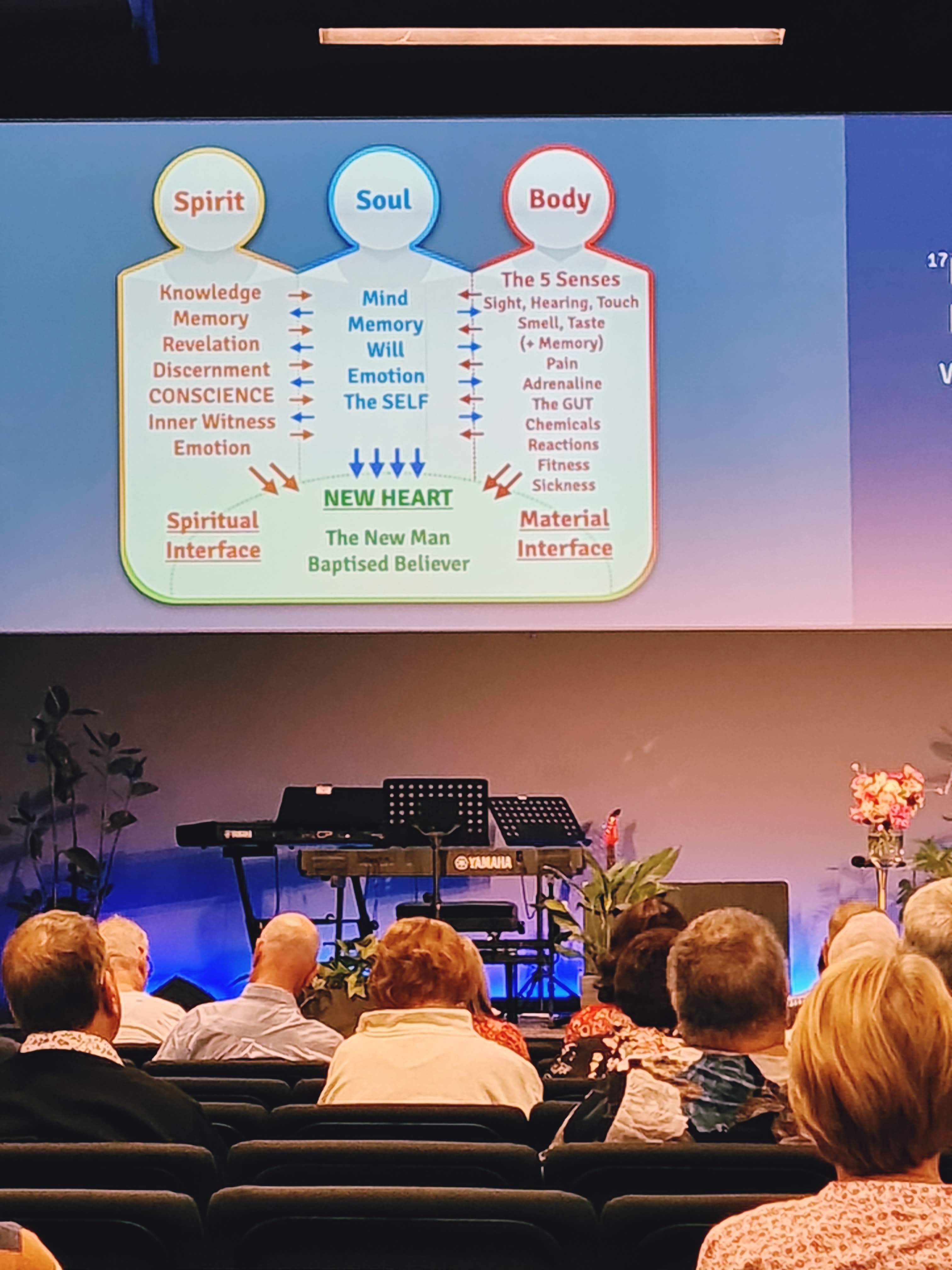
God looks at the heart.
The 2024 Apostolic Summit kicked off at Peace Apostolic Church in Rockhampton this evening (Thursday May 30th).
As always, we drove up,starting out at 7 am and arriving after 6 pm. It is on these trips that you realise how big the country is. From Narrabri to Rockhampton,m the road distance is well over 880 km, but when you look on the map it is barely a blip on the continent.
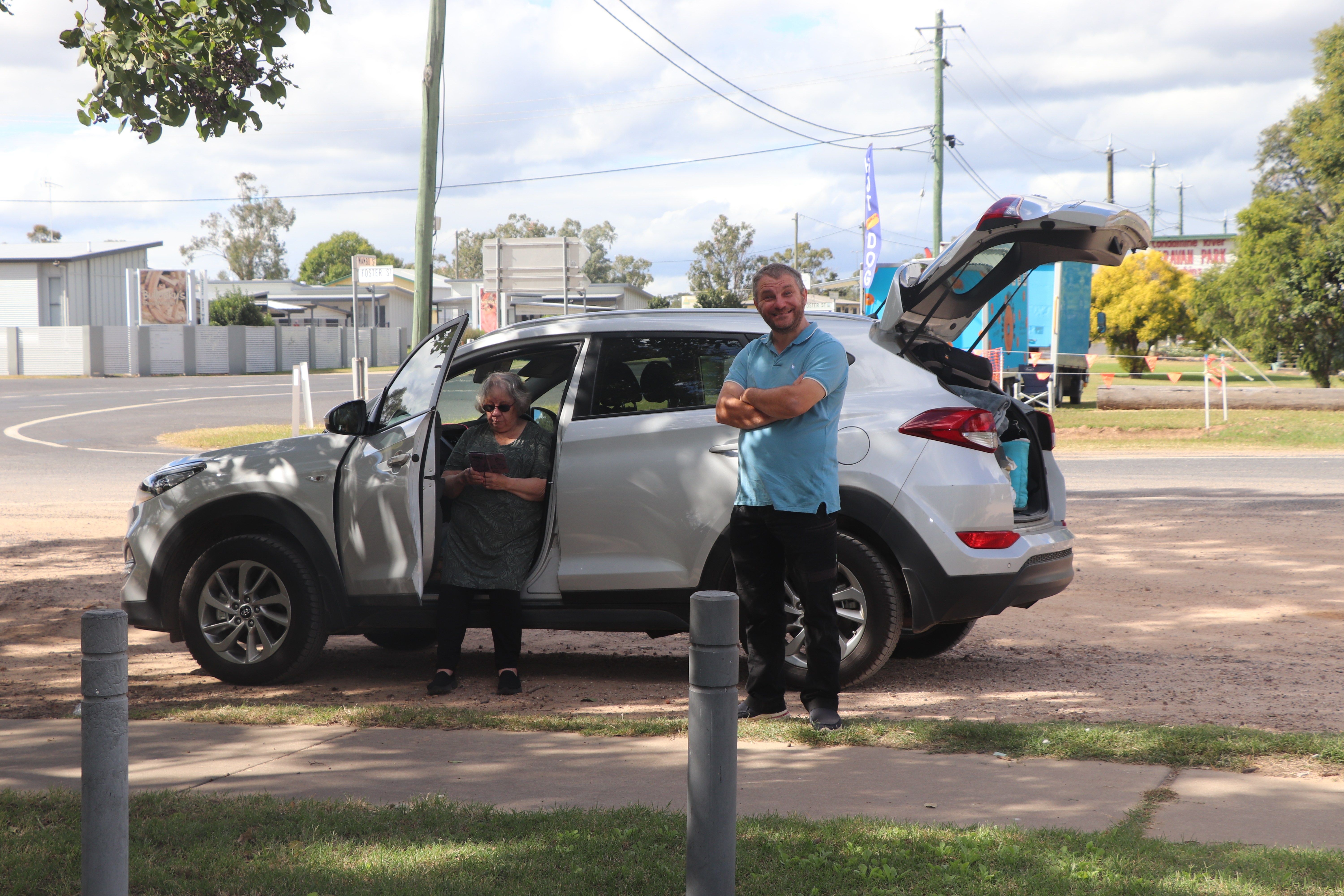
Usually Tim drives the whole way and enjoys the road trip. Today, he wasn’t feeling too well, so I drove the last one third of the journey from Taroom.
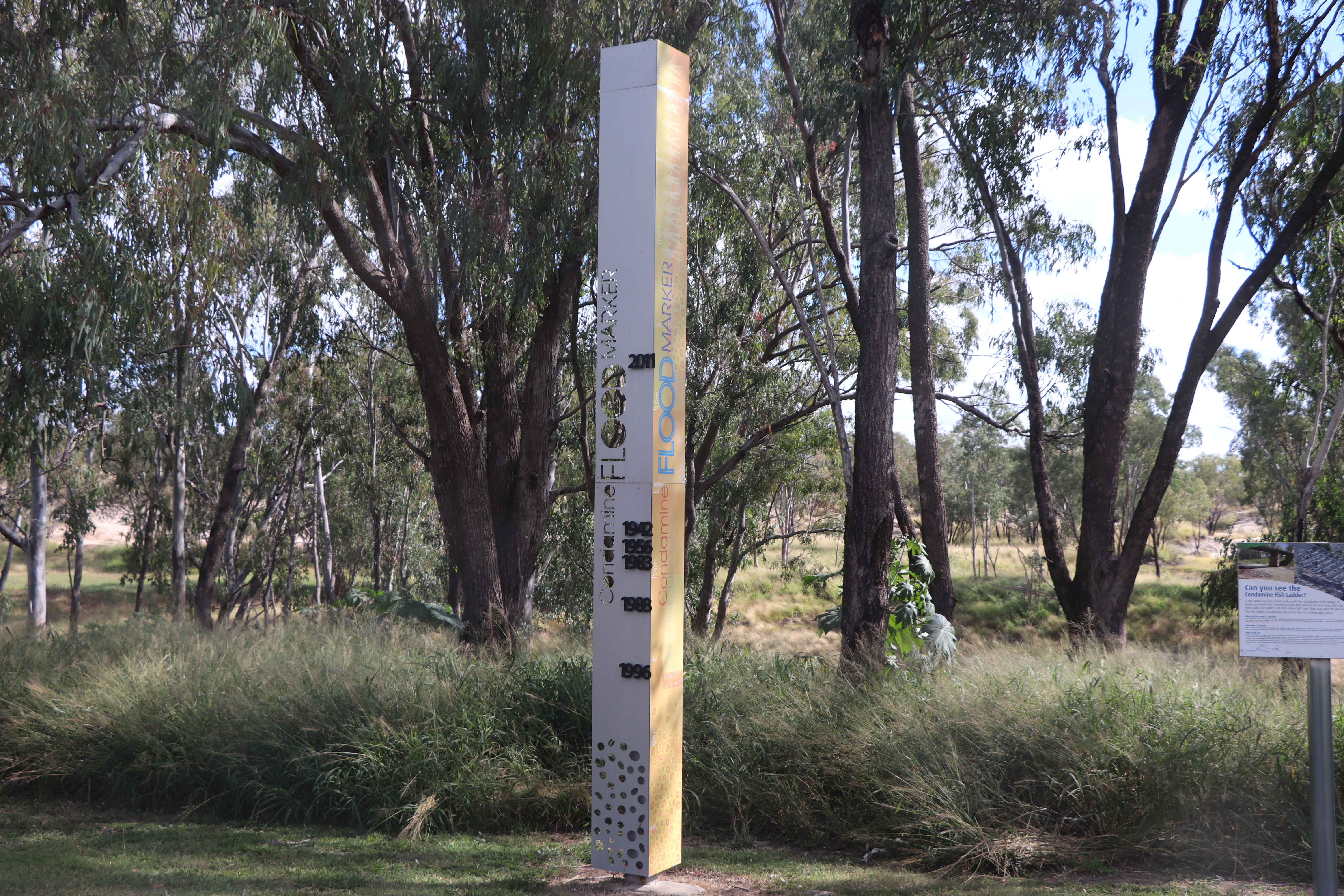
We stopped for lunch at a place called Condamine. The flood markers for the highest floods of the Condamine River are shown on the obelisk. What is scary is that the normal river flow is about 10 metres below this point. They really know how to do floods here.
It was great to catch up with the Cooper family who have been on holidays for a couple of weeks. They have been touring Queensland and planned their holiday to be in Rockhampton for the Summit.
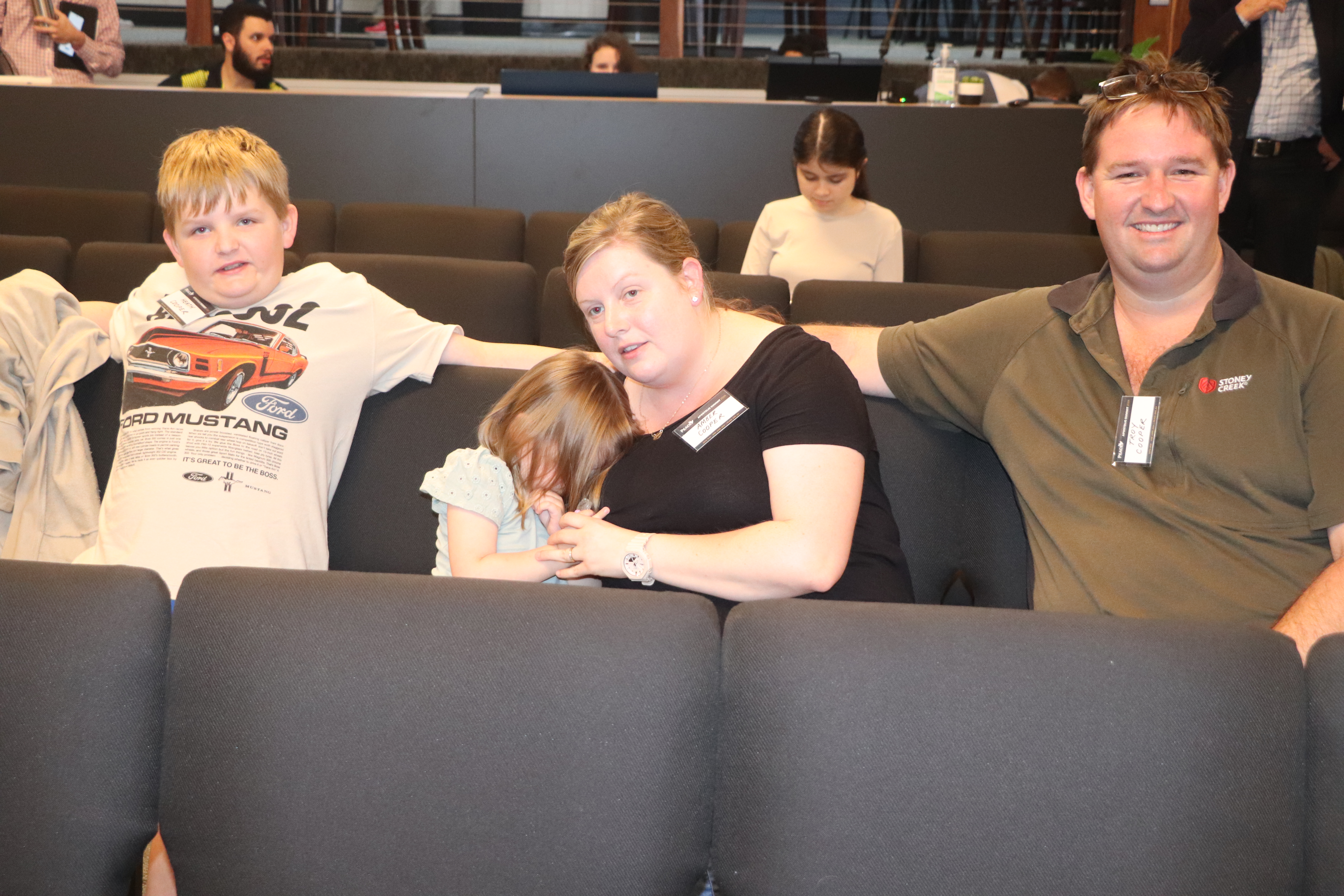
Evelyn was unusually shy for the photo.
It was a great meeting with good praise and a great message from Apostle John Alley. John is planning to go over the basics of the apostolic message over the course of the Summit.
Here are my notes from Session 1.
In the mid 90s people were writing about apostles but it was premature. There was a mixture of revelations with a lot of human speculation.
John realised at that time it was bigger than restoration of apostles. The Lord was going to restructure the church to become an apostolic church.
Lots of people calling themselves apostles, claiming the name but using human techniques of church growth and leadership etc.
The new paradigm is relational rather than institutional.
The Apostolic Summit started in 1996 to teach the latest knowledge about the Apostolic Revelation.
Apostles are being released for the purpose of raising the church to a new level of spiritual maturity and authority.
The work of salvation history is far bigger than we can imagine.
The effect of the Reformation is still being worked through. It is all building to something greater.
Apostles are a different order of ministry. They are not just the old style leaders under a different name.
It is not about a network but about relational connection.
We all need an encounter with the Lord that changes us. Jacob had to wrestle the Lord. Elisha had to request and chase the power that was on Elijah. They knew the Lord but needed to get that extra power.
John was invited to join in 2003. He had reservations but felt he should do so for the purpose of relationships. He felt very uncomfortable in the meetings.
He discerned there was a spirit of control at the heart of it. Spirit of conformity- that is control with the volume turned down.
He resigned membership but felt his apostolic mojo came back. More energy, clarity of mind, return of authority.
And that also clarifies the goal of all Christian community: they meet one another as bringers of the message of salvation. Dietrich Bonhoeffer


