After several days of rain it was good to get out on the bike this morning. Of all the places I ride, it is this semi rural area that seems to have the most kangaroos.

After several days of rain it was good to get out on the bike this morning. Of all the places I ride, it is this semi rural area that seems to have the most kangaroos.
There are times in our lives when we must stay closer, locking onto His words and His vision. God gives us prayer strategies, and we look to Him for focus and understanding on how to pray with results. Then the birthing will come. Beni Johnson

By Mario Vega, www.elim.org.sv
Leaders will attract attention because people want to know they are living out their faith. Those who lead cell groups inevitably become an emblem of what is expected of a believer. Hence, effective leadership is far more than words—conduct matters.
And between the two, leadership behavior is most important. Every leader must keep in mind that they are watched all the time and that their behavior will influence others. This should not inhibit the leader. Rather, it should encourage him or her to take advantage of their privileged position to embody the teachings of Jesus and, thus, disciple others.
The attitude that best models the Savior is a servant attitude. Most people are selfish and think primarily of themselves. Yet, when a person breaks that pattern and serves others, they break the selfish pattern that is common in the world. Selfless service is the concrete way to love. When such service is directed to people who do not deserve it, the leader is giving a palpable sign of the love that Jesus spoke of, when he said that we should love our enemies.
In this way, members of the cell receive ministry that they will not forget. The exact words may fade over time, but the behaviors remain vivid in their memories. Modeling Christian teachings produces true, lasting fruit in cell members.
From Joel Comiskey’s blog
God’s yes together with our yes is what brings about breakthrough in prayer. Beni Johnson
From First Things

Since the news broke that the Supreme Court may be poised to overturn Roe v. Wade, some pro-abortion activists have responded by vandalizing Catholic churches and disturbing Masses. While the threats to disrupt worship en masse and even burn the sacramental elements seem to be overblown so far, the backlash against religion is surely a sign of the times. Most obviously, the sartorial choices of some of the activists (dresses inspired by a sermonizing Margaret Atwood novel) speak to the infantilism of our age. Clearly, there is no issue so profound—not even the mystery of the creation of new life—that cannot be reduced to sophomoric silliness. But if the idiom has been that of puerile performance, the focus on churches indicates that desecration is becoming a default strategy for the political class in the modern West. And that bodes ill for some of our most basic freedoms.
In striking at the Catholic Church at worship, the protesters have identified an obvious player in the history of anti-abortion activism. The Catholic Church, and many Catholics, from high-profile figures such as Robert George to countless unknown laypeople who help at crisis pregnancy centers or engage in fundraising work, have been the beating heart of the pro-life movement for decades. And the Catholic judges on the Supreme Court are the key ingredient in the impending decision. But there is surely more to the targeting of churches than the mere fact of Catholic involvement in current events. The protesters target churches because they want to profane the sacred.
Abortion is desecration. That is why it raises such passionate emotions on both sides of the debate. Sex and conception create new life and that means they possess—or should possess—a mysterious aura of the sacred. Attitudes about them therefore go to the heart of what, if anything, society thinks it means to be human. But the case for abortion teaches that new life is simply a biological process that adds a new part to a woman’s body, and that this can be removed when convenient. Terminating a pregnancy is therefore of no more significance than clipping a damaged fingernail or cauterizing an unsightly wart.
Our society intuitively knows that this is nonsense. That is why the law considers an assault leading to the loss of a fingernail or a wart to be far less heinous than one that ends in rape or miscarriage. In such extreme circumstances, the law acknowledges by escalated penalties that sex and procreation cannot be reduced to merely one more biological function or recreation. These things involve the mystery of life itself and place us on the threshold of the sacred. But a culture of abortion desecrates this mystery, at least as far as such desecration serves the purposes of perceived human autonomy and control.
That is one reason why pro-abortion activists have targeted church services. The church service is not simply a convenient place to intimidate pro-life campaigners. To attack a worship service is not simply to annoy the participants. It is to profane the sacred. It is to enact that which abortion itself represents. It is to spit on the very identity of those worshipping and thus upon the God whom they worship. It is to strike at the very heart of what Christians believe it means to be human, a dependent creature in the presence of a holy God. It is to strip away the aura that shrouds the mystery of life. It is to attempt to make ridiculous that which reminds us we are creatures defined first and foremost by obligations to others—to God and to those dependent upon us, such as the unborn child in the womb. It is an act of intentional amnesia. More than that, it is an act of descration.
Read the rest of the article here
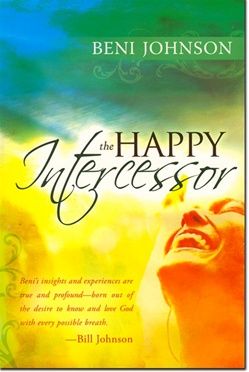
Intercession is just the fruit of being with Him. It was birthed in my own heart because of spending time with Him. I go into His presence to love Him, to experience “Spirit-to-spirit”—His Spirit with my spirit. Beni Johnson

Scripture
Yet true godliness with contentment is itself great wealth
Observation
Slaves must respect their masters, especially if the master is also a believer.
Timothy is encouraged to teach all these things. Those who contradict Paul’s teaching quibble over the meanings of words and stir up division.
True godliness with contentment is great wealth. We came into the world with nothing and we will leave the world with nothing. If we have enough food and clothing we should be content.
Application
If you have enough to live on, you don’t need anything more. There are people who are never happy with what they have. They have to have the latest model car, the best new gadgets, up-to-date fashions, and so on. Even with all this, they still want more.
True peace comes when we are content with what we have and thankful to God who is the provider of every good thing.
Living in relationship with God and honouring Him with our lifestyle is storing up for ourselves treasures in heaven. This is the eternal source of wealth, far better than gold or silver.
To combine godliness with contentment means that we are storing up eternal wealth and not lacking anything in this life either. Our hearts are fixed on God, our eyes focused on heaven, and nothing can disturb us.
Prayer
Thank you Lord for this recipe for true riches – godliness and contentment. Amen
From The Daily Declaration:
5 Subconscious Lies of Our Therapeutic Age that Can Deceive Christians

As we shed our traditional Judaeo-Christian values, our worldview has radically changed, including our expectations of life, of others, and what we base our identity upon. Feelings trump reason and suffering is unacceptable.
Over 200 years ago, a revolution was launched across the West.
Or rather, revolutions. Western societies began to move away from Christianity. They moved slowly at first — like a crawling baby. But as that baby grew, it became less and less Christian, shaking off its religious beliefs.
Fast forward to 2022, and this child (to continue the metaphor) has a radically different view of reality and humanity than 200 years ago.
We’re now a society where our feelings are critical to our existence. Or, in the words of sociologist Philip Rieff, we live in the ‘therapeutic age’: we’re driven and defined by our feelings in ways utterly foreign to our ancestors. And this has spawned all sorts of beliefs that shape us and our view of the world.
What’s more, these beliefs are mostly subconscious:
We don’t consciously choose to accept them. Instead, we ‘catch’ them as we swim in the sea of Western culture. Whether through the media we consume (e.g. Disney, Hollywood), our workplaces, social media, or friends.
And because these beliefs are unbiblical, they can wreak havoc on people’s lives.
Here are 5 of those beliefs:
1) Our Feelings Determine Who We Are
This belief is the bedrock of our therapeutic feeling-based age.
You see it everywhere, from Disney (‘just follow your heart’) to the transgender movement (your internal feelings about gender trump your physical biology). Genuine ‘authenticity’ now means living out your inner feelings, no matter what they are (and woe to anyone who tells you otherwise). [1]
But when anyone — including Christians — adopts this belief, it shapes us in strange and ungodly ways:
We can let our feelings trump our given identity in Christ. We can let our emotions drive our moral decision-making. And we can judge our Church not on its faithful teaching and living, but on how it serves our felt needs.
2) True Freedom Means Defining Your Own Existence
If our feelings determine our identity, then true freedom means society giving us space to express that identity.
This view of freedom is a bedrock belief that sustains the abortion rights movement across the West. As the US Supreme Court wrote in a ruling about abortion rights:
‘At the heart of liberty is the right to define one’s own concept of existence, of meaning, of the universe, of the mystery of human life. Beliefs about these matters could not define the attributes of personhood were they formed under the compulsion of the State.’ [2]
With freedom thus redefined, oppression is also redefined: oppression now includes anything — any belief, any law — that prevents people from expressing their own view of existence (the Biblical sexual ethic, anyone?). And so, Christians have moved from being the ‘moral guys’ to being the ‘bad guys’.
While Christians feel this pressure externally, from society, it’s also a belief that shapes us internally:
We’re less willing to submit ourselves to others, like church leaders and religious institutions. We’re less likely to see submission as good. We don’t want others telling us what to do.
And if we’re in positions of leadership, we’re less likely to want to enforce rules like church discipline, as it feels a little unfair.
3) Always Trust Your Feelings
Because feelings are essential to who we are, they now hold authority like never before.
If something or someone makes you uncomfortable, then the problem is always the other person and never your feelings. Your interpretation of reality (which leads to those feelings) is always right because we are our feelings.
We see this in the rise of cancel culture, where any person or belief that causes people to feel offended is attacked and shut down. There’s little engagement or understanding with what the other person might mean or why they might hold to that view — let alone whether that view is true or not.
4) We’re Meant to Have Good Feelings, So Avoid Anything That Makes You Feel Bad
The aim of life in a therapeutic age has moved from having good character to having good feelings.
Feeling good becomes a moral duty: the big question we ask ourselves is no longer ‘what’s the right thing to do?’, but rather ‘how will it make me feel?’. And so, as a culture, we avoid anything that makes us feel bad:
We avoid the difficult person at Church because they don’t make us feel good.
We avoid having those hard but important conversations because they make us feel uncomfortable.
And we avoid conflict like it’s an out-of-fashion pair of jeans.
We use people and things to help us feel good: life becomes increasingly self-centred.
Of course, this has all sorts of problems because constantly feeling good is an unrealistic goal. We’ll regularly feel frustrated. Yes, we might feel good for a while — when we get that new phone, friend, or partner. But it never lasts.
More perniciously, life lived for self-centred feelings and avoidance of difficulty can leave a trail of damaged relationships.
(Ask almost any celebrity.)
5) Suffering Serves No Good Purpose
If life is all about feeling good, then suffering is all bad: it serves no purpose.
Suffering gets in the way of my feeling good. And I’ll do anything to avoid it. There’s no ‘higher purpose’ to my suffering.
But we can’t avoid suffering in a fallen world.
It’s part of our human condition (no matter how much we try to avoid it). Adopting a therapeutic view of suffering leads to anger and even despair when suffering hits us. We’ll feel discombobulated and fearful, worrying about the next bout of suffering that might come our way.
These 5 beliefs, these lies, are deeply embedded in Western Culture. But in an upcoming post, we’ll explore how we can respond to each of them in a way that frees us from their grip.
___
[1] It’s worth mentioning there are still culturally accepted limits to what desires people can live out: e.g. pedophilia is still unacceptable.
[2] Planned Parenthood of Southeastern Pennsylvania v. Casey, 505 U.S. 833, 851 (1992). Quoted in Carl Trueman, The Rise and Triumph of the Modern Self – Cultural Amnesia, Expressive Individualism, and the Road to Sexual Revolution (Wheaton, Illinois: Crossway, 2020), 303.
It is almost as if we say, “Here God, here is my idea; now do it my way.” When we do that, we handcuff God. We are no longer partnering with Him. Beni Johnson