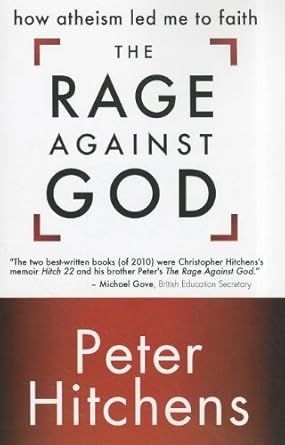
Among the favorite arguments of the irreligious—one that they almost invariably advance in the opening offensive of their attacks on faith—is this: that conflicts fought in the name of religion are necessarily conflicts about religion. By saying this, the irreligious hope to establish that religion is of itself a cause of conflict. This is a crude factual misunderstanding. Peter Hitchens
Only one reliable force stands in the way of the power of the strong over the weak. Only one reliable force forms the foundation of the concept of the rule of law. Only one reliable force restrains the hand of the man of power. And, in an age of power-worship, the Christian religion has become the principal obstacle to the desire of earthly utopians for absolute power. Peter Hitchens
Please give my greetings to our brothers and sisters at Laodicea, and to Nymphas and the church that meets in her house.
Observation
This section consists of Paul’s final instructions and greetings.
Tychicus is a beloved brother and faithful servant. He will give the Colossians a full report about the ministry. Paul is sending Onesimus, the former runaway slave, with him.
He sends greetings from his fellow workers who, are working for the kingdom of God, Epaphrus is a great prayer warrior who prays earnestly for the Colossians.
Paul sends greetings to the believers in Laodicea, and to Nymphas and the church that meets in her house.
Application
After preparing a sermon this morning about cell groups and their importance in the early church, it is interesting to come across this passage in my devotions. Often Paul’s letters end with a pile of personal greetings of this form: give my greetings to So- and- so and to the church that meets in their home.
The early church was essentially a house church movement. They had their large meetings from time to time, but they were generally small groups meeting in homes. These groups networked and had an over-arching leadership structure.
When we see the word “church” in the New Testament, we should think home groups rather than mega church. Over the centuries we’ve become used to the Sunday morning gathering with optional Bible study or fellowship meetings.
It’s very hard to shake off this multi-generational pattern, but if the church is to thrive in the next decade, we must recover the biblical pattern.
Journal.
Lord, what do you want to say to me about this template for the church?
Keith, it is true that my preferred model for the church is some kind of small group together with large group meetings or celebrations. This is the pattern I established in Acts.
This is not always a viable pattern when governments or local authorities oppose my bride, the Church. Wherever christians meet for intentional fellowship in my name, I am with them.
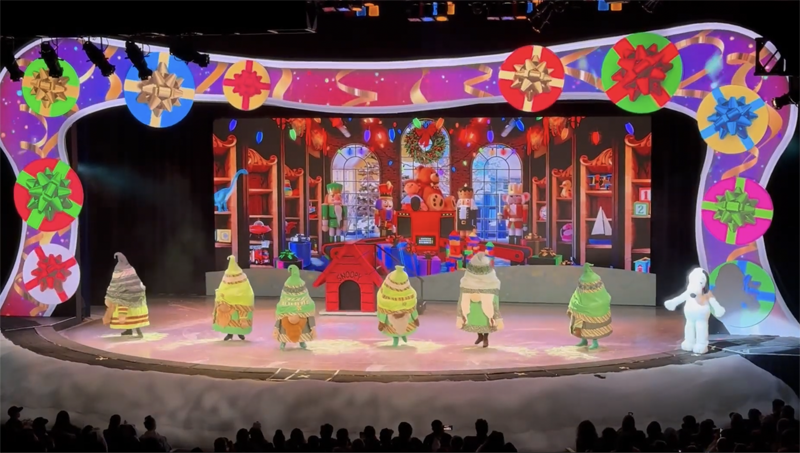
Snoopy ice show at Knott’s: A Christ-centered moment brings wild applause
By Mark Ellis —
Scene from ice show (sixflags.com)
As the sun dipped low over Buena Park, my wife Sally noticed a long line of people forming outside the Walter Knott Theater for the latest production of “Snoopy’s Night Before Christmas.”
We jumped in line with our son and daughter-in-law and two granddaughters, with low expectations for a free, ice-skating Peanuts show in a secular theme park.
Within minutes my heart was overflowing with delight, not only because of the spectacular skating, but also its meaningful content.
In an age when many Christmas productions tiptoe around the real reason for the season, Knott’s has done something courageous: they’ve let Linus take center stage and quote the Gospel of Luke verbatim, exactly as he did in the immortal 1965 TV special, A Charlie Brown Christmas.
Under the skilled direction of the incomparable ice show team at Knott’s, the Peanuts gang glides across the 5,000-square-foot Royal Welcome Ice Stage in a delightful retelling of Clement Clarke Moore’s famous poem. Snoopy dreams of sugarplums (and perhaps a certain Red Baron), Woodstock flits about in panic, Charlie Brown frets over Christmas meaning something more than commercial fuss, and Sally still wants “tens and twenties.” It’s all charming, funny, and impressively skated.
Scene from 2024 show (YouTube screenshot)
But then came the moment that may have caught many by surprise in the audience, including my wife and me.
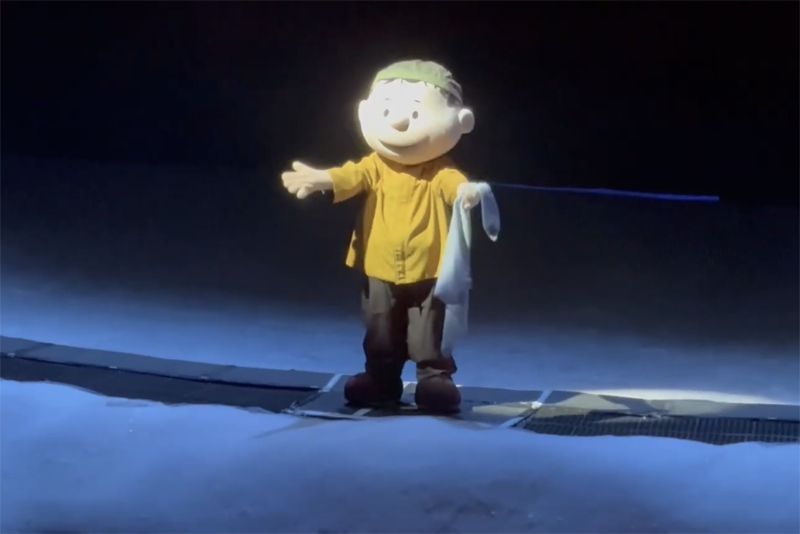
The lights dimmed. Linus, wrapped in his trademark blue blanket, skated to the center of the rink with the same quiet confidence millions of us remember from childhood. The orchestra fell silent. And in his gentle, endearing voice he proclaims:
“And there were in the same country shepherds abiding in the field, keeping watch over their flock by night. And, lo, the angel of the Lord came upon them, and the glory of the Lord shone round about them: and they were sore afraid…”
Word for word. Luke 2:8-14, King James Version, just as Charles Schulz insisted on 60 years ago when network executives tried to cut it from A Charlie Brown Christmas.
In 2025, in a major American theme park, with thousands of families from every background watching, Linus finishes with the line that has brought tears to generations: “And that’s what Christmas is all about, Charlie Brown.”
The audience erupted in wild applause — the biggest response of the evening. In an era when the meaning of Christmas is obscured, here was a humble beagle and his blanket-carrying friend declaring the story of Christmas without apology, the Scripture undiluted, without a single content warning.
Linus recites from Luke 2 in 2024 show (YouTube screenshot)
The decision to include Linus quoting the Gospel of Luke verbatim comes from the creative team at Knott’s Berry Farm (specifically the entertainment division under Cedar Fair/Six Flags) in collaboration with Peanuts Worldwide LLC, the company that now owns and licenses the Peanuts intellectual property.
However, that scene is a loving and deliberate homage to Schulz’s original insistence in 1965. When CBS executives tried to remove Linus’s recitation of Scripture from A Charlie Brown Christmas, Schulz famously replied, “If we don’t tell the true meaning of Christmas, who will?” and refused to budge.
Because that moment is now considered inseparable from the Peanuts legacy—and is protected as a core element of the brand—modern licensed Peanuts Christmas productions (including the Knott’s ice show, the stage musical, and some theme-park parades) almost always retain the Luke 2 reading when Linus appears in a Christmas context.
The rest of the show features spectacular spins, lifts, and jumps set to arrangements of Peanuts classics, with Snoopy stealing many scenes. Yet everything circles back to that sacred midpoint. The skating is world-class (several performers have Olympic and Disney on Ice credentials), the costumes sparkle under the colored lights, and the storytelling is tight—perfect for families with short attention spans.
When the finale arrived and snow gently fell inside the open-air theater, I found myself thanking God for Charles Schulz, a devout Christian who refused to let the networks remove the Scripture from his special, and now, decades later, for Knott’s Berry Farm choosing to honor that same conviction.
While Schulz himself had no hand in the current Knott’s production (he died 24 years before the current version opened), the inclusion of the biblical Christmas story is a direct result of the stand he took six decades ago.
“Snoopy’s Night Before Christmas” is a bright, unashamed proclamation that Jesus is still the heart of the Christmas message. Bring your kids and grandkids and let Linus point them that enduring truth.
No doubt it would be easier to fight if we were better armed. But in recent times it has grown clear that in my own country the Christian religion is threatened with a dangerous defeat, by secular forces that have never been so confident. Peter Hitchens





 New Life Narrabri