If you love the Lord, then the world will hate you.
The Bible uses the word “world” in three different was, as we do in English:
the physical planet on which we live
humanity in general “God so loved the world…”
the system of culture, governance and business that operates independently of God, and often in opposition to Him.
It is that world as system which hates all Christians.
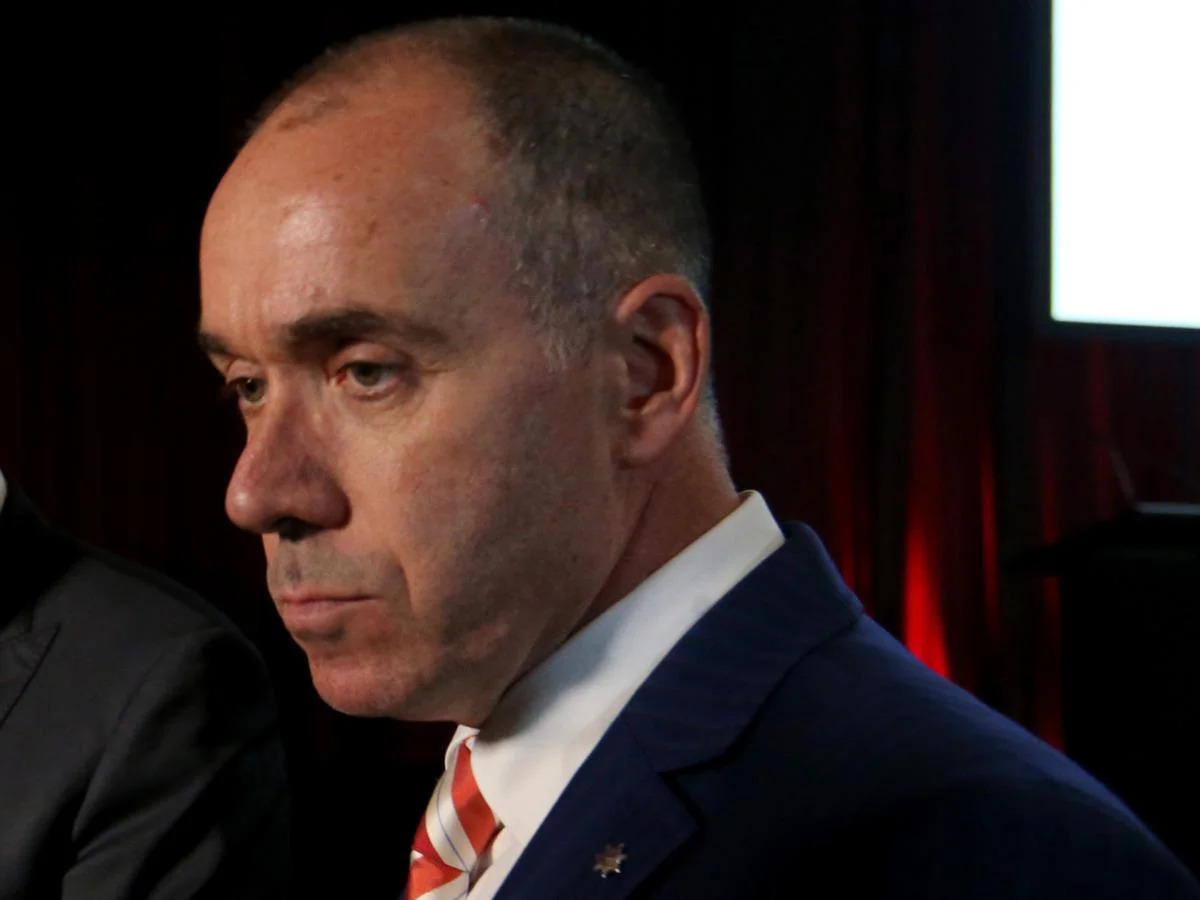
Andrew Thorburn was on Monday night announced as CEO of the Essendon AFL Club. By Tuesday he was fired.
His huge crime was that he is also Chairman of the Board of City On a Hill Church, a church which describes itself as being in the Anglican tradition.
Apparently back in 2013 somebody there preached a sermon that was against abortion and another person preached a sermon that said homosexuality is a sin. He was not the preacher of either message, but merely associating with such people is an unforgivable sin.
Dictator Dan Andrews, the Premier of Victoria, condemned him as “hateful” and a “bigot”, currently the worst judgement that can be bestowed on a person by the State of Woke.
So he resigned before he even started,
For the axe of Cancel Culture to have fallen so swiftly, it is clear that there was a “dirt file” already in existence. There are people who are so dedicated to destroying christians that they have already done the research on those whom they hate.
So the AFL, and organised sport more generally, justify their actions by wanting to make the sport inclusive and diverse. Their inclusion and diversity will come by excluding Christians.
The world really does hate you.
Any christian who works in an organisation big enough to have an HR Department now needs to have a Plan B.
Churches and other christian organisations, especially schools, also need to consider what might happen if the Government takes exception to their beliefs, which they will.
We live in a culture that has rejected God’s ways, and rather than seeing the church as a comfort and an ally, it sees the church as the enemy.
The danger in the post-lockdown era is that in our rush to move on we forget the hard lessons that have been learned about this catastrophic public policy failure.
On the basis of alarmist modelling, often commissioned by governments and amplified by sensationalist media, panicked politicians discarded all basic ideas about proportionality and the rule of law to criminalise everyday life and exert unprecedented controls over the citizenry.
From the beginning of the pandemic in March 2020, all Australian governments adopted the attitude that any public health mitigation measure was on the table, and little to no consideration was given to the costs of the measures that were adopted.
This is the subject of new research published by the Institute of Public Affairs, which for the first time in Australia calculates many of the costs of the nation’s Covid zealotry up to June 2022. In the report, Hard Lessons: Reckoning the Humanitarian, Economic, and Social Costs of Zero-Covid, we find that the total economic and fiscal cost of the Australian COVID-19 response was no less than A$938.4 billion (£550.6 billion) to June 2022. This report identifies:
In the meantime, the Victorian government should apply the new Buhler standard to all Victorians and grant an immediate amnesty to anyone who was charged or fined for exercising their basic rights and freedoms as Victorians.
$595.8 billion in state and federal Government to enforce Covid policies and stimulate the economy;
$259.8 billion in lost economic activity because of the restrictions and economic shutdowns;
$82.8 billion in inflation related costs due to expansive monetary and fiscal policies, a cost which is set to only increase more and more over the next couple of years.
The research also calculates how much children suffered in terms of schooling. Despite being the safest cohort in society when it comes to COVID-19, children were routinely sent home to learn remotely or not learn at all. We estimate children in the state of Victoria would have lost about 12 weeks of reading skills and 17 weeks of numeracy skills, something which for many will never be recovered.
Even on the most basic metric, lockdowns failed. In terms of the number of years of life, the costs of joblessness because of the initial nationwide lockdowns in March and April 2020 were about 31 times more costly than the maximum possible years of life saved by lockdowns throughout 2020 and 2021.
Even in the state of Victoria, whose Labor Government enthusiastically established a world-renowned Covid police state, politicians are no longer touting their pandemic response in the lead up to the state election in November.
Likewise, the former federal Liberal/Nationals Coalition Government, which was voted out of office earlier this year, rarely boasted of its Covid response.
Governments of the Covid era appear to have accepted the failure of the Covid-elimination approach, but rather than confront the reality of this failure are just pretending that it never happened.
This is not about living in the past, because the reality is we are still bearing the costs now. In terms of the resulting mental health crisis, lost learning, shuttered businesses, Government debt and inflation, we are not likely to know the full costs of the Covid response for many years to come.
Our future wellbeing as a society also demands that we remember the hard lessons of the Covid response.
We will need to deal with pandemics in the future, and it is critical to know what went wrong, and how these failures came to be.
Australians were subject to the harshest restrictions on their way of life in their history, and we should be demanding not that it should be forgotten, but that it should be remembered so that it doesn’t happen again.
Jo Nova reports the astounding find of corals way above current sea levels. Maybe we could restore those coal fired power stations, burn some fossil fuels and restore the reef.
Corals covered the Australian desert once – maybe they’ll grow back if we screw in the right light globes?
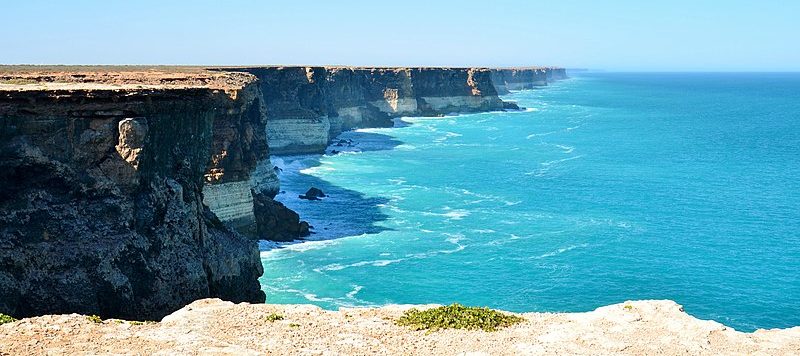
The remnants of a long gone coral reef are not in the water here, but on top of the cliff. This is what real climate change looks like:
The whole coral reef is now 100 m out of the water | Bahnfrend |
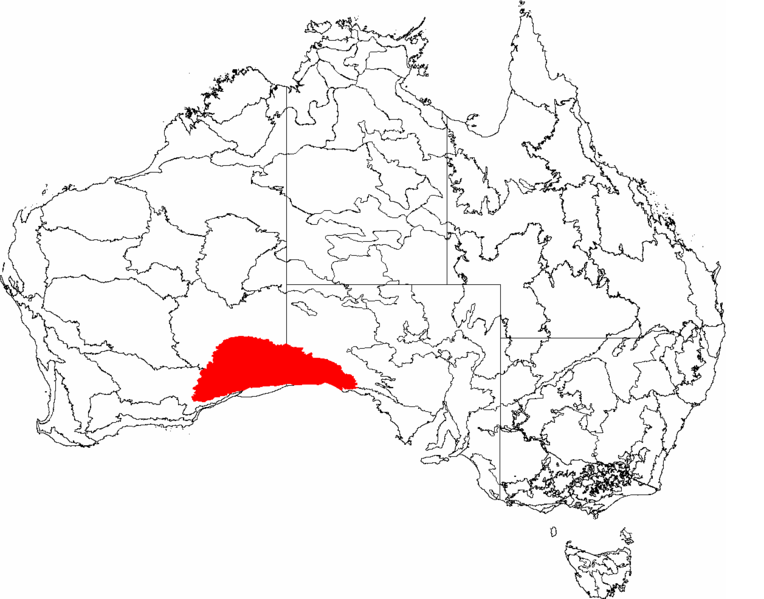
The Nullabor Plain.
It turns out the high plateau desert called the Nullarbor was once a coral reef. It’s a thousand kilometer stretch without a tree that’s now about 100m above sea level. Obviously it’s a wilderness that’s begging to be restored to its true Miocene glory. The question is whether we can put on enough solar panels to save this reef, or if we can melt the Antarctic and raise the oceans…
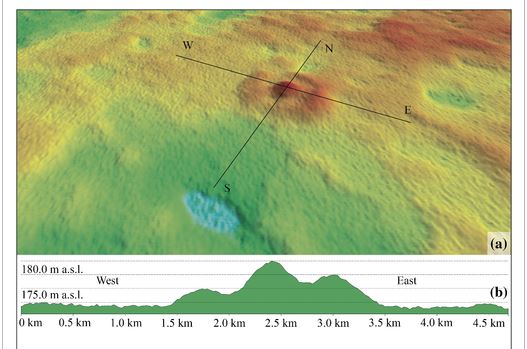
Researchers looking at satellite images spotted a suspicious looking dome and ring (below) . They figured out it was not a meteor crater but probably a former coral atoll. It’s about one kilometer across and corals built this (probably) 14 million years ago. Tectonic shifts lifted the land out of the ocean. If only the polyps had put in a carbon tax?
The Nullarbor is a bit special because the surface is well preserved. There is not a lot of rain, no rivers to speak of, humidity is low, storm surges don’t wash over it and sediments don’t settle on it. Plus the nearest glaciers are in New Zealand.
““So even though it’s exposed, it’s kind of like a land that time forgot … the erosion is so slow, [these features] get preserved for millions and millions of years, kind of capturing a snapshot of how environments were at different times.” —WA Today
Coral Dome, remnant, Nullabor Australia
Once fish frolicked in the afternoon sun among the anenome here. Now there is saltbush.
This is the kind of climate change we need to teach children at schools. Geological, not Gretalogical.
Imagine the effect if students knew almost nothing was permanent, life was adaptable, and the climate changed all the time.
Most of Australia is now arid and dry, with vast inland deserts. Millions of years ago, though, during the Miocene, the continent was teeming with life; not just dense, thriving forest ecosystems, but huge inland seas.
“Through high-resolution satellite imagery and fieldwork we have identified the clear remnant of an original sea-bed structure preserved for millions of years, which is the first of this kind of landform discovered on the Nullarbor Plain,” says geologist Milo Barham of Curtin University in Australia.
The ocean that covered the Nullarbor started to dry up around 14 million years ago, exposing the shallow-water limestones deposited during the middle Cenozoic.
That means the Nullarbor is effectively a clean record of geological processes and features dating back to the Miocene.
“Evidence of the channels of long-vanished rivers, as well as sand dune systems imprinted directly into limestone, preserve an archive of ancient landscapes and even a record of the prevailing winds,” Barham says.
“And it is not only landscapes. Isolated cave shafts punctuating the Nullarbor Plain preserve mummified remains of Tasmanian tigers and complete skeletons of long-extinct wonders such as Thylacoleo, the marsupial lion.”
That’s not all. “At the surface,” adds Barham, “due to the relatively stable conditions, the Nullarbor Plain has preserved large quantities of meteorites, allowing us to peer back through time to the origins of our Solar System.”
If we are to rely on e-vehicles to transport our soldiers through warzones, the Australian Defence Force is certainly doomed. Perhaps we should consider an even more environmentally-friendly, natural means of transport.
Last month, amid great fanfare, an electric version of the battle-tested Australian Bushmaster (a concept E-Protected Mobility Vehicle) was launched in Adelaide.
The original, diesel-powered Bushmasters built in Bendigo served in the Afghanistan theatre. So impressive were they that allied combatants including the Netherlands and Britain purchased 120-plus of them.
Currently, 20 Bushmasters are en route to active service with the Ukrainian Army. Other defence force customers of the Bushmasters include New Zealand, Fiji, Japan and Indonesia.
The diesel-powered vehicle has an operational range of 800 kilometres.
So, now, an all-singing all-dancing concept electric prototype is ready for Army trials. It is anticipated that these e-Bushmasters will be silent and not generate the heat signature of a diesel vehicle.
Limitations
According to your ABC News of August 11, it is anticipated that the e-vehicle will have an impressive operational range of 1,000 kilometres.
That is not yet the case, according to the Defence Department’s release of August 19, which says: “The first version has about a 100-kilometre range, but a planned larger battery should increase this to 350 kilometres. There’s also work to mount small external generators, increasing the range to about 1,000 kilometres.”
A small detail missed in the media hype was that the e-vehicle could not drive to the Adelaide launch. This was confirmed by the Minister’s office, which said the e-vehicle was transported from Newcastle (NSW) on the back of a motorised vehicle.
The lithium battery utilised in the e-vehicle features high-speed recharging; about three hours at an EV station; or, if the crew pull up outside a farmhouse and use the household plug, about seven hours.
An inconvenient feature of the large lithium battery is that if a bullet or shrapnel pierces its casing, the crew will probably be roasted alive. If it should happen in dense scrub, there is the possibility of a bushfire.
A convoy of E-Bushmasters rolling at 100 kilometres per hour from Melbourne to Sydney (870 km) would, with nine stops at EV points, take 36 hours (1½ days) to arrive; while the same 870-km trek in outback South Australia, Queensland, Western Australia or the Northern Territory stopping at farms to recharge would take 72 hours (three days). Diesel-powered Bushmasters can cover the same distance – with driver breaks every two hours – in about 11 hours (half a day).
But do not despair; Assistant Minister for Defence Matt Thistlethwaite said the electric Bushmaster is part of building a “future ready” Army.
Standard Operating Procedure for an army field-force convoy movement is to place the slowest vehicles in the lead. A worry for any convoy commander if he was moving a mixed convoy of motorised and e-vehicles would be the requirement to halt every 100 kilometres to recharge the electric units.
Moreover, not all e-vehicles would stop at the same location because some might “run out of puff” after 90 kms, others at 95 kms, or 98 kms, well short of the recharge point. A convoy with 20 e-vehicles would require a recharge point with 20 EV stations or 20 power points at a farm.
Missing in Action
A timely lesson for the Army comes from the Gloucestershire Constabulary, which boasts the largest full electric fleet in Britain, 91 vehicles. Its problem is simple: the force cannot respond to crime because the batteries “keep going flat”.
Police and Crime Commissioner Chris Nelson said officers had experienced problems finding recharging facilities in the county as the e-vehicles “run out of puff”, and staff needed to change police cars.
Police Scotland invested £20 million ($A34 million) providing 23 stations with e-vehicles but no EV charging points. When their vehicles were plugged into the station’s regular power point, the latter blew up. Now the e-vehicles are left at council car parks overnight with officers reverting to combustion-powered vehicles.
The e-Bushmasters engaged in a limited conflict in the remote outback or even in rural areas and “running out of puff” would certainly meet the Army’s “silent” criterion.
Natural Alternative
While it is easy to criticise a work in progress, any correspondent worth his salt should provide an interim workable solution that will work until the Army’s R&D e-vehicles are perfected before we face an invasion or shortage of liquid fuels.
Australia has (perhaps) a million feral camels roaming the Outback. Australian soldiers rode camels into battle during World War I in the Mesopotamia campaigns. Camel trains were used in remote Australia as each animal could carry 100 kilograms of stores, or be harnessed in teams to haul wagons.
In a military emergency, camel teams could haul “out-of-puff” e-vehicles to the nearest power point. A good camel will travel at five km/h; so, she’ll be right, no urgency; the troops can wait.
The Army’s use of camels would be an innovative carbon-reduction “work in progress” of Labor’s Climate Change Bill, now before the Senate, and would easily impress the UN’s climate barons and other assorted global-warming alarmists.
Indigenous smoking ceremonies performed for Catholic schoolchildren are creating an alarming spiritual malaise.
Although elements of paganism have been creeping into various parishes and dioceses for some time, the blatant idolatry on display during the 2019 Amazon Synod really opened the floodgates. Since that time, faithful Catholics in the West have been inundated by indigenous emblems, prayers and rituals in what appears to be an attempt to change the Catholic Church’s very identity.
In Australia, that trend is quite evident, and the focus on Aboriginal culture which is being promoted politically and in the corporate world is being mirrored by the Catholic Church. When too much attention is given to another form of spirituality, there is always a risk that the pre-eminence of the Catholic faith will be overlooked. However, that is not the extent of the problems facing an institution that is starting to view pagan ceremonies as interchangeable with its own rituals.
Invoking Spirits
Many, including Family Life International, have expressed concern about the spiritual consequences of participation in indigenous rituals. Given that a non-Christian ritual, by its very nature, invokes spirits other than that of the One, True God — that is, it invokes demons — it seems implausible that there would be no evidence of spiritual bondage or oppression among its participants.
FLI sought counsel from that group of experts who sees the devastation of spiritual warfare on a daily basis: Church-appointed exorcists. What they revealed confirmed our worst suspicions.
Fr John Rizzo, former exorcist of the Diocese of Parramatta, has had years of experience in delivering unfortunate souls from demonic attack. In the two weeks before he spoke to FLI, Fr Rizzo had been contacted by three families whose children are at two different schools. Each family wanted his assistance because a child was exhibiting disturbing symptoms that the parents believe are linked to indigenous smoking ceremonies.
Fr Rizzo told Family Life International that he has seen “unpleasant consequences” from children attending smoking ceremonies.
“Children have become irritable after being involved in such situations. Students at some schools are forced to walk through the smoke against their will. Their well-informed Catholic conscience makes them feel uncomfortable! They know that it’s wrong!”
The priest said that he has been seeing “… a certain moodiness and a type of fear that is hard to understand.” Thankfully, he has found that minor exorcisms, which can be prayed by any priest, are proving effective in liberating the children.
“I particularly use the exorcism prayers from the traditional rite of Baptism,” he said. “I recite them in Latin first, and translate afterwards into English.”
Incurable Ailments
The mother of one of the children, Jane, (not her real name) opened up to FLI about her family’s experience.
“My son was attending a Catholic school, where smoking ceremonies were being performed quite frequently. He had also been exposed to regular smoking ceremonies at the public school that he previously attended. As time went by, my son’s health declined and he began to suffer from anxiety.”
For three years, Jane took her son to visit various medical professionals who were unable to diagnose his problem. All they could offer was medication to help with his symptoms — but there was no cure. Things then escalated to the point where, out of fear, the boy was unable to sleep.
“My son is naturally quiet, and he was at first unable to explain the reason for his inability to sleep. He eventually told us that about a week before, he had been visited in the night by a shadowy figure which screamed at him and pinned him down to the bed. When my son started to pray, the figure went away.”
Although it didn’t return, the boy was terrified that it would come back and asked his mother to pray the Rosary with him in his room before bed. The whole family was losing sleep by this time, as the boy was too afraid to be left alone at night.
When Jane’s son told her about the sleep paralysis, she feared that there was a supernatural cause to her son’s problems and contacted Fr Rizzo. After lengthy questioning, Fr Rizzo determined that the boy was suffering from a minor demonic attack. The priest heard the boy’s confession, administered Holy Communion and prayed prayers of deliverance over the boy. He immediately felt better and that night had what he described as his best ever night’s sleep.
Authors of the report released yesterday – Sydney university academic Professor Emerita Suzanne Rutland and Professor Zehavit Gross from Bar Ilan University in Israel – found Christian, Jewish, Muslim and Hindu students had all experienced being teased or being made fun of because of their faith.
Cases of vilification were higher in Sydney and Melbourne the researchers discovered, after conducting hundreds of interviews with students, teachers and families in New South Wales, Queensland, Victoria and Tasmania.
The report – titled ‘Exploring the Value of Special Religious Education in Australia’ – also showed that school principals and other leaders were often unaware of or reluctant to deal with religious bullying, and students and families often played down the abuse.
“This is a real phenomenon. Now the question we have to face is, are we going to ignore and deny it, or are we going to deal with it openly and professionally?” – Professor Zehavit Gross
“I was shocked,” Gross told Eternity about the extent of religious bullying they found in Australian government schools.
“This is a real phenomenon. Now the question we have to face is, are we going to ignore and deny it, or are we going to deal with it openly and professionally? I think that if we as adults fail to protect our children, we are not fulfilling our duty of care.”
Gross said she was also “shocked and surprised” about the “denial of this phenomenon.”
“We went to the principals. We went to parents. We went to SRE [Special Religious Education] teachers. And they all denied this phenomenon.
“Yes, we must unequivocally condemn racism and oppression—but we must also care enough to listen to the indigenous voices on each side and engage our fellow image-bearers endearingly, not in a one-size-fits-all manner…”
As an Australian-American currently living in Houston—one of the most racially segregated cities in the US—it is disconcerting to see similar racial tensions gain steam in Australia in light of present debates regarding stolen land.
Front and centre in heated discourse is the Uluru Statement from the Heart, a document written by certain indigenous leaders and endorsed by Prime Minister Anthony Albanese on behalf of the Australian Labor Party. The statement itself seeks to bring about “structural reform” and “constitutional change” through a voice to parliament, advocating that Aboriginal and Torres Strait Islander tribes were the “first sovereign nations” of Australia.
Even so, religious leaders in Australia have come out in support of the Uluru Statement. But is such support good, wise, or biblical?
Caldron Pool colleague Mark Powell has shared legitimate and compelling reasons for Australians to reject the Uluru Statement in his piece Enshrining Victimhood into the Constitution, reasoning that it will perpetuate the failures of the ATSIC, distort Section 116 of the Australian Constitution, diminish the moral agency of Aboriginal people, promote more racial division, etc. In line with his insights, I shall provide more reasons, for pastors and elders, in particular, to do the same.
The Uluru Statement—both in its wording and intent—must not gain a foothold in Australian churches.
First, from a pastoral perspective, we ought to listen to the voices of ethnic minorities, because all of them are our neighbours and God’s image-bearers. However, I cannot stress enough the importance of employing prudence and impartiality when it comes to gauging the indigenous Australian experience. As is evident, indigenous Australians are divided over issues of race. No doubt many agree with the message of the Uluru Statement, but many indigenous Australians also vehemently disagree.
Pastors and elders, therefore, must not assume that an entire demographic shares a singular experience when it comes to race relations, as the Uluru Statement does. Yes, we must unequivocally condemn racism and oppression—but we must also care enough to listen to the indigenous voices on each side and engage our fellow image-bearers endearingly, not in a one-size-fits-all manner, but pastorally, on the merits of their own experience as Australians.
Moreover, the Uluru Statement is dehumanising because it peddles a white guilt narrative that is rooted in a white saviour complex (i.e., the assumption that indigenous Australians need to be acknowledged and saved by whites in order to live their lives). In relation to this, Jacinta Price has stated, “It is suggesting we need this voice because we are in a position of marginalisation; the way I see it, I would like to see us all as equally taking advantage, having these opportunities, and to live our own lives, which would make us equal to everyone else; and we would not then need to be a stand apart voice…”
Last of all, amid ongoing debates in the church, pastors and elders must be diligent to protect their congregations from the Uluru Statement, because it simply does not comport with the message of the gospel wherein Jesus secured reconciliation between ethnic Jews and Gentiles in his atoning death (Matt. 27:51); and despite being a persecuted Jew himself, Jesus’ message was never “Jewish lives matter” but rather “repent” (Matt. 4:17) and “preach the gospel to every creature” (Mark 16:15) because all have “sinned” (Mark 2:17).
As pastors, we are also called to keep the main thing the main thing. If your colleagues or congregants want you to, in a plea for racial unity, express approval for what is in the Uluru Statement, just lovingly explain to them that Jesus has already achieved racial reconciliation on the Cross, which means the unity that people experience within the true body of Christ far transcends any sin allegedly inherited from British ancestors (Eph. 2:11-13).
As I write this, we have just entered magpie season, the two month part of the year when some male magpies get very protective of their newly hatched offspring and attack anything that they deem a threat.
The Australian magpie is a very intelligent, and usually friendly bird. In exchange for food, they will usually come quite close to people. They have a melodious warbling sound that seems to a sophisticated form of communication amongst the local birds.
In late winter and spring, however, about 10% of males become very aggressive. They swoop from behind, often coming very close indeed to the victim’s head. Usually they make a warning warble and clack their beak. Sometimes they dispense with the warning and attack silently from the rear. They rarely make actual contact. With small children they sometimes stand in front of the child and then leap from the ground at the child’s face.
For some reason, cyclists can be at particular risk of attack. At the back of my home there are some football fields. The magpie that patrolled that particular area, whom we nicknamed “Nut job” because he was particularly nasty, was fine with hundreds of people on the oval, but if anyone dared to ride a bike through the crowd they were targeted. On the other hand, when you are wearing a helmet, they can’t cause too much of an injury.
In our area, the season usually starts around August 1st. Some years it can be as early as July 25th, but this year we had a late start, with the first swoop that I experienced happening on August 9th. While the so-called experts claim that magpies only swoop for 6 weeks,the real period is more like 10 weeks. If you have different birds starting and finishing the season later then it is really the end of October before we start to feel safe again.
Magpies are a little disconcerting, but mostly harmless. You get ready for the attacks and stoically endure them.
On the other hand, there is another swooping creature that we often don’t even see, even though they surround us all the time. Demons are the literal army of the devil. They inflict people with temptation, sickness, mental illness, curses and much more. They are generally considered to be so-called “fallen angels”, that is angels who chose to join in Lucifer’s rebellion against the Lord.
They have afflicted humanity since the beginning of time, and will until the end of this age.
There are hierarchies of demons, in the same way that any army has its different ranks and officers. Paul tells us in Ephesians 6:11-12
Put on the whole armour of God, that you may be able to stand against the schemes of the devil. For we do not wrestle against flesh and blood, but against the rulers, against the authorities, against the cosmic powers over this present darkness, against the spiritual forces of evil in the heavenly places.
Christians need to be aware that we are fighting in this spiritual battle. The atmosphere is full of creatures who have assignments to torment individuals and those which are assigned to geographical, political and cultural regions.
God has given us the appropriate PPE, Personal Protective Equipment, to keep us safe from all demonic attacks. Again Paul tells us in Ephesians 6:13-17
Therefore take up the whole armour of God, that you may be able to withstand in the evil day, and having done all, to stand firm. Stand therefore, having fastened on the belt of truth, and having put on the breastplate of righteousness, and, as shoes for your feet, having put on the readiness given by the gospel of peace. In all circumstances take up the shield of faith, with which you can extinguish all the flaming darts of the evil one; and take the helmet of salvation, and the sword of the Spirit, which is the word of God,
The key to standing firm is to recognise the battle that we are waging and to resist satan’s carmies with these weapons.
In the end, we are assured of total victory. Satan, for all his bluster is not equal to God. He is a created being just as you and I are, and in Christ we already have the victory. Hallelujah!
When you are tempted to feel overwhelmed by the battle remember this:
Little children, you are from God and have overcome them, for he who is in you is greater than he who is in the world. 1 John 4:4
The Holy Spirit is in you and is greater than the spirit in the world which is satan. Take courage, and stand firm. Demons are like magpies, a little scary until you realise that the power of God in you is far greater than theirs.








.jpg)