What do you trust when it all goes wrong?

The last few weeks have brought terrible events in which large numbers of people have lost everything, some even dying.

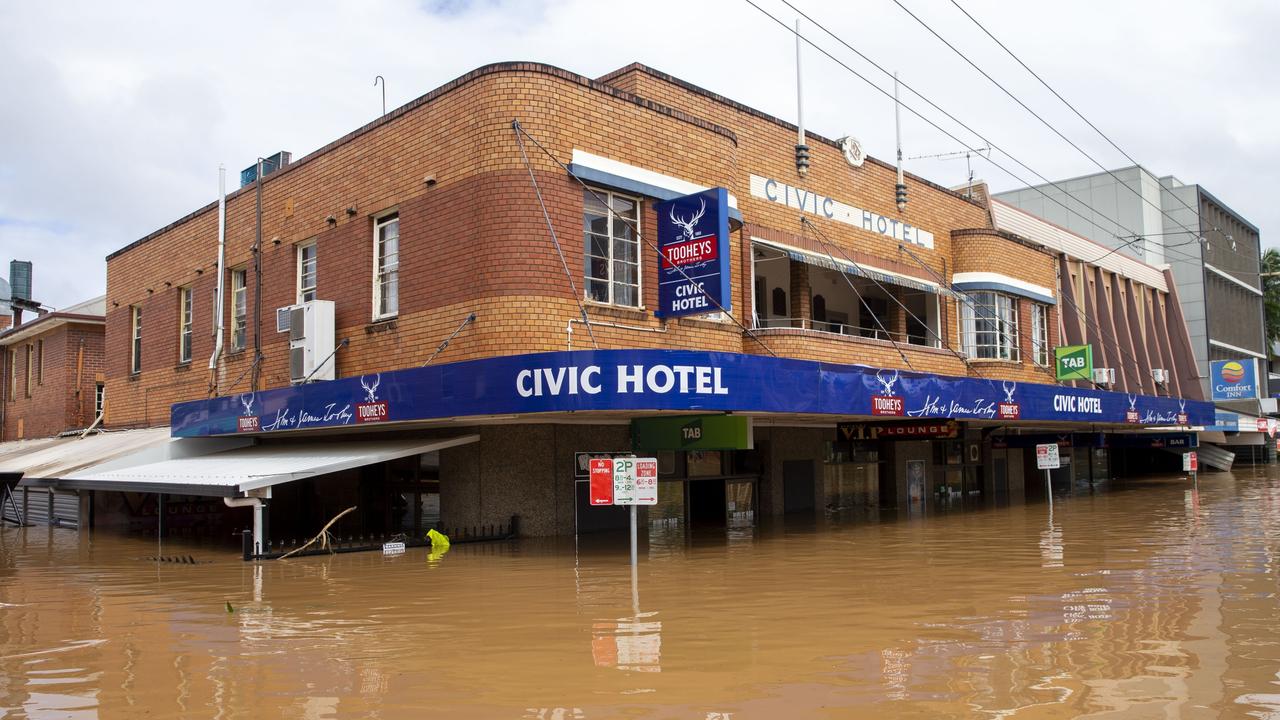
On February 24th Russia invaded Ukraine, wreaking death and destruction right through the much smaller nation. Then on the 28th, much closer to home, floodwaters rolled through Lismore and many other towns on the NSW North Coast.

Both these events were, in some ways, expected. That doesn’t reduce the shock or the devastation of the destruction that takes place.

In both situations it has been inspiring to see the ways that ordinary people have moved to serve their neighbours in the midst of chaos.

We intuitively believe that our homes are places of safety, and that we are protected there. We derive a lot of security from the belief that our possessions will help us cope with anything life will throw at us.

What happens when it all gets taken from you by force or by nature? Where do you turn for your security then?

In Psalm 27, King David writes: “The Lord is my light and my salvation – so why should I be afraid? The Lord is my fortress, protecting me from danger, so why should I tremble?”

Our response to devastating situations shows where we put our trust.

God doesn’t promise to protect us from floods and fire, but He does promise to go with us through tough times, and give us peace in the middle of chaos.

Jo Nova: There were Bigger Floods and Rain-bombs in the 1800’s

Jo Nova writes:

If only the $3 million dollar a day ABC could afford a science team that could do as much research as one unpaid volunteer does in a day?

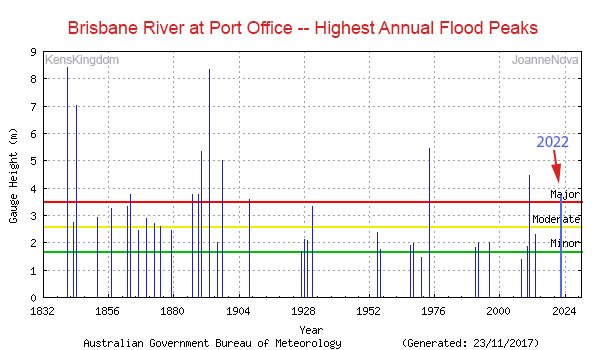
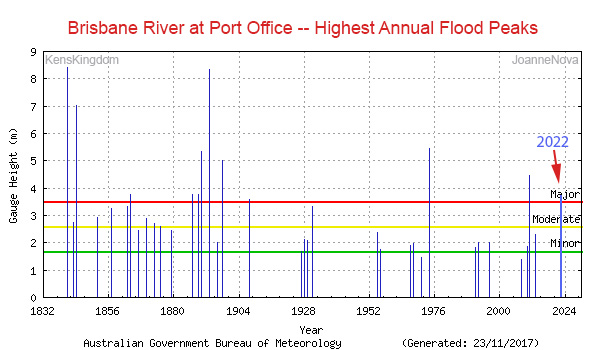
Thanks to Cliff Ollier and Ken Stewart for the BOM graph of past Brisbane Floods. Clearly things were worse in the 1800s.

If CO2 has any effect perhaps it reduces flooding?

There have always been big floods in Brisbane       | BOM Source   |  KensKingdom

One day when the ABC finally gets the Internet they’ll be able to find official pages like “Known Floods in the Brisbane and Bremer River Basin“. And one day the half billion dollar BOM agency will be able to update graphs like this within a week of a new flood peak, like bloggers did (above).

Ken Stewart went looking for lost Rain Bombs and found them

As Ken reports the ABC made a fuss over three Queensland sites recording more than 1 metre of rain in just four days. But neither the ABC or the BOM is telling Australians that there have been at least nine similar “Rain Bombs” before and most of them were more than one hundred years ago.

I went looking at Climate Data Online for four day rainfall totals over one metre, to compare with the recent totals above at Mount Glorious, Pomona, and Bracken Ridge. For a start, Pomona’s BOM station has been closed for years, and Bracken Ridge is not listed at all, so those reports are from rain gauges external to the BOM network and can’t be checked.  That’s OK.  In about half an hour I found the following four day rainfall records.

Crohamhurst4/2/18931963.6mm
Yandina3/2/18931597.8mm
Tully Sugar Mill13/02/19271421.3mm
Palmwoods4/2/18931244.6mm
Buderim3/2/18931150.3mm
Bloomsbury20/01/19701141.8mm
Dalrymple Heights6/04/19891141mm
Innisfail3/04/19111075.8mm
Nambour11/1/18981013mm

1893 was a wet year!  Crohamhurst had 2023.8 in five days, and Brisbane had three floods in two weeks in February and another in June.

And there is no such thing as a “rain bomb”, a term invented to make it sound unprecedented.  This was an entirely natural and normal rain event.  Slow moving tropical lows drift south every few years in the wet season, producing a large proportion of Queensland’s average rainfall.

It’s another Red pill moment. Spread the news. Australians need to know the media and the BOM are not giving them the whole truth. Has anyone in the BOM called up the ABC and corrected their mistake? Isn’t that their job?

The Green Industrial Revolution Is A Lie

As we gear up for a Federal election in May, you can be sure that Labor and the Greens will peddle the fantasy about “Green Jobs”. It is a lie, like the one about renewable energy being cheaper than coal, not to mention the whole climate change scam.

Ben Pile writes on spiked:

The green industrial revolution is a lie

The UK’s green sector has not grown in nearly a decade.

The green industrial revolution is a lie

Share

TopicsPOLITICSSCIENCE & TECHUK

The Office for National Statistics (ONS) published data earlier this month which showed that the UK’s ‘low-carbon and renewable-energy economy’ (LCREE) had not grown significantly between 2014 and 2020. This performance is a far cry from the promises of plentiful ‘green jobs’ and a ‘green industrial revolution’ that have echoed around Westminster for the past decade and more. It turns out that the much heralded green growth was nothing more than mould.

This news should surprise no one. As I have argued elsewhere on spiked, the green industrial revolution is a lie. Since the 2008 Climate Change Act, successive governments have embraced the fantasy of leading the world in the ‘transition’ to a low-carbon economy. And it’s all been to no avail. The rest of the world continues to increase its consumption of fossil fuels despite endless COP meetings, and Britain’s green industrial revolution stubbornly fails to materialise.

Back in 2009, the then Labour government, led by Gordon Brown, claimed the green economy was already thriving. He promised to add 400,000 new ‘green jobs’, taking the total number of people working in the green sector to 1.3million. These claims were based on proprietary data produced by an economic research company, which refused to share its data, as did the government even after freedom-of-information requests.

Even without access to the data, I was already able to point out in 2009 that growth in the ‘green economy’ is an illusion – or better still, an accountancy trick. The government was effectively compelling sectors of the economy, through a variety of green regulations, to ‘decarbonise’ their operations. It was then adding said sectors to the green economy and so the green economy appeared to be growing. This was happening even when the sectors in question had been harmed and diminished by the new regulations.

It took me until 2013 to obtain the data on which successive governments were basing their figures, policies and predictions. By then, it was being claimed that the ‘green economy’ was worth £122 billion. But it had only reached this size because the figure included sectors of the economy that simply do not qualify as ‘green’ in any meaningful sense. It even included the production, transportation and sale of liquefied natural gas and liquefied petroleum gas – otherwise known as fossil fuels – merely because such businesses were now subject to environmental regulation. My analysis at the time suggested that through such tricks, the government’s financial wizards had inflated the value of the ‘green economy’ by something in the region of 700 per cent.

Read the full article here

No Religious Liberty in Australia

There is no religious liberty in Australia.

From Canberra Declaration:

Citipointe silenced

The Citipointe Controversy – Christians Are Second-Class Citizens

7 FEBRUARY 2022

2.8 MINS

The Citipointe debacle is a sobering revelation of where conservative Australian Christians stand in terms of our ability to forthrightly express our basic beliefs within our own institutions.

Religious freedom is now a second-tier right in Australia. This is the obvious conclusion from the controversy surrounding Brisbane’s Citipointe Christian College.

If religious people cannot join together and publicly form schools to educate their children without first paying homage to LGBTQIA+ sensitivities, then religious freedom is no longer a fundamental principle.

Religious liberty — a once cherished freedom — is now a disfavoured right, seen by many as a licence for bigotry and hatred. And so religious freedom cannot be tolerated, even when there is no evidence that anyone has been harmed.

A Christian Education

Citipointe Christian College began February by advertising their Christian principles to prospective students and their families.

They believed homosexuality was a sin and they required students to enrol according to their biological sex.

None of this was remarkable. The clue was in the name – Citipointe Christian College.

For 2,000 years Christians have believed sex is a gift from God to be enjoyed within the bounds of marriage. And the Bible defines marriage as a lifelong, exclusive union between a man and a woman. Any sex outside of that — whether premarital, extramarital, or homosexual — is a sin. Oh, and sex is binary. God created us male and female.

So you have to be okay with a Christian worldview to enrol at Citipointe Christian College. Again, the clue to all of this is in the name.

Control

If you just can’t survive without waving a rainbow flag, or if you just can’t resist the urge to change pronouns and start using bathrooms for which you are anatomically unsuited, then Citipointe is not the school for you. And, sadly, your choice of schools is reduced by one to literally hundreds.

But activists didn’t want to send their children to an ‘enlightened’ school where their views on sexuality would be celebrated. They demanded the Christian school change its ethos to accommodate them.

Bizarrely, they even argued that the Christian thing for the Christian college to do would be to change their Christian ethic to something other than Christian and, in so doing, show themselves to be true Christians.

Such an absurd proposition could only be reasonable to people whose ‘Pride’ has now ripened into full-blown narcissism, wherein they now believe the entire world — including Jesus Himself — should orbit around them.

The school’s enrolment contract drew widespread outrage, with a petition calling for its recall gaining more than 155,800 signatures in a matter of days. This was highly significant in the eyes of journalists who seemed to think biblical truth, like politics, was almost entirely a matter of polling.

Read the rest of the article here

What Is Truth?

This week’s news cycle was dominated by unsubstantiated claims that some unnamed people had sent some text messages saying nasty things about the Prime Minister. Worse still, some of these unnamed people were his friends.
That’s not news, that is Primary School level of gossip.
No facts have been offered, no justification for the story and no explanation of why it might even be important.
Many hours of air time, internet screens and column inches have been wasted on what is just a mischievous attempt to sir up trouble.
Unfortunately, we live in a post-truth culture. My truth might not be the same as your truth. My feelings may be more important than facts. My assertion about what happened is valid if I can get enough journalists to report it.
Regardless of what you feel about the truth, the reality is that if you step off a cliff you will accelerate towards the ground at the rate of 9.8 m/s2. As a former engineer, I can confidently assert that the strength of a bridge is far more important than whether I like its colour.
Jesus said, “I am the Way, the Truth and the Life. Nobody can to the Father except through me.” Jesus claims He alone is the Truth, and if you want to find happiness with God, then you have to go through Him.
People try to mix and match spirituality according to how they feel. They rarely ask the most important question of “Is this true?” or “Does this match reality?”
If Jesus really is the truth, then He is the truth for everybody. If He is the truth as He claims, then there is no other way to find God.
I don’t know if there is a text message somewhere about the Prime Minister, and I really really don’t care.
What I do care about is basing my life on truth rather than fairy tales. How about you?

Jo Nova: Huge Spike in US Military Injuries From Covid Vaccinations

Photo by Mat Napo on Unsplash

From Jo Nova:

Game-changer: US Military Data shows shockingly high vaccination injuries

ABomb: Last week a lawyer for military personnel spoke about the extraordinary rise in medical conditions that occurred after vaccination against Covid. This is one of the largest and best kept medical datasets in the world, the people in it are mostly young and healthy, and the whistleblowers have signed legal declarations.

The military data suggests most national vaccination databases suffer from gross underreporting of adverse events.

In the World-We-Thought-We-Lived-In, this would have been Frontpage news the next day. Calls should be coming in from all around to pause vaccinations immediately until it can be reviewed.

The three whistleblowers noticed strange patterns in the patients they were treating. They trawled through data on medical billing from the Defense Medical Epidemiology Database (DMED).

Aside from the [300%] spike in miscarriage diagnoses, there was an almost 300% increase in cancer diagnoses (from a five-year average of 38,700 per year to 114,645 in the first 11 months of 2021). There was also a 1,000% increase in neurological issues, which increased from a baseline average of 82,000 to 863,000.

CovidWorld

The event was a five hour hearing held by US Senator Ron Johnson. Lawyer Thomas Renz has been representing clients suing over vaccine mandates and he was on fire. As well as the risks above, there were many conditions with rates far above their long term averages:

    • myocardial infarction –269% increase
    • Bell’s palsy – 291% increase
    • congenital malformations (for children of military personnel) – 156% increase
    • female infertility – 471% increase
    • pulmonary embolisms – 467% increase

“Our soldiers are being experimented on, injured and sometimes killed…”

The increase in medical reports didn’t happen during the first year of Covid, only after the vaccination program was started. In other words, Covid itself didn’t cause this.

Hopefully, for everyone’s sake, the effects will fade with time, especially if people don’t get boosted, or choose a safer vaccine, or an even safer anti-viral.

Read the rest of the article here

Irukandji Jellyfish Are Tiny And Deadly

From Australian Geographic

Scientists have successfully hatched Irukandji eggs. Here’s why that’s important

A breakthrough by Australian marine scientists means they’ll be able to at last unlock the secrets of one of the world’s most dangerous creatures.By Sheree Marris • December 23, 2021 • Reading Time: 8 Minutes • Print this pageResearch assistant and aquarist Sally Turner monitors the behaviour of captive-bred Irukandji jellyfish. Image credit: Sheree Marris

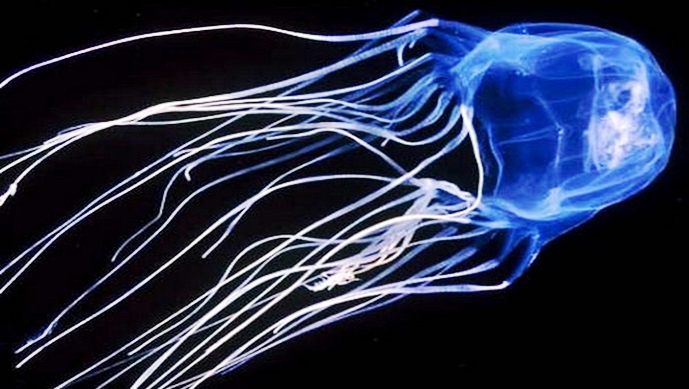
The Irukandji jellyfish could have sprung from the fertile imagination of a sci-fi horror writer. It looks deceptively insignificant and benign, but its entire body is a biological booby trap. In most jellyfish it’s only the tentacles that are studded with the minuscule harpoon-like, venom-loaded stinging cells known as nematocysts. But in Irukandji the bell is also armed with these toxic weapons – as many as 5000 per square centimetre. An encounter with an Irukandji can have an adult human soon fighting for their life. Like most jellyfish, the Irukandji is transparent, but it’s tiny – no more than 2.5cm wide – so you’re unlikely to see it coming and stay out of its way. And even if you did, those tentacles are extendable, reaching out to four times their relaxed length. 

This jellyfish was named after the Irukandji people, traditional fishers whose Country includes the sea off the coastal regions near Cairns, Queensland. Although this was the area where the jellyfish was first recognised, its distribution is much wider. And with more people venturing into the waters where they occur, reports of stings are becoming increasingly common and scientific scrutiny of the Irukandji has been mounting. 

But research on the species in the wild has had limitations. Although it’s been possible to collect these tiny, near-invisible creatures in their natural habitat at night using lights, scientists have been struggling to study them in a controlled laboratory environment and haven’t been able to breed them in captivity. 

Now in a world-first, Professor Jamie Seymour and his team of jellyfish researchers working in a lab dubbed the eduQuarium at James Cook University’s Cairns campus have managed to breed the Irukandji in captivity. It’s an achievement that’s been 20 years in the making and is a vital step forward in the mitigation of the threat posed by this intriguing jellyfish species.

It also means that we finally have a chance to learn the secrets of a creature that produces one of the most diabolically painful experiences known to humans.

Irukandji–human encounters

Jamie Seymour is a global expert on jellyfish, as well as many other dangerous sea creatures. Protected in tanks stretching around the walls of his lab is a range of deadly marine animals, from colourful crustaceans that literally punch their prey into submission, to slimy snails with weapons stuffed up their noses and sand assassins with blade-like claws that would make Freddy Krueger cower.

But it’s the Irukandji jellyfish that are the stars of this show in their futuristic round tanks, designed without corners to prevent damaging the soft bodies of these hard-core carnivores. 

Jamie understands the pain of an Irukandji sting better than most. It’s one of the risks of his research and he’s been stung 11 times so far. “Yep, I’ve experienced the pain of an Irukandji sting many times in the past. It’s not something I’m proud of and it’s 11 mistakes I wish I hadn’t made,” he admits. “So on a more positive note, at least I’m intimately familiar with the incredible pain and discomfort that victims can suffer, and I wouldn’t wish it on my worst enemy.”

As with many things about this poorly understood jellyfish, its lethal weaponry of explosive and spring-loaded venomous harpoons is unique in the animal kingdom. Certainly people have died following envenomation by Irukandji, with victims succumbing to the effects of potent toxins and incredible pain, but it’s rare. There are only two recorded deaths.

But there’s concern that these jellyfish may have been responsible for more deaths than those attributed directly to them and that for various reasons, including the impact of climate change on their distribution, Irukandji–human encounters are on the rise. And that’s what makes the discovery of how to breed them so important.

Read the rest of the article here 

The Piglet Squid

The variety of creatures that live on the land and in the sea is a testament to the creativity of God our Creator.

From Australian Geographic

The piglet squid is a squidgy little enigma

Only the luckiest divers, researchers and ocean-enthusiasts will ever get the chance to spot a piglet squid in the wild. Or, if you’d prefer, a squiglet.

These elusive little cephalopods charm with their cartoonish appearance and intrigue with their gelatinous, transparent bodies. Those spots you can see in the image above are chromatophores, or pigment organs, which, when you look at the piglet squid from front-on, give it the appearance of a broad smile

The piglet squid (Helicocranchia pfefferi) grows to about 8 or 10 cm long. It’s found throughout the Pacific and Atlantic Oceans, ranging from tropical to polar waters. It can live at depths of just 1 metre to more than a kilometre below the surface – an unusually wide range for such a delicate creature.

It’s been spotted off the coast of Australia right down in the south-eastern corner of the mainland and occasionally in Tasmanian waters.

The piglet squid’s ‘nose’ is an exposed syphon, a hole used for filling itself with water, breathing and propulsion. Oddly enough, the piglet squid is able to keep itself buoyant by regulating the levels of ammonium (yes, the same kind of chemical you use to clean the oven) and sodium ions throughout its body.

You can see the way it bobs around in the ocean as these chemical levels ebb and flow within its balloon-like mantle (the main body of a squid) in the amazing deep-sea footage below. It was captured by a robotic underwater rover in the Palmyra Atoll, located in the Pacific Ocean roughly halfway between Australia and Mexico:Play

Piglet squids belong to the family Cranchiidae, which comprises roughly 60 species of glass squid, named for their transparent bodies.

Glass squid have been known to display an unusual habit of swimming upside-down, and no one really knows why they do it. It gives them the appearance of having a weird mop of hair, their arms and tentacles flowing freely above their eyes.

Read the full article here