New Analysis Reveals 1 in 3 Women Suffer Post-Abortion Depression

From The Daily Declaration:

New Analysis Reveals 1 in 3 Women Suffer Post-Abortion Depression

14 DECEMBER 2023

3.3 MINS

Post-abortion depression is a real phenomenon affecting up to 1 in 3 women who abort, according to a new meta-analysis.

Women who go through with an abortion suffer no lasting mental health problems—according to conventional wisdom, at least.

However, conventional wisdom is on notice following the publication of a bombshell meta-analysis that found 34.5 percent of women experience post-abortion depression globally.

Released in October in the UK-based scientific journal BMC Psychiatry, the meta-analysis reviewed data from 15 different papers representing over 18,000 women across 11 nations.

“[T]he occurrence of post-abortion depression has been observed to be widespread globally,” concluded the Ethiopia-based research team led by Natnael Atnafu Gebeyehu and Kirubel Dagnaw Tegegne.

The team explains that their paper is “the first global meta-analysis of literature on post-abortion depression, to the best of the researchers’ knowledge.”

A Conspiracy of Silence From the Mainstream Media

An internet search of the article’s title—“Global Prevalence of Post-Abortion Depression: Systematic Review and Meta-Analysis”—reveals how few mainstream media outlets have bothered to report on the distressing finding.

When addressing this topic at all, outlets such as The New York TimesNBC News, and Time reference older studies that have a far narrower scope in order to prop up the idea that abortion carries no significant mental health risks for the women who have one.

Indeed, the American Psychological Association (APA) promotes the distorted notion that it is not abortion but the denial of an abortion that has the greater mental health impact on pregnant women.

An article on the APA website quotes Debra Mollen, Ph.D., a professor of counseling psychology at Texas Woman’s University, who claims, “It’s important for folks to know that abortion does not cause mental health problems. … What’s harmful are the stigma surrounding abortion, the lack of knowledge about it, and the lack of access.”

How Wealth Affected Post-Abortion Outcomes

However, that is not what was discovered by the team of researchers behind the recent meta-analysis which compiled data on post-abortive women from nations as diverse as Australia, China, Denmark, Germany, Iran, Jordan, Kenya, Kosovo, Lithuania, the Netherlands, and Turkey.

“Healthcare providers should prioritise the provision of post-abortion counselling, care, and emotional support to women,” the team of six researchers warned.

“Depression is a major public health concern, with women being twice as likely as men to experience depression during their lifetime. Depression is a leading cause of disability worldwide,” they added.

In their discussion, the researchers pointed to prior studies that found prevalence rates of post-abortion depression as high as 82 percent in affluent nations (though the researchers excluded North and South America due to a lack of data) and 74 percent in the developing world.

The meta-analysis demonstrated little variation in mental health outcomes from continent to continent; however, a nation’s wealth did result in different outcomes for women: Post-abortion depression rates were 43 percent in lower-middle income nations, while high income nations saw rates of 25 percent.

“This disparity may be attributed to the low social status of individuals, which can impede access to intangible resources such as security, opportunity, and education, irrespective of their objective income levels when they reside below the societal material standards,” they write.

‘Abortion Goes Against a Woman’s Very Nature’

One of the few outlets to report on the recent meta-analysis was The Washington Stand, which quoted Mary Szoch, director of the Center for Human Dignity at Family Research Council. Szoch explained:

The new meta-analysis revealing that one in three women suffer serious depression after an abortion affirms what we all innately know to be true: Abortion goes against a woman’s very nature. From the moment of her child’s conception onward, a mother’s life will always exist in relationship to her child. That child is, and always will be, a part of her. Science demonstrates this very clearly. A mother’s own DNA is altered by the child she is carrying. A mother’s unborn child literally leaves behind an imprint in her mother’s DNA changing that mother’s DNA to include a part of the child.

As highlighted by Szoch, the meta-analysis underscores the importance of better alternatives for pregnant women than abortion, along with support services for women who are suffering from post-abortion depression.

Help, Support and Hope is Available

The good news is just how many pregnancy support centers there are in the United States offering help and hope to women regardless of what they are facing.

According to The Daily Wire reporter Megan Basham, “82,000 volunteers in nearly 3,000 pro-life centers across the country annually serve roughly two million clients—more than three times the number of abortions procured.”

She adds, “In 2019, before there was any serious inkling that Roe might be overturned, pro-life centers provided $270 million worth of services and goods to at-risk women, including medical care, education, and baby items like diapers, car seats, and clothing.”

That’s not to mention the support available to women who are suffering from post-abortion depression.

As the recently released short film I’ll Speak For You affirms, “There is hope, you just have to know where to find it.”


Originally published at Intellectual Takeout. Image via Unsplash.

I abandoned Buddhism to follow Jesus Christ

The Anglican Archbishop of Sydney, Kanishka Raffel, describes how he abandoned Buddhism to follow Jesus Christ.

My family came to Australia in 1972. My parents were Sri Lankan. My mother’s family were Buddhist and so my two sisters and I were raised as Buddhists in Australia, which was unusual then.

I think Australia’s first Buddhist temple opened in 1975 in Stanmore. It was a Thai Buddhist temple and Thai Buddhism is very similar to Sri Lankan Buddhism, so that was where the Sri Lankan community would go.

In my third year at university, I thought I should devote myself a little to the study of my religion. So, I started privately reading Buddhist literature. I visited the temple. I developed my meditation practice. But in God’s kindness, I’d had Christian friends at high school and at university. And so, at the end of my third year at university, I was going on holiday with a few friends and we picked up some of them at the end of a beach mission.

So we arrived on the last day of the beach mission. And after we’d had lunch, the team said to me, “Oh, we’re going to pray now. Maybe you could go for a walk on the beach.” And I said, “Oh, I’ll just stay here if that’s okay.”

That was the first time I saw Christian people in prayer, and it was quite surprising. I didn’t know what they were going to do when they said that they were going to pray. They just stayed right where they were and started talking to God. So that was eye-opening.

“He allowed me to see the vitality, the beauty, the majesty of Jesus Christ.”

Then I said to one of my friends, “What’s being a Christian all about?” And he said being a Christian meant he’d “lost control of his life to Jesus Christ”. Remember, I had devoted the year to serious study of Buddhism and was trying to develop, especially through meditation, control of my emotions and my ambitions and my desires, in order to be released from them. And here was my friend, who I respected, who said he’d lost control of his life to somebody who lived 2000 years ago!

Well, he asked me, “Would you read something if I gave it to you?” I said, “Okay.” And he gave me Mark’s Gospel and John’s Gospel.

When I was back at home after our holiday, in my bedroom, I thought I ought to keep my word to my friend. So, I got John’s Gospel out and began to read it. And as I did – wonderfully – God, in his kindness, convicted me, first of all, that I wasn’t reading a fairytale but that I was reading history. And he allowed me to see the vitality, the beauty, the majesty of Jesus Christ – a person who had friends and enemies, who had compassion and a mission, who was a man of emotions, but also seemingly always in control.

The Lord drew my attention to a particular phrase that John uses. He relates a story, and then he’ll say, “At this, the people were divided.” God really drew my attention to this phrase and turned it around on me, so that I began to ask myself, “Well, you’re not on the side of Jesus. Why not?”

As I read through the gospel once again, my attention became focused on John 6:44. Jesus says, “No one can come to me unless the Father who sent me draws them to me, and I will raise them up on the last day.” Although this verse raises questions about God’s sovereign election, what provoked me was the idea of “the last day”. Buddhism taught me to expect that it would take hundreds of lifetimes, through many deaths and rebirths, before I could hope to achieve enlightenment. The Buddha himself took over 500 rebirths. If that was true, then the idea of a “last day” was problematic.

But then, I began to wonder what Jesus could have meant when he said, “No one can come to me unless the Father … draws them to me.” How would the Father draw someone to Jesus? How could this happen? Then I noticed the very next verse. John  6:45 says, “It is written in the Prophets: ‘They will all be taught by God.’ Everyone who has heard the Father and learned from him comes to me.” It occurred to me that as I had been reading the gospel, the Father had been teaching me about Jesus! If I had indeed “heard the Father” and “earned from him” then the necessary thing was to “come to Jesus”. I was being “drawn to Jesus”, and in God’s kindness, I came.

Eventually, I couldn’t think of any good reason for not being on Jesus’ side. In a way that I couldn’t have explained, I just felt somehow that Jesus was for me. And I thought, “Well, I need to be for him too.” And so, in God’s kindness, he saved me.

De-regulation of Abortion Pill Misses the Point

From The Daily Declaration:


2 NOVEMBER 2023

6.2 MINS

As of August 1st, chemical abortions have potentially been easier to access across Australia following the federal government’s decision to deregulate the process for prescribing the abortion pill. GPs are no longer required to complete the training and are no longer required to re-register every three years.

Additionally, nurse practitioners – subject to state laws – are now able to dispense the abortion pill and are covered by a Medicare rebate. The changes also affect pharmacists, as the new policy allows an increased number to stock the abortion pill. However, abortion proponents appear unable to understand the real reasons why many women around the country have trouble accessing terminations.

The regulatory changes surrounding the abortion pill were made in response to a Senate inquiry report released last May. The report stated that Australian women, particularly those in rural areas, need greater access to abortion services and that loosening restrictions around chemical abortion was one way to achieve that.

Unsafe

Although usually referred to as the abortion “pill”, a chemical abortion comprises a regimen of two drugs, mifepristone and misoprostol, which are taken over several days, usually in the first nine weeks of pregnancy. As well as being lethal for babies, there is a great deal of evidence to show that the abortion pill is dangerous for women, and many jurisdictions worldwide have chosen to maintain restrictions on its availability. Despite this, Ged Kearney, the Assistant Minister for Health, claims that the abortion pill is completely safe and that the new guidelines will bring Australia into line with the rest of the world.

In Australia, the abortion pill is sometimes known as RU-486 and is marketed under the name “MS 2-Step”. The sole supplier here is abortion-behemoth MSI, the organisation formerly known as Marie Stopes International, which changed its name after the eugenics mentality of its founder Marie Stopes became widely known. Until now, MSI has been the sole provider or trainer for health professionals wanting to dispense the abortion pill and still controls the registration process.

Data for the Senate inquiry originated from researchers at Melbourne’s Monash University SPHERE programme. According to its website, SPHERE, also known as the SPHERE Centre of Research Excellence, “seeks to improve awareness, availability and access to sexual and reproductive health services for all Australian women.”

Reluctance

SPHERE has been pushing nurse-led medical abortion for years, as well as increased provision of long-acting reversible contraception devices, or LARCs. According to data from SPHERE, only 10% of Australian GPs prescribe the abortion pill, and only 30% of pharmacists can dispense it, meaning that half of Australian women can’t obtain an abortion locally.

This data has been spun by pro-abortion spokesmen and the media to conclude that the former regulations surrounding the abortion pill were preventing doctors and chemists from providing medical abortions. Yet the truth is that most GPs and pharmacists have been making a deliberate decision not to prescribe or dispense MS 2-Step.

SPHERE’S own studies debunk the idea that it is legislation that throws up obstacles to the provision of abortion services. Its recent international meta-study of over 6000 medical professionals showed: “Fear of criminal prosecution and conservative attitudes towards abortion determined whether or not health professionals provided the service and or referrals.”

The study also found that most “primary care providers have poor knowledge of medical abortion service provision”, but somehow concluded that “changes in legislation” would give medical professionals the confidence to provide abortions and to “become exemplars of abortion advocacy in their respective countries.”

SPHERE spokesperson Professor Danielle Mazza AM believes that the need for training and registration created ‘suspicion’ about medical abortions in the eyes of GPs. Mazza suggests that doctors would think, “Maybe there’s something I don’t know about medical abortion,” and decide not to provide them. She said that “… in the past, GPs had concerns about the process — many were not sure about the registration process or why it was in place.”

Such comments are an example of the kind of sophistry often engaged in by pro-abortion ideologues: it is beyond belief that medical professionals, who are some of the most intelligent people around, are unable to acquaint themselves with a simple registration process, or that the need for training put them off prescribing a drug which is apparently in high demand.

Read the rest of the article here

Ten Reasons All Australians Can Rejoice at the Voice Referendum Result

From The Daily Declaration:

The Daily Declaration
referendum result

Ten Reasons All Australians Can Rejoice at the Voice Referendum Result

The Yes campaign and the corporate media might be in mourning, but in truth, the referendum result is a win for all Australians. Here’s why.

The result of the weekend’s referendum was known within an hour or so of polls closing. Australians emphatically voted against constitutionally enshrining an Indigenous Voice to Parliament.

Nationally, just 39.3 per cent affirmed the proposition, while a whopping 60.7 per cent made known their disapproval. Every state rejected it, along with the Northern Territory, home to the highest proportion of Indigenous residents in the nation.

The result was as definitive as the opinion polls had suggested. Once postal votes are accounted for, the No vote will likely swell some more.

The referendum debate subjected Australians to months of bickering and division. With some campaigners cynically framing the debate as a de facto empathy test or a vote on the value of Indigenous lives, the referendum took an especially heavy toll on many Aboriginal Australians.

However, as the dust settles on Saturday’s result, what are the positives all Australians can take away from our nation’s 45th referendum?

1. Indigenous Equality Reaffirmed

In 1967, over 90 per cent of Australians voted in favour of including Indigenous people in the census and empowering the federal government to legislate for Aboriginal people. That referendum took place in a decade that saw the full political equality of Aboriginal Australians affirmed, including their right to vote and stand for political office.

Almost 60 years later, Australians were effectively asked if Indigenous Australians should receive unequal political rights via a permanent race-based advisory body in Canberra. Their resounding rejection of the 2023 proposal race was a conspicuous reaffirmation of the 1967 referendum.

Thus, for more than five decades, our nation’s body politic has maintained remarkable consistency in its belief in the fundamental equality of all Australians, regardless of race. Put another way, the majority of the nation believes Aboriginal and Torres Strait Islander Australians do not need to be pandered or condescended to for the simple reason that they are already our equals.

2. National Unity Fortified

While the referendum debate was deeply divisive, the eventual outcome was clear and resounding. A hefty majority of Australians agree that there are far more constructive ways to address Indigenous disadvantage than the one recently offered.

Note that a constitutionally-enshrined advisory body in Canberra was not the only thing rejected on Saturday. The Uluru Statement from the Heart — the political manifesto behind the Voice — effectively argued for two competing Australian sovereignties.

“The invasion that started at Botany Bay is the origin of the fundamental grievance between the old and new Australians,” the document argues. “Our sovereignty preexisted the Australian state and has survived it.”

Two competing Australias, divided along ethnic lines, perpetually battling for the upper hand in Canberra? It was a recipe for an ugly but permanent national division. Whether or not most voters were aware of the Uluru Statement’s more radical aims, they have repudiated it — and future generations will thank them.

3. Identity Politics Rejected

Over the last decade, we have seen a concerted effort from many quarters to reduce people to their physical attributes, and reward or hinder them accordingly.

Identity politics is a reductionistic way of viewing the world, and an anaemic way of viewing our fellow human travellers, who are made in God’s image as one-of-a-kind individuals.

Cultural Marxism has taken this a step further, using race to categorise people as “oppressed” and “oppressor”. Western Marxists have been very successful at weaponising Indigenous people against Western institutions which — ironically — have been uniquely successful at protecting their dignity and equality in law.

It is a credit to voters and a blessing for Australia that such a strong majority have resisted this cynical ploy, choosing to view Indigenous Australians as individuals, not avatars of a political cause.


Read the rest of the article here

The Voice Is Silenced

Yesterday, Australia voted in a referendum to change our constitution to include a so-called Voice to Parliament. The Voice would have been effectively a third chamber of Parliament that represented the concerns of indigenous people, able to veto any legislation or executive action of the Australian Government.

This referendum will go down as Australia’s Brexit moment. As with the Brexit vote in the UK, the ordinary people of Australia told their elite overlords to get out of identity politics and the “woke” agenda and start listening to the people who pay for all this stuff.

There are many reasons why the Voice is wrong in principle, including the following:

  • It gives one group of people extra rights not enjoyed by others
  • The aboriginal industry has over 1000 groups paid for by tax payers already
  • In Parliament, the proportion of indigenous Members and Senators exceeds the proportion of the general population. If they cannot be a “Voice” to the Government, (their job description is literally to represent the interests of their electorate), then who can?
  • The Voice would not solve the problems of remote aborigines who are the 20% who comprise the gap between mainstream Australia and indigenous Australia
  • The Voice would just be a talk fest for the inner city elites who already have plenty of platforms to voice their grievances

In Australia, constitutional change is difficult to achieve. As well as getting a national majority in favour, proponents must also win a majority in a majority of states (i.e. 4 out of 6 states). To achieve that, history shows that both sides of politic need to be actively in favour. In this case they weren’t.

So here are the results from the AEC web site as of close of counting on Saturday night. The vast majority of votes have been counted, but the result cannot be officially declared for two weeks until postal votes are included.

Overall, the vote was about 60% “No” nationally and in every state. Even Victoria, the wokest state ended up 54% “No”. Early in counting, it almost looked like it would be about 50-50, but the later counting brought it more into line with the rest of the country.

Interestingly SA and WA which were the two states that the “Yes” campaign had to win to ensure the majority of states, they had an even greater “No” vote. In other words, the more people saw of this proposal, the more likely they were to reject it.

If you go to the last line in the table you see the ACT vote. They were the exact opposite of the rest of the country- 60% “Yes”. The Canberra bubble is the cause of most of the problems in this country. Dominated by the bureaucracy, the ACT is exactly out of step with the rest of the nation. It must surely be time to dismantle Canberra- that would be a constitutional change that could get through.

Renewable Paradise: Australia Set For Blackouts This Summer

From Jo Nova


#d6b15c">Blackouts are coming: Australian grid so fragile, expensive, cement giant already shuts down nearly every day

Fantasy, dystopia, plane in the sky.

Image by Vicente Godoy from Pixabay

By Jo Nova

We can’t even run a cement factory all day anymore

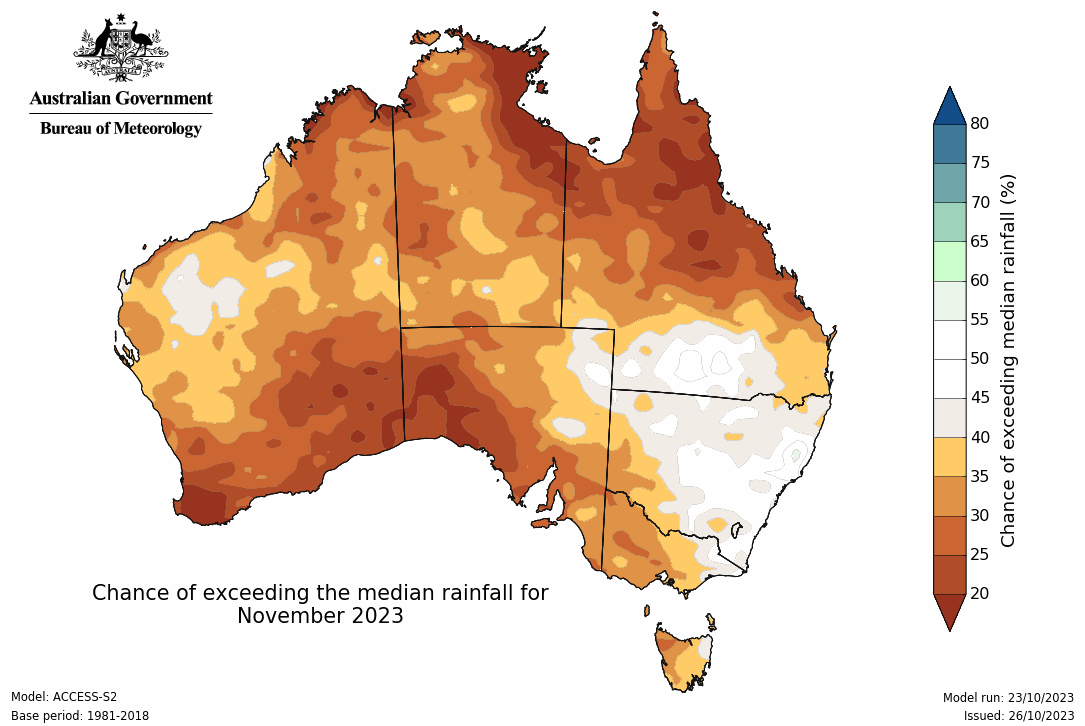
Get your candles for summer! Unlike the last three years the Australian national grid won’t be rescued by another cooler La Nina this summer. Fears of rolling blackouts this summer are fraying nerves at The Australian Financial Review Energy & Climate Summit. The transition is described as stuttering, gridlocked, faltering, and the government as “desperate”.

Things are so bad, former CEO’s of major generators are warning that “the lights are going to go out” and accusing one Energy Minister of speaking “complete and utter horseshit” because they don’t think we need reliable peaking gas plants to replace coal power. Said Energy Minister has responded by refusing to even take his calls. That’s really going to work. Meanwhile Japan is getting nervous just watching us, afraid we have screwed things up so badly we can’t be relied on to keep sending them gas.

Not only is summer nerve-wracking, but things are already so bad, one of our largest cement producers is shutting down nearly every day because it can’t afford to pay for the peak electricity spikes even in springtime. Here in Renewable World it’s cheaper to let 5,500 workers sit around for 30 minutes than pay for electricity. The company was paying 54% more for electricity than the year before.

Riding the Express Train to the Renewable Faraway Tree

The numbers are staggering. Australia is racing headlong to the glorious 82 per cent renewables target by 2030. The catch is that the national grid at the moment uses coal for 62% of its electricity. The opposition energy spokesman is calling it “lunacy”, which it is.  To reach the land of sunshine and breezes, our grid manager, the AEMO, is theoretically going to close two-thirds of the country’s existing coal power generation in the next ten years.

To put this in perspective, since the last hot summer we’ve shut down Liddell Coal plant, and still haven’t fixed the coal turbine that blew up in Queensland two years ago. New renewable investment has ground to a halt when it clearly should be going gangbusters. No one wants to build new wind and solar plants until someone builds the 10,000 kilometers of high voltage lines to reach distant cheap windy real estate, and no one wants to live or farm next to those transmission towers, so the protests are fierce.

Energy Summit confirms stuttering transition is not on track

Decarbonising Australia’s fossil-fuelled electricity grid is proving slower and more costly than previously advertised, with reliability risks increasing as the exits of coal-fired power plants run ahead of cleaner and reliable replacement generation.

Nerves are frayed “We’re not having an honest conversation”:

‘Get your candles’: energy experts are ‘terrified’ about this summer

Angela MacDonald-Smith, Australian Financial Review

Former Snowy Hydro CEO Paul Broad said, “the lights are going to go out” in a return to normal conditions after three mild summers and said politicians were not listening to the warnings about the risks around supply, while the industry was not speaking up enough.

“That’s our problem,” he said. “We’re not having the honest conversations and us in the industry we’re not speaking up.”

Mr Broad, who abruptly exited Snowy Hydro last year after a run-in with Mr Bowen, accused Victorian Energy Minister Lily D’Ambrosio of speaking “complete and utter horseshit” in her refusal to recognise the need for peaking gas power plants in Victoria as coal power exits the system.

He listed Ms D’Ambrosio among energy sector figures who would no longer take his calls as he tried to get the message through, including former Australian Energy Market Operator Audrey Zibelman.

We can’t even run a cement factory all day anymore:

The startling reason Boral is stopping production almost every day

Chanticleer, The Australian Financial Review

Mr Bansal [the chief executive of Boral] told the Summit that Boral’s electricity price rose by 54 per cent in the 12 months to the second half of last year, and have not retreated, counter to expectations.

He said Boral had about 5500 “blue collar” workers who were being told to stand aside and do nothing for 30 minutes at a time when power prices made it too expensive to operate.

“At a certain price during the day, when the price goes up [to] a certain level, our manufacturing stops because we’ve worked out economically it’s actually better to have thousands of people waiting idle for the prices to come down then actually do the work,” he said.

“That’s a real issue we are facing every single day on 300 manufacturing sites across the country. So we are extremely nervous what that means.”

The chief at Boral pointed out that he’s not willing to sign up to 20 year electricity contracts because everything is so uncertain.

They still don’t understand the difference between reliable and unreliable power

It’s OK, the believers protest, Australia has added 20 gigawatts of solar.

“Australia has three-and-a-half-million solar systems installed and that represents around 20 gigawatts of potential output,” Westerman says.

“That’s more than seven Eraring power stations at full output and capable of meeting almost half the energy demand in the day when the sun is shining at its brightest.”

As if solar panels can be measured on the same page as a coal plant. For half an hour a day, on a good day, only in summer, and as long as the clouds don’t roll over, the peak output might be like seven coal plants. These people are crazy.

Pagan Celebration of Darkness “Paused”

From The Daily Declaration:

Dark

Hobart’s Pagan Dark Mofo Festival Cancelled Next Year

Dark Mofo organisers cite rising costs and a need for rest, review and reset before coming back bigger in 2025.

Dark Mofo, a neo-pagan festival held yearly in Hobart during winter, has been cancelled for 2024. But two of its events, the nude solstice swim and winter feast, will go ahead next year.

The 2023 festival saw record attendance and ticket sales, but event organisers cited “changing conditions and rising costs” as reasons to pause the festival in 2024. Organisers issued the following statement:

“After 10 years of darkness, and in preparation for 10 more, Dark Mofo is pausing in 2024 for a period of renewal.

“Since Dark Mofo’s inception back in 2013, the festival has felt the weight of shifting conditions and the burden of escalating costs.

“While 2023 left an indelible mark, it also exacted its toll, prompting the decision to pause, reflect and plan out a more sustainable future.

“We will return – whole and bountiful – in 2025.

“From our dark heart to yours.”


Considering the amount of prayer against this dark festival, next year’s cancellation is very welcome and encouraging. But as spiritual battles won’t go away, there’s always the need to reflect on current culture, and how Christians should respond to it.

#f6f6f6;color: ;font-family: sans-serif;font-size: 20.8px">Government Backing

Dark Mofo receives significant public funding and government endorsement. The 2022 festival involved $7.5 million dollars in funding from the Tasmanian Government, $1 million from the Federal Government and $500,000 from Hobart City Council.

Reflecting on the 2023 ten-year anniversary, Tasmanian premier Jeremy Rockliff paid tribute to his predecessors “for the vision and courage to invest in what has been an extraordinary contribution of so many creative people over the course of the last decade.”

Hobart Mayor Anna Reynolds believes the event has changed Hobart, stating that “There’s been such a change in Hobart in the last ten years as a result of Dark Mofo and the winter feast.”

#f6f6f6;color: ;font-family: sans-serif;font-size: 20.8px">A Biblical Perspective

The Bible would agree that a public endorsement of neo-pagan practices would result in a change in Hobart. However, there would be sharp disagreement that change would be positive.

inverted cross Dark Mofo Hobart Tasmania

According to the Scriptures, humans don’t merely inhabit this planet. We co-habit it (with the spiritual realm made up of God and good and evil angels).

Dark Mofo has placed sayings such as “Welcome to Hell” at the Hobart Airport and features upside-down crosses. It’s interesting the ‘other side’ of the spiritual realm recognises where its true opposition lies: the cross. Why are there no inverted Hindu or Buddhist symbols? Why didn’t Anton Szandor LaVey, founder of the Church of Satan, call it the Mosque of Satan?

That the dark spiritual side segregates out Christianity as special while promoting hell tells us something about the reality of the world. Of course, like Jesus, we refuse the testimony of demons (Mark 1:34). But the demonic realm does have accurate theology, and it knows the truth about Jesus (Mark 1:24). And its knowledge of that truth will manifest itself in various, dark ways.

Modern Australian culture largely dismisses the role of the spiritual realm (Eph 6:12). Even among those who accept it, few would acknowledge the spiritual realm’s impact on day-to-day life.

Hosea 4:6 teaches that people “are destroyed for lack of knowledge”. Ignorance is not bliss.

#f6f6f6;color: ;font-family: sans-serif;font-size: 20.8px">Secularism Won’t Succeed: What Will Take Its Place?

The secular worldview (the idea that the natural realm is all that there is) has a stranglehold over the public square in Australia. But cracks in it are now appearing (such as Dark Mofo).

But it’s only a matter of time before secularism falls. In response to the question, ‘Why am I here?’, secularism answers, ‘For no reason at all. The universe is here through blind, chance processes. There is no plan, nor purpose. You are a cosmic accident, an insignificant biological machine in a cold dark universe.’

Such an answer cannot satisfy the longing of the human heart. Humans are spiritual beings created in the image of an eternal and infinite Spirit: the Creator God (Gen 1:26). We can only suppress that spirituality for so long.

The book Cross and Culture: Can Jesus Save the West? presents the changing Australian landscape using the following diagram:

Australian society is a mixed bag, not a homogenous whole. That said, it’s undeniable that we are moving clockwise around that circle, away from a Christian society and towards a post-secular and pre-modern one.

Dark Mofo falls under the ‘post-secular’ heading, where “humanity is debased and ancient beliefs are revived”.

#f6f6f6;color: ;font-family: sans-serif;font-size: 20.8px">A Christian Response

The rise of neo-pagan beliefs and practices create particular challenges for the Church. They also present opportunities.

The Church will require good training and equipping in knowing how to deal with the evil spiritual realm. And how to help people who, ignorantly or otherwise, are caught up in it.

People’s openness to spiritual realities will create opportunities for Christians where previously, invitations to ‘secular’ Australians would have met a closed door.

First-century culture in the Roman Empire was highly paganistic. If the Church could, despite the odds, thrive in this setting (Col 1:6), there’s no reason it can’t do so again.


It Seems Those Paper Straws Might Be Worse For The Environment

From Jo Nova:

#d6b15c">Paper straws have ‘forever chemicals’ that may be worse for us and the environment than plastic

Written by Jo Nova

Would you like PFAS with that?

Paper StrawsWouldn’t you know — to make paper straws resistant to water, it seems we have to add Teflon type chemicals that stick around for thousands of years.

Researchers analyzed 39 brands of straws in Belgium and found two thirds contained PFAS, and the paper straws were the worst. Fully 90% of all the paper straws contained some form of PFAS. 80% of Bamboo straws did too, as did 75% of plastic straws. Even 40% of glass straws contained PFAS. The only type of straws that were free of it were steel.

The UK, Canadian, Belgium, New Zealand, and Australian governments banned plastic straws, as did some US States because “they were bad for the environment”.

Paper drinking straws may be harmful and may not be better for the environment than plastic versions

Science Daily

In the first analysis of its kind in Europe, and only the second in the world, Belgian researchers tested 39 brands of straws for the group of synthetic chemicals known as poly- and perfluoroalkyl substances (PFAS).

PFAS were found in the majority of the straws tested and were most common in those made from paper and bamboo, the study, published in the peer-reviewed journal Food Additives and Contaminants, found.

PFAS are used to make everyday products, from outdoor clothing to non-stick pans, resistant to water, heat and stains. They are, however, potentially harmful to people, wildlife and the environment.

They break down very slowly over time and can persist over thousands of years in the environment, a property that has led to them being known as “forever chemicals.”

They have been associated with a number of health problems, including lower response to vaccines, lower birth weight, thyroid disease, increased cholesterol levels, liver damage, kidney cancer and testicular cancer.

Maybe accidental, maybe not…

It isn’t known whether the PFAS were added to the straws by the manufacturers for waterproofing or whether were the result of contamination. Potential sources of contamination include the soil the plant-based materials were grown in and the water used in the manufacturing process.

However, the presence of the chemicals in almost every brand of paper straw means it is likely that it was, in some cases, being used as a water-repellent coating, say the researchers.

Calling these straws “paper”, 100% biodegradable and fully compostable seems like false advertising.