Climate experts wrong on Australian frosts, and media say nothing
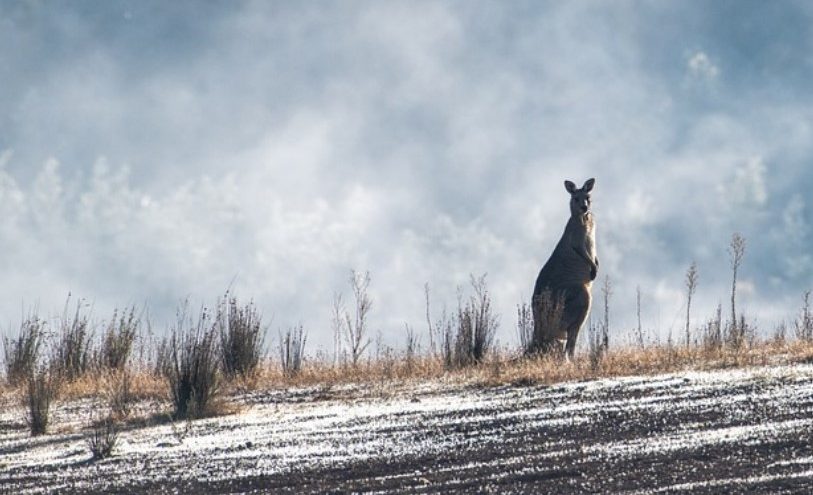
The IPCC experts were sure would be less frosts in Australia, but buried in a government funded ABC weather report was the virtually unknown admission that the frost season is actually growing across southern Australia, not shrinking. And in some places by an astonishing 40 extra days a year. What’s more, the researchers have known about this long term trend for years but didn’t think to mention it, and the ABC didn’t have a problem with that either. (It’s not like farmers need to know these things?)
When asked for an explanation for the increase in frosts, the ANU climate expert said “I think this is one of those climate surprises,” as if the IPCC unexpectedly won a game of Bingo, instead of getting a core weather trend 100% wrong.
We note the ABC feigned journalism to cover up for the Bureau of Meteorology and IPCC failures. Where were the headlines: “Climate Change causes more frosts, not less”, or “IPCC models dangerously misleading on frosts?” Did any Australian farmers and investors buy up properties and plant the wrong crops based on the global warming misinformation repeated or tacitly endorsed by the ABC, BoM and CSIRO?
Frost damage costs Australian farmers around $400 million each year. (Perhaps if we sold the ABC we could cover that).
Buried under 450 words of weather, trite caveats, and preamble the ABC journalist finally gets to a new virtually unknown climate trend that affects farmers, investors, researchers, and rural Australia:
The latest Intergovernmental Panel on Climate Change report projected, with high confidence, that frost events would decrease, in general, across southern Australia in the future with climate change.
ANU climate applications scientist Steven Crimp said some parts of New South Wales were now experiencing five more frost events on average each year, compared to 1960.
And he has known for years:
He said this was based on local weather station data between 1960 and 2018, but the trend was unlikely to have changed much in the past five years.
“I think this is one of those climate surprises,” he said.
Scientifically they are not caught unaware because climate models are useless politicized fantasies, it’s because there is more “climate-nuance” around now:
“Despite the sort of overall warming trend in our temperatures, the extremes of our temperatures, be they hot or cold, are acting in a slightly more nuanced and complex way, which can be quite surprising at times,” he said.
BOM forecast overnight minimum temperatures to fall well below zero across large swathes of the country [last] Sunday.
#302226;font-family: Candara, Verdana, sans-serif">But jokes aside, this actually seems like a trend that matters:
Dr Crimp said they had also found the frost season was lengthening across southern Australia.
“So if we think about the east coast first, we see an earlier start and a later finish to that frost window,” he said. “In some cases, the extension of that frost window is greater than 40 days.
“But in Western Australia in particular, we see that it’s less to do with the later frost occurrence, but more earlier frost occurrence.”
The frosts are due to the dry conditions, says Dr Crimp, putting in an admirable effort at scientific-word-salad to cover up for what he’s not allowed to say — that they have no idea.
Why aren’t frost days decreasing?
Dr Crimp said, ironically, the observations could be explained by the types of weather system that brought warmer, drier weather. That was high pressure systems which often produced the clear, still nights needed for frost to settle.
“As anyone knows who’s outside at night in winter, you have to have those clear night skies and the atmosphere needs to be very dry,” he said.
“That way the surface of the Earth loses heat very rapidly and any moisture in the air then condenses as a frost. “So because we are getting those dry conditions that are starting to emerge, that is more conducive for frosts to occur.”
But the truth is that, on average, and a priori — global warming would increase humidity and global cooling would dry the air out. And carbon dioxide is supposed to work at night time too — increasing minimum temperatures. All these factors make frosts less likely.
Widespread recovery has led to the highest coral cover recorded by the Long-Term Monitoring Program in the Northern and Central Great Barrier Reef …
Q3. These perimeter surveys under estimate coral cover, claiming it to be less than 40%, when coral cover is often more than 90% at the crest of the same reef.
Corals around the outside/perimeter of reefs are particularly susceptible to cyclone damage.
The official surveys of coral cover are somewhat misleading because the survey is done of just one habitat type, the reef perimeter. Most of the coral is at the reef crest. The survey of John Brewer reef followed the track shown by the yellow, orange and green lines.
Q4. The number and intensity of cyclones has been decreasing since at least the 1970s. Something the Bureau of Meteorology is unable to acknowledge. Why?
A few months ago the Shire Council did some resealing work along our street. The newly applied asphalt covered the line markings, so a few weeks later, the contractors came along and applied the appropriate lines.
This was all very well, except the line markers made a mistake. They extended a double line by a few metres to make it join up with a traffic island.
The gap in the lines had been there ever since we moved into the house 25 years ago. It provided a handy place to do a U-turn to get to our driveway. You might be thinking, “They could just drive a bit further”, and you would be right. Except that it is actually more dangerous to do a U-turn where the lines end.
Transport NSW told us that the gap should be there, as the correct line markings are in the NSW Government Gazette and have the force of the law.
So, as I understand it, the double lines are actually there illegally. If I get caught crossing these illegal lines would I be fined?
Many religions and philosophies are based on rules. Do this and God will be happy; do that and God will be unhappy with you.
The trouble with laws (apart form the fact that they can become self-contradictory) is that they tell you what to do, make no attempt to help you, and then condemn you when you fail.
In contrast, Jesus comes to us with grace and love. Love motivates us to do the right thing because we want to, it empowers us to life right, and it forgives us when we fall.
The invitation of Jesus is this: “Come to me, all of you who are weary and carry heavy burdens, and I will give you rest. Take my yoke upon you. Let me teach you, because I am humble and gentle at heart, and you will find rest for your souls. For my yoke is easy to bear, and the burden I give you is light.” (Matthew 11:28-30).
If you are frustrated by trying to be good, connect yourself to Jesus who brings love not law.
From The Free Press, a top level study tells us what we knew- masks are useless for protecting against virus transmission.
So what do we have now?
Useless masks
Useless vaccines
Useless lockdowns
All for a useless virus which killed a very small number of humans. Future generations will be paying for this stupidity for at least 50 years in most countries.
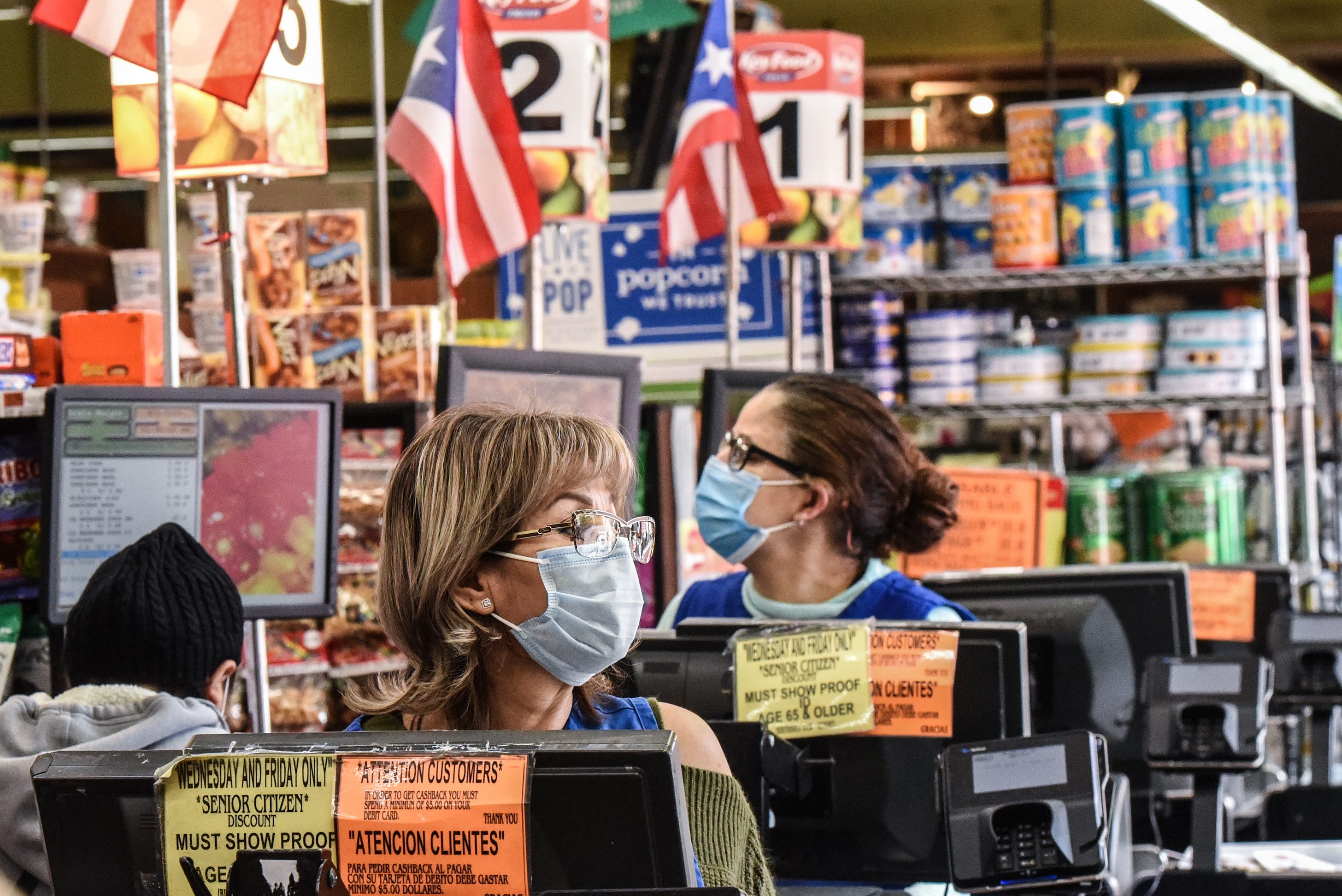
Cashiers wear protective masks in a grocery store in New York City on April 2, 2020. (Stephanie Keith via Getty Images)
We now have the most authoritative estimate of the value provided by wearing masks during the pandemic: approximately zero. The most rigorous and extensive review of the scientific literature concludes that neither surgical masks nor N95 masks have been shown to make a difference in reducing the spread of Covid-19 and other respiratory illnesses.
This verdict ought to be the death knell for mask mandates, but that would require the Centers for Disease Control (CDC) and the rest of the public health establishment to forsake “the science”—and unfortunately, these leaders and their acolytes in the media seem as determined as ever to ignore actual science.
Before the pandemic, clinical trials repeatedly showed little or no benefit from wearing masks in preventing the spread of respiratory illnesses like flu and colds. That was why, in their pre-2020 plans for dealing with a viral pandemic, the World Health Organization, the CDC, and other national public health agencies did not recommend masking the public. But once Covid-19 arrived, magical thinking prevailed. Officials ignored the previous findings and plans, instead touting crude and easily debunked studies purporting to show that masks worked.
The gold standard for medical evidence is the randomized clinical trial, and the gold standard for analyzing this evidence is Cochrane (formerly the Cochrane Collaboration), the world’s largest and most respected organization for evaluating health interventions. Funded in part by the National Institutes of Health and other nations’ health agencies, it’s an international network of reviewers, based in London, that has partnerships with the WHO and Wikipedia. Medical journals have hailed it for being “the best single resource for methodologic research” and for being “recognized worldwide as the highest standard in evidence-based healthcare.”
It has published a new Cochrane review of the literature on masks, including trials during the Covid-19 pandemic in hospitals and in community settings. The trials compared outcomes of wearing surgical masks versus wearing no masks, and also wearing surgical masks versus N95 masks. The review, conducted by a dozen researchers from six countries, concludes that wearing any kind of face covering “probably makes little or no difference” in reducing the spread of respiratory illness.
It may seem intuitive that masks must do something. But even if they do trap droplets from coughs or sneezes (the reason that surgeons wear masks), they still allow tiny viruses to spread by aerosol even when worn correctly—and it’s unrealistic to expect most people to do so. While a mask may keep out some pathogens, its inner surface can also trap concentrations of pathogens that are then breathed back into the lungs.
Whatever theoretical benefits there might be, in clinical trials the benefits have turned out to be either illusory or offset by negative factors. Oxford’s Tom Jefferson, the lead author of the Cochrane review, summed up the real science on masks: “There is just no evidence that they make any difference. Full stop.”
This lack of evidence would be enough to keep any new drug or medical treatment from being approved—much less one whose purported benefits had not even been weighed against the harmful side effects. As the Cochrane reviewers disapprovingly note, few of the clinical trials of masks even bothered to collect data on the harmful effects on subjects. Most public health officials and journalists have ignored the downsides, too, and social media platforms have censored evidence of those harms. But there’s no doubt, from dozens of peer-reviewed studies, that masks cause social, psychological, and medical problems, including a constellation of maladies called “Mask-Induced Exhaustion Syndrome.”
Yet public health officials, in violation of the first-do-no-harm principle, continue recommending or mandating masks without good evidence of their effectiveness or any pretense of cost-benefit analysis. Masks are still required in many hospitals and other institutions. Despite all the data showing that Covid-19 poses virtually no risk to healthy children, the CDC continues to recommend masking all students in communities where infection rates are rising. While the WHO advises against masks for children under five, and the European Union advises against them for students under 12, the CDC cruelly recommends masking everyone from age two on up.
The CDC’s director, Rochelle Walensky, remains determined to ignore the best research on masks, as she made clear in a congressional hearing earlier this month. “Our masking guidance doesn’t really change with time,” she said, when asked how the new review from Cochrane would affect the agency’s policies. “This is an important study,” she conceded, “but the Cochrane review only includes randomized clinical trials, and, as you can imagine, many of the randomized clinical trials. . . were for other respiratory viruses.”
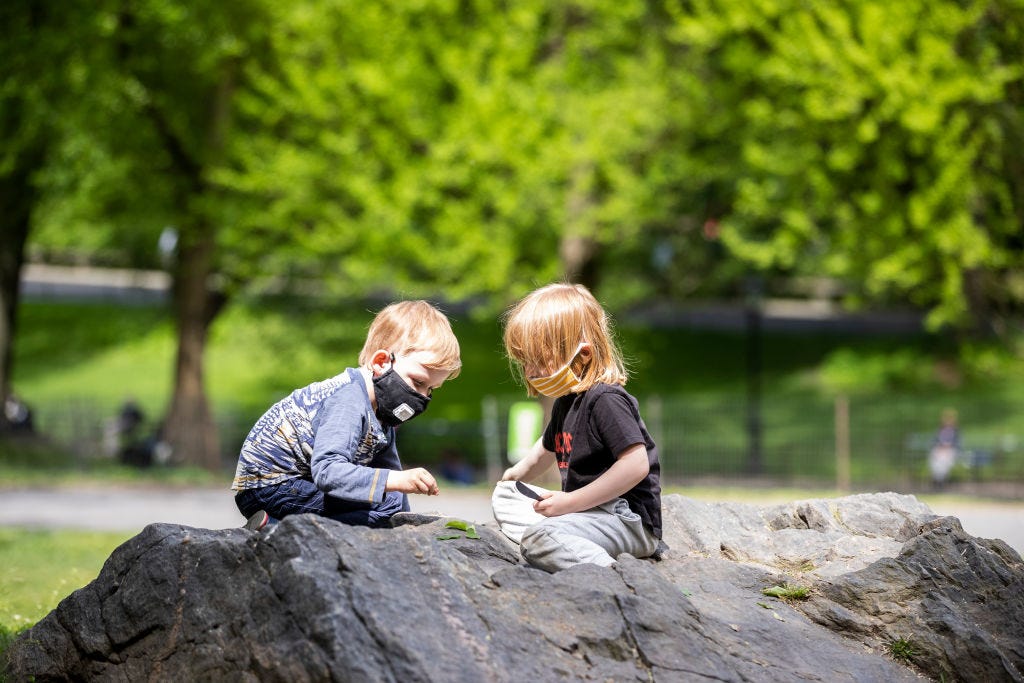
Children wear masks while playing in Central Park on May 24, 2020. (Ira L. Black via Getty Images)
It was a statement remarkable for its chutzpah as well as its scientific incoherence. One of the worst mistakes of the CDC and other lavishly funded federal agencies was the failure to conduct randomized clinical trials to determine whether their policies were effective. The Cochrane review had to rely on pandemic mask trials conducted in other countries—and now Walensky has the gall to complain that other countries didn’t do enough of the research that U.S. agencies shirked. She’s right that some of the trials involved other viruses, but why dismiss them as irrelevant to the coronavirus? And while one can always wish for more studies to include in a meta-analysis, that’s no excuse to ignore the best available evidence in favor of the shoddy science peddled by her agency to defend its policies.
Early in the pandemic, the CDC justified its newfound enthusiasm for masks in a press release hailing “the latest science” from a case study of a hair salon in Missouri. “[W]earing a mask prevented the spread of infection from two hair stylists to their customers,” the CDC proclaimed, a preposterously sweeping conclusion to draw from a small observational study that lacked a control group and had other obvious limitations (most of the salon’s customers were never even tested for Covid).
On national television, Walensky touted another study, of schools in Arizona, as proof that masks dramatically reduced the spread of Covid, but the study’s methodology was so clearly flawed—and the results so out of line with rigorous studies—that other Covid researchers dismissed it as “ridiculous” and “so unreliable that it probably should not have been entered into the public discourse.”
Instead of sponsoring—or at least heeding—clinical trials, the CDC kept searching for confirmation from less reliable research. It repeatedly cherry-picked observational data, crediting masks for a short-term reduction in Covid rates in some localities while ignoring contrary data from more systematic analyses, such as a study that tracked infection rates nationwide over the entire first year of the pandemic—and found that neither mask mandates nor mask usage correlated with infection rates.
Can anything persuade the maskaholics in the public health establishment and the public to give up their obsession? Some researchers, echoing Walensky, concede that the Cochrane review is the gold standard but argue that the clinical trials so far haven’t been extensive enough to rule out the possibility that masks might do some good. But that vague possibility is no reason to force masks on people: a public health intervention is supposed to be based on solid evidence, not wishful thinking.
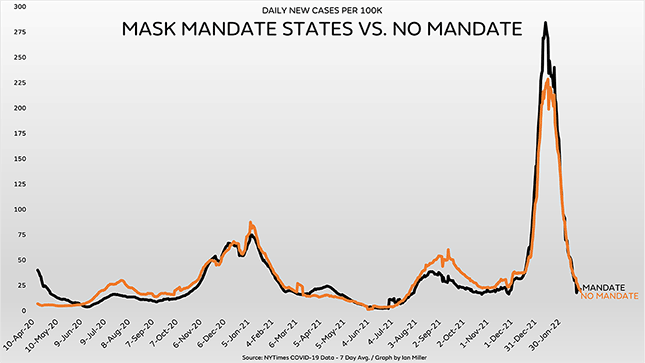
In his bookUnmasked: The Global Failure of COVID Mask Mandates, data analyst Ian Miller devotes an entire chapter to graphs exposing the CDC’s statistical malfeasance. He also prepared a graph for a previous City Journalarticle that is worth showing again, because it’s a visual confirmation—from nationwide data, not clinical trials—of the conclusions in the Cochrane review. The graph tracks the results of the natural experiment that occurred across the United States in the first two years of the pandemic, when mask mandates were imposed and lifted at various times in 39 states.
The black line on the graph shows the weekly rate of Covid cases in states with mask mandates that week, while the orange line shows the rate in states without mandates. As you can see, the trajectories are virtually identical, and if you add up all those numbers, the cumulative rates of Covid cases are virtually identical too. So are the cumulative rates of Covid mortality (the mortality rate is actually a little lower in the states without mask mandates).
Hundreds of millions of Americans dutifully covered their faces in the states with mandates, and the result was the same as in the clinical trials analyzed by Cochrane: the masks made no difference.
John Tierney is the coauthor of The Power of Bad: How the Negativity Effect Rules Us and How We Can Rule It, and a contributing editor of City Journal, where this piece first appeared.
The Free Press seeks the truth, no matter how politically inconvenient. Read our story about the epidemic of #DiedSuddenly here. And if you’re hungry for more stories like these, become a subscriber today:
Carp are a terrible plague in Australian waterways. There is a control measure being considered, but is now the right time to introduce it?
From National Geographic:
Is it time to unleash carp herpes?
By Ivor Stuart, Charles Sturt University; John Koehn, Charles Sturt University; Katie Doyle, Charles Sturt University, and Lee Baumgartner, Charles Sturt University•January 30, 2023
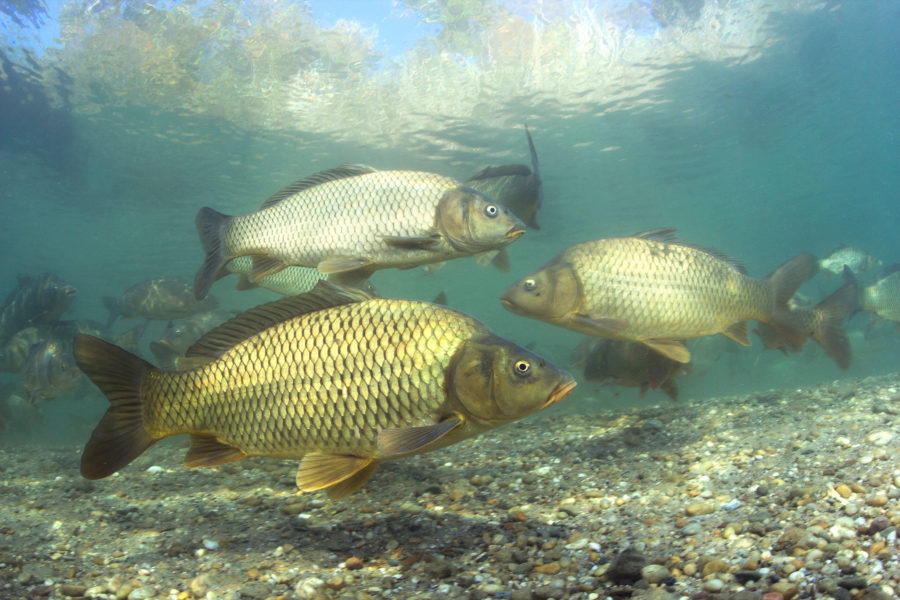
A school of common carp (Cyprinus carpio).Image credit: shutterstock
Exploding carp numbers are ‘like a house of horrors’ for our rivers.
With widespread La Niña flooding in the Murray-Darling Basin, common carp (Cyprinus carpio) populations are having a boom year.Videosof writhing masses of both adult and young fish illustrate that all is not well in our rivers. Carp now account for up to90%of live fish mass in some rivers.
Concerned communities are wondering whether it is, at last, time for Australia tounleash the carp herpes virusto control populations – but the conversation among scientists, conservationists, communities and government bodies is only just beginning.
Globally, the carp virus has been detected inmore than 30 countriesbut never in Australia. There arevalid concernsto any future Australian release, including cleaning up dead carp, and potential significant reductions of water quality and native fish.
As river scientists and native fish lovers, let’s weigh the benefits of releasing the virus against the risks, set within a context of a greater vision of river recovery.
A house of horrors for rivers
Carp are a pest in Australia. They cause dramatic ecological damage both here and in many countries. Carp werefirst introducedin the 1800s but it was only with “the Boolarra strain” that populations exploded in the basin in the early 1970s.
Assisted by flooding in the 1970s, carp have since invaded92%of all rivers and wetlands in their present geographic range. There have been estimates of up to357 million fishduring flood conditions. This year, this estimate may even be exceeded.
Carp are super-abundant right now because floods give them access to floodplain habitats. There, each large female can spawn millions of eggs and young have high survival rates. While numbers will decline as the floods subside, the number of juveniles presently entering back into rivers will be stupendous and may last years.
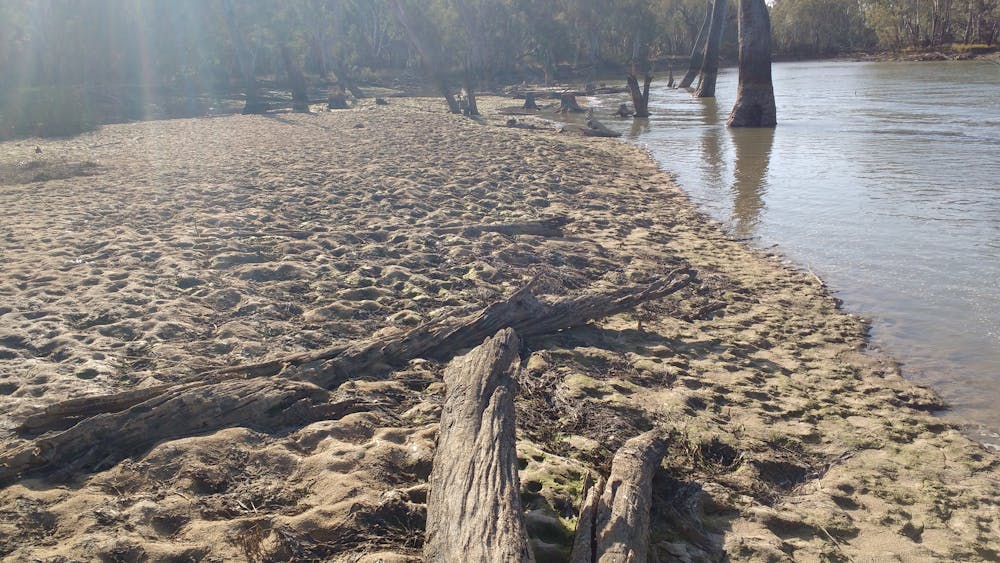
The impacts of carp are like a house of horrors for our rivers. They cause massive degradation of aquatic plants, riverbanks and riverbeds when they feed. They alter the habitat critical for small native fish, such as southern pygmy perch. And they can make the bed of many rivers look like the surface of golf balls – denuded and dimpled, devoid of any habitat.
Adult carp usually search for food at the bottom of rivers, stirring up sediment and creating dimples on the riverbed. Image credit: Ivor Stuart, Author provided
Most strikingly, this feeding behaviour contributes to turbid rivers, reducing sunlight penetration and productivity for native plants, fish and broader aquatic communities.
Carp truly are formidable “ecosystem engineers”, which means they directly modify their environment, much likerabbits. Their design leads to aquatic destruction of waterways.
We know when their “impact threshold” exceeds88 kilograms per hectareof adult carp, we see declines in aquatic plant health, water quality, native fish numbers and other aquatic values. At present, we expect carp to far exceed this impact threshold. For river managers, the challenge is to keep numbers below that level.
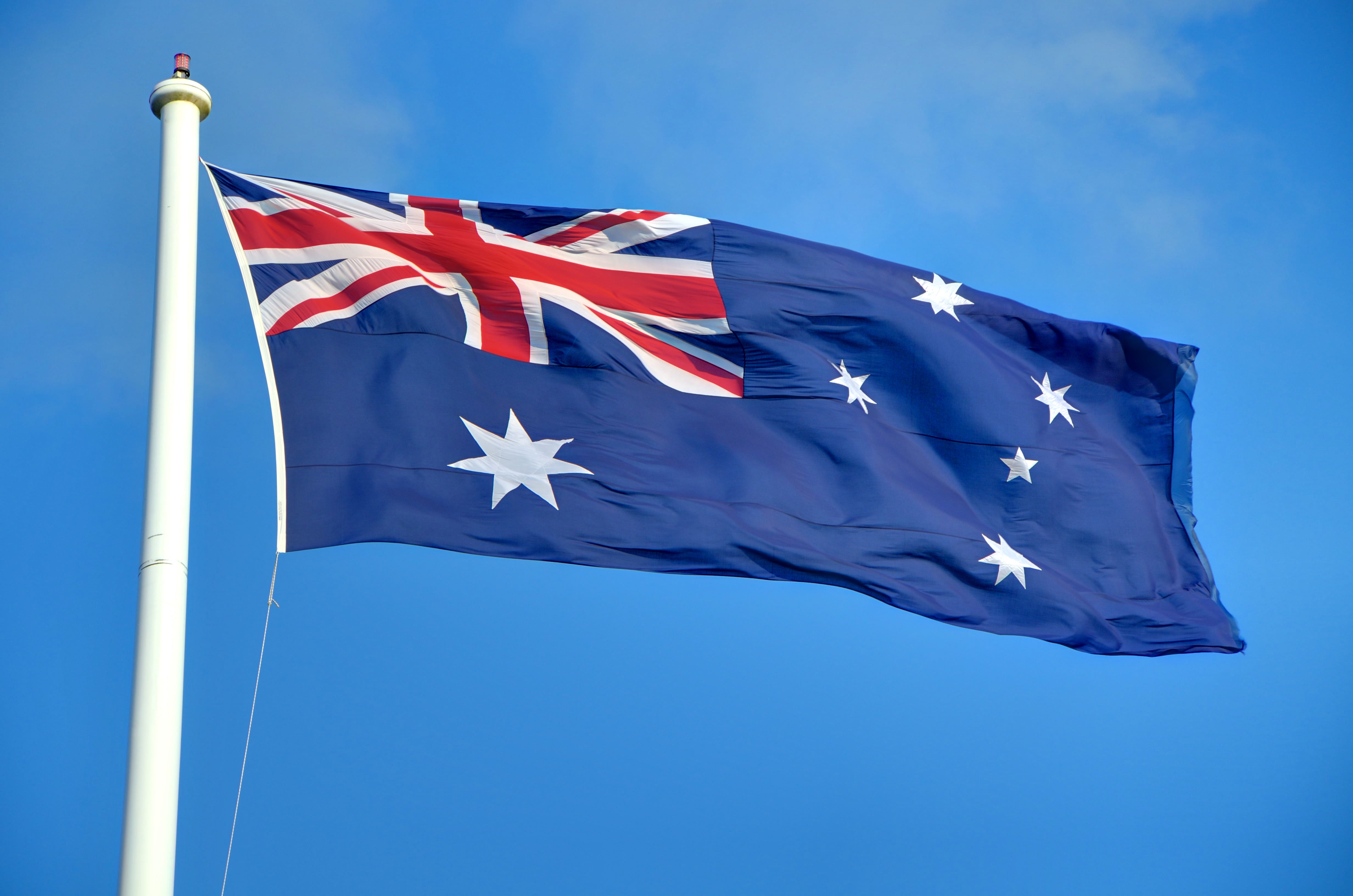
On January 26th 1788, a diverse group of convicts, soldiers and leaders landed at Sydney Cove to establish the colony of New South wales, the beginning of the modern state of Australia.
Despite all the propaganda of genocide and massacres of aboriginal Australians, it was a mostly peaceful affair. It was never an “invasion” by any stretch of the imagination.
The Governor of the colony was charged with developing a self-reliant settlement and maintaining as far as possible a positive relationship with the inhabitants.
Yes, terrible murders took place. There were times of terrible institutional racism, which most Australians look back at with shame. Those days have come to an end, and most people I talk to have little interest in the “race” of others. Oh yes, and after some of the most infamous cases of violence, the perpetrators were tried by white man’s justice and hanged for their crimes.
Like most modern states, our history has been coloured by the highest of aspirations and also by the worst of human sin.
Despite our imperfections, there is nowhere in the world that I would rather live. Judging by the huge number of migrants that come to live here every year, not to mention the many more who apply but are rejected by our strict immigration rules, that is a widely shared opinion.
Let’s celebrate the good things about living in this awesome nation and rejoice in the great mates we have.
Happy Australia Day!
I have a bit of an Aussie Day tradition where I post my favourite Australian poem, “My Country” by Dorothea Mackellar, who actually lived near Gunnedah not too far from here.
My Country
The love of field and coppice, Of green and shaded lanes. Of ordered woods and gardens Is running in your veins, Strong love of grey-blue distance Brown streams and soft dim skies I know but cannot share it, My love is otherwise.
I love a sunburnt country, A land of sweeping plains, Of ragged mountain ranges, Of droughts and flooding rains. I love her far horizons, I love her jewel-sea, Her beauty and her terror – The wide brown land for me!
A stark white ring-barked forest All tragic to the moon, The sapphire-misted mountains, The hot gold hush of noon. Green tangle of the brushes, Where lithe lianas coil, And orchids deck the tree-tops And ferns the warm dark soil.
Core of my heart, my country! Her pitiless blue sky, When sick at heart, around us, We see the cattle die – But then the grey clouds gather, And we can bless again The drumming of an army, The steady, soaking rain.
Core of my heart, my country! Land of the Rainbow Gold, For flood and fire and famine, She pays us back threefold – Over the thirsty paddocks, Watch, after many days, The filmy veil of greenness That thickens as we gaze.
An opal-hearted country, A wilful, lavish land – All you who have not loved her, You will not understand – Though earth holds many splendours, Wherever I may die, I know to what brown country My homing thoughts will fly.









 New Life Narrabri