I abandoned Buddhism to follow Jesus Christ

The Anglican Archbishop of Sydney, Kanishka Raffel, describes how he abandoned Buddhism to follow Jesus Christ.

My family came to Australia in 1972. My parents were Sri Lankan. My mother’s family were Buddhist and so my two sisters and I were raised as Buddhists in Australia, which was unusual then.

I think Australia’s first Buddhist temple opened in 1975 in Stanmore. It was a Thai Buddhist temple and Thai Buddhism is very similar to Sri Lankan Buddhism, so that was where the Sri Lankan community would go.

In my third year at university, I thought I should devote myself a little to the study of my religion. So, I started privately reading Buddhist literature. I visited the temple. I developed my meditation practice. But in God’s kindness, I’d had Christian friends at high school and at university. And so, at the end of my third year at university, I was going on holiday with a few friends and we picked up some of them at the end of a beach mission.

So we arrived on the last day of the beach mission. And after we’d had lunch, the team said to me, “Oh, we’re going to pray now. Maybe you could go for a walk on the beach.” And I said, “Oh, I’ll just stay here if that’s okay.”

That was the first time I saw Christian people in prayer, and it was quite surprising. I didn’t know what they were going to do when they said that they were going to pray. They just stayed right where they were and started talking to God. So that was eye-opening.

“He allowed me to see the vitality, the beauty, the majesty of Jesus Christ.”

Then I said to one of my friends, “What’s being a Christian all about?” And he said being a Christian meant he’d “lost control of his life to Jesus Christ”. Remember, I had devoted the year to serious study of Buddhism and was trying to develop, especially through meditation, control of my emotions and my ambitions and my desires, in order to be released from them. And here was my friend, who I respected, who said he’d lost control of his life to somebody who lived 2000 years ago!

Well, he asked me, “Would you read something if I gave it to you?” I said, “Okay.” And he gave me Mark’s Gospel and John’s Gospel.

When I was back at home after our holiday, in my bedroom, I thought I ought to keep my word to my friend. So, I got John’s Gospel out and began to read it. And as I did – wonderfully – God, in his kindness, convicted me, first of all, that I wasn’t reading a fairytale but that I was reading history. And he allowed me to see the vitality, the beauty, the majesty of Jesus Christ – a person who had friends and enemies, who had compassion and a mission, who was a man of emotions, but also seemingly always in control.

The Lord drew my attention to a particular phrase that John uses. He relates a story, and then he’ll say, “At this, the people were divided.” God really drew my attention to this phrase and turned it around on me, so that I began to ask myself, “Well, you’re not on the side of Jesus. Why not?”

As I read through the gospel once again, my attention became focused on John 6:44. Jesus says, “No one can come to me unless the Father who sent me draws them to me, and I will raise them up on the last day.” Although this verse raises questions about God’s sovereign election, what provoked me was the idea of “the last day”. Buddhism taught me to expect that it would take hundreds of lifetimes, through many deaths and rebirths, before I could hope to achieve enlightenment. The Buddha himself took over 500 rebirths. If that was true, then the idea of a “last day” was problematic.

But then, I began to wonder what Jesus could have meant when he said, “No one can come to me unless the Father … draws them to me.” How would the Father draw someone to Jesus? How could this happen? Then I noticed the very next verse. John  6:45 says, “It is written in the Prophets: ‘They will all be taught by God.’ Everyone who has heard the Father and learned from him comes to me.” It occurred to me that as I had been reading the gospel, the Father had been teaching me about Jesus! If I had indeed “heard the Father” and “earned from him” then the necessary thing was to “come to Jesus”. I was being “drawn to Jesus”, and in God’s kindness, I came.

Eventually, I couldn’t think of any good reason for not being on Jesus’ side. In a way that I couldn’t have explained, I just felt somehow that Jesus was for me. And I thought, “Well, I need to be for him too.” And so, in God’s kindness, he saved me.

Proud Brahmin Hindu worshipped a thousand gods

From God Reports:

A pious and proud Brahmin Hindu, Uma Moorthy worshiped idols at the temple every day, and the fact that she went to a Catholic school did nothing to change her convictions. But one day in the 12th grade, she heard a teaching from Isaiah 44, when God points out that part of the log gets used to make an idol and the other part gets used to cook food.

“If you have a brain, think and see,” the sister said to the group at the Scripture Union Bible camp to which Uma went for fun with friends.

The message was confrontational and rattled her.

“That night was a sleepless night because as a teenager I felt so bad in front of all my friends,” Uma says on a StrongTower27 video. She hadn’t been singled out from the crowd by the sister. But the Spirit went to work.

“Just out of curiosity and also to go and fight with that sister, I opened the Bible to the Book of Isaiah and started reading. I was reading just to fight with the sister the next day, but as I was reading, I don’t know what happened. The Holy Spirit just transformed me. For the first time in my life, I got to know that the true living God hates idol worship.”

Uma Moorthy was raised in a staunch Hindu family in Chennai, India. She was proud of her heritage and diligent with her duties. She never missed prayers at the temple. She always had the vermilion “third eye” pasted on her forehead. She washed in the Ganges River and planned to go to the Himalayas.

But the religious strivings collapsed upon reading the word of God.

“I cannot compress this omnipresent god to (the confines of) a statue,” Uma says. “This God of the Bible wants to have a relationship with me. When I was a Hindu, I used to worship a thousand gods. But none of those gods wanted to have a relationship with me. But the God of the Bible wanted to have a personal relationship with me. I can call this God Abba Father, my dad.”

As she read the scriptures, Uma also learned that Jesus’ sacrifice was enough for humanity to be forgiven, thereby making all religious striving pointless.

“I used to do a lot of ritualistic sacrifices,” she says. “This God sacrificed himself on the cross of Calvary while I was yet a sinner.”

Intending to stand up for her faith against the sister, she wound up bending her knee to the Savior.

“That day I accepted Jesus Christ as my personal Savior when I was in 12th grade,” she says.

Inevitably, she was persecuted by her family. They threw out her Bibles and wouldn’t let her pray. She had to lock herself in the bathroom at home to pray.

The Lord healed Uma of stammering. She is now an eloquent speaker, and she became a college lecturer.

Her parents eventually relented and allowed her to marry a Christian man, as long as he was original Hindu and still vegan, she says. They now live in California as missionaries with their two children.

When Uma left India, she left one little Bible on a shelf upstairs. She hoped her parents, who always threw out the bigger Bibles, might stumble across it one day in a special moment and open it.

“One day I was feeling down in the spirit and called my dad and shared that I was worried,” she relates.

“He quoted scripture verses from the Bible, and he said, ‘Jesus is with you. Though we are not there, he is there. He is the living God. He did so many miracles in the Bible.’”

Uma was floored.

“Dad, how do you know this?” she asked. “You were against the Bible. How do you know scripture verses?”

He confided that he had found the Bible one day when he was lonely. He had started reading and couldn’t stop.

Furthermore, it was a miracle that he was able to read the tiny print because his failing eyesight, he said, wouldn’t permit him to read the newspaper. He was 77 at the time.

Uma bought and sent him a big letter Bible.

“Every day he’s sending me verses,” Uma says.

When Mom found out that Dad had converted, she was incensed.

However, the pandemic struck fear into the heart of many Indians, including her mom.

One day, Uma shared Psalm 91 to calm her mother’s fears.

The inevitable happened. The Word and the Spirit touched her heart. Today, Mom is a Christian too, and she’s spreading the truth among all the Hindu relatives, Uma says.

“No one can convert anyone,” Uma says. “Only the word of God can convert a man. God has used the pandemic to bring a revival to India. There’s a lot of people who used to be against Christianity, and God is using the pandemic to bring people to Christ.”

If you want to know more about a personal relationship with God, go here

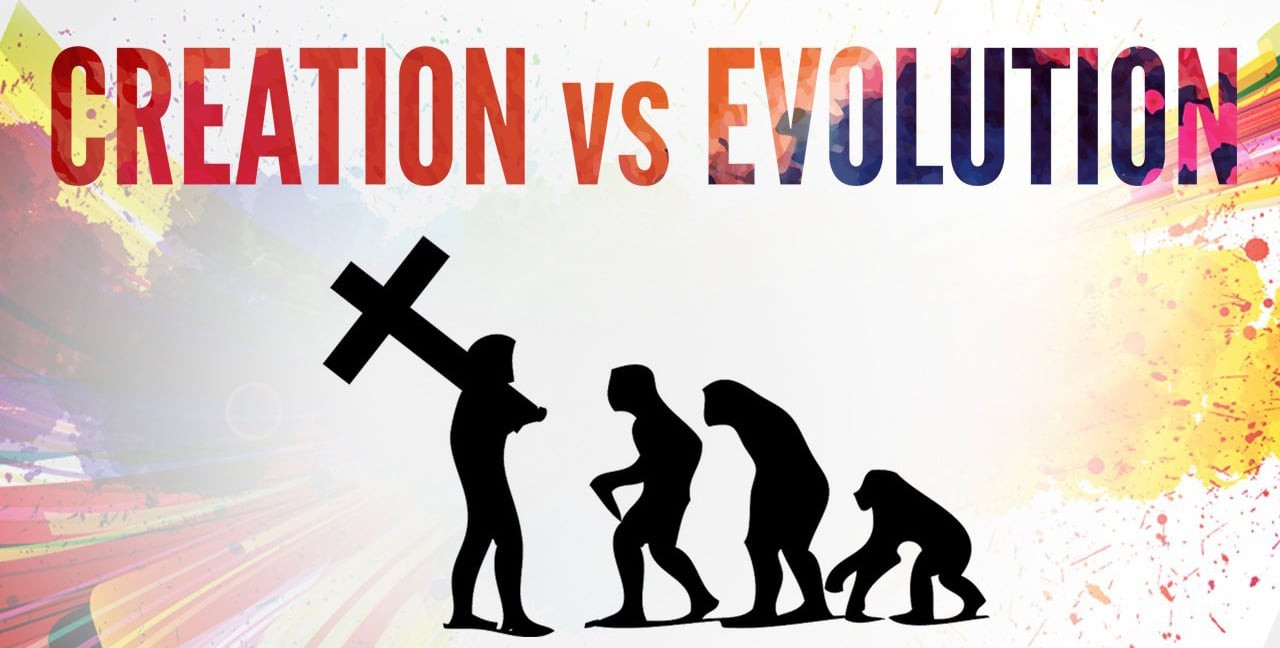
Creation Or Evolution

I have been thinking this week about two stories of how we arrived in the world. The first theory is evolution, which says that we are just a product of random chemical reactions over a very long period of time. The second story is that of creation as described in the very first chapter of Genesis.

This is not the place to say whether one of these stories is factually correct, or whether we can blend the two together in some way. I do want to consider some of the ramifications of these stories and the results of believing one or the other.

As we read the familiar words of Genesis 1, we discover that God is greater than the world, the sun and moon, the stars and bigger than everything all put together. Science tells us that the universe is unimaginably huge and more complex than we can imagine, but God is bigger than all of this.

At each stage of the process, God describes the creation as good, until the last day when He makes the first people and He describes it as “very good.” It is as if everything is made for the purpose of supporting human beings.

The Bible teaches that we are created for a purpose and that we are the pinnacle of God’s creative activity.

On the other hand, evolution tells us that everything is random, from the birth of our planet (an insignificant lump of rock on the edge of an average galaxy), to the production of individual human beings (you are just a random arrangement of DNA, and it determines your life).

So we get to a place of despair because there is no reason for us to exist. There is no future because in the end the whole universe will just run out of energy.

From that depressing explanation of life, we reap a harvest of depression, purposelessness, sexual anarchy and lawlessness.

God made you for a purpose. He has a plan for your life and a destiny for you in eternity.

Praise God!

Get You A Bible

‘Get You a Bible’: Couple Married 84 Years Delivers Powerful ‘God’ Response While Sharing Secrets to Love, Long-Lasting Nuptials

Photo by Jeremy Wong Weddings on Unsplash
A couple with the longest-running marriage in the state of Arkansas has some simple advice for a successful marriage: seek the Lord.

Cleovis Whiteside, 102, and his wife Arwilda Whiteside, 98, got married in 1939, and with 84 years of matrimonial ups and downs under their belt, the couple recently delivered pointed advice to others.

“Pray,” Arwilda told USA Today, speaking to anyone considering walking down the aisle anytime soon. “Know how to get on your knees, and get you a Bible, because that Bible is going to have to take you through all kinds of storms.”

The couple openly credited God for their long-lasting nuptials, with Arwilda saying the Lord placed them together to “love one another.”

“We can hardly believe this is happening to us because we feel like we were the least, but God said, ‘No. You’ll glorify my name and love one another,’” she said, according to KATV-TV.

The Whitesides were honoured by the Arkansas Family Council, a Christian organisation that celebrates traditional families and marriage. The organisation honours the longest-married couples in the state, with the Whitesides reportedly currently holding the record in Arkansas.

The couple told USA Today about how their love story began, with the two meeting when Cleovis was 13 and Arwilda was 9; they married just a few years later.

The loving husband and wife had 12 children of their own and also housed others in need of families, with the duo being described as “pillars in the community.” Generosity, it seems, is ingrained in the fabric of the family, with Arwilda praising her husband’s kindness.

“He is always trying to help people,” she said.

Read more about the family’s story here.

‘Get You a Bible’: Couple Married 84 Years Delivers Powerful ‘God’ Response While Sharing Secrets to Love, Long-Lasting Nuptials

Photo by Jeremy Wong Weddings on Unsplash
A couple with the longest-running marriage in the state of Arkansas has some simple advice for a successful marriage: seek the Lord.

Cleovis Whiteside, 102, and his wife Arwilda Whiteside, 98, got married in 1939, and with 84 years of matrimonial ups and downs under their belt, the couple recently delivered pointed advice to others.

“Pray,” Arwilda told USA Today, speaking to anyone considering walking down the aisle anytime soon. “Know how to get on your knees, and get you a Bible, because that Bible is going to have to take you through all kinds of storms.”

The couple openly credited God for their long-lasting nuptials, with Arwilda saying the Lord placed them together to “love one another.”

“We can hardly believe this is happening to us because we feel like we were the least, but God said, ‘No. You’ll glorify my name and love one another,’” she said, according to KATV-TV.

The Whitesides were honoured by the Arkansas Family Council, a Christian organisation that celebrates traditional families and marriage. The organisation honours the longest-married couples in the state, with the Whitesides reportedly currently holding the record in Arkansas.

The couple told USA Today about how their love story began, with the two meeting when Cleovis was 13 and Arwilda was 9; they married just a few years later.

The loving husband and wife had 12 children of their own and also housed others in need of families, with the duo being described as “pillars in the community.” Generosity, it seems, is ingrained in the fabric of the family, with Arwilda praising her husband’s kindness.

“He is always trying to help people,” she said.

Read more about the family’s story here.

Swooping Birds And Harassing Spirits

Each year, spring time is quite hazardous in many parts of Australia. Some birds become very protective of their territories during the nesting season.

Normally placid and tame birds start to swoop pedestrians and cyclists whom they consider to be a threat. The worst among these are the Australian magpie and the plover. While they are mostly harmless, seeking to intimidate rather than injure, some individuals do make contact with people’s heads and faces.

Over recent weeks, I have been praying for the covering of the blood of Jesus when I enter a known hot spot. If a bird swoops, I command it to leave in the name of Jesus. Amazingly most of them do.

Recently I was swooped by a pair of crows, which I have never experienced before. Indignantly I told them to go and they immediately left me alone.

These are not all natural events. Some of them, if not all, are actually evil spirits that are sent specifically to harass, intimidate and distract us, even to reduce us to fear.

We might even consider them to be a sign of other events that satan is using to pull us down. If we are being attacked in a physical way, it is probably a sign that we are under spiritual attack in other areas. Sure enough there are many people in our church who are being intimidated and harassed by the enemy in various parts of their lives.

W don’t have to allow this to continue. We have been given authority over the devil and all evil spirits. Whatever realm in your live is under attack right now, surrender it to the Lord. Ask Him to cover it with the blood of Jesus and command those intimidating spirits to go in Jesus’ name.

5 Lies Our Culture Is Telling Us: Rosaria Butterfield

5 Lies Our Culture Is Telling Us

Lie #1: Homosexuality is normal.

Included in this lie is the belief that homosexual orientation is true and immutable—fixed and never-changing. Homosexual orientation, a nineteenth-century Freudian invention, is an unbiblical category of personhood and an antagonist to the creation ordinance because it redefines sinful desire as something that defines who you are rather than how you feel. Lie #1 claims that the word of God doesn’t apply to homosexual orientation because homosexual orientation represents a person’s core truth. Some professing Christians believe that homosexual orientation is fixed, immutable (unchangeable), and part of God’s creational and eternal plan. Some people believe that homosexuality is embedded in a person’s identity.

We must ponder why God’s attribute of immutability has been embraced by the LGBTQ+ movement as an attribute of homosexual orientation. God is immutable—God never changes. One theologian defines God’s immutability as “that perfection in God whereby He is exalted above all.” But if you exchange the Creator for the creature, you impose God’s attributes on man. When we hear “homosexual orientation is fixed and immutable—it never changes,” this is only imaginable in a world that has already exchanged the worship of the Creator for the worship of the creature—of God for an idol. “Gay Christians” (an oxymoron if there ever was one) teach that you can’t repent of who you are, how you feel, or even what you desire. They believe that homosexual orientation is morally neutral, separate from one’s sin nature, cannot be repented of, and rarely changes over a person’s lifetime. This is a lie.

Five Lies of Our Anti-Christian Age

Five Lies of Our Anti-Christian Age

Rosaria Butterfield

Bestselling author Rosaria Butterfield addresses 5 lies modern culture has embraced about sexuality and spirituality, using the word of God to help illuminate each topic. 

Lie #2: Being a spiritual person is kinder than being a biblical Christian.

Unbiblical spirituality welcomes people exactly as they are or, at least, makes this promise. This is a religion that elevates being a “good” person over giving your life to Christ. To the unbiblically spiritual person, everything is one. Distinctions and hierarchies are called abusive, and true spirituality is supposedly found inside ourselves. This sort of spirituality, unbiblical spirituality, believes that everything in the universe supposedly shares in this divine power and unifying balance. Rules, divisions, and distinctions are violent, or so says the unbiblically spiritual person.

In contrast, for the biblical Christian, there are two kinds of reality: God and creation. God is eternal, triune, personal, holy, loving, and separate from his creation. According to biblical spirituality, there are two kinds of people: those who love God and those who defy God. Even though we create our own problems by refusing to live by his laws, God provides the only solution through the Lord Jesus Christ. Pastor and theologian Peter Jones, founder of TruthXchange, offers the most helpful paradigm for comparing unbiblical spirituality to biblical spirituality. While unbiblical spirituality self-promotes as kind and inclusive, it is in reality narcissistic and damning.

Lie #3: Feminism is good for the world and the church.

Feminism began in 1792 with Mary Wollstonecraft’s A Vindication of the Rights of Woman. As its title suggests, it sought to “vindicate,” which means “to assert one’s right to possession.” And what rights needed possessing? Women needed to possess the rights to citizenship. Wollstonecraft sought rights for education and voting for women. Feminism has gone through four “waves” or phases since 1792, with the most recent wave so tied to the LGBTQ+ movement that now, in 2023, we cannot even define what a woman is or defend her right to exist—least of all to be noted as a citizen. Feminism in the world is passè—it has been displaced by transgenderism. Feminism in the evangelical church, however, is alive and well. When the church sets itself up to follow the world and not to lead it, it necessarily lingers long with discarded trends and affections.

We don’t need to be all-knowing, because God is. Christ alone can solve the problems we face today.

Adherents of feminism believe the Bible has no bearing on gender roles, responsibilities, or requirements because the idea of men and women being made by God’s design for God’s purposes on earth is old-fashioned, silly, dangerous, abusive, and culturally driven. Some professing Christian feminists believe that Adam’s headship is a consequence of the fall—and thus a sin. They claim that there is no biblical warrant for a married woman’s submission to her husband and elders or for elders and pastors to be qualified men. Bible verses that call for a wife to obey her husband in the Lord, such as Titus 2:4–51 Peter 3:1, 5–6, and Colossians 3:18, are “contextualized” and then dismissed. Such feminists believe that feminism offers a corrective to Christianity because, without it, misogyny (the hatred of women) will run rampant with biblical support. Without feminism to the rescue, they argue, the church will unwittingly promote sexual abuse by giving perpetrators extreme and unchecked power and spiritual abuse by prohibiting a woman from using her gifts of teaching from the pulpit and assuming the roles of pastor and elder. This is a lie.

Lie #4: Transgenderism is normal.

People who believe in what is called “gender fluidity” also believe that sexual difference has no biological or ontological (original and eternal) integrity. Transgenderism is supposedly as normal for some people as freckles and a blue sky on a North Carolina summer day. Transgenderism maintains that there are more than two biological sexes and even more genders. The year 2022 boasts seventy-two genders and seventy-eight gender pronouns. In time there may be ten thousand. What does this all mean? How did we get to a place in the United States where someone can walk into Planned Parenthood and, forty-five minutes later, leave with a prescription for powerful hormones that will leave her sterilized for life if taken over time? We got here by believing the lie that transgenderism is normal—at least for some people.

Lie #5: Modesty is an outdated burden that serves male dominance and holds women back.

People who believe this lie dismiss the virtue of modesty for Christian women. Having denied that men and women are different, with different responsibilities, callings, and boundaries, those who reject modesty believe that calling women to a different standard of dress, speech, and conduct is oppressive. They deny that women owe their brothers the kindness of modesty. At the bottom of this is a feminist belief that it is not fair that women are different from men and that asking women to dress and behave with biblical modesty serves male dominance and holds women back. In the contemporary church climate, modesty has been replaced by exhibitionism.

Cling to Christ with Courage

When it seems like we are living at ground zero of the Tower of Babel, when the whole world seems to have gone mad, we need to cling to Christ with courage, read and memorize our Bible with fervency, be active members of a faithful Bible-believing church with passion, sing psalms with joy, and pray for our enemies with humility. We need to be humble people, remembering that we were not created to be all-knowing. We don’t need to be all-knowing, because God is. Christ alone can solve the problems we face today.

God calls us to live our Christian lives with courage, tell the truth, and fear God and not man. Can we with Jesus sing Psalm 118:6: “The Lord is on my side; I will not fear. What can man do to me?” I know. You can think of a long list of things the world can do to you. Your son, who calls himself Julie, won’t talk to you. You will be fired from your job if you don’t put a rainbow sticker on your door. Your neighbors will hate you when they learn that you believe in the God of the Bible. All of this may be true, and still this verse calls us to put things in perspective, specifically the Lord’s perspective as seen in Hebrews 11, where we see firsthand that God uses our faith whether we live or die.

This is the faith story we like:

And what more shall I say? For time would fail me to tell of Gideon, Barak, Samson, Jephthah, of David and Samuel and the prophets—who through faith conquered kingdoms, enforced justice, obtained promises, stopped the mouths of lions, quenched the power of fire, escaped the edge of the sword, were made strong out of weakness, became mighty in war, put foreign armies to flight. (Heb. 11:32–34)

This is the faith story that terrifies:

Others suffered mocking and flogging, and even chains and imprisonment. They were stoned, they were sawn in two, they were killed with the sword. They went about in skins of sheep and goats, destitute, afflicted, mistreated—of whom the world was not worthy. (Heb. 11:36–38)

God records that both life and death, if done in faith, advance the gospel and give glory to God. Christians ought never despise suffering for Christ. And as we are seeing today and have seen throughout church history, all true Christians will suffer for the truth of Christ.

This article is adapted from Five Lies of Our Anti-Christian Age by Rosaria Butterfield.


“God Is Strategically Bringing You Into: Divine Alignment”: Bernice Scheidler

From Elijah List


While in Israel over the summer, I noticed I needed help getting into my hotel rooms, but my keycards were not working.

In one hotel, it became amusing after the 6th trip from my room on the 10th floor back down to the lobby, trying to get my key card to work. At that point, a manager took notice and insisted someone come up with me to my room to make sure I could get in. I was accompanied to my room and asked if I had the right room. I assured them I did.

The manager was able to open my room using a key fob he had, allowing me to wait in my room as he tried to fix the problem. After many more trips up and down (on his part), he RESET the entire system on my door, allowing my key to work.

It became apparent the Lord was trying to get my attention. I also couldn’t help but notice my interactions with people in the elevator during the process. I understood the elevator was symbolically speaking of a place of transition (going from one place to the next). As I sat in my room, #1029, I began to ask the Lord what He was trying to show me.

Alignment and Blessing

I felt there was something significant about my room number and was prompted to look up the numbers in Scripture. As I read Numbers 10:29, the Lord began to speak.

“Now Moses said to Hobab the son of Reuel the Midianite, Moses’ father-in-law, ‘We are setting out for the place of which the Lord said, “I will give it to you.” Come with us, and we will treat you well; for the Lord has promised good things to Israel.'” (Numbers 10:29) (Photo via PickPik)

God is strategically aligning you with His plans and aligning you relationally.

Moses’ brother-in-law was a skilled man. He understood the desert, where to camp, and what to look out for. Moses recognized that Hobab would be an asset to them as they set out to the place the Lord promised to give them. He asked Hobab to go with them, but Hobab was from a different tribe and wanted to return to his family. As you read the story, Moses tells his brother-in-law that the Lord will be good to the Israelites and that they will share with him the blessing they receive, if he chooses to go with them.

Many of you have been in transition and God is shifting you and bringing alignment in your assignments and relationships, and it will cause blessings to come upon you and those you are aligned with.

What God Is Saying about Relational Alignment for September through the Fall

Here is what the Lord has been showing me in connection to relational alignment for September through the fall.

1. The Lord is bringing new and necessary relationships into your life that will be a tremendous blessing to you for what He is calling you into. The Lord is bringing people into your life who are skilled, qualified and anointed, and who will propel you into the Lord’s promises. Understanding that the ones whom the Lord brings to you in this season may look different than you are used to will be necessary. Just like Moses’ brother-in-law, they may come from another “tribe” (stream or denomination), but they will be the ones who will help unlock the door for you.

2. The Lord is bringing peace to your heart in connection with relationships that will no longer be a part of your next season. The Lord will heal your heart from the relational hurts from the past and bring peace and closure to you as you move forward.

3. The Lord is doing a work with existing relationships as they take on new meaning! Some people are already in your life who love you and are for you; they have been there all along but not necessarily fulfilling certain functions in your life. You will notice God doing a work in these relationships as they assume a new role and take on new meaning for you. These relationships will begin to blossom and bless you immensely.

4. The Lord is renewing your value for relationships. As you move into the fall, dealing with any relational unforgiveness that might be holding you captive is imperative. The Lord wants you free. Those of you who have felt the pain of relational hurt, those who have been in isolation and reluctant to trust and step into new relationships, the Lord will heal you as you come to Him. His healing power will carry such restorative power that it will instill in you a renewed value for relationships. (Photo via StockSnap)

5. It is important not to force connections; God already has those relationships for you, and as you seek Him, He will make it clear to you. Be faithful to step into what He shows you, because these alignments will unlock the door of abundant blessing!

Entering the Door to Promise

I shared the following word while in Israel:

You can’t understand why the door is not opening for you! It’s not because you are trying to open the wrong door; it’s not because you don’t have the key to open the door. God has already given that to you! It is because a divine reset is required before you can access the promises you are about to enter into. It is happening in the transition.

What feels like ups and downs, what feels like a lot of backwards and forwards, what feels like inconvenience, and what appears to be delay is actually a sequence of moments bringing you the divine reset! Pay attention to what the Lord is saying in these moments. He is revealing your next assignments and bringing new and unexpected connections into your life that are vital for your next season! You will enter the door to the promises God has for you!

God’s plans for you are so good!

I decree and declare that you will see every plan He has for you fulfilled. I bless your relationships, I bless your assignments, I bless you to prosper, and I speak divine alignment over you, in the mighty name of Jesus! YOU ARE BLESSED!


Bernice Scheidler was born and raised in Johannesburg, South Africa, and moved to America with her husband Josh in 2010. They currently reside in Redmond, Oregon, along with their three children, where together they planted Ignite Faith Church in 2016. She is a revivalist and is passionate about the call of God on her life. She places great emphasis on the importance of prayer in her life and the life of the Believer. If she could choose any title in the world it would be “friend of God”! She is called to release the Kingdom of God here on Earth through sharing the Gospel, releasing God’s heart to others through dreams, visions, the prophetic, the creative arts, and acts of service that will propel and champion others in their callings. Her heart’s desire is for people to encounter God in a very powerful way, bringing them the salvation, healing, deliverance, breakthrough and freedom they desire. She longs to see people turn their hearts fully to God. She believes in signs, wonders and miracles, and all the gifts of the Spirit, and that the Body of Christ should operate in them today!

Babylon Bee: Feeling Bad About Yourself?

From the Babylon Bee:

Feeling Bad About Yourself? Check Out These 10 People From The Bible Who Did Way Stupider Stuff Than You
SPONSORED·Sep 6, 2023 · BabylonBee.com
Article Image


Brought to you by the Hope Together Conference:


Feeling a little down? Think you’ve really screwed the pooch this time? Come with the Babylon Bee as we crack open the Scriptures and check out some Bible heroes who have done way, way stupider stuff than you!

  1. Adam: You may be feeling a little blue today, but did sin and death enter the world through you? See, it’s not so bad.
  2. Samson: His girlfriend betrayed him to be tortured by enemies – TWICE – and the third time, he STILL FELL FOR IT! Come on.
  3. Jonah: This guy legit tried to run away from the Creator of the universe on a boat. Way dumber than you!
  4. Abraham: You may have messed up today, but did you lie about your wife being your sister? TWICE?
  5. Balaam: This prophet of God beat the heck out of his own donkey, who was only trying to save Balaam from getting killed by an angel with a flaming sword. Ouch.
  6. Aaron: First he helps lead the miraculous Exodus, then he leads millions of people into idolatrous demon worship. That’s pretty bad!
  7. David: He failed to install a Covenant Eyes filter on his rooftop, leading to adultery, murder and ultimately his kingdom’s destruction. Puts your mistakes in perspective.
  8. Paul: Before encountering Jesus, he literally went from town-to-town murdering Christians. Probably worse than what you did today.
  9. Cain: This guy thought offering someone vegetables was a good idea. VEGETABLES!
  10. Peter: The rock upon which Christ would build the church once rebuked Jesus Christ over His plan to die for our sins. So, yeah, pretty stupid in hindsight!

Yikes! Feel better now? Sure you do!


Casey Chalk: Texting With AI Jesus

From firstthings.com


Logo for print screen

Want to talk to the Son of God? There’s an app for that. Text With Jesus, a Los Angeles–based product that launched in July, replicates an instant messaging platform and features biblical figures impersonated by the artificial intelligence program ChatGPT.

Among the characters available on the app are the Holy Family, the apostles, various prophets, Ruth, Job, and Abraham’s nephew Lot. Mary Magdalene is also available, but only to premium subscribers for $2.99 a month. You can even chat with Satan, who signs his texts with a “smiling face with horns” emoji.

Perhaps such an app provokes fears of blasphemy. Not to worry: Stéphane Peter, the app’s developer and the company’s CEO, ensured that character responses always include a Bible verse. “Our AI always generates responses that are in line with the teachings of the Bible,” explains the website. He also invited unnamed “church leaders” to try the beta version of the app. Though some pastors had reservations at the beginning, the app’s final version received “pretty good feedback.” 

Text With Jesus’s characters typically avoid any stance that might be perceived as offensive, instead maintaining a line of inclusivity and tolerance. If asked about gay marriage, for instance, the app will respond that it is “up to each individual to seek guidance from their own faith tradition and personal convictions,” and that users should “prioritize love and respect for all people regardless of their sexual orientation or gender identity” (followed by a rainbow and red heart emoji). If queried about feminism, app Jesus will explain the importance of “empowering women and breaking societal barriers that limited their opportunities.”

So far, so “healthy.” The app aligns with our clinical culture, which emphasizes personal affirmation and physical and mental wellness. Text With Jesus offers a moral, therapeutic god for a moral, therapeutic age, as sociologist Christian Smith calls it in his 2005 book Soul Searching. It replaces the arcane “second person of the Trinity” with Jesus the therapist and social worker. 

This Jesus is not here to condemn (obviating less “warm and fuzzy” Gospel episodes such as the improperly dressed wedding guest of Matthew 22:1–14, or Jesus’s statements about the “Sign of Jonah” in Luke 11:29–32). He is here to affirm us and our behaviors and opinions. He certainly wouldn’t want you to feel bad about yourself and repent (unless you are repenting of “bigoted,” “patriarchal,” or “fascist” opinions on race, sex, or gender). 

Text With Jesus represents the age-old human vice of pride. Through our creativity and brilliance, we seek to ascend to God’s level, to be like him, and even to dictate terms to the divine. Or rather, the app is a diabolical inversion of this: Instead of being transformed into God’s image, we aim to make him into our own. Is seeking to communicate with and control God through a handheld device really all that different from the ancient metalworkers who fashioned little totems to whom they could offer supplication for their own health and prosperity?

The app’s insistence that its content is “Bible-based” is curious, given that the biblical characters sidestep Scripture’s more controversial and provocative claims. It does then seem to reflect the embarrassing biblical illiteracy even of those claiming to be Christians, and that people, even the pious, tend to prefer a religion that avoids uncomfortable truths in favor of what we want to hear.

Yet perhaps most sadly, that Text With Jesus would even be conceived and consumed reveals how deeply wedded we have become to our smartphones. Prayer is such a remarkable human experience because of its universality, both in terms of who can do it (everyone) and where it can be done (anywhere). I pray in my bedroom, on my commute, waiting in line, and while exercising. I can pray the divine liturgy, a rosary, or simply talk and listen. 

Indeed, one of the most beautiful things about Christian prayer is the quality of the access. “Ask, and it will be given you; seek, and you will find; knock, and it will be opened to you. For everyone who asks receives, and he who seeks finds, and to him who knocks it will be opened. . . . If you then, who are evil, know how to give good gifts to your children, how much more will the heavenly Father give the Holy Spirit to those who ask him!” (Luke 11:9–10, 13) What has happened to us, that anyone would contemplate inserting a gimmicky Silicon Valley tool into something so profoundly human and liberating? (I should note that I do not intend to “throw shade” on apps such as Magnificat or Hallow that help facilitate prayer through Scripture readings, meditations, or the divine liturgy.)

To be a people formed by prayer, we Christians need to protect and cultivate our little spiritual gardens, where we can let Jesus be himself, in all his terrifying glory. Because it is in “practicing in the presence” that we can appreciate the reality of an omnipotent, omniscient God who deigns to care about us and our problems. But in order to walk with him, and talk with him, and share that joy, I wager we’ll need to put our phones on silent.

Casey Chalk is a contributing editor at the New Oxford Review.