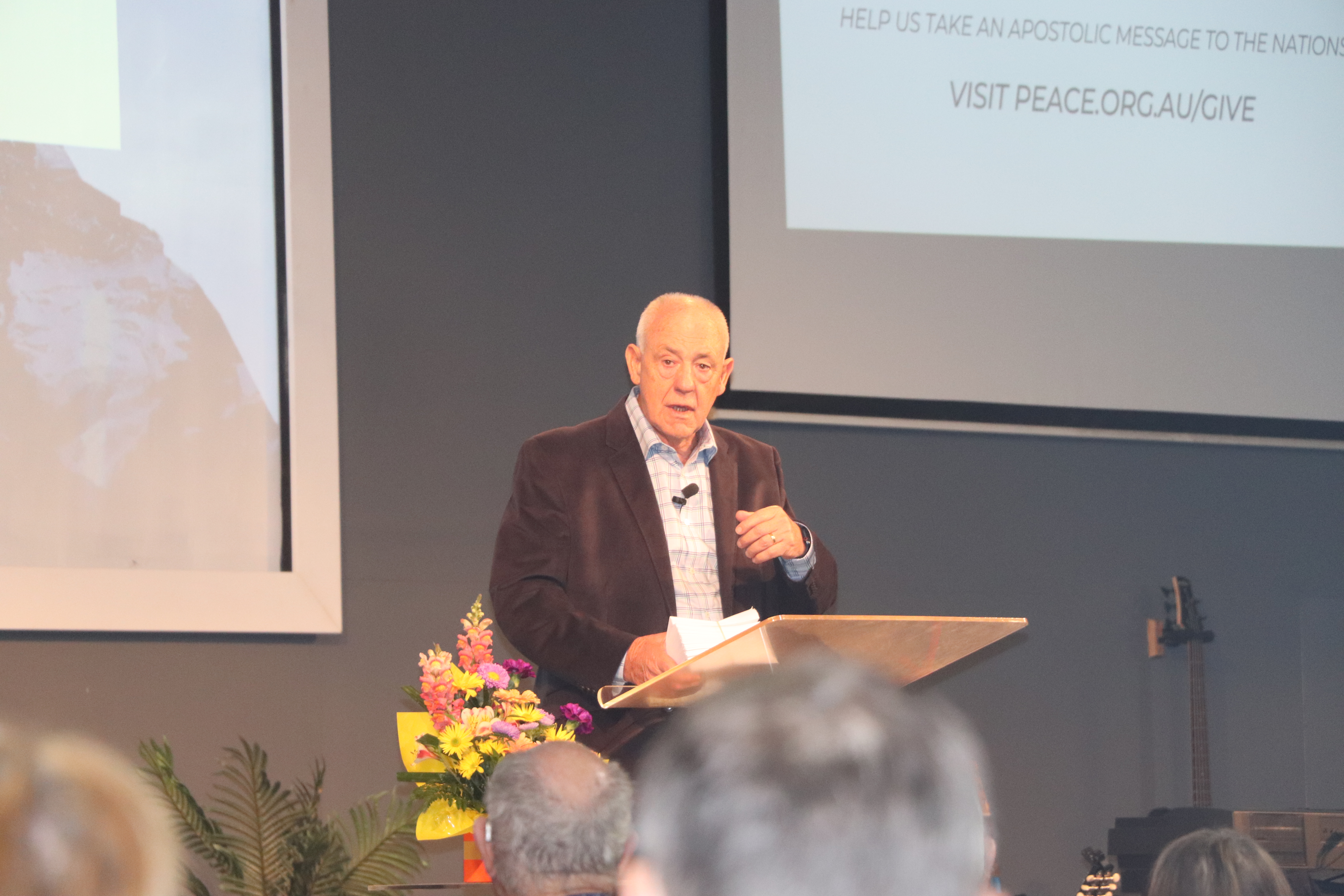
Becky Dvorak: Prayer for the Baptism in the Holy Spirit

I have been a witness to a mighty move of the Spirit moving throughout the entire earth. It is a wave of the Baptism of the Holy Spirit. The altars have been filled with people asking and receiving this empowerment of Holy Spirit. The Lord knows what is ahead of us and His desire is that we are ready for what is to come.

The Baptism of the Holy Spirit is for anyone who has received Jesus Christ as their Lord and Savior. This is what the apostle Peter preached immediately following the initial outpouring of the Holy Spirit at Pentecost.

Then Peter said to them, “Repent, and let every one of you be baptized in the name of Jesus Christ for the remission of sins; and you shall receive the gift of the Holy Spirit. For the promise is to you and to your children, and to all who are afar off, as many as the Lord our God will call.” Acts 2:38-39, NKJV. 

It is the Father who gives the Holy Spirit to those who ask of Him, and He always gives us good gifts.

Continue reading

Is This You?

A recent survey by the George Barna Group found that the church in the USA has been massively weakened by a heresy that is both appealing and anti-christian.

The heresy goes by the name of Moralistic Therapeutic Deism (MTD). That’s a mouthful so let’s break it down a little before examining the specifics.

  • Moralistic means the belief that being a “good” person is the most important virtue.
  • Therapeutic means that God wants me to be happy and feel good about my life
  • Deism is a philosophy that originated in the 18th Century and acknowledges there is a Creator, but He is distant from the world and not interested in our personal affairs.

We can see how this would be a common point of view amongst many people who believe that God wants us to be happy and to be good, and that He won’t judge us. In fact this is at many points the exact opposite of the gospel.

Continue reading

Keys To Healing

One of the confusing aspects of healing ministry is the reason why some people are not healed. After all, Jesus healed everyone who came to Him, so why does this not happen today? It is easy to be discouraged by these apparent failures when we should rejoice in the fact that many are healed.

We have been conditioned by our technological culture to believe that there should be techniques , procedures or methods for every problem. Sickness can be dealt with by a pill or a needle- just follow the directions on the bottle. Of course we ignore the side effects and the cases where this approach fails, because of our faith in medical science.

This is not to disparage medical science. Our lives are immeasurably better because of the insights and knowledge of the medical and scientific professions.

Christians need to take a different approach. If our faith in doctors and medicines is greater than our faith in God, then we have made medicine an idol.

My thinking on this subject has been provoked by a question somebody asked at a recent cell group study of Psalm 91. Here is Psalm 91 in the Passion Translation:

When you abide under the shadow of Shaddai,

you are hidden in the strength of God Most High.

2 He’s the hope that holds me and the stronghold to shelter me,

the only God for me, and my great confidence.

3 He will rescue you from every hidden trap of the enemy,

and he will protect you from false accusation and any deadly curse.

4 His massive arms are wrapped around you, protecting you.

You can run under his covering of majesty and hide.

His arms of faithfulness are a shield keeping you from harm.

5 You will never worry about an attack of demonic forces at night

nor have to fear a spirit of darkness coming against you.

6 Don’t fear a thing!

Whether by night or by day, demonic danger will not trouble you,

nor will the powers of evil be launched against you.

7 Even in a time of disaster, with thousands and thousands being killed,

you will remain unscathed and unharmed.

8 You will be a spectator as the wicked perish in judgement,

for they will be paid back for what they have done!

9–10 When we live our lives within the shadow of God Most High,

our secret hiding place, we will always be shielded from harm.

How then could evil prevail against us or disease infect us?

11 God sends angels with special orders to protect you wherever you go,

defending you from all harm.

12 If you walk into a trap, they’ll be there for you

and keep you from stumbling.

13 You’ll even walk unharmed among the fiercest powers of darkness,

trampling every one of them beneath your feet!

14 For here is what the Lord has spoken to me:

“Because you loved me, delighted in me, and have been loyal to my name,

I will greatly protect you.

15 I will answer your cry for help every time you pray,

and you will feel my presence

in your time of trouble.

I will deliver you and bring you honour.

16 I will satisfy you with a full life and with all that I do for you.

For you will enjoy the fullness of my salvation!”

The question was this: are these promises absolute or not? We talked for some time about all the reasons why people do not get healed and we made excuses for God.

When we see texts like this which are absolute promises of peace, healing and protection, we have to either compromise the text (“God didn’t really mean this”) or explain away the reasons why it doesn’t apply in a particular situation.

At the heart of the issue, we need to move our thinking away from a mechanical or technological mode (do this and that will happen) to a relational mode in which we understand that God is drawing us deeper into Him, and He will use physical, emotional and spiritual healing as part of a process.

Here are three important keys to healing:

1. Promise

All through the Bible we see promises about protection, healing, provision and so on. Sometimes these promises are very clear, and other times we can infer them from the narratives.

What we often overlook is that the promises come with conditions, “If you do this, I will do that.” In our eagerness to seize on isolated texts that seem to guarantee some benefit, we often fail to look back at the conditions that are set out. In other words, we have to do our part.

Psalm 91 offers us all kinds of wonderful promises, including the promise that even if thousands die around us we will not be harmed, and that no infection can touch us.

But look at the first two verses:

When you abide under the shadow of Shaddai,

you are hidden in the strength of God Most High.

He’s the hope that holds me and the stronghold to shelter me,

the only God for me, and my great confidence.

There is the condition. We have to make God our refuge. When we turn to Him, rely on Him, trust Him for safety, then we can receive the promises.

When you are sick, where do you first turn to? Is it call the doctor, rush to the Emergency Department? Or do you turn to the Lord?

When you are feeling overwhelmed by life, do you trust alcohol or drugs ? Or is the Lord your refuge at that time?

To receive the promises of Psalm 91, we must make the Lord our sanctuary.

2. Power

Many of us have limited levels of faith. We believe that God can do some things but not others. We may think He can heal a cold but not cancer. Not that we say that of course.

We may believe that God will heal some people but not others. Or that healing and miracles happened in a fairy tale era called “Bible times.”

God has the power to heal today. Sickness was never a part of God’s plan for the world. It is caused by the general corruption of sin, but this does not mean God is unable to heal.

God is able and willing to heal. Faith means putting our trust in this fact.

3. Partnership

We need to understand that God works out His purposes In us in co-operation with us. We might know the promises of God and believe that He can heal but still fail to receive healing.

There are times when we might receive a sudden or miraculous healing, but often the Lord is asking us to do something as well. For example, when I was praying about my chronic issues with high blood pressure, I came under a strong conviction that I must lose weight. In other words, God is promising healing for me, but He wants me to take responsibility for my lifestyle .

Part of our quest for healing, particularly for chronic conditions is that we may need to do something that contributes to our continuing health.

We should not be surprised by this when we consider how often Jesus asked people to do something such as wash at a pool or go to the priests as a part of their healing process.

Notice that for each person there may be a different requirement. For me it is weight loss. For another person it might be that they have to forgive someone, give up drinking or something else. The point is that we must listen to the Holy Spirit to discern if there are things He is asking us to do in their healing journey.

It is important to see that healing (or good health) is not an end in itself. God pours out blessings upon us to encourage us to go deeper with Him. His goal is always relationship with us, and healing may be a by-product of that.

To live in the shadow of the Most High means that we live every day in close contact with Him. As we learn to do that those promises pf Psalm 91, including health and protection, will flow in us and through us to others.

The Slow Strangulation of Freedom in Europe

A respected Finnish MP faces prison for tweeting Bible verses:

From mychristiandaily.com

Finnish Christian MP Could Face Prison Sentence For Tweeting Bible Verse


David Rogers | Staff

The Finnish Prosecutor General has brought three criminal charges against Finnish Member of Parliament, Päivi Räsänen.

Imprisonment for posting a Bible tweet is now a very real possibility in Finland. The Finnish Prosecutor General has brought three criminal charges against Finnish Member of Parliament, Päivi Räsänen.

According to ADF International, the former Minister of the Interior now faces two years of imprisonment for each alleged crime. The medical doctor, mother of five, and grandmother of six is ​​accused of having engaged in “hate speech” for publicly voicing her opinion on marriage and human sexuality in a 2004 pamphlet, for comments made on a 2018 TV show and, most recently, a tweet directed at her church leadership.

“I cannot accept that voicing my religious beliefs could mean imprisonment. I do not consider myself guilty of threatening, slandering or insulting anyone. My statements were all based on the Bible’s teachings on marriage and sexuality,” said Päivi Räsänen. “I will defend my right to confess my faith, so that no one else would be deprived of their right to freedom of religion and speech. I hold on to the view that my expressions are legal and they should not be censored. I will not back down from my views. I will not be intimidated into hiding my faith. The more Christians keep silent on controversial themes, the narrower the space for freedom of speech gets.“


Criminally charged for voicing deeply held beliefs 

Police investigations against Räsänen started in June 2019. As an active member of the Finnish Lutheran church, she addressed the leadership of her church and questioned its official sponsorship of the LGBT event ‘Pride 2019’, accompanied by an image of a bible text. Räsänen has already attended several lengthy police interviews about her views and had to wait over a year for the General Prosecutor to decide whether to continue with the prosecution. That decision has now been made and ADF International will continue supporting Räsänen’s defense and the right for everyone to freely share their beliefs.

“Freedom of speech is one of the cornerstones of democracy. The Finnish Prosecutor General’s decision to bring these charges against Dr. Räsänen creates a culture of fear and censorship. It is sobering that such cases are becoming all too common throughout Europe. If committed civil servants like Päivi Räsänen are criminally charged for voicing their deeply held beliefs, it creates a chilling effect for everyone’s right to speak freely,” said Paul Coleman, Executive Director of ADF International and author of Censored: How European Hate Speech Laws are Threatening Freedom of Speech.

Räsänen has served as a Finnish Member of Parliament since 1995, was chair of the Christian Democrats from 2004-2015, and from 2011-2015 she was the Minister of the Interior, during which she held responsibility for church affairs in Finland.

Ann Voskamp: Work, Worship, Dreams, Reality

Ann Voskamp writes about work and worship.

He was 22 and I was 21 when we bought the farm. It was April 26th — 25 years ago this week.

When one of the travelling feed salesman pulled into the farmyard that first spring, he rolled down his pick-up truck window, and hollered to the Farmer: “Hey, your dad around?”“How someone sees you doesn’t get to change how you see your dream.”

“I’m sure he is — over at his farm,” the Farmer grinned and it took that sales guy more than a beat or two to realize that the baby-faced boy, not looking a day over 16, was the man of this land, trying to make a go of this dirt on his own. How someone sees you doesn’t get to change how you see your dream.

We worked 18 hours day and scrounged to buy flats of Kraft Dinner when it was on sale and I picked rocks with a baby strapped on my back and on our second wedding anniversary we got out of the barn in time to see the sunset across the fields and I told the Farmer that’s all I’d ever need: If we walked into the barn before sun-up, if, now and then, we could finish up evening chores and walk out of the barn before sun down.

This is the part of the story where the hustlers tell you that this is the dream that hard work built — but this is not that story, because this world doesn’t work like that.

Read the rest here

Your Brain Can Change Its Addictions

Great article at faithgateway.com about addiction and how our brains rewire themselves.

Your Brain on Porn

Michael John Cusick

Michael John Cusick2 days ago

Like sand on a beach, the brain bears the footprints of the decisions we have made, the skills we have learned

—Sharon Begley, Newsweek Science Editor1

Restart and reboot yourself. You’re free to go.

—U2, “Unknown Caller”2

“I know it’s not really true,” said Manny, “but it seems as if my brain has been conditioned by porn. I’ve tried everything and nothing helps.”

“Why do you say it’s not really true?” I asked.

“It’s like saying, ‘It’s not really my fault,’” he answered. “I can’t blame anyone or anything else for my problem. I’m supposed to trust God, right?”

“What if your brain really is conditioned to need porn?” I asked. “And what if acknowledging that meant that you were actually exercising faith?”

“Well, that would be pretty cool,” he said, chuckling. “I wouldn’t feel like such an absolute loser.”

My conversation with Manny is not unlike talks I’ve had with many men who have sincerely pursued recovering from porn addiction but who have not yet realized that porn physically changes the brain. Without understanding porn’s impact on the brain, too many men either quit trying to change or carry unnecessary guilt and shame when their spiritual zeal and willpower aren’t enough.

Any discussion about compulsive use of pornography is incomplete without understanding these physical changes. God created human beings in physical bodies, and David wrote of his own creation in the womb that he was “fearfully and wonderfully made” (Psalms 139:14). So are we. Defining ourselves and our problems in only spiritual terms not only is unbiblical but also hinders our recovery.

In the last decade, the field of neuroscience has exploded our understanding of the human brain. Recent discoveries have profound implications on treating various addictions and psychological disorders, and pursuing physical and emotional well-being. The consistent theme is that contrary to conventional wisdom, our brains are highly changeable.

When you fly on a major airline, your journey begins with a preflight announcement, which includes a review of the emergency procedure card in the back pocket in the seat in front of you. That card gives you important instructions about how to escape to safety in the event of emergency. You aren’t asked to master the finer details of airplane safety; you’re given basic instructions that could save your life if something goes wrong. My goal in this chapter is to give you the back-pocket version of how porn affects your brain, and how you can use this information to break free from porn’s grip on your brain.

Back in the day, a popular public service announcement on television touted the dangers of drug use. “This is drugs,” a man began, as the screen showed a sizzling skillet. “This is your brain on drugs,” the voice-over continued, as an egg is cracked into the hot skillet and is instantly fried. “Any questions?” the PSA concludes.3 Its meaning is clear. Behavioral addictions, like porn, affect the brain just like drugs—in all major respects.4

*

How To Rewire Your Brain

One of the most profound discoveries in understanding the brain involves the concept of neuroplasticity. This is the idea that our brain changes as the result of experience. Porn changes the brain in an undesirable way. The man who doesn’t watch porn, or is not yet addicted, has yet to develop sensitized “weed-whacked” pathways. But the porn neuropathways of a man whose brain is addicted are weed-whacked and trampled down so that they have become the path of least resistance. But your brain can be changed in a positive and healthy direction. Rewiring your brain allows it to unlearn the addictive patterns and relearn impulse control. This occurs as the addictive “gotta have it” pathways are weakened and the “think about it” pathways are strengthened. Here’s how you can begin rewiring your brain.

Practice Intentional Thinking

What you think about is ultimately what you become. What we once called “the power of positive thinking” is increasingly backed by scientific evidence. The more attention your brain pays to a given input, the stronger and more elaborately it will be wired and retained in the brain.5 When we give our attention and focus to good things, like peace, joy, and self-control, our brains rewire themselves in a way that allows us to experience those good things. Wouldn’t it make sense, then, to be intentional about what we give ourselves to?

With this in mind, consider the words of the apostle Paul: “Finally, brothers and sisters, whatever is true, whatever is noble, whatever is right, whatever is pure, whatever is lovely, whatever is admirable—if anything is excellent or praiseworthy—think about such things” (Philippians 4:8 UPDATED NIV).

When Scripture exhorts us to set our minds on good things, it concerns more than just the well-being of our souls. It also affects the well-being of our brains. Our neural circuitry forms itself around whatever we give our attention and focus to. That’s why Paul connected our transformation with the renewing of our minds: “Do not conform to the pattern of this world, but be transformed by the renewing of your mind” (Romans 12:2).

In the next chapter I discuss how you can practice focusing on what is pure, lovely, and admirable, in a way that rewires your brain to its original setting before porn—but better.

Pursue Alternate Passions

The famous philosopher, novelist, and poet Johann Wolfgang von Goethe was right. We are shaped and fashioned by what we love. Certainly this applies to our brains. The life focus of a man struggling with porn leads to tunnel vision. When a man views porn on a regular basis, his passions are held captive, and he forfeits the ability to direct his life in the way he would otherwise choose.

Many men realize the importance of pursuing their passions. What is life-giving to your soul? What relationships have been affected by your use of porn? What enjoyable activities have stopped? Of all possible alternative passions, exercise is the most crucial. Studies show that exercise increases dopamine receptors, therefore helping to rewire the brain.6 Another study showed that the number one behavior associated with successful substance abuse recovery was exercise.7 If you have not been physically active in the past with some form of exercise, it’s important that you begin. Don’t assume you have to join a health club or sign up for the Ironman Triathlon. You can walk, hike, or ride a bike. Take the stairs instead of the elevator.

Recent attention has been given to children and adults who suffer from NDD, or nature deficit disorder, as a result of spending too much time online or engaged in electronic media. Avoid this disorder by interacting with the outdoors in the sunshine, fresh air, and natural beauty of God’s creation. Get out and move! Pursuing alternative passions expands your horizons and rewires your brain at the same time.

Employ the Power of Repetition

Studies show that repeated behaviors, over time, cause structural changes in the brain. These changes can be negative—causing compulsion and addiction. Or they can be positive—rewiring the brain so the stimuli of porn and lust are no longer a reflexive reaction. Repetition helps lock behaviors in the brain in the same way an athlete develops muscle memory. Or consider a concert pianist. When performing, he never thinks, Now I will reach my left hand exactly seven inches to the right while simultaneously moving my right hand two inches to the left. Instead, the pianist’s brain has learned to bypass the conscious cognitive step and follow a learned response.

So be encouraged. Your struggle with porn is a learned response, in many ways, just like the skills of a pianist or athlete. Your brain can unlearn, and it can change.8

Watch the video

1. Sharon Begley, Train Your Mind, Change Your Brain: How a New Science Reveals Our Extraordinary Potential to Transform Ourselves (New York: Ballantine Books, 2007), 9.
2. U2, Brian Eno, and Daniel Lanois, “Unknown Caller,” on U2’s No Line on the Horizon (album), produced by Brian Eno, Daniel Lanois, and Steve Lillywhite, 2009.
3. Partnership for a Drug-Free America, “Brain on Drugs” (public service announcement), viewable on YouTube at http://www.youtube.com/watch?v=dk9XY8Nrs0A&feature=related.
4. American Society of Addiction Medicine, Public Policy Statement, Definition of Addiction, August 15, 2011, http://www.asam.org/About.html.
5. John Medina, Brain Rules: 12 Principles for Surviving and Thriving at Work, Home, and School (Seattle: Pear Press, 2008).
6. Marta G. Vucckovic et al., “Exercise elevates dopamine D2 receptor in a mouse model of Parkinson’s disease in vivo imaging with (18F) fallypride (2010),” Movement Disorders, vol. 25, issue 16, 2777–84, 15 December 2010.
7. Chen Hsiun lng, et al., “Long term compulsive exercise reduces the rewarding efficacy of 3,4-methylenedioxymethamphetamine,” Behav Brain Res., 2008 Feb 11;187(1):185–9. Epub 2007 Sep 16.
8. I am grateful to Gary Wilson for allowing me to liberally draw from his collected research and simplified scientific explanations. His website http://yourbrainonporn.com is an invaluable resource.

Excerpted with permission from Surfing for God: Discovering the Divine Desire Beneath Sexual Struggle by Michael John Cusick, copyright Michael John Cusick, 2012.

Voices told abuse victim to ram her car into a tree

Great testimony from God Reports

Voices told abuse victim to ram her car into a tree

voices

 
Voices in her head told her to commit suicide.

Lorena Saylor would get in her car and wind up at some random place, having no idea how she got there.

Depression had taken over her life.

“I didn’t want to talk. I didn’t want to go outside. I didn’t want to get dressed. I just basically wanted to be alone,” Lorena says on a CBN video. “There was times I wanted to commit suicide.”

Lorena’s problems started with sexual abuse in her childhood home in Kentucky. Although she was the victim, she was punished. “I was the one that got spanked for it,” she says.

Migraines set in at the same time. She couldn’t concentrate in school and was diagnosed with dyslexia. She also suffered from anxiety and low self-esteem.

Lorena married at age 25, but her problems persisted. Her husband was enlisted in the Air Force and would frequently be sent for lengthy deployments, leaving her and the two children alone for long periods of time.

“This voice would say, ‘Ram your car into this tree. Your family would be so much better off if you’re just gone.’”

She was raised in church, but “the back-stabbing of people talking about people, just the things I had heard and seen within the church, I didn’t want anything to do with it,” she says.

At age 33, Lorena suffered a back and hip injury at work. Unfortunately, her prescription pain medication turned into an addiction. “My body just craved more and more,” she says. “I become a functioning addict.”

She felt unloved. She wanted to be alone but despaired of the loneliness. Whenever she drove, she got lost in her thoughts and direction. The voices would tell her to commit suicide.

“I wanted to die,” she says. “Many times I put pills in my hands ready to take them. This voice would say, ‘Just take it. Your family would be so much better off.’”

But another voice would counter: “Who will love your children like you? Who will raise your children the way you would?”

In 2004, her husband was deployed to North Dakota for five years, while Lorena and their children stayed in North Carolina. She hit bottom.

“I was on 10 medications, and my husband was drinking. I was ready for divorce. My family was falling apart,” Lorena says. “I didn’t know where to turn, I didn’t know what to do. All I knew was. I was in this deep dark place.”

Then something remarkable happened. A co-worker invited her to church, and she accepted.

The praise and worship music moved her deeply.

“I feel the presence of the Lord. I couldn’t stop crying,” she says. “After service was over and everybody was leaving, I found myself in the foyer. I’d hit a point where I was just done. I was finished, and this lady that worked with me had invited me to church and she was standing there with me and she says, ‘You want to go pray?’ and I said, ‘Yes.’

“That day I gave my life to Jesus.”

Then an amazing transformation began. “Something in that moment had changed tremendously inside me,” she remembers. “All my life, I knew of Him, but I didn’t know Him. Knowing Him it became a different dynamic in my life.”

After a year of attending church, she was delivered from the addiction, the depression, the low self-esteem and the pain.

“He didn’t only heal me,” Lorena says. “He delivered me of everything.”

She didn’t even realize until five days later that she hadn’t popped a pill. The migraines vanished, as did the back pain.

“In the days that followed, there was something inside that was like a thirst and a hunger that I’d, never experienced before,” she says. “I said, ‘Holy Spirit, teach me to read.’”

She began to consume God’s word voraciously.

Lorena’s husband, Raymond, and their children also gave their lives to Christ in 2015.

The couple has preached the gospel in Tanzania with Outside the Walls International Ministries.

“I just had to reach out to Him and He was there with open arms,” Lorena says. “Jesus loves you and He has a purpose. He says, ‘I know the plan that I have for you and that it is good.’”

If you want to know more about a personal relationship with God, go here

Ben Lahood studies at the Lighthouse Christian Academy in Santa Monica.

Sex, Consent and Personal Responsibility

Sex, Consent and Personal Responsibility

A long time ago, in what now seems like a galaxy far away, the general consensus was that the only appropriate context for sexual activity was within marriage defined as one man and one woman committing themselves to each other for life. This viewpoint was derived from the Bible and 2000 years of christian tradition.

Marriage provided a safe place for people who loved each other to engage in sex acts in an atmosphere of mutual respect. “Consent” could be negotiated by partners who knew each other intimately and were committed to pleasing one another. Marriage also provided a safe place for children to be raised, which was important because in those days sex and reproduction were hard to separate.

The system was not perfect as people were involved. Rape was an uncommon but real crime and generally despised by the public. Domestic violence was a reality that marred some marriages. People were unfaithful at times, and divorce on these grounds occurred.

Then in the 1960’s came the birth control pill and the Sexual Revolution. Sexual activity was divorced from childbirth and also from marriage. More diverse forms of sexual expression came to be tolerated and “no fault” divorce became all the rage, leading to much higher rates of marriage breakdown.

Sixty years on, we have a very weak institution of marriage being constantly undermined to accommodate same sex marriage and threesomes.

More worrying, but entirely predictable, we have people opining about the issue of consent in sexual encounters. Self-styled “experts” claim that consent must be enthusiastic at every stage of the process. If you so much as look at a person without this consent you can be accused of harassment or assault.

The NSW Police Commissioner suggested a phone app whereby people can register their agreement before hand, only to be shot down by the feminists who claim it was just a patriarchal ploy to continue the repression of women. What happens if “Yes” changes to “No” part way? If you are playing with your phone prior to sex, you might as well just cut all the risk and go straight to the porn sites.

Men have their reputations trashed by people alleging unwanted sexual approaches that took place decades before. Even the death of a complainant years ago is not enough to stop the outrage and the name calling.

We don’t need consent apps and education in primary schools. We don’t need culture change in Parliament or diversity training in corporations.

Just one simple rule will fix it: if you are not married to a person you don’t have sex with them, kiss them, touch them or do anything remotely sexual with them.

An additional rule would be: you love your spouse with all your body, mind and soul until death parts you. Those words you spoke at the altar are supposed to be a binding life-long promise.

If society honoured marriage, practised the “sanctity” of marriage and taught children and youth to do likewise, many of the scandals and problems that keep cropping up would be done away with.

This is another area where God’s intention for people works out a lot better than the wisdom of mere humans.

Tithing When Times Are Tough

  • From “God Reports”, a great testimony of God’s provision in hard times. This testimony could be repeated by dozens of people that I know.

He kept tithing when times were tough; God opened a window of blessing

By Ryan Zepeda —

When he broke his walkie-talkie as a child, he was able to fix it himself. But when his finances were broken, God fixed it.

“I broke the walkie-talkie on my birthday, and I was like, ‘Ah, man, I can’t tell Mom I broke it,’” Dennis Dixon says on a CBN video. “So I was like, ‘I’m gonna try to fix it.’ And I didn’t know how to fix it. But I opened it up and I saw the inside and it just caught me. And I’ve always been interested with electronics since then.”

Being adept with electronics came in handy. First, he repaired some friends’ devices, and they told others. At the encouragement of his father, he placed an ad as an adolescent, and the calls for help flooded in.

As money came in for his services, his father encouraged Dennis to honor God with the tithe.

Tithing is you trusting God with what He’s given you and honoring Him, you know, 10% of the 100% that He gives us every day,” says Dennis. “Setting aside money for God, for His kingdom and for His purpose and learning how to trust God with everything you have including finances.”

He got a work at a large electronic store, but the company went bankrupt. Dennis lost his job at the same time his mother was laid off. Then they lost their car and their house.

How could he, under duress, stay faithful with his tithe?

“I realized that faith wasn’t just a feeling, but it was a reaction. Like how am I gonna choose to respond to this? Am I gonna panic or am I gonna continue to trust God?” he says. “And I chose to continue to trust God. I chose to continue tithing and praying. Believing that He was gonna take care of us. And I would actually go above and give offerings, just believing for God to do a miracle. I wasn’t gonna allow my circumstances to destroy my faith.”

With no work available, Dennis felt God stirring him to do something outside his comfort zone — start his own electronics fix-it store. He could think of many reasons not to risk such a venture. It wasn’t the right time, he lacked capital, etc.

But when he saw a vacant storefront, God prompted him to inquire about leasing.

Learning a little about his dreams and abilities, the owner offered him a few months of free rent. I Will Fix Your Phone opened in an Atlanta suburb a few years ago.

Through hard work, diligence – and giving back to God – a window of blessing was opened from heaven. His family got the car back, the house back, and he now earns a six-figure income.

Bring the whole tithe into the storehouse, that there may be food in my house. “Test me in this,” says the Lord Almighty, “and see if I will not throw open the floodgates of heaven and pour out so much blessing that there will not be room enough to store it. (Malachi 3:10)

This is the only place in Scripture where God asks his children to test Him. When they follow His lead by offering the whole tithe to Him, God responds in ways that are often amazing.

“Since I’ve been tithing, I’ve just seen like a ridiculous favor that just doesn’t make sense. Like miracles would just happen,” Dennis says. “I would just see God provide in ways that I could–I know that in my wisdom or in my knowledge, I couldn’t have made it happen by myself. And it’s just favor. God restored everything we lost and then some, a hundredfold. Like I never would have thought that I’d end up here, running my own company, making six figures, every day it’s a blessing.”

Ryan Zepeda studies at the Lighthouse Christian Academy in Santa Monica.