Our local newspaper, The Courier, has started publishing articles from local pastors.
I was up for the first one of 2021, published today
Life Matters
Keith Bates
Congratulations! If you are reading this, you survived 2020!
While last year seemed for many people to have more challenges than most years, 2021 stands before us seemingly bearing many opportunities and possibilities.
Any New Year, but especially this time around, feels like an opportunity for a new start, a new beginning, a new chance to be the person we would like to be. It’s ridiculous to place so much value on what is just another date on the calendar, but we have this wired- in expectation that we can do so much better if we try a little harder.
This is the appeal of New Year’s Resolutions of course. We take the opportunity to make a new start at doing those things which we know we should be doing. That is why January is the busiest month for gym operators and February, not so much.
Did you make a Resolution this year? How is it working out for you? I find that the chocolate is still calling me from the fridge as much as it ever does.
So we want to be better people, in some way, and most of the time we find it’s too hard. We can’t do it ourselves because we are too trapped into old patterns of living.
In the Bible we read this interesting passage: “But to all who believed him (Jesus) and accepted him, he gave the right to become children of God. They are reborn—not with a physical birth resulting from human passion or plan, but a birth that comes from God.”
Being reborn sounds like the ultimate restart. You can get to do it all over and maybe not make so many mistakes this time around. Better still, the things we have done that separate us from God are swept away and we get a new start with Him.
Maybe this year’s resolution could be a prayer: “Lord I want to follow you. Please come into my heart and give me that new start.”
This is a very sad story about the ministry of a Great Apologist and Champion of the Christian faith. I am very saddened by these reports and reminded that we are all just one step from catastrophic sin.
As a young man with a passionate love for Jesus, many of my dearest family and friends asked me difficult questions about Christianity. Because of these conversations, I felt compelled to resolve existential questions. Perhaps my supposed faith in God was no more than an outdated fairytale? Due to these pressures, I constantly studied and discussed apologetics with mentors and friends.
I was excited when I had the opportunity to personally meet Ravi Zacharias at a Christmas dinner in high school. After all, his book Can Man Live Without God? had persuaded me that atheism was an untenable position. I subsequently wrote to Ravi for guidance while studying philosophy at Rhodes College and I visited his international ministry’s offices when I studied abroad at St. Catherine’s College, Oxford. Throughout ten years of campus ministry, including seven years serving students at Harvard University, I often pointed to Ravi Zacharias. As a globe-trotting intellectual who persuaded elite leaders to place their faith in Jesus, he was an inspiration.
When my family moved from Boston to Atlanta in 2013, I was thrilled to begin working at Ravi Zacharias International Ministries. Working closely with gifted apologists, I thanked God for the impact of Ravi’s growing ministry on audiences throughout the world. Serving together with so many passionate evangelists, I celebrated near-daily reports of those whose lives were being transformed by the gospel.
In August 2017, the ministry team at RZIM was informed that a greedy couple in Canada had identified Ravi as a target for extortion – and felt no scruples in falsely accusing Ravi. Taking advantage of his friendly, even naïve, approach to people, they had conspired together to defraud him of millions of dollars. Through prayer meetings and regular updates on these “Satanic attacks,” we managed to get through this trial with renewed unity and commitment to our mission.
As we sometimes heard troubling details that suggested Ravi was guilty of what he had been accused of, it was a relief to hear that his incriminating emails were taken out of context, that exculpatory material had been reviewed by the board, and that his courageous RICO lawsuit had put an end to their falsehoods with a non-disclosure agreement. We gave thanks that Ravi’s bold leadership had freed us to focus once more on the ministry God had called us to. Convinced of this narrative, I served at RZIM with great passion and joy, and then wept and grieved for weeks when Ravi’s health unexpectedly declined, followed by his death in May of 2020.
However, in September 2020, new evidence surfaced about Ravi’s relationship with Lori Anne Thompson. As I studied this information carefully – again and again and again – it slowly dawned on me that Ravi had personally and repeatedly lied to me and others in the ministry about his relationship with her. If true, it revealed that his RICO lawsuit was a malicious attempt to bully his victim into silence, and that Ravi had perjured himself in the effort.
More humbling and embarrassing was the realization that the public evidence was sufficient for me to have pieced together the truth in 2017. Anyone who has taken pride in their association with Ravi, and especially those who like me work at RZIM, will now experience that as a shame. I confess that my longing for the approval of others kept me from asking hard questions and accepting the painful truth much sooner. The way forward is to lament the betrayal, confess any complicity, receive the honor of being God’s beloved children, and resolve to live with a chastened faithfulness.
Just as I was awakening to an accurate understanding of the abuse uncovered in 2017, another bombshell came: credible, carefully researched reports appeared in Christianity Today and WORLD magazines, demonstrating that Ravi had committed criminal sexual abuse against at least three massage therapists in the mid-to-late-2000s. The reporting shared the testimony from multiple women, corroborated by their co-workers, from women who had nothing to gain from reliving these awful experiences and were not seeking to win monetary restitution through the courts. If true, these allegations suggest that Ravi’s abuse of Lori Anne Thompson wasn’t an isolated affair, but rather part of an ingrained pattern of life stretching over a decade or more. His constant traveling, especially overseas, now seemed ripe with foreboding possibilities.
One thing that has revolutionised my personal Quiet Times has been journalling my Scripture reading. I regularly post these on my blog and social media with the title of “Reflection on [Bible Passage]”
Writing down my thoughts slows me down. It forces me to read the Bible passage slowly and carefully, and to think about what God has said in His word.
In addition, a framework called SOAP – Scripture, Observation, Application, Prayer- helps me to listen to what God is saying to me now. This framework is a variant on the ancient practice of lectio divina.
Here is how I use journalling in my daily devotions.
Firstly it is important to settle my heart and to focus. I calm my thoughts and pray for the Holy Spirit to speak to me in the word.
Next, I read the passage, perhaps a chapter or half a chapter, to get a feel for what the passage is about. I used to let the Lectionary of the Uniting Church guide me in this, but in recent times I have been working through a book of the Bible.
Having read the passage, I look for a verse that is being highlighted by the Holy Spirit. Occasionally I will read the passage up to three times before I see the verse that is the one I need to think about.
I write the verse down under the heading “Scripture” then move on to “Observation”. Under this heading I summarise the passage so that I am understanding the verse in its context. Typically this section is about 2 to 4 paragraphs. I use a Study Bible in my devotions, so sometimes I might look at what the footnotes have to say.
Application is where I look at the Scripture verse and think about how to apply the verse. What is this verse saying to me today. How might I need to change my thinking or my actions in order to apply this verse?
Finally I pray about the verse, and anything else that God is showing me in this passage. I write down a short prayer of one or two sentences that summarises what I want to say to God about my reflection.
Our daily devotion time is meant to be rich as we encounter God in the Scriptures. Unfortunately, for many of us, it becomes a religious ritual in which we rush through a short passage, then a commentary such as Word For The Day, before a quick prayer and dashing out to work. Journalling invites us to slow down and meditate on God’s Word.
Gary de Mar writes at American Vision about the circular reasoning of “End Time Prophecy Prognosticators”
Like clockwork, when something bad happens in the world, Bible prophecy prognosticators start with their end-time claims. They are part of a “thought collective” where adherents share their beliefs in a closed system using the same language and shortcut responses to those who criticize their conclusions. When challenged with this question, “Where in the Bible does it say that?,” they avoid answering directly by offering a formula response that comes from the safety of the “thought collective” bubble.
It happens every time some new prophecy claim is made about current events and challenged. Here’s the latest since Joe Biden might be our nation’s next President:
It is amazing to see prophecy being fulfilled right before our eyes.
How many times have you read something like the above? How many generations of failed prophetic predictions do we have to endure before Christians say “enough”?
Then I saw this:
There are only four passages in the Bible that use the word “antichrist.” You won’t find the word “antichrist” in the book of Revelation. The fact surprises a lot of prophecy enthusiasts. Not one of these passages mentions anything about the antichrist ruling anything. Read the passages for yourself from John’s epistles that were written before the temple was destroyed in AD 70:
“Children, it is the last hour; and just as you heard that antichrist is coming, even now many antichrists have appeared; from this we know that it is the last hour” (1 John 2:18).
“Who is the liar but the one who denies that Jesus is the Christ? This is the antichrist, the one who denies the Father and the Son” (1 John 2:22)
“By this you know the Spirit of God: every spirit that confesses that Jesus Christ has come in the flesh is from God; and every spirit that does not confess Jesus is not from God; this is the spirit of the antichrist, of which you have heard that it is coming, and now it is already in the world” (1 John 4:2–3).
“For many deceivers have gone out into the world, those who do not acknowledge Jesus Christ as coming in the flesh. This is the deceiver and the antichrist” (2 John 7).
When I pointed out these biblical facts, I was dismissed with, “I respectfully disagree.” He didn’t tell me why he disagreed. It might be due to the fact that the passages are as clear as can be and do not fit today’s general understanding of the antichrist.
Notice that there were “now many antichrists” (1 John 2:18). “Now” refers to John’s day, a point made in again 1 John 4:3. In 1 John 2:22, we find, “Who is the liar but the one who denies that Jesus is the Christ? This is the antichrist, the one who denies the Father and the Son.” In 2 John 7, we find a definition that compliments what we read in 1 John 2:22: “For many deceivers have gone out into the world, those who do not acknowledge Jesus Christ as coming in the flesh. This is the deceiver and the antichrist.”
John’s definition of antichrist is exclusively theological. Nothing is said about a charismatic leader solving the Middle East conflict, promising to rid the world of terrorism, getting the Jewish nation and the Arab nations to sign a peace treaty that will pave the way for the long awaited Third Temple (of which the New Testament says nothing), a satanic superman, namely, “the most evil man that ever lived.”
John was describing antichrists (plural) in his day as evidence that “it is the last hour” (1 John 2:18). What did John mean by “the last hour”? It’s a reference to the prophecy Jesus made in the Olivet Discourse (Matt. 24; Mark 13; Luke 21) and other places (Luke 11:46–52; 13:34–35; 17:22–37; 19:41–44) that a prophetic event was going to take place before their generation passed away. When John wrote his first epistle, the destruction of Jerusalem in AD 70 was near, possibly only a few years away. “Last hour” is not being used to describe thousands of years of history.
Who were these antichrists? They were Jews who understood the claimed relationship between Jesus and His Father. “I and the Father are one,” Jesus said (John 10:30). The Jews objected “and took up stones again to stone Him” (10:31).
Jesus answered them, “I showed you many good works from the Father; for which of them are you stoning Me?” The Jews answered Him, “For a good work we do not stone You, but for blasphemy; and because You, being a man, make Yourself out to be God.” (10:32–33).
The unbelieving Jews understood the claim that Jesus was the Christ, that is, the promised Messiah. In John’s day, unbelieving Jews were the antichrists because they denied that Jesus was God incarnate (John 1:1, 14) and that He was the promised Messiah. This is why Jesus was accused of blasphemy and the Jewish religious and civil rulers wanted to kill Him.
“If I glorify Myself, My glory is nothing; it is My Father who glorifies Me, of whom you say, ‘He is our God’; and you have not come to know Him, but I know Him; and if I say that I do not know Him, I will be a liar like you, but I do know Him and keep His word. “Your father Abraham rejoiced to see My day, and he saw it and was glad.” So the Jews said to Him, “You are not yet fifty years old, and have You seen Abraham?” Jesus said to them, “Truly, truly, I say to you, before Abraham was born, I am.” Therefore they picked up stones to throw at Him, but Jesus hid Himself and went out of the temple (John 8:55–59).
John described these unbelieving Jews as a “synagogue of Satan” (Rev. 2:9; 3:9), a type of “thought collective” who denied the reality of God’s revealed Word and instead adopted a type of anti-Messianic group think.
While tens of thousands of Jews embraced Jesus as the promised Messiah (read the book of Acts), many Jews rejected Him. They held on to the tradition of the elders and chafed under the claim that the old covenant was temporary and was in the process of passing away (Heb. 8:13).
After answering some of the responses about the antichrists and how those defining the term were not following the biblical definition, the topic of the great tribulation came up. It is during this supposed future event that the antichrist is said to make his appearance. John does not say anything about this claim. Neither does Jesus in Matthew 24:21.
I responded with the following:
The great tribulation is a past event that took place before the generation to whom Jesus spoke passed away. See my book Last Days Madness. John described himself as a “fellow-partaker in the tribulation” (Rev. 1:10).
What was the response of the person who posted the meme?: “I respectfully disagree.”
I responded with: “Disagreeing is not a refutation.” His answer is typical of a “thought collective” response in that it must stay within the narrow confines of the prophetic paradigm. Any attempt to question it must be rebuffed even if it goes against what is specifically stated in Scripture or what’s not stated.
One of the biggest fears that people have with journalling is that they might be deceived into believing something that is not from God, or worse still, led into some great sin through being deceived. This was addressed in the article mentioned above, “Journalling- Testing Your Thoughts.”
I was asking the Lord about this recently, and I want to share the answer I received.
I asked: How would you know if you are being directed by satan?”
The answer:
The problem with all meditation techniques is that they open you up to the spirit you are following. If it is me, the Holy Spirit, that is great, the way it should be! But if you are being led by satan, if there are demons in your spirit, then you will be open to hearing the voices of satan.
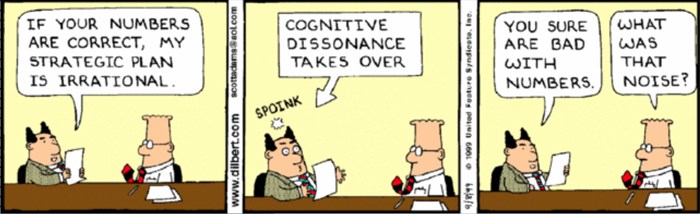
If you are deceived, but wanting to follow me, I will send you alarm bells, called cognitive dissonance. Cognitive dissonance happens when you realise that what you believe does not line up with reality.
That is why it is always essential to check your journal revelations with the Scriptures. It is also why knowledge of Scripture will never be supplanted by meditation and listening. If my words says one thing and your spirit hears another thing, you are being deceived.
Do not abandon journalling when this happens. Do not despise the gifts of my Spirit because of the possibility of being deceived.
I will always be speaking words of love to you. I will always lead you in the ways you should go.
Be still and know that I am God.
More on Cognitive Dissonance
We all have a complex set of beliefs that together can be called a world view, a lens through which we view the world and our place in it. When our world view conflicts with observed reality we have to adapt to that situation by either modifying our world view or ignoring the conflict.
When we come to know Jesus, the Holy Spirit starts dismantling our world view and our resultant behaviours to ensure that our lives glorify God and reflect the person of Jesus Christ. This is a life long process, sometimes called “sanctification” (becoming holy).
If we have a sin that we are comfortable with, the Holy Spirit might start convicting us of this. To use a trivial example, suppose it is swearing. Then we will suddenly find we are finding verses in the Bible about the words we speak and so on. Perhaps friends will say things, or we will feel bad when we say certain words. Eventually we find that our behaviour is changing to reflect God’s holiness.
In journalling, it is possible that we might receive a “word” that is not from God. In that case, God sends alarm bells of cognitive dissonance to warn us that this is not from Him. We find that Scriptures contradict that thing, people say things in passing, or things happen that contradict what we thought we heard from God.
When that happens, the best thing is to lay it all before the Lord, and ask Him to show you where you may have gone wrong.
He loves you and will correct you when you inadvertently go astray.
In the previous article I talked about using the process of Journalling to develop our ability to listen to the Holy Spirit.
It is important to test every thought and revelation against Scripture so that we understand whether we are just making stuff up or whether we really are hearing the Holy Spirit. When we come to Jesus and give our lives to Him, we receive the Holy Spirit inside us. We all have the capability to hear God. We also have the ability to deceive ourselves into believing that our own ideas are words from the Lord.
The answer to this conundrum is to test every revelation against God’s word. In 1 Thessalonians 5:19-21 Paul tells us:
Do not stifle the Holy Spirit. Do not scoff at prophecies, but test everything that is said. Hold on to what is good.
The only true measure of what is consistent with God’s purpose is the Bible. Sometimes this is not a big issue. One time I felt that God was telling me to tell someone “God loves you.” This is a very simple thing to do, and is so obviously in agreement with the Bible that it takes no effort at all to believe it is from God.
Conversely, if you are communing with God and you feel that He is saying to leave your spouse or start a sexual relationship with someone, this is so obviously contrary to Scripture that we can instantly dismiss it as coming from anywhere but God.
Sometimes, though, it isn’t that clear cut. We need to ask questions such as this:
What does the Bible teach about this?
Is this something Jesus would say, or the apostle Paul?
In what way is God being glorified through this?
This is what the Bible means by testing prophecy. We get our thoughts ordered and written down so we can see them clearly, and then we ask, “Is this really from God?”
Having done that, we can lay it all before the Lord again in prayer, asking Him to direct our thoughts and show us more of His love. In this sense, journalling is a circular process. We start with praying and listening, and end up in the same posture before the Lord.
The good news is that even when we get it wrong or make mistakes, the process leads us back to listening to the Holy Spirit and reading the Bible, which is never a bad thing.
‘Buffet-Style’ Christianity: 1 In 3 Evangelicals Believe Jesus Is Not God
Kevin SimingtonOctober 26, 2020
A recent study called “The American Worldview Inventory” has revealed that about a third of Americans who claim to be evangelicals do not believe that Jesus Christ is God. The study, conducted by Arizona Christian University, confirmed what has already become obvious over the last decade. Traditional Christian beliefs and values are on the decline – not just in society as a whole, but even with the Christian church itself.
The new ‘progressive’ version of Christianity that is beginning to gain traction is one of open-minded acceptance of many beliefs and practices that contradict the Bible. Progressive Christianity does not accept the Bible as God’s inerrant, authoritative Word. In particular, it tends to regard the accounts of Jesus Christ’s incarnation, miracles and resurrection as myths. This new ‘enlightened’ version of Christianity also embraces the LGBTQI movement and regards the Bible’s prohibitions against homosexuality and pre-marital sex as out-dated.
Of course, this type of liberal Christianity has existed for many years, particularly since the Age of Enlightenment in the 18th century. But it has gained significant momentum in recent decades. Today, gay pride flags adorn church buildings that were once bastions of orthodox beliefs. Christian publishing houses that once exclusively published orthodox evangelical works now promote a wide diversity of ‘progressive’ books that openly dispute the Bible’s authority and call for a re-imagining of what it means to be a Christian.
John Stonestreet, in his article, “Why Progressive Christianity is Another Gospel”, (in The Christian Post, Oct 19) says:
“Today, there is an effort to update Christianity, to adapt and re-form it according to the spirit of the age.”
I recently heard a podcast interview with Alisa Childers, a member of the Christian pop group, “Zoe Girl”. Alisa spoke about her shock when she learned that her church Pastor was a sceptic. At one point, he apparently confronted her with arguments against the Bible’s reliability and authority, as well as admitting that he doesn’t believe that Jesus rose from the dead or that his death on the cross purchased forgiveness for sins. Even more shocking to Alisa, was her Pastor’s admission that he wasn’t even sure that God existed and, if he did exist, his assertion that God certainly isn’t at all concerned with our sexual choices and behaviour.
This is typical of the new open-minded Progressive Christianity – a form of religion which is much more concerned with social justice and personal autonomy than with what is perceived as narrowly-defined, out-dated, restrictive dogma.
For years, I have been preaching about hearing the Holy Spirit. It seems very straight forward to me that God gives us the Holy Spirit in order to guide, direct and teach us, but often we fail to hear the voice of the Holy Spirit.
People are often afraid to minister in the power of the Holy Spirit out of fear that they will get it wrong. We fear being the person who delivers a false prophecy (which is not the same as being a false prophet) or messing up a word of knowledge. Some fear being led by an evil spirit rather than the Holy Spirit.
In John 10:27 we read “My sheep listen to my voice; I know them, and they follow me.” The New Testament teaches over and over that we are meant to hear the voice of God, Yet many christians do not.
Many years ago I learned the power of journalling as a means of strategically listening to the “still small voice” of the Holy Spirit. Journalling does three things for us:
It slows down our hyperactive inner voices, so that we can listen to the Voice
It focuses our attention
It separates the act of listening from the act of testing
Journalling slows down our hyperactive inner voices
We live in a crazy age of hyper information. We are always being bombarded with data from our phones, computers, televisions, bill boards etc. The data comes in so fast that our brains cannot process it properly.
I read once that in the seventeenth century the average person would absorb in their whole lives the amount of information in a daily metropolitan newspaper. In the last decade this has accelerated out of control, so that people now have trouble sleeping, high blood pressure and other symptoms of information overload.
The Holy Spirit is wanting to talk to us, but there is so much happening in our brains that we can’t hear Him.
Journalling focuses our attention By choosing to tune out all the other voices and focusing on the voice of the Holy Spirit we put the Holy Spirit at the front of our thinking. We make a choice to focus on the Holy Spirit in order to write down what we believe the Spirit is saying to us. It is like taking notes in a sermon or class, or even in a TV program- the very act of writing down what we are hearing closes out other thoughts.
Journalling separates the act of testing from the act of listening. One big fear that many christians have is that they might be listening to the devil or their own thoughts rather than God’s thoughts. So, for fear of being deceived, they avoid listening to God altogether.
We are told to “test the spirits” (1 John 4:1) and test every prophecy, holding onto what is good (1 Thessalonians 5:21).
When we journal we write down what we believe that God is saying, and then we test it. We measure it against Scripture; we see if it makes sense; we test if it is consistent with our knowledge of ourselves or other people. We can even give our writing to a trusted friend, and ask “Does this sound like God to you, or am I just making it up?”
How to Journal
Find a comfortable, quiet space where you know you won’t be interrupted. Have your Bible, your journal and a pen ready. You may need a notebook also.
Quieten your heart. Many of us live in a state of high stress. We are always thinking either about the things we just did, or the things we need to do when we finish up here. Part of releasing the stress is to steady our breathing so that our whole body is released from the fight or flight reaction.
One of my favourite activities is the Jesus Prayer. The prayer is very simple: Jesus Christ Son of God Have mercy on me A sinner.
As you say each line, breathe in or out Breathing in: Jesus Christ Breathing out: Son of God Breathing in: Have mercy on me Breathing out: A sinner
Repeat this several times until you are breathing slowly and your body is resting.
Open your journal, start a new page and write the date. Ask God a specific question, for example, How can I represent you in this conflict at work? Now listen and write down the thoughts that come into your mind, that sound like they are not your own thoughts. Don’t over-analyse, just get the thoughts onto paper.
By getting your thoughts onto paper, I don’t mean just words. Sometimes I use mind maps; other people who are more visual sketch, or even paint, their thoughts.
You may find your mind is going back to other topics. If this is the case, write them down in the other notebook. Usually it is our anxieties and worries about things that need to be done that get in the way of hearing the Holy Spirit. If you write these things down it is a promise to yourself that they will not get forgotten. If the thoughts persist, tell yourself you have written them down and you will get to them.
At the end of the process, read what you have written. Now is the time to ask questions like: Is this God or me? Does this agree with the teaching of the Bible? Would Jesus say this?
Spend time asking for wisdom and grace to discern what God would have you do next.
Like anything, this will seem difficult at first. If you persevere and make journalling a part of our spiritual discipline you will grow in your walk with the Lord. You will learn to hear the voice of the Holy Spirit, and not just when you are intentionally listening.