I recently came across the strange phrase “Ethical Porn” in the context of a parent wanting to find “good” pornography for their sons to look at.
The idea of ethical porn is that we can clean up the pornography industry by removing the nasty bits of the industry.
Porn has long been associated with people trafficking, slavery, non-consensual activities and a string of other nasty practices.
Many performers have to resort to drugs to cope with the dehumanising effects of the industry. Like any film productions, porn movies require multiple takes of specific actions in what is usually a more violent activity than most of us would consider to be normal sex. Often a day’s shooting leaves the actors in pain and looking for chemical relief.
Ethical porn involves people not being coerced into performing and removing the trafficking element. They supposedly give consent before and during the filming to demonstrate that everything is consensual.
This is just pure fantasy, as is everything around the consumption of porn.
Many movies already feature the performers discussing the scene before and their experience afterwards. In fact, it is part of their contract. Actors who refuse to do this, or do so in an honest way that suggests that they did not enjoy the session, don’t get paid. They run the risk of not being employed by the same production company or other companies in the industry.
Many actors claim that the actual contents of a movie might be entirely different to that which was discussed before. More men might be brought into the studio so that a straight sex scene becomes gang rape, or a “rough sex” video turns into bondage and sadism.
There can never be any such thing as “ethical porn” because pornography overturns God’s plan for human flourishing.
Sex was designed for intimacy within a marriage- one man and one woman voluntarily bound to one another for life.
Sex was designed for the production of babies and, within marriage, is a part of an ecosystem of healthy relationships providing nurture and love for children.
Sex was never meant to be a performance. When it is turned into entertainment for the pleasure of viewers, it strips the performers of all human dignity. It can never be anything but exploitative, because the audience is not seeing human beings, just body parts.
All porn is unethical.
We live in an age where people call good things bad and bad things good. We love things that appeal to our fleshly nature. When it is clear that there are potential dark sides to the things we enjoy, we tell ourselves we can clean it up and salve our consciences.
God has told us what He wants from us to promote human flourishing. Vicarious adultery is not part of that plan, even when we dress it in mice clothes like “ethical porn.”
When I left my denomination to plant an independent church, I was determined to have the minimum of committees and unnecessary unproductive meetings. My previous denomination had a beautiful structure of councils and committees at various levels of authority. Between the meetings of these groups and the communication of the decisions of these groups, there was a lot of work being done that contributes little to the core business of the church which is to make disciples and preach the Good News.
John Carver is an expert in the leadership of non-profit organisations and other community groups. He argues for a model of governance in which the Board (the generic term he uses for the leadership group of an organisation) sets the minimum boundaries for itself which will ensure that the interests of the “owners” are preserved while pursuing their vision. Everything else is delegated to the management via a CEO or equivalent.
Carver argues that most CEO’s will feel empowered by a Board that sets them free to be creative in the way that they pursue the mission of the organisation without having a Board breathing down their neck and second guessing their decisions.
In Carver’s model, which he calls Policy Governance, boards should concern themselves with 4 areas in the life of the organisation:
Ends Policies- that is what the organisation is here for . What is the vision of the organisation? What difference will we make in the world? In broad terms, how do we get there?
Executive Limitations Policies- what is not OK in pursuing our vision? Can the CEO break the law in order to make things happen? Can we run a sweat shop as a fund raiser?
Board- Management Policies- how do the board relate to management and vice versa?
Governance Process Policies- these are decisions about how the board goes about doing its own job.
These policies are written down and can be set out in a page or so of narrative.
In this approach, the Board goes about setting the “big picture” parameters of the organisation instead of getting bogged down in finances, HR policies, and all of the other things that get boards and committees bogged down. Everything else is passed down to management to control.
What I like about this book is that it pursues a minimalist vision for governance that can be adapted to a wide range of different groups. It is almost a universal model for governance. For churches, this fits in with the apostolic model that emphasises the gifting of pastors and other leaders, while allowing for oversight and correction where things go off track.
“Boards That Make A Difference” is well argued and is readable. The topic might seem dry and uninteresting, but to everyone who is involved in leading organisations, it will be inspiring.
Carver has also written a book about how to implement this Policy Governance model, “Reinventing Your Board.” I look forward to getting onto that and thinking about the organisations that I am involved with.
Finland Electricity Prices Drops to BELOW ZERO Due to Efficiency of Nuclear Power Plants
This is what common sense looks like.
Insider: Finland was dealing with an unusual problem on Wednesday: clean electricity that was so abundant it sent energy prices into the negative. While much of Europe was facing an energy crisis, the Nordic country reported that its spot energy prices dropped below zero before noon (Insider).
Marian L Tupy: Finnish electricity price drops BELOW ZERO after the latest nuclear reactor is switched on. That is what the world could have looked like if the greens did not stop humanity from expanding nuclear power. Remember: nuclear power = no CO2 emissions (Twitter)
#f6f6f6;color: #222222;font-family: sans-serif">Finnish Nuclear Plant Throttles Output After Electricity Prices “Become Too Cheap”
As we detailed in early May, the transition from testing to regular output last month saw Finland’s first nuclear power-plant drive electricity prices dramatically lower.
by Tyler Durden, Zero Hedge, May 25, 2023 – 02:45 AM
That was unacceptable and prompted the plant’s owner, Teollisuuden Voima (TVO) to significantly cut back its output…
“Electricity production must also be profitable for nuclear power plants, and when the price is particularly low, there may be situations where output is limited,” TVO communications manager, Johanna Aho, said.
According to Aho, cutting back on nuclear power production due to excessively low electricity prices is very rare, but not unheard of.
Janne Kauppi, an energy markets advisor at Finnish Energy, agreed with that sentiment.
“There haven’t been many situations where nuclear power output has been regulated specifically because of low prices,” Kauppi explained.
“When prices go negative on the electricity market, basically anyone who can adjust their production will do it, so that they don’t have to pay for their own production,” Kauppi noted.
The Finnish example is a testament to how nuclear can play a part in solving the current energy crisis, with consumers still paying sky-high fees for energy in many European countries.
However, the hypocrisy is of course that when power prices were extremely high in 2022, hurting consumers – it was all Russia’s fault; but now that prices are plummeting, operators can’t have that and withdraw supply to hurt consumers.
There have been many complaints lately about the way Google searches are far less informative than a decade ago. A number of new search engines have emerged to overcome this.
One of the best is Tusk which aims to stop censorship in search. It even has its own AI, Gippr, a throw back to Ronald Reagan.
I had a play with Gippr this morning , and had this amusing response to “What is the Uniting Church in Australia?
I have made Tusk my default search engine to see how it compares to Duck Duck Go
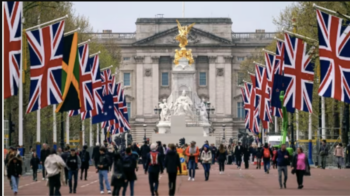
The coronation taking place in Westminster Abbey this Saturday is not just about the crowning of a new king.
If the service follows precedent, it will also be much focused on the King of Kings, the ruler of the universe.
This is symbolically reflected in the orb and scepter, part of the ceremonial regalia made of gold and decorated with precious stones, with the globe-like orb surmounted by the cross, representing Christ’s dominion over the world.
King Charles III will be handed a copy of the Bible as “the most valuable thing that this world affords” and will be anointed with oil from the Mount of Olives, where his grandmother Princess Alice is buried, and where Jesus sweated drops of blood as he agonized over his impending death for our sins.
Princess Alice of Greece, the late Duke of Edinburgh’s mother who became a nun in later life, was recognized as ‘Righteous Among the Nations’ for saving the lives of a Jewish family during World War II by hiding them from the Nazis.
Charles, meanwhile, has shown much compassion to Holocaust survivors, regularly inviting them to special teas. In fact, he has reached out a helping hand to many struggling people over the years with practical ventures like the Prince’s Trust, funding business ideas for those who might not otherwise find such support.
One beneficiary told the BBC how Charles had literally saved her life. When she was suicidal and in prison, she prayed to God and with the help she received from the Trust, was able to set up a thriving business.
Charles clearly has big shoes to fill, but it is hoped that the 74-year-old will gain a greater personal knowledge of the Lord who was the Rock of his mother’s record-breaking reign.
As someone has pointed out, it is too much to expect him to live up to his spiritual title of Defender of the Faith if he has not been truly born again of God’s Holy Spirit (see John 3:3), so we must obviously pray for his salvation – that he will hear the “still, small voice” of the One who created the beautiful environment about which he is so passionate. (See 1 Kings 19:12, Psalm 46:10)
The story is told of a British king of earlier times who visited a chapel in Edinburgh with his entourage. They duly began chattering among themselves, but were sternly rebuked by the preacher quoting the words of the prophet Habakkuk: “The Lord is in his holy temple; let all the earth be silent before him.” (Habakkuk 2:20)
I pray that, like Jesus, Charles too will become a servant king.
The Queen’s 70-year rule (1952-2022) mirrors the duration of Israel’s Babylonian exile and has seen the UK drift relentlessly away from the moral moorings of our Christian faith in spite of Her Majesty’s example. I pray that, as with Israel under Nehemiah, we will now recognize our folly in turning away from God’s commands and go back to the Bible.
Charles’ grandfather King George VI called the nation to prayer during the last war and God came to our rescue. Oh, that Charles would do the same! Queen Victoria (1837-1901) was also a dedicated Christian who is reported to have confessed to a chaplain that she would like to have witnessed the return of Jesus in her lifetime so she could place her crown at his feet!
Among the hymns likely to be sung in the Abbey is Jerusalem, which has become something of a national anthem here. William Blake’s words reflect a somewhat strange theology centered around the belief that the Messiah once visited these ‘sceptered isles’.
But if building Jerusalem in England’s ‘green and pleasant land’ means restoring the faith of our forefathers, I will be singing it heartily with the rest of them.
Beyond the pomp and circumstance, this great event is really all about Jesus. When he first came among us, the Wise Men asked: “Where is the one who has been born King of the Jews? We saw his star in the east and have come to worship him?” (Matthew 2:2) And when he was nailed to the cross, even his enemies unwittingly acknowledged that he was King of the Jews.
But he is also King of the Universe, the name above all names, “that at the name of Jesus every knee should bow, in heaven and on earth and under the earth, and every tongue confess that Jesus Christ is Lord, to the glory of God the Father.” (Philippians 2:9-11)
After children in the Congo have dug out the cobalt for the blessed batteries we’d hope the cars would be sustained as long as possible. Alas, apparently there is just one more design flaw on top of the low mileage, delays, expense, spontaneous fires, and the need for a whole new grid.
After a minor accident, no one quite knows how to assess the safety of the battery, so it’s easier to throw it away. That means more waste in the landfill and higher insurance premiums to cover the cost of writing off near new cars. Where are the Greens? If child slaves and emissions matter, isn’t it better to reduce consumption by saving your old car from landfill, especially if your new one might end up there as well? Reduce, reuse, recycle…
Meanwhile the UN is demanding Net Zero targets, which are not even theoretically possible, be achieved ten years sooner. Half the technologies we need are not even invented yet. Infinity-minus-ten is a number that won’t get you to work, but it powers whole careers at the UN.
By Nick Carey, Paul Lienert and Sarah Mcfarlane, Reuters
LONDON/DETROIT, March 20- For many electric vehicles, there is no way to repair or assess even slightly damaged battery packs after accidents, forcing insurance companies to write off cars with few miles – leading to higher premiums and undercutting gains from going electric.
And now those battery packs are piling up in scrapyards in some countries, a previously unreported and expensive gap in what was supposed to be a “circular economy.”
“We’re buying electric cars for sustainability reasons,” said Matthew Avery, research director at automotive risk intelligence company Thatcham Research. “But an EV isn’t very sustainable if you’ve got to throw the battery away after a minor collision.”
Amazing what uncertainty can do to the value of a good car:
Allianz [an insurer] has seen scratched battery packs where the cells inside are likely undamaged, but without diagnostic data it has to write off those vehicles. …
It already costs more to insure most EVs than traditional cars. According to online brokerage Policygenius, the average U.S. monthly EV insurance payment in 2023 is $206, 27% more than for a combustion-engine model.
The Reuters team found many low mileage EV’s at salvage yards in Europe:
At Synetiq, the UK’s largest salvage company, head of operations Michael Hill said over the last 12 months the number of EVs in the isolation bay – where they must be checked to avoid fire risk – at the firm’s Doncaster yard has soared, from perhaps a dozen every three days to up to 20 per day.
“We’ve seen a really big shift and it’s across all manufacturers,” Hill said.
The UK currently has no EV battery recycling facilities, so Synetiq has to remove the batteries from written-off cars and store them in containers. Hill estimated at least 95% of the cells in the hundreds of EV battery packs – and thousands of hybrid battery packs – Synetiq has stored at Doncaster are undamaged and should be reused.
It’s just another bump on the road to Renewable World that shows that no one really cares how “clean-n-green” anything is. Your emission of CO2 are irrelevant, it’s only the power, control and profits that matter.
From The Free Press, a top level study tells us what we knew- masks are useless for protecting against virus transmission.
So what do we have now?
Useless masks
Useless vaccines
Useless lockdowns
All for a useless virus which killed a very small number of humans. Future generations will be paying for this stupidity for at least 50 years in most countries.
Cashiers wear protective masks in a grocery store in New York City on April 2, 2020. (Stephanie Keith via Getty Images)
We now have the most authoritative estimate of the value provided by wearing masks during the pandemic: approximately zero. The most rigorous and extensive review of the scientific literature concludes that neither surgical masks nor N95 masks have been shown to make a difference in reducing the spread of Covid-19 and other respiratory illnesses.
This verdict ought to be the death knell for mask mandates, but that would require the Centers for Disease Control (CDC) and the rest of the public health establishment to forsake “the science”—and unfortunately, these leaders and their acolytes in the media seem as determined as ever to ignore actual science.
Before the pandemic, clinical trials repeatedly showed little or no benefit from wearing masks in preventing the spread of respiratory illnesses like flu and colds. That was why, in their pre-2020 plans for dealing with a viral pandemic, the World Health Organization, the CDC, and other national public health agencies did not recommend masking the public. But once Covid-19 arrived, magical thinking prevailed. Officials ignored the previous findings and plans, instead touting crude and easily debunked studies purporting to show that masks worked.
The gold standard for medical evidence is the randomized clinical trial, and the gold standard for analyzing this evidence is Cochrane (formerly the Cochrane Collaboration), the world’s largest and most respected organization for evaluating health interventions. Funded in part by the National Institutes of Health and other nations’ health agencies, it’s an international network of reviewers, based in London, that has partnerships with the WHO and Wikipedia. Medical journals have hailed it for being “the best single resource for methodologic research” and for being “recognized worldwide as the highest standard in evidence-based healthcare.”
It has published a new Cochrane review of the literature on masks, including trials during the Covid-19 pandemic in hospitals and in community settings. The trials compared outcomes of wearing surgical masks versus wearing no masks, and also wearing surgical masks versus N95 masks. The review, conducted by a dozen researchers from six countries, concludes that wearing any kind of face covering “probably makes little or no difference” in reducing the spread of respiratory illness.
It may seem intuitive that masks must do something. But even if they do trap droplets from coughs or sneezes (the reason that surgeons wear masks), they still allow tiny viruses to spread by aerosol even when worn correctly—and it’s unrealistic to expect most people to do so. While a mask may keep out some pathogens, its inner surface can also trap concentrations of pathogens that are then breathed back into the lungs.
Whatever theoretical benefits there might be, in clinical trials the benefits have turned out to be either illusory or offset by negative factors. Oxford’s Tom Jefferson, the lead author of the Cochrane review, summed up the real science on masks: “There is just no evidence that they make any difference. Full stop.”
This lack of evidence would be enough to keep any new drug or medical treatment from being approved—much less one whose purported benefits had not even been weighed against the harmful side effects. As the Cochrane reviewers disapprovingly note, few of the clinical trials of masks even bothered to collect data on the harmful effects on subjects. Most public health officials and journalists have ignored the downsides, too, and social media platforms have censored evidence of those harms. But there’s no doubt, from dozens of peer-reviewed studies, that masks cause social, psychological, and medical problems, including a constellation of maladies called “Mask-Induced Exhaustion Syndrome.”
Yet public health officials, in violation of the first-do-no-harm principle, continue recommending or mandating masks without good evidence of their effectiveness or any pretense of cost-benefit analysis. Masks are still required in many hospitals and other institutions. Despite all the data showing that Covid-19 poses virtually no risk to healthy children, the CDC continues to recommend masking all students in communities where infection rates are rising. While the WHO advises against masks for children under five, and the European Union advises against them for students under 12, the CDC cruelly recommends masking everyone from age two on up.
The CDC’s director, Rochelle Walensky, remains determined to ignore the best research on masks, as she made clear in a congressional hearing earlier this month. “Our masking guidance doesn’t really change with time,” she said, when asked how the new review from Cochrane would affect the agency’s policies. “This is an important study,” she conceded, “but the Cochrane review only includes randomized clinical trials, and, as you can imagine, many of the randomized clinical trials. . . were for other respiratory viruses.”
Children wear masks while playing in Central Park on May 24, 2020. (Ira L. Black via Getty Images)
It was a statement remarkable for its chutzpah as well as its scientific incoherence. One of the worst mistakes of the CDC and other lavishly funded federal agencies was the failure to conduct randomized clinical trials to determine whether their policies were effective. The Cochrane review had to rely on pandemic mask trials conducted in other countries—and now Walensky has the gall to complain that other countries didn’t do enough of the research that U.S. agencies shirked. She’s right that some of the trials involved other viruses, but why dismiss them as irrelevant to the coronavirus? And while one can always wish for more studies to include in a meta-analysis, that’s no excuse to ignore the best available evidence in favor of the shoddy science peddled by her agency to defend its policies.
Early in the pandemic, the CDC justified its newfound enthusiasm for masks in a press release hailing “the latest science” from a case study of a hair salon in Missouri. “[W]earing a mask prevented the spread of infection from two hair stylists to their customers,” the CDC proclaimed, a preposterously sweeping conclusion to draw from a small observational study that lacked a control group and had other obvious limitations (most of the salon’s customers were never even tested for Covid).
On national television, Walensky touted another study, of schools in Arizona, as proof that masks dramatically reduced the spread of Covid, but the study’s methodology was so clearly flawed—and the results so out of line with rigorous studies—that other Covid researchers dismissed it as “ridiculous” and “so unreliable that it probably should not have been entered into the public discourse.”
Instead of sponsoring—or at least heeding—clinical trials, the CDC kept searching for confirmation from less reliable research. It repeatedly cherry-picked observational data, crediting masks for a short-term reduction in Covid rates in some localities while ignoring contrary data from more systematic analyses, such as a study that tracked infection rates nationwide over the entire first year of the pandemic—and found that neither mask mandates nor mask usage correlated with infection rates.
Can anything persuade the maskaholics in the public health establishment and the public to give up their obsession? Some researchers, echoing Walensky, concede that the Cochrane review is the gold standard but argue that the clinical trials so far haven’t been extensive enough to rule out the possibility that masks might do some good. But that vague possibility is no reason to force masks on people: a public health intervention is supposed to be based on solid evidence, not wishful thinking.
In his bookUnmasked: The Global Failure of COVID Mask Mandates, data analyst Ian Miller devotes an entire chapter to graphs exposing the CDC’s statistical malfeasance. He also prepared a graph for a previous City Journalarticle that is worth showing again, because it’s a visual confirmation—from nationwide data, not clinical trials—of the conclusions in the Cochrane review. The graph tracks the results of the natural experiment that occurred across the United States in the first two years of the pandemic, when mask mandates were imposed and lifted at various times in 39 states.
The black line on the graph shows the weekly rate of Covid cases in states with mask mandates that week, while the orange line shows the rate in states without mandates. As you can see, the trajectories are virtually identical, and if you add up all those numbers, the cumulative rates of Covid cases are virtually identical too. So are the cumulative rates of Covid mortality (the mortality rate is actually a little lower in the states without mask mandates).
Hundreds of millions of Americans dutifully covered their faces in the states with mandates, and the result was the same as in the clinical trials analyzed by Cochrane: the masks made no difference.
John Tierney is the coauthor of The Power of Bad: How the Negativity Effect Rules Us and How We Can Rule It, and a contributing editor of City Journal, where this piece first appeared.
The Free Press seeks the truth, no matter how politically inconvenient. Read our story about the epidemic of #DiedSuddenly here. And if you’re hungry for more stories like these, become a subscriber today:
U.K. authorities have dropped charges against a charity worker who was criminally charged for praying near an abortion clinic, but her case might be far from over.
Listen to the latest episode of CBN’s Quick Start podcast 👇
Crown Prosecution Service’s (CPS) charges against Isabel Vaughan-Spruce have been dismissed, but she has no plans of stepping away from the legal battle.
According to a press release from her attorneys with Alliance Defending Freedom UK, Vaughan-Spruce “will continue to await justice as she states her intention to pursue full dismissal of her charges.”
Uncertainty as to her legal rights has led the charity worker to fear potential new charges or legal issues moving forward, so she’s looking for a “clear verdict in court.”
“Given the nature of Vaughan-Spruce’s regular voluntary work in offering charitable support to women in crisis pregnancies near abortion facilities, the discontinuance has left her with significant legal unclarity moving forward, given that CPS made clear that the charges ‘may well start again’ in the near future subject to further evidential review,” the statement reads.
As CBN News previously reported, Vaughan-Spruce, the director of the UK March for Life, was arrested in Birmingham, England, this past December after she said she “might” be silently praying when questioned as to why she was standing on a public street near an abortion clinic.
Vaughan-Spruce was reportedly silent before police approached her and had no signage in her hands. Her offense? According to CBN News, authorities received complaints from an onlooker who suspected she was praying silently in her mind in a so-called “censorship zone.”
Video of her police encounter went viral and sparked an international reaction. Vaughan-Spruce can be seen in the clip interacting with police and explaining she “might” be praying in her head but isn’t protesting. “You’re under arrest,” a cop proclaims in the viral video before detaining her.
The City of Birmingham maintains buffer zones around abortion clinics; these designations render it illegal for people to engage “in any act of approval or disapproval” surrounding abortion, including through “verbal or written means, prayer or counseling.”
Through Vaughan-Spruce’s ADF UK attorneys, she explained why she’s forging on to seek a more definitive conclusion clarifying her legal rights.
“It can’t be right that I was arrested and made a criminal, only for praying in my head on a public street,” she said. “So-called ‘buffer zone legislation’ will result in so many more people like me, doing good and legal activities like offering charitable support to women in crisis pregnancies, or simply praying in their heads, being treated like criminals and even facing court.”
Vaughan-Spruce said she wants to be able to continue her pro-life charity work and, in order do to so, she wants to have a clear legal status.
“Many of us need an answer as to whether it’s still lawful to pray silently in our own heads,” she continued. “That’s why I’ll be pursuing a verdict regarding my charges in court.”