To imagine the early history of Christianity, we would do much better to use the standard map of the world that was regularly offered in medieval times. In these older pictures, the then-known continents of Europe, Africa, and Asia all appeared as more or less equal lobes conjoined at a central location, which was Palestine, with Jerusalem at its center. This image made splendid theological sense, in that Jesus’s sacrificial self-giving occurred at the very center of the world that he was saving.
Even at the height of the missionary endeavour , non-Western converts very soon absorbed and adapted the religion according to their own cultural needs. Philip Jenkins
While the laws of individual nations lasted only as long as the nations themselves, Christendom offered a higher set of standards and mores, which alone could claim to be universal. Philip Jenkins
Since there were only a handful of charismatics and Pentecostals in 1900, and several hundred million today, is it not reasonable to identify this as perhaps the most successful social movement of the past century? Philip Jenkins
For 2-Wheel Commuters in LA, ‘Bikepooling’ Brings Safety in Numbers
A UCLA project that uses an app to organize group rides aims to promote car-free transportation for Los Angeles residents.
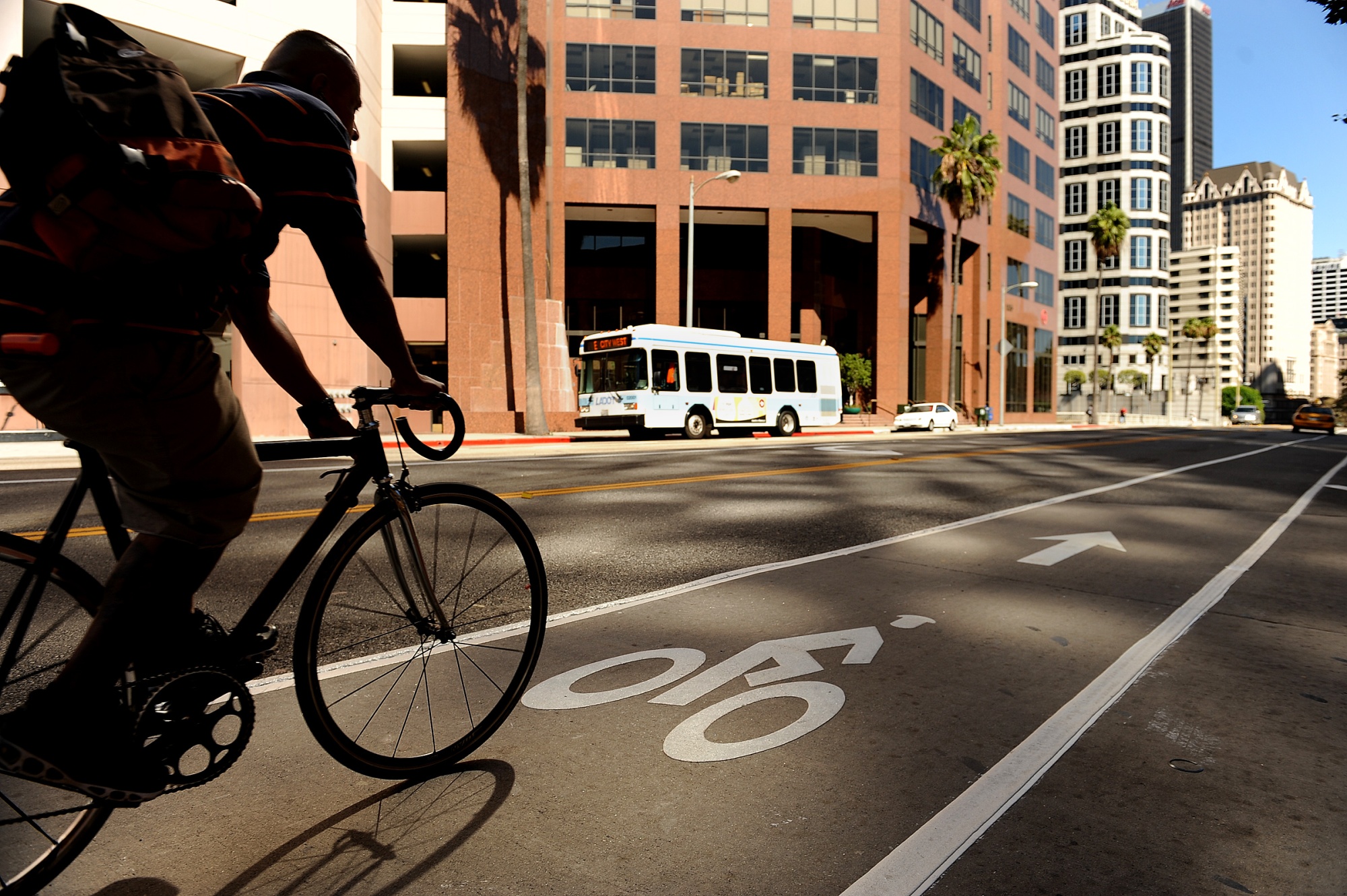
A bicyclist in downtown Los Angeles. Despite its agreeable climate, LA isn’t known as a welcoming city for bike commuters.
On paper, Los Angeles looks like bike commuter country: The sprawling LA basin boasts glorious year-round riding weather and generous expanses of largely flat streetscape.
But only about 1% of LA commuters get to work by bicycle, according to the US Census Bureau, a figure that reflects the challenges that riders face in a freeway-laden city that’s been optimized for the automobile. Protected bike lanes are rare, and the streets of Southern California are among the most dangerous for two-wheeled travelers. Between 2011 and 2020, 276 cyclists were killed in traffic in Los Angeles County — the most of any US county. In 2018, Bicycling Magazine declared LA the “Worst Bike City in America.”
To encourage more Angelenos to take to the streets by bike — and keep them safe there — a demonstration project set to launch this fall will encourage residents from low-income neighborhoods to bike to work in groups.
“It’s not just an informal group of cyclists — it’s a public transportation system based on bicycles,” said Fabian Wagmister, an associate professor at the University of California Los Angeles School of Theater, Film and Television and the founder and principal investigator of the Civic Bicycle Commuting research project, also known as CiBiC.
The concept is simple: Wagmister describes CiBiC as “carpooling, but on bikes.” In the pilot program set to start Oct. 1, users put their destination and arrival time in an app that determines the best route — or “flow” — to bring them to work. The app then pairs bike commuters with each other in groups of up to 12, known as a pod, led by two experts whose job is to prioritize safety on the road over efficiency.
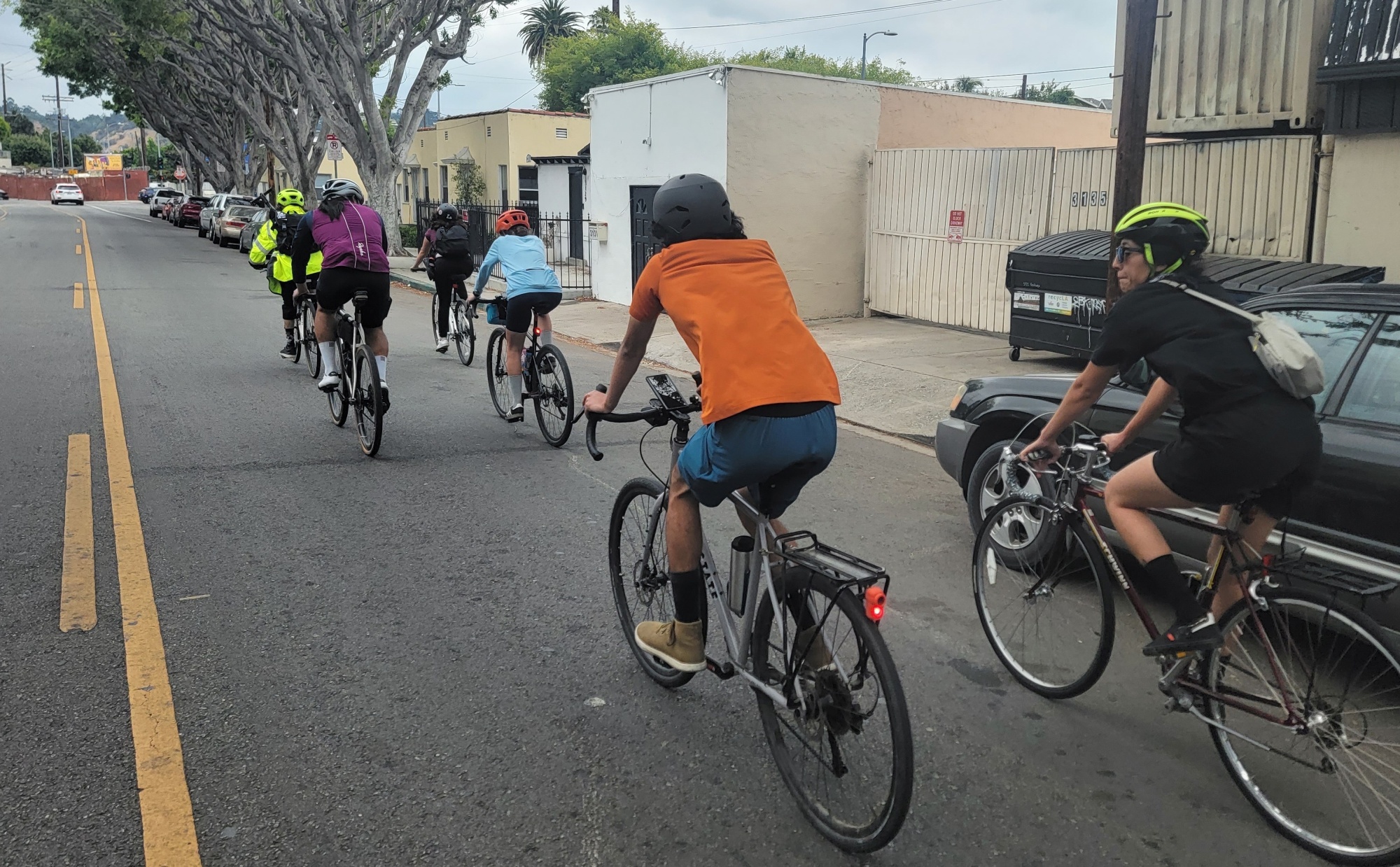
A group of CiBiC riders road-test a “flow” in Northeast LA in advance of the program’s October launch.
Photo courtesy of CiBiC
Bikepooling, Wagmister hopes, will help participants save money and improve their health and well-being while reducing vehicle emissions in a traditionally car-centric city. Armed with a $1 million grant from the National Science Foundation’s Civic Innovation Challenge, researchers at UCLA and community partners will focus on five Northeast Los Angeles neighbourhoods — including Chinatown, Solano Canyon and Lincoln Heights — which are home to lower-income communities of colour. According to a CiBiC survey, 73% of respondents in the area the pilot serves drive for commutes of less than five miles.



 New Life Narrabri