Always follow the money.
Always follow the money.
Is the so-called “Voice” to Parliament a way to real Aboriginal reconciliation or is it just another good but wasteful idea? Were the people who came up with the idea representative of the general Aboriginal community?
Jacinta Price writes:
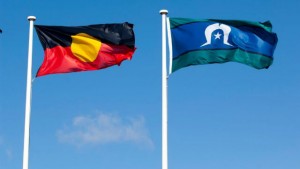
The Uluru Statement of the Heart proposes a ‘Voice’ representing Indigenous Australians be enshrined within the constitution, to enable Aboriginal and Torres Strait Islander peoples to be formally consulted on legislation and policy affecting their communities.
Minister for Indigenous Australians, Ken Wyatt has suggested such a ‘Voice’ could be legislated rather than embedded within our constitution.
However, before we debate how, and in what form a ‘Voice’ might be implemented, we need to discuss some important aspects.
The first matter of concern, who was representing me when the all big decisions were being made?
Going back to 2017 when the First Nations National Constitutional Convention was held at Uluru, the representatives in attendance were invited by nominees of the Referendum Council; and not elected by Indigenous people.
Much of the media attention has ignored the fact that there were and still are dissenting – and unheard – Indigenous voices throughout the entire process of the development of the Uluru Statement of the Heart.
Secondly, for far too long Aboriginal people have been portrayed as being one homogenous group of people who all think the same; and the Uluru Statement has now further entrenched this idea. The reality is, this could not be further from the truth.
We don’t have one voice and we never have. This has been a construct that undermines us.
The Palawa of Tasmania have real, genuine problems that need to be addressed. At the other end of the country, the Tiwi also have real, genuine problems that need to be addressed. And in the middle there are the Warlpiri, with their own set of real problems. And many other group with their own problems as well.
To try to put them all in the one basket and to treat them as if they are all the same is a grotesque denial of their rights to see themselves as different and distinct linguistic and cultural groups, with their own distinct histories of contact with Europeans and experience of colonisation.
We would not want to send Tiwi and Warlpiri to Tasmania to sort out their problems for them and we wouldn’t expect Palawa to come to the NT to sort out the problems of remote communities. Each of these groups are the only ones who can solve their own problems in their own unique way.
And what of our non-Indigenous loved ones and relatives. A clear majority of those who identify as Indigenous now have children with those who don’t. In the southern cities of Sydney and Melbourne, over 80% of Indigenous people are coupled with non-Indigenous partners and have children. Roughly the same percentage of their children identify as Indigenous.
Do our non-Indigenous loved ones have no say in the future of their own children and grandchildren?
Thirdly, as Indigenous people, we all know that those with powerful positions within our communities tend to have most of the resources and most of the control. Those who have managed to take advantage of the plentiful resources available in the Aboriginal industry have done so without effecting much change for the most vulnerable.
Do we imagine that a ‘Voice’ will empower the marginalised or will it entrench those who already maintain control of the resources that flow into Aboriginal disadvantage? While there are many community controlled organisations working tirelessly to stem disadvantage, we are acutely aware of those embedded within some Aboriginal organisations and institutions, who are there for their own personal and financial gains.
Will yet another bureaucracy such as a legislated ‘Voice’ simply give more power to those who haven’t yet demonstrated that they can solve the critical issues our marginalised Australians are faced with?
Truth telling is as much a responsibility we should put upon ourselves as it is for our entire nation in understanding our combined history. The real question — which did not appear in the Uluru Statement — is ‘what are we going to do for ourselves?’
In practical terms, stripping back bureaucracy to support grassroots decision-making from community to community suggests real empowerment — as opposed to an umbrella ‘Voice’ that we will never truly gain consensus on, because we are not simply one people.
These issues require robust debate so as not to push this process along blindly, and then suffer the consequences later.


By MATT WALSH @MATTWALSHBLOGJuly 17, 2019
As I have argued in the past, left-wing gender theory can be entirely dismantled and debunked with one simple question: What is a man? All of the talking points, all of the sermonizing, all of the stuff about “transgenderism” and “gender fluidity” and “gender spectrums” — all of it is blown to pieces by a question that my six-year-old could answer. No leftist who espouses gender theory can provide a coherent answer to this question. Few will even attempt it.
It is a classic double-edged sword. If “man” has no objective definition, then it is meaningless for a woman to identify as one. A statement like “transmen are men” is hollow and absurd if the word “man” has no meaning. But if it does have meaning, then we must admit that the meaning of the word stands independent of anyone’s feelings or opinions on the matter. If the word “man” means something, then it is possible for someone to wrongly identify as one. We can, in that case, compare their identity claims against the objective meaning of the term and determine whether their claim is correct or incorrect. Leftists can’t have that, of course, but neither can they have the alternative. If “man” has no definition, their position is destroyed. If it does, their position is destroyed. They lose either way. And they know it, so most will simply avoid the question and continue using words they can’t and won’t define.
But this week, a relatively prominent leftist made the mistake of not avoiding the question. Best of all, this particular leftist is a doctor. Dr. Eugene Gu, a self-described “surgeon-scientist,” made a decidedly unscientific claim on Twitter:

It’s a scientific and medical fact that men can get pregnant and also have abortions. Trans men and non-binary individuals are human beings who deserve to be acknowledged by society. They choose their own identity—not me, not you, not any doctor, and certainly not any politician.
Rather than mock this superstitious nonsense, I asked him the unanswerable (for a leftist) question:

Doctor, what is a man? Please provide a definition. Thank you.
Read the rest of the article here

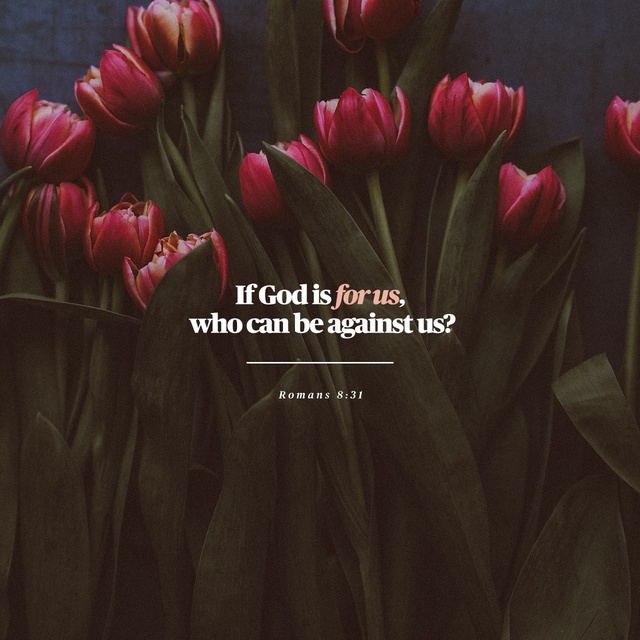

As the Scriptures say, “People are like grass; their beauty is like a flower in the field. The grass withers and the flower fades.
1 Peter 1:24 NLT
https://bible.com/bible/116/1pe.1.24.NLT

So now I am giving you a new commandment: Love each other. Just as I have loved you, you should love each other. Your love for one another will prove to the world that you are my disciples.”
John 13:34-35 NLT
https://bible.com/bible/116/jhn.13.34-35.NLT
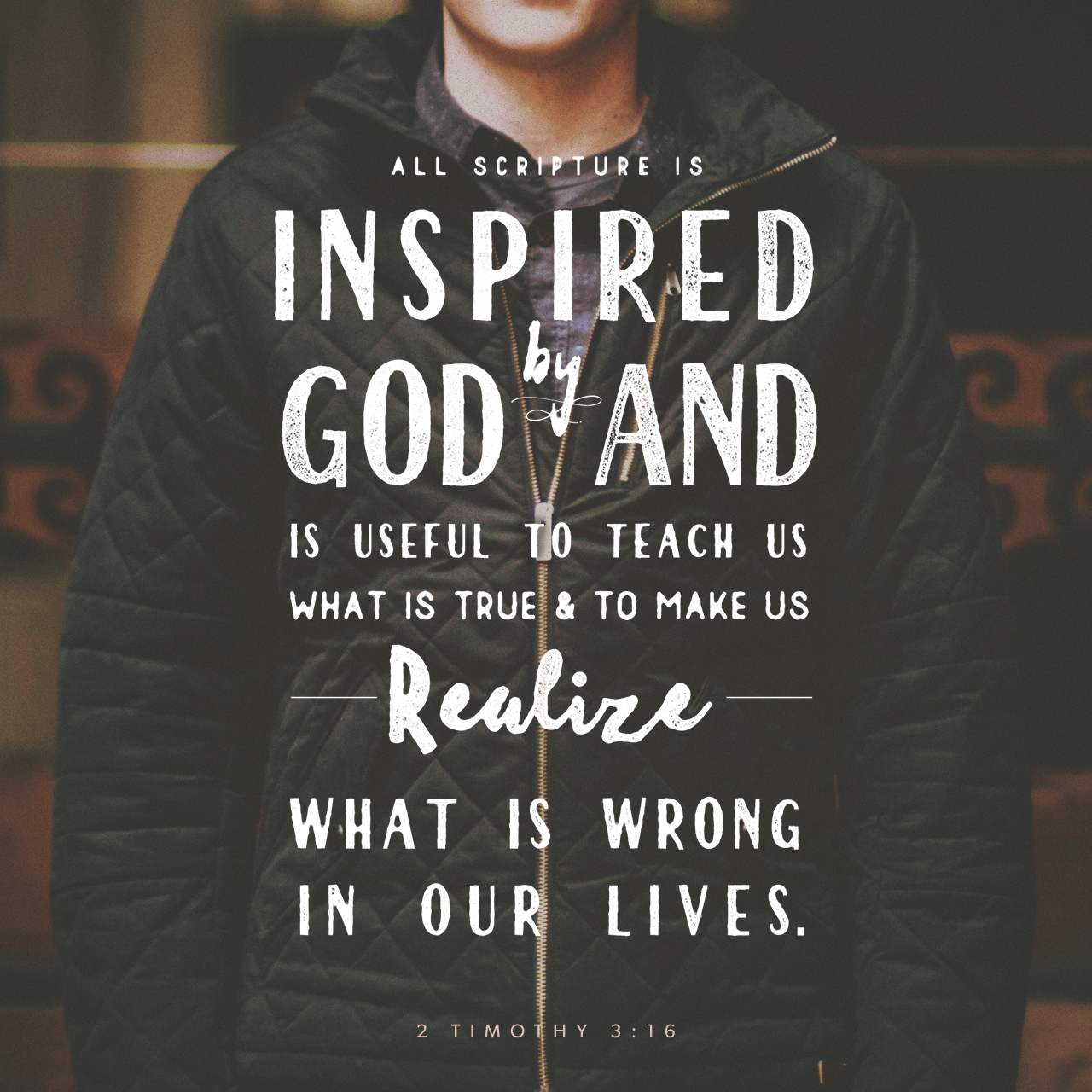
All Scripture is inspired by God and is useful to teach us what is true and to make us realize what is wrong in our lives. It corrects us when we are wrong and teaches us to do what is right. God uses it to prepare and equip his people to do every good work.
2 Timothy 3:16-17 NLT
https://bible.com/bible/116/2ti.3.16-17.NLT

 New Life Narrabri