
The virgin will conceive…
Scripture
Before day break the next morning, Jesus got up and went to an isolated place to pray.
Observation
Jesus, James and John leave the synagogue and go to Simon and Andrew’s house. Simon’s mother-in-law is sick in bed with a fever. Jesus goes to her bedside and heals her.
That evening many sick and demonised people are brought to Jesus. He heals the sick people of all kinds of diseases and casts out many demons. Before sunrise the next morning, Jesus goes to an isolated place to pray.
When Simon and the others find Him, they tell Him that everyone is looking for him. Jesus tells them that He needs to go to other places as well to preach the Good News.
Application
There are times when Jesus was so inundated by people that He had to go somewhere quiet to pray.
Even the Son of God needed to refresh Himself in the presence of God. He needed to renew His strength by waiting on the Lord, and He needed to talk with the Father about the Father’s mission for Him.
We all need to maintain that connection with God in order to be effective for Him. This takes time and commitment. We must set aside time to be with the Lord, even if it means getting up early.
We must also find a place that is free of distractions.
Connecting with the Holy Spirit is as simple as this:
1. Stop. I clear my thoughts and concentrate on listening to God.
2. Look. I visualise Jesus with me Emmanuel – God is with us.
3. Listen. I listen to the spontaneous thoughts that God is speaking to me.
4. Write. I write down the conversation to make the thoughts concrete.
Listening
Lord, what else Do you want to say to me about prayer today?
Keith, as you have experienced, fellowship with me is a journey. It takes determination and consistency. Many people give up or stay in the shallow end when things get challenging. Many people just get overwhelmed by life and busyness and so fail to grow in me.
Prayer is simply stepping out of yourself – letting go of the addictions to activity and letting go of the ways of the world.
If Jesus got up early to pray, then all of my children can find time in their day to seek me.
From godreports.com
By Exjani Rojas —
ISIS operatives killed two Chinese missionaries in Balochistan’s capital in Pakistan in broad daylight. The mother of one of the missionaries publicly forgave the killers and speculated their deaths would spark revival.
“I believe these two will be like seeds to bring greater revival,” she said, per translation on Back to Jerusaelm podcast. “I pray that God would forgive the sin and evil of ISIS because they know not what they do. These two children are now gone; I trust they will inspire the church in China to be united for the sake of the Gospel and that the fires or revival will spread from China to the nations.”
Mom’s words show why Chinese missionaries will succeed in the Muslim Corridor where Western missionaries have failed. Their movement — called Back to Jerusalem because it traces the spread of Christianity from China back to its origin — is the greatest unreported phenomenon of the world.
The Chinese figure they can in the so-called 10/40 window — the most unevangelized region of the world between latitudes 10 and 40 — slip in easier, exist more successfully and evangelize more off radar than a Westerner (who stands out and draws resentments).
The Chinese missionary movement is also called “Between the Walls” — from the Great Wall of China to the Wailing Wall of Jerusalem. They want to mobilize 100,000 missionaries for the Muslims, Hindus, Buddhists and animists who dominate in the region.
The Back to the Jerusalem missionary movement dates back to the 1920s, to early Chinese Christian groups such as the Jesus Family in Shandong Province, who preached across villages in China. It got a resurgence out of China’s underground church in the 1980s.
“In 1988 in Henan, the church was filled with the Holy Spirit, and people starting sharing the Gospel,” a leader says in Chinese on a Back to Jerusalem documentary. “I would say 2010 was the second great filling. We started sending missionaries. Why are so many workers going overseas now? It was the work of the Holy Spirit, sending them to specific nations.”
Pastor Shen XiaoMing presides over 10M Chinese Christians in the China Gospel Fellowship. He says the taking up of the call to send missionaries into Muslim lands began with the youth.
“The Holy Spirit was working in China’s house church. Especially the youth, we experienced God’s call to reach the whole world,” XiaoMing says in Chinese. “We started praying for nations.”
Youths began studying the languages of the Muslim countries. The mission set up a training center in the Philippines. Doors began opening, young people got passports and visas, they began going to places where it was dangerous to preach the Gospel — and they were mentally and emotionally ready for it because of the persecution the Chinese church has faced for decades from the communist government.
They went to Cambodia, where they evangelized the land once decimated by Pol Pot’s Killing Fields genocide ot 2M+.
“We go inside the Buddhist temples and preach the Gospel,” a missionary says, per translation. “We love to teach the children and tell them Jesus loves them. Often, the first, second or third time, they reject us, saying ‘Why do you come here to our village to change our religion? I have been a Buddhist since youth.’”
Breakthrough comes with the miraculous healings. In a village of 600, many got healed; people see the genuine power of God and convert, the missionary says.
“There was an older woman who had a serious disease,” he says. “We prayed for her and asked if she felt better. She shook her head. Later when we were leaving, she stopped the car and told us, ‘I have been healed. Praise God!’”
They went to India, where they lifted spirits of the Indian church
“We were really encouraged to hear how God moved in China,” said and Indian pastor whose identity was obscured. “The Chinese pastors and believers had to go through extreme persecution, being jailed. In spite of all this, the Chinese church grew. That really encouraged the church (in India) to share the Gospel more joyfully.”
In India, revival is spreading in villages. Like Cambodia, supernatural healing is a gamechanger, he says.
Back to Jerusalem podcaster Eugene Bach says that when Chinese missionaries join Indian locals in spreading of the gospel, you have the teaming up of the Land of the Dragon and the Land of the Elephant.
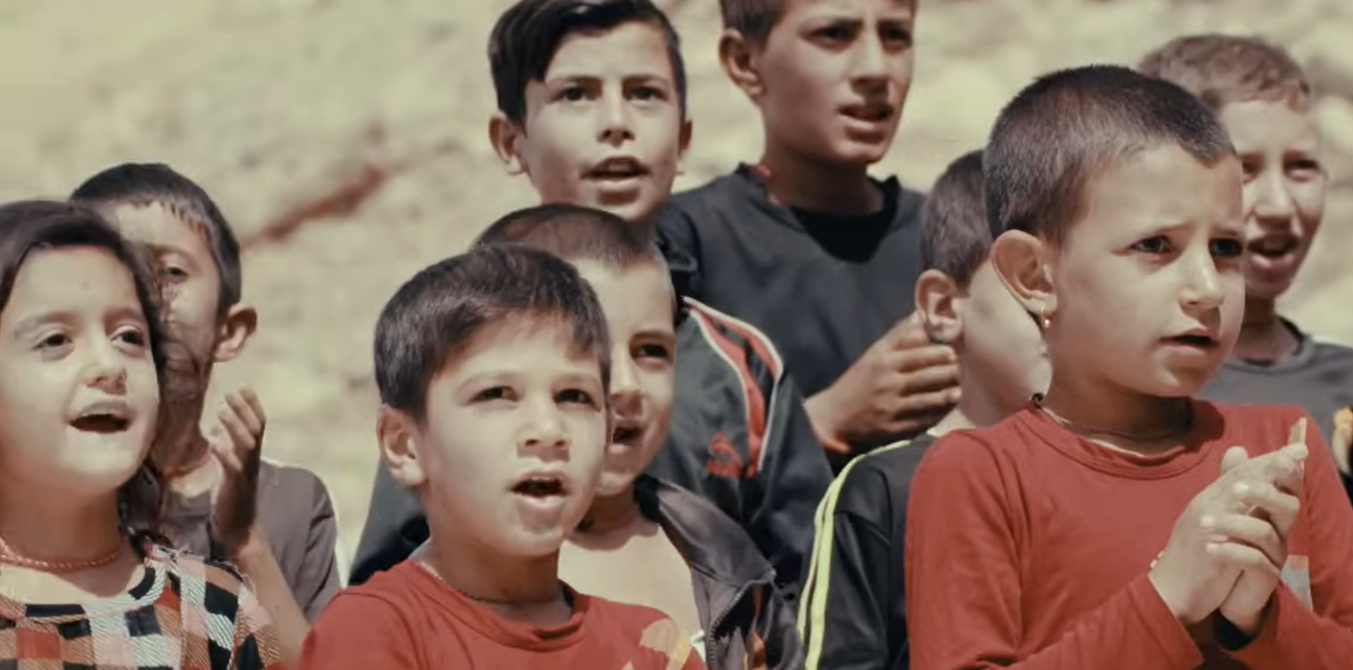
They went to Iraq under ISIS and ministered to Kurdish and Yazidi refugees running from terrorists who sold off women and girls as sex slaves and killed men and boys who did not convert, brainwash and become militants.

Bach documents the landing of three Chinese missionaries in Kurdish region of Iraq sometime in 2013-14 when ISIS erupted on the international scene, taking over much of Syria and Iraq. While taking care of refugees and bringing joy to children who had lost their parents, they present the gospel.
Back to Jerusalem podcaster Eugene Bach says that when Chinese missionaries join Indian locals in spreading of the gospel, you have the teaming up of the Land of the Dragon and the Land of the Elephant.
They went to Iraq under ISIS and ministered to Kurdish and Yazidi refugees running from terrorists who sold off women and girls as sex slaves and killed men and boys who did not convert, brainwash and become militants.
Bach documents the landing of three Chinese missionaries in Kurdish region of Iraq sometime in 2013-14 when ISIS erupted on the international scene, taking over much of Syria and Iraq. While taking care of refugees and bringing joy to children who had lost their parents, they present the gospel.
As long as the Temple remained standing, animal sacrifices were being conducted by the apostate Jewish priesthood. They were going through the religious motions to keep up the appearance of righteousness to deceive the people. The people believed the ark of the covenant was behind the veil in Herod’s Temple, like in the Tabernacle of Moses. Since the destruction of Solomon’s Temple, there had been no ark in the Holy of Holies. This is why it was significant when the veil was torn from the top to the bottom when Jesus died, to reveal the absence of the ark. Cindye Coates
Scripture
The people were amazed at his teaching for he taught with real authority – quite unlike the teachers of the religious law.
Observation
Jesus and his disciples go to Capernaum. On the Sabbath, Jesus goes to the synagogue to teach, People are amazed at his teaching for he has authority, unlike the teachers of religious law.
A demonised man starts shouting. “Why are you bothering us? Have you come to destroy us?” he shouts.
Jesus orders the demon out of the man. The spirit comes out immediately. This amazes the people even more, because Jesus has authority even over evil spirits.
Application
The teachers of religious law had very little authority in their teaching. They often just resorted to commenting on other, more famous, teachers. But they had nothing new to add of themselves.
The Spirit of God is alive and active. He is always showing us new truths from His Word. We can never fully exhaust the depths of God or of His holy Scriptures.
Jesus cut through the religious propaganda. He is the real truth, the holy Son of God. For that reason, every word he speaks carries the authority of God.
There is no greater authority.
Listening
Lord. What do you want to say to me about this passage?
Keith, the real sign of my authority was the demonised man who screamed at my presence. Satan knows me, as do his evil minions. They tremble at my presence.
When I save a person, their demon flee. As my Spirit invades their spirit, there is no room for evil spirits.
Satan trembles whenever the gospel is preached under my authority. He shrieks when a person surrenders their life to me. He knows his time of mischief making is coming to an end and he resists with all his might.
His might is nothing compared to my authority and the power of my kingdom.
From godreports.com
By Asaiah Logan –
When Yasuko Fleming first prayed to accept Jesus in London in 1993, demon spirits showed up enraged.
“Buddha’s face was there. All the gods I used to pray to were right in front of me,” she said. “They told me, ‘Don’t do that.’ … They grabbed me on my shoulder and pull me back and then I I felt my neck was choked.
After an hour of prayer, praise and scripture reading from the woman who led her to Christ, Yasuko was free.
Yasuko Fleming, from Japan, took a year to study in London. Her landlady was a born-again Christian and invited her to know Jesus.
“I didn’t know anyone who believed in Jesus,” she says. “When she said there is only one God, I didn’t agree,” Yasuko said. “I believed in many gods. It made me feel safe. I didn’t want to get disappointed by one or two gods. I wanted to believe as many as I can so that I feel secure.”

The landlady read her a verse about the people who trust God will not be disappointed. It confronted her directly and convinced her that God was speaking to her.
“When I heard that, it felt like a wall inside my mind fell down,” Yasuko said. “I thought, wow, this feels true.”
So she received Jesus into her heart.
Immediately, the demons manifested and engaged in a battle for her soul that lasted an hour. It turns out that the landlady had been praying and fasting for three days to bring Yasuko to Jesus.
“After that, I felt clean,” she said. “I felt peace for the first time in my life.”
Today, Yasuko leads a Christian art and dance community in Tokyo.
Little by littler, her family members all came to Christ. Japan is 1% Christian and has a strong culture of conserving traditional values, so people are resistant to the gospel.
“It was really hard,” she said. “It’s okay if it takes 10 or 20years Just love your family members. Pray for them. Don’t rush. God is patient.”
She says Japan can be reached one person at a time. “Jesus started with twelve people,” she said. “We can start with whoever is near us.”
Now at All Nations Art Community in Tokyo, she teaches dance and English, runs a café, leads a prayer room, and holds small church services. Sometimes she sings or dances outside. “People stop and watch,” she said. “I can feel the whole atmosphere change.”
Even after all these years, she remembers that first prayer. “Jesus walked toward me,” she said. “And I felt like He had been waiting for me for a long time.”
This article first appeared on Pilgrim Dispatch.
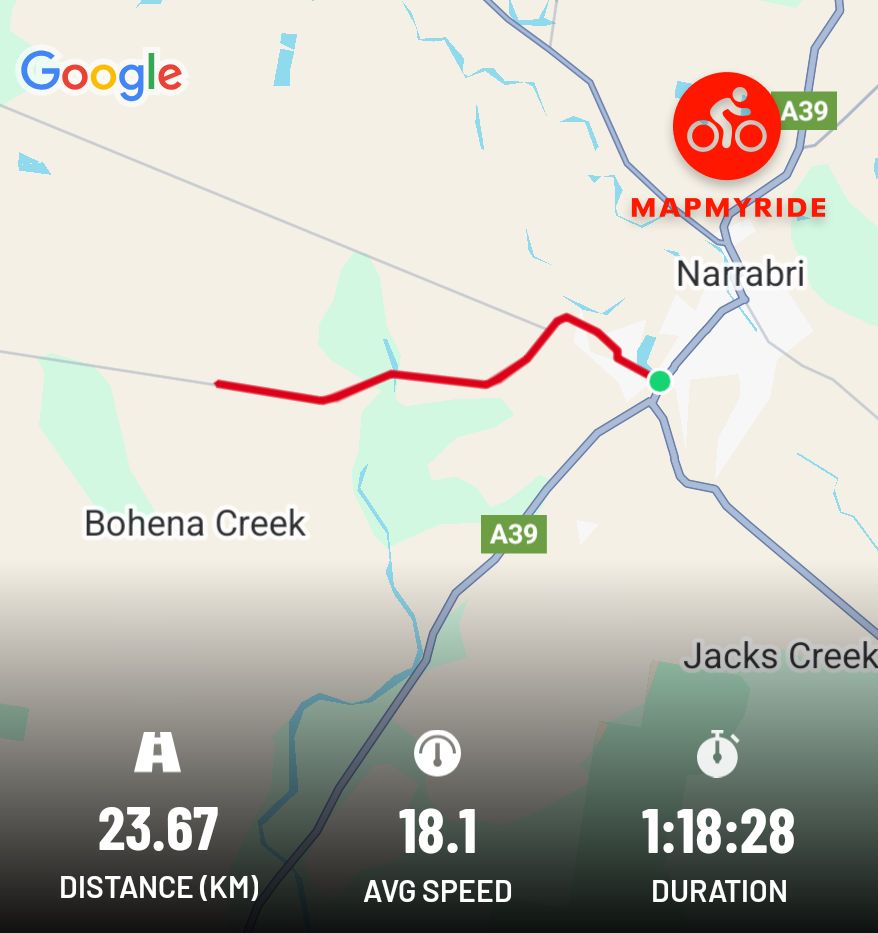
A little breezy this morning, so it was hard work, and my speed was down. But it’s always good to ride, even when you have to work at it. 😁🚲 #Narrabri #cycling
 New Life Narrabri

