“Everyone who asks receives. Everyone who seeks finds. And to everyone who knocks the door will be opened.”
Observation
Jesus tells us to keep on asking, keep on seeking, keep on knocking on the door. Everyone who asks will receive; everyone who seeks will find; and everyone who knocks the door will be opened.
If Earthly parents know how to give good gifts to their children. How much more will our heavenly Father give us what we need.
We can only enter God’s kingdom through the narrow gate. The road to hell is wide, but the road to life is narrow and only a few ever find it.
Application
Jesus is adamant that our Father answers prayer. He iss a good father. He knows how to give good gifts to His children.
Here, the emphasis is on persistence in prayer. We must keep on asking, keep on seeking, keep on knocking on the door.
In our instant quick fix culture, we get discouraged when God does not seem to answer our prayers according to our time scale, We get discouraged so easily. The person is not healed after a single prayer. Somebody isn’t saved the instant we pray for them. We then assume that the prayer failed. Maybe we just need more faith.
Jesus tells us to keep on praying. Be persistent and do not give up. This is the kind of prayer, which God answers.
Prayer
Lord, please show me how to pray the kind of prayers you require. Help me to be persistent and to not give up until I see your grace at work. Amen.
The historical data from coins can’t be altered, obscured or rationalised.
Coins from the emerging Arab Empire tell a frightening story (it’s only frightening for those who believe in Islam).
The story they tell undermines the standard Islamic narrative.
“The earliest history of Islam is questionable at all levels,” remarks Al Fadi, on a CIRA International video. “The so-called Islamic coins debunk Islam itself.”
All minted coins from the 7th Century come from the north or east. None come from Mecca or Medina, where supposedly Islam got started.
First off, there are no coins minted in Mecca or Medina during the 7th Century (when Arabs arose). According to Islam’s narrative, Mohammad and his followers rose out of Mecca and Medina to conquer the world with the powerful sword of Allah.
But NONE of the earliest coins minted by his followers emanated from either Mecca or Medina. (The coins have the city of minting on them.)
They were minted hundreds of miles to the North in Jordan and Lebanon: Illya, Yubna, Amman, Jerash, Baysan, Abila, Tebariya, Dimashq, Ba’albak, Hinis, Tartus.
(This survey excludes coins from Yemen and Oman, from the Byzantine Empire based in Modern Turkey and the Zoroastrian coins from around Modern Iran and Kuwait.)
Since rulers minted coins from their homebase, this tells us that none of the early Caliphs were based where they were supposed to be in the Hejaz (of Medina and Mecca).
A timeline of Islam. The earliest coins of Arab leaders show Christian symbols. This changes come in 692, 60 years after Mohammad’s supposed death, when Abd al-Malik makes an anti-Trinitarian proclamation. Later, Islam emerges.
In fact, according to ancient maps, Mecca didn’t even exist.
This is troubling for Muslims because if their history is questionable, logically everything they believe is likewise questionable.
But it gets worse for the standpoint of their historical narrative.
The earliest coins of Arab rulers show they were Christian, according to Dr. Jay Smith.
Coins from the Sassanians (651-660) have crosses on them, showing they were Christian (as opposed to Zororastrian coins which had an emblem of fire altars on them). According to the SIN, the Sassanians were Muslim.
The first Umayyad Caliph, Mu’awiyah (661-680) put three crosses on his western coins, a nod to the Trinity. According to the SIN, Mu’awaiyah was Muslim.
Source: CIRA International video
“If Mohammad died in 632, we’re 50 years later, the coins are either Christian or Zoroarastrian,” Dr. Smith says. “There is nothing at all that is close to Islam.”
The first hint of Muslim doctrine comes in 692 when Abd al-Malik announces his leadership to the world with a coin that says: “There is no god but Allah and MHMD is his prophet.”
This is the proto-shahada proclamation that Muslim use to make converts (their version of a Christian’s “sinner’s prayer.”)
Dr. Smith puts forth an intriguing theory that Abd al-Malik may NOT have even been a Muslim, but rather a Christian anti-Trinitarian.
“It’s attacking Byzantine Christianity,” Dr. Smith contends.
Creation is indeed very good, but that doesn’t mean that it is complete. Creation doesn’t come into existence with schools and art museums and iPhones and automobiles. God places us in creation with an invitation to unpack and unfurl all of the latent potential that God has folded into creation—and commissions us to do just that. James Smith
“Hypocrite! First, get rid of the log in your own eye then you will see well enough to deal with the speck in your friend’s eye.”
Observation
We are not to leap to judgement about others because we will reap what we sow. The standard we use in judging others is the standard God will use against us.
We must not worry about the speck in our friend’s eye when we have a log in our own eye. We must get rid of the log in our own eye to help the friend with their speck.
We should not waste holy teaching and wisdom on people who don’t want to receive it. They will trample the teaching and then use it to attack us.
Application
We are under constant temptation to judge other people – our co-workers, family members, celebrities, and politicians.
Jesus tells us to stop doing this. The word judge means to condemn or pass sentence. We find people guilty and condemn them without taking the time to find out why they do things.
We find fault with other people and offer to help them, even when we are guilty of far greater sins or even the same sins.
Jesus doesn’t tell us, we shouldn’t help people become better people or stronger believers. We do have to deal with our own sins first so that we can be genuinely helpful.
This takes a measure of humility in which we acknowledge that we are as guilty as anyone else. “All have sinned and fallen short of the glory of God” (Romans. 3:23)
To be able to help another person. I must first acknowledge my own weakness. I confess my “logs” to God and ask Him to remove him so that I can be useful to others.
Prayer
Lord Jesus, thank you that you are removing the logs in my eyes. Please keep me free from the sins of self-righteousness and pride. Amen.
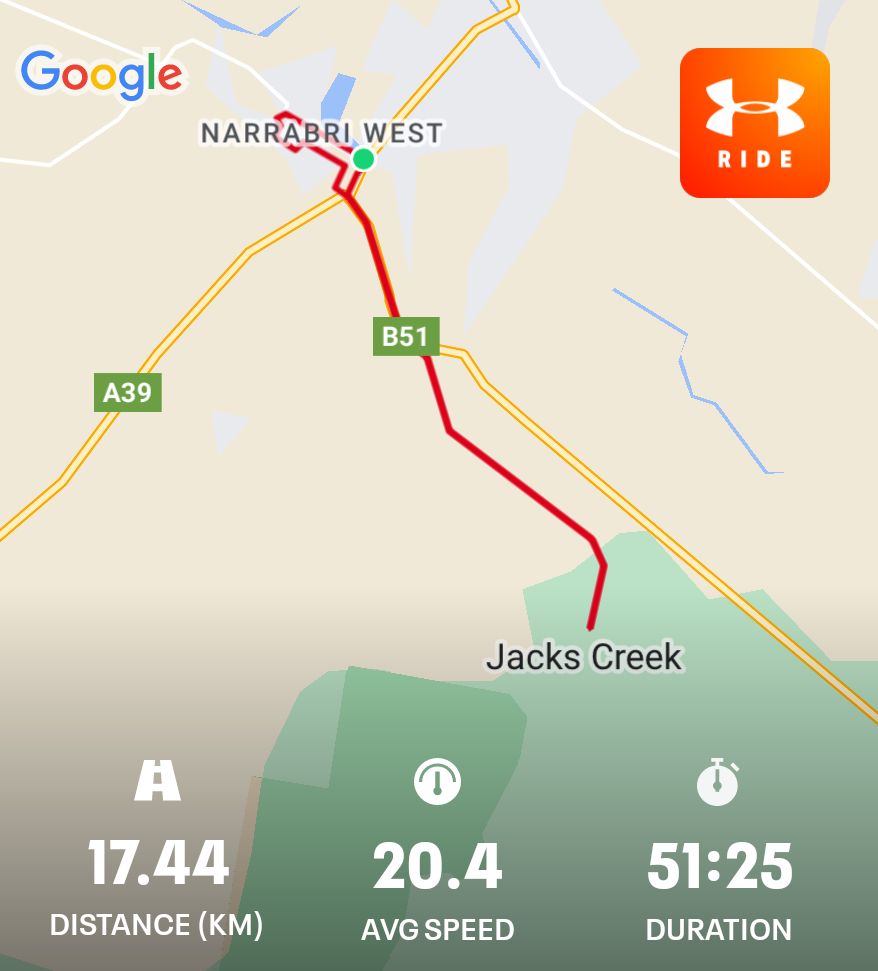
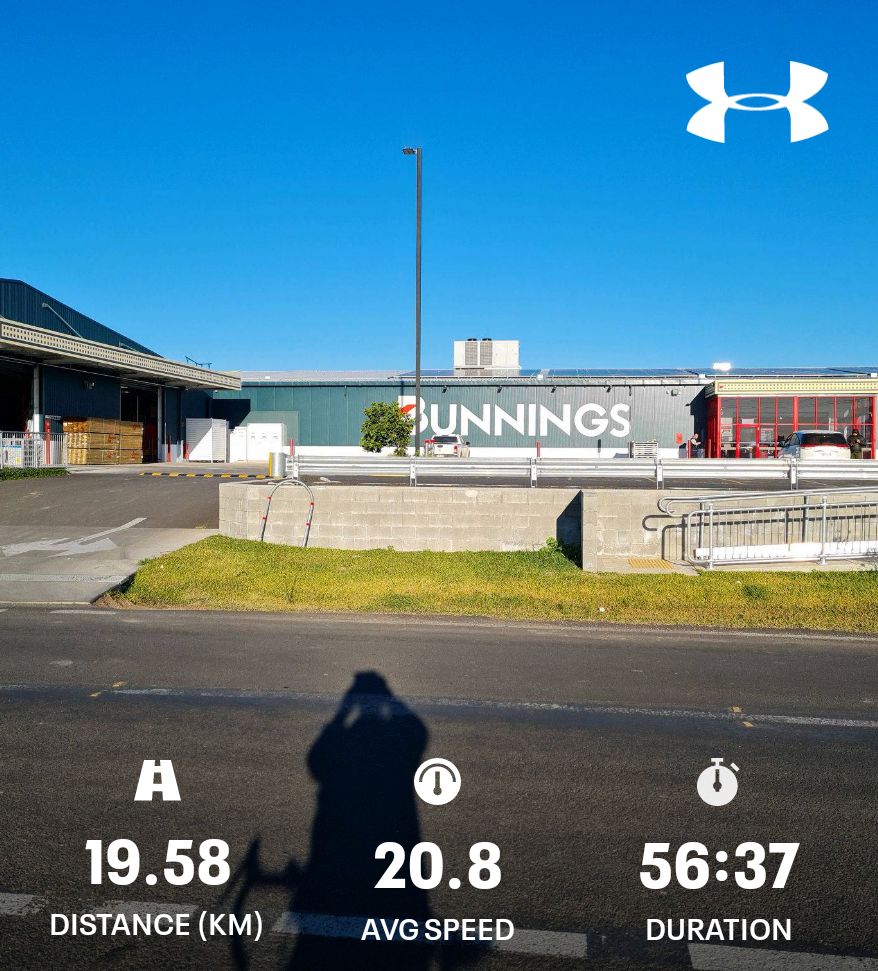
Nice ride along Yarrie Lake Rd this morning, although the last couple of kilometres were hard, riding into a stiff SE breeze. #cycling #Narrabri #Biketooter
When the Spirit gives you ears to hear and eyes to see, creation is a gift that calls—it is a chamber of God’s glory that resonates with an invitation. James Smith