But what distinguished Christian converts from their neighbours was their rejection of sexual practices and idolatries. Scot McKnight and Cody Matchett

Scripture
“In that day, no weapon turned against you will succeed. You will silence every voice raised up to accuse you.”
Observation
Rejoice, childless woman, for the Lord is giving you children beyond number. Jerusalem will have to enlarge her house because she will be bursting at the seams.
You will not live in disgrace or abandonment, for the Lord of Heaven’s Armies will be your husband. Even if the mountains move and the hills disappear, His constant love will remain.
The Lord created the blacksmith who makes the weapons of destruction and the armies that destroy. But in that day, no weapon will succeed against you and every accusing voice will be silenced.
Application
Christians often face many enemies and accusers. The Lord promises that their weapons and accusations will fall short. It I not clear in this chapter whether the promises are for Israel and Jerusalem. But then, in the very last verse, the Lord says, “these benefits are enjoyed by the servants of the Lord.”
Lately some members of my church have faced some frustrations and difficulties caused by witchcraft of various forms, all emanating from one individual. We have had to persevere in prayer, but we know that God’s promise is “no weapon turned against you will succeed.”
People make accusations against christians on social media and in other places. but we can rest assured that God will silence every voice raised up to accuse us.
When we face opposition, we should remember that we are not fighting against flesh and blood, but against forces in the spirit realm. We take it all to the Lord and trust Him to vindicate us and bring victory.
Prayer
Hallelujah! Lord the victory is yours. Please help me to rest in you when the enemies arise. Amen.

From Creation Evolution Headlines
David F. Coppedge writes
A major journal publishes a paper
claiming that natural selection is
like human engineering
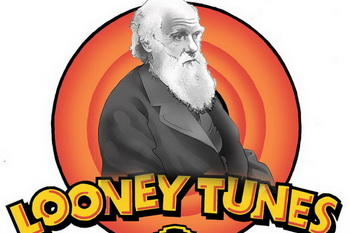
Darwin’s blunder was criticised by scientists in his own day. He likened natural selection to artificial selection: i.e., human breeding of plants and animals. The two concepts could not be farther apart. They are opposites. Now, three guys print the same blunder out in the open with shameless bravado.
Weinberg’s Law: an expert is a person who avoids the small errors while sweeping on to the grand fallacy.
What farmers and ranchers do as they try to produce better tomatoes or stronger horses has nothing to do with Darwin’s theory. Breeders have foresight. They have intentionality. They set a goal, and can gauge the success of their efforts by measurable results. Darwin’s Stuff Happens Law has none of the above.
Charley specifically denounced any role for foresight, intentionality, or purpose in the operation of natural selection (NS). NS was to be a blind, unguided mechanical process all the way down. Darwin’s own “intention” was to rid biology of any role for a Creator God or designer of any kind. And yet he repeatedly used a fallacious argument from analogy for support, claiming that natural selection is like artificial selection. He was still claiming this in 1876 in the 6th edition of Origin of Species, 17 years after the 1st edition.
Slow though the process of selection may be, if feeble man can do much by artificial selection, I can see no limit to the amount of change, to the beauty and complexity of the coadaptations between all organic beings, one with another and with their physical conditions of life, which may have been effected in the long course of time through nature’s power of selection, that is by the survival of the fittest. [Origin, 6th ed., ch. 4, p85]
Ah, the fittest. Yes, that was the purpose of the blind watchmaker: increasing an organism’s “fitness” (whatever that is). Please re-read our entry, “Fitness for Dummies” to recall that fitness is a slippery, undefinable tautological term that can mean anything the evolutionist wants it to mean. But why would a blind process even know or care about the definition of fitness? Stuff Happens; that’s fitness in a nutshell. Anyone who stuffs that idea into his skull has it in a nut shell.
Darwin never saw his own fallacy. He should have known better, having been a pigeon fancier and a friend of breeders. He should have known that the outlandish varieties produced by breeders, like poodles and dachshunds and pouter pigeons would never have arisen naturally—indeed, they could not survive in the wild. But Charley reasoned that if breeders could accentuate small variations to those extremes, couldn’t Nature accomplish much more, given millions of years? “I can see no limit,” he said. That’s because his eyes were closed, and he was daydreaming in his imagination.
Summing up, Darwin thought (illogically) that if human intelligence can accentuate variations for a purpose, why couldn’t blind nature accentuate variations for no purpose at all? He reasoned that Nature is just like a thinking, rational breeder, that purpose is just like chance, that foresight is like blindness, and that intention is like aimlessness.
He didn’t get it. In his new book Darwin’s Bluff, Robert Shedinger quotes from Darwin’s own correspondence how he persisted in this fallacy to his dying day.
Darwin’s disciples today still sweep on to the same grand fallacy. Here is a spectacular example printed by Nature yesterday.
Engineering is evolution: a perspective on design processes to engineer biology (Nature Communications, 29 April 2024). These three Darwinians (Simeon D. Castle, Michiel Stock and and Thomas E. Gorochowski) do a one-up on Darwin. Not only is evolution like breeding, they assert; it’s like engineering! Indeed, they say, engineering is evolution! The paper is open access, so go ahead: watch them sweep on to the grand fallacy.
Read the rest of the article here
Worship describes a whole life lived in devotion to the God on the throne and the Lamb who stands in the middle of that throne. If worship is one’s whole life devoted to God, then any dimension of life surrendered to anything else corrupts worship. Scot McKnight and Cody Matchett

Scripture
He was pierced for our rebellion, crushed for our sins. He was beaten so we could be whole. He was whipped so we could be healed.
Observation
The Lord’s servant grew up like a tender green shoot. There was nothing remarkable about Him. He was despised and rejected by the people he came to save.
He bore our weaknesses and our sins. We thought His suffering was punishment from God. But He was pierced for our sins, and his beatings bring us healing.
He was led like a lamb to the slaughter. His life was an offering for sin, and those whom He has redeemed will be counted as His sons and daughters.
Despite being rejected and despised, He will be honoured in His death.
Application
This is another of the suffering servant songs in which Isaiah looks forward to the life and death of the Messiah, Jesus.
Jesus was crucified,dying a horrible death, for the sake of our sins. He bore the penalty of the whole earth on his body.
Because Jesus died, I can now experience the true freedom of forgiveness. I am a new creation in Christ. Not only does He wipe away the guilt of sin, He removes the bondage of sin, the ability of sin to hold us in captivity.
Christ’s beatings, Isaiah tells us, are the means of physical healing. Salvation is not just about spiritual wholeness. it extends to every part of our being, including the physical. Just as Christ’s death makes us whole in our spirits, He also provides for healing for our bodies.
Prayer
Thank you, Lord, for this wonderful salvation in which you are restoring every part of my life. Amen.

 New Life Narrabri