Cloudy this morning but mild. I rode to Bunnings then around the edge of town and then up Ugoa St past the lake and to Railway St before coming home. #cycling #Narrabri
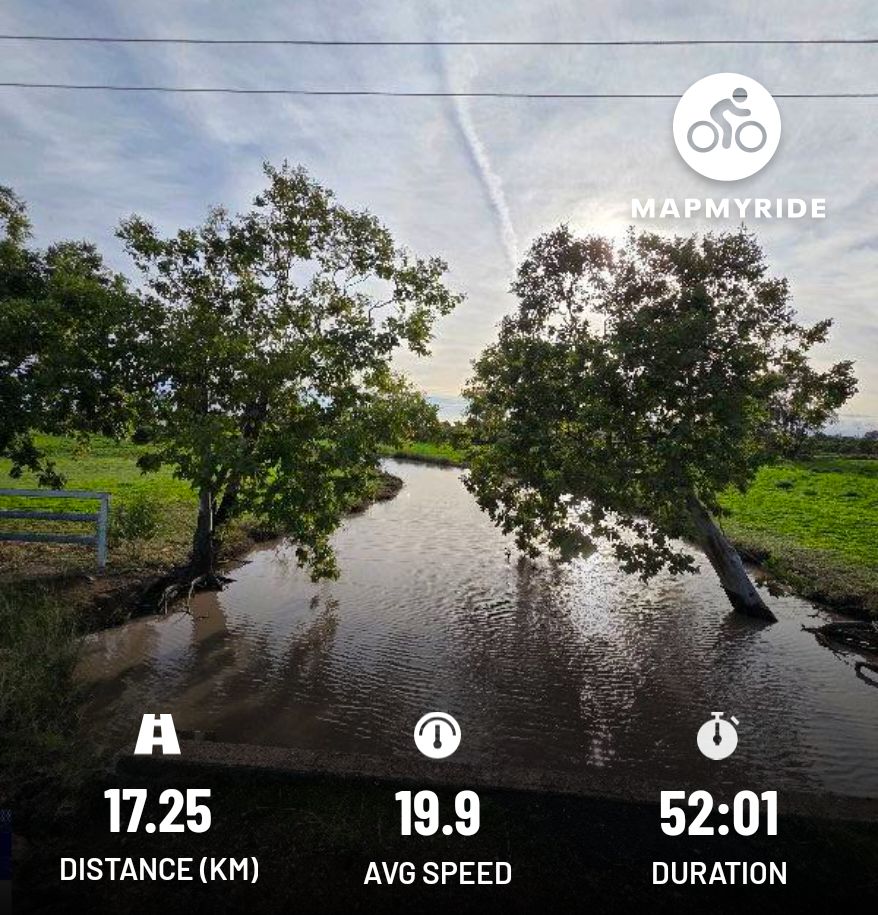
Cloudy this morning but mild. I rode to Bunnings then around the edge of town and then up Ugoa St past the lake and to Railway St before coming home. #cycling #Narrabri

A community whose ultimate loyalty lies with a religious-political system incompatible with secular governance will not remain content under non-Islamic authority forever. It will seek to impose that system, either gradually, through political dominance, or suddenly through armed control. Danny Burmawi

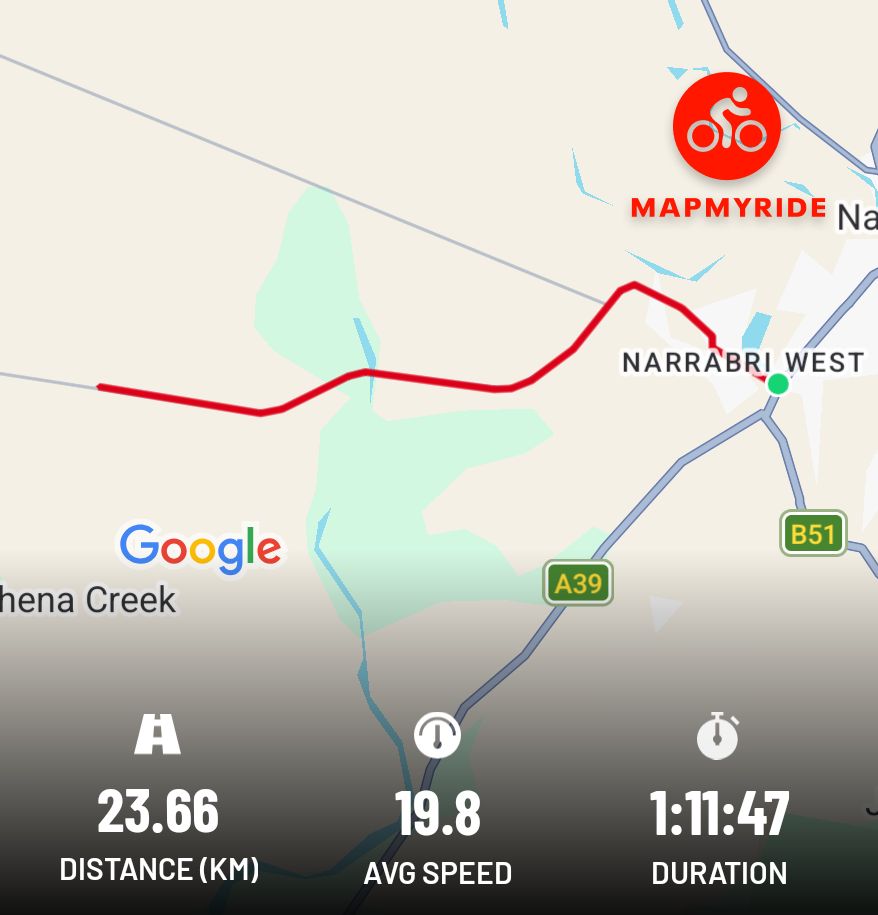
Another splendid morning in Narrabri. Hard to believe they call this winter. I rode along Yarrie Lake Road. #cycling #Narrabri

Morality in Islam is not internal conviction but external decree. It is legalism, total and exhaustive. Danny Burmawi

Scripture
Suddenly Jesus’ words floated through Peter’s mind: “Before the rooster crows twice, you will deny three times that you even know me. And he broke down and wept.
Observation,
While Jesus is being interrogated by the religious leaders, Peter is in the High Priest’s courtyard.
One of the High Priest’s servant girls recognises Peter and says, “You are one of Jesus’ followers.” Peter denies this. The same girl then tells other people that Peter is one of Jesus’ followers. But Peter again denies it.
Some of the other bystanders later recognise Peter’s accent as Galilean, and they accuse him of being a disciple of Jesus. For the third time Peter denies it.
Then Peter remembers Jesus’ prophecy and he weeps.
Application
It is easy for us to pass judgement on Peter for this moment of weakness. But how can we be sure we would do anything different?
This is not the last word on Peter’s faithfulness to Jesus.
A few days later, Jesus will forgive Peter and restore him to the fellowship.
And in a few weeks, on the Day of Pentecost, Peter, full of the Holy Spirit, will make a bold proclamation of the gospel, leading to 3,000 people being saved in one day.
Failure and sin are not the last word. We commit ourselves to the Lord, and everything changes.
Peter the denier becomes Peter the bold preacher and, eventually, Peter the martyr.
Listen
Lord, what would you say to me today regarding Peter?
Keith, Peter is a great disciple. He made mistakes, but he learned and he grew in knowledge of me and in wisdom. That is why he was recognised as one of the early leaders in the church.
Be like Peter. Be filled over and over with the Holy Spirit. Let me direct your paths and trust me always.
From Christian Post

Arson attacks were prevalent among a surge in anti-Christian hate crimes in May, according to the Observatory on Intolerance and Discrimination against Christians in Europe (OIDAC Europe).
The watchdog’s May report shows 37 verified anti-Christian hate crimes across 11 European countries. The crimes include 13 arson attacks, 10 acts of vandalism, three cases of desecration, three incidents of physical violence, three thefts targeting religious objects, three cases of vandalism and violence, one case of incitement and one disrupted worship service.
“This continued prevalence of fire-setting against Christian sites remains one of the most serious patterns documented during the year,” the report stated.
The 13 verified arson incidents represent the highest monthly total that investigators have recorded this year. The report dubbed the monthly figure “exceptionally high” as blazes hit properties across multiple countries, including attacks on church buildings, chapels, parish buildings and other Christian property.
In Germany, four arson attacks damaged properties in Marbach, Munich, Delmenhorst and Gladbeck. The country also saw severe property violations; in Knittelsheim, assailants scattered consecrated communion hosts across a church altar, while unknown persons daubed satanic graffiti inside the Barbara Chapel in Penzberg. Vandals in Bad Oeynhausen deliberately damaged church bells and live power lines, creating potential physical harm for the community.
In Italy, authorities recorded eight hate crimes, including four cases that carried an explicit ideological link. In Genoa, attackers defaced the Basilica of San Siro with anti-clerical and anarchist graffiti demanding that perpetrators “burn churches.”
Italian monitors also recorded a desecration at the parish of San Paolo della Croce in Rome, and heavy vandalism at the Church of Sant’Angelo Magno in Ascoli Piceno, where attackers destroyed a crucifix, sacred statues and a historic 17th-century organ.
Three arson cases in France included an attack at the Church of Notre-Dame de l’Assomption in Lentigny, alongside a highly dangerous suspected arson at a parish hall in Tergnier while children were inside the building.
French vandals also ransacked the Church of Saint-Pierre-ès-Liens during Pentecost at Pont-du-Casse near Agen. In Paris, thieves broke a crucifix and stole a figurine of Christ from Saint-Germain-des-Prés. In South Gironde, a wave of burglaries targeted several churches, resulting in altar desecration and tabernacle profanation. Assailants in Saint-Martin-la-Sauveté tore Christian statues from graves, while attackers in Poleymieux-au-Mont-d’Or near Lyon beheaded a statue of Mary holding the infant Jesus.
In Krosno, Poland, an attempted arson damaged an image of Our Lady of Perpetual Help inside a desecrated chapel, while vandals in Kalwaria Zebrzydowska defaced several chapels with physical damage and satanic inscriptions.
Arsonists and vandals also targeted two churches in Ireland. In Warrington, England, police launched an arson investigation after discovering fires inside a disused church building.
Violent crime targeted clergy as well, as robbers held a Portuguese priest hostage for 90 minutes while they looted a church building and parish house in Cantanhede. In Chania, Greece, a shotgun attack damaged a historic church bell tower. In Bosnia and Herzegovina, criminals forced entry into the Serbian Orthodox Church of St. George in Tuzla, marking another repeated act of vandalism against the site.
In Leipzig, Germany, a Christian-run café announced its permanent closure after organized harassment campaigns by left-wing extremists. The operators reported 26 attacks over the past two-and-a-half years, which included repeated vandalism, graffiti, and butyric acid attacks, making continued business financially impossible.
The report cited the closure as evidence of “the persistence of repeated and sustained campaigns targeting Christian institutions.”
“According to the operators, the attacks were carried out by individuals associated with the far-left extremist scene and ultimately made the continued operation of the café financially impossible,” OIDAC Europe stated.
Left-wing extremists reportedly also assaulted and seriously injured two Catholic fraternity students in Innsbruck, Austria. In Bielsk Podlaski, Poland, an assailant insulted and attacked a nun at a bus stop, tearing a cross necklace from her neck.
Perpetrators also fired steel and plastic balls during a Mass that approximately 200 worshippers attended at the Holy Spirit Church in Hanau, Germany. The projectiles shattered windows, and the report noted that the attack placed the congregation in immediate danger.
“The incidents recorded this month … illustrate that anti-Christian hostility is not limited to attacks against church buildings,” the report stated. “Several cases targeted Christian individuals, religious communities, and organizations directly, demonstrating that visible expressions of Christian faith and Christian presence in public life can themselves become targets of aggression or intimidation.”
The overall dataset includes widespread vandalism, desecration, physical assaults, and thefts targeting religious spaces and individuals. Germany led the continent with 10 reported incidents, followed closely by Italy and France with eight cases each. Poland recorded three cases, Ireland reported two, while Austria, Portugal, Spain, Greece, the United Kingdom, and Bosnia and Herzegovina each documented one verified incident.
“Germany also recorded numerous additional non-counted thefts, break-ins, damage incidents, and fires under investigation,” noted the report.
OIDAC Europe also noted widespread property damage that fell outside the official statistics due to unverified bias. This additional data included local authorities investigating nine church building fires alongside 14 unverified acts of vandalism, 24 break-ins, and dozens of thefts.
Separate figures confirmed last month to the Greek Parliament by the Ministry of Education, Religious Affairs and Sports reported 4,409 incidents involving Orthodox Church properties in the country between 2015 and 2024. This accounted for 96.05% of all recorded incidents involving religious sites in Greece over that 10-year period, covering attacks, vandalism, thefts, desecrations, and burglaries.
The publication of the data comes as the FIFA World Cup kicked off across 16 cities in the United States, Canada and Mexico on Thursday. Anja Tang, the executive director for OIDAC Europe, wrote an introduction to the report noting a negative reaction to sports personalities expressing their faith in the public sphere in the run-up to the matches.
“With the beginning of the World Cup, debates surrounding Christian football players have once again highlighted how expressions of faith continue to attract public scrutiny,” Tang wrote. “While athletes are increasingly encouraged to bring their identities into the public sphere, openly expressing traditional Christian beliefs can still provoke disproportionate criticism and controversy.”
The organization stressed that the official numbers represent only a baseline of the issue across the continent.
“The figures presented in this report reflect only documented cases known to OIDAC Europe and therefore cannot capture the full extent of anti-Christian hostility in Europe,” the report noted. “Nevertheless, the incidents recorded during May point to a continuing pattern of attacks affecting Christian places of worship, religious symbols, and Christian organizations across a broad range of European countries.”
 New Life Narrabri