Reflection on 2 Corinthians 1:1-7

Scripture

All praise to God, the Father of our Lord Jesus Christ. God is our merciful Father and the source of all comfort.

Observation

Paul was chosen by the will of God to be an apostle of Christ. He writes, with Timothy, to the church in Corinth and to all the saints in Greece.

God is our Father and He is the source of all comfort. He comforts ui in our troubles so that we can comfort others when they are troubled.

The more we suffer, the more God pours out His comfort on us. When Paul is weighed down with troubles, God comforts him , and he is able to pass on the same comfort to others. As the Corinthians share in Paul’s suffering, they will also share in his comfort.

Application

God is our merciful Father and the source of all comfort.

God is our Father. Jesus taught us to pray, “Our Father.” God is strong, mighty, and loving. He wants to see us thrive and grow in his love.

He is merciful. That mean that, because of the death of Jesus on the the cross, we now know forgiveness for our sins. Mercy means that our failings,,are acknowledged but put aside. We do not have to pay the penalty because Jesus did that.

God the Father is the source of all comfort. This is not a common word in the Bible. I looked up the Greek word and it has the same source as the word used for the Holy Spirit – paraclete. The Holy Spirit is described in John’s gospel as the comforter.

This is not talking about a comfortable chair or a soft bed. God comforts us in our sufferings and in our disappointments. He does not take away the pain of living in a sinful and broken world, but He comes beside us and reminds us of His presence. In that way He brings us comfort.

Prayer

Merciful Father, you are the source of all comfort. Please remind me to look to you when I am experienced distress of any kind. Amen.

Reflection on Matthew 28: 16-20

Scripture

“And be sure of this: I am with you always, even to the end of the age.”

Observation

The eleven disciples go to the mountain in Galilee where they see Jesus and worship him.

Jesus gives them the Great Commission. He has been given all authority on earth; therefore the disciples are to go and make disciples of all the nations. They are to baptise in the name of the Father, the Son, and the Holy Spirit. They are to teach their disciples to obey all of Christ’s commands.

He will be with us always, even to the end of the age.

Application

We are to go to the world and make disciples of all nations. That doesn’t mean that I personally have to go to all the nations. But it does mean that I have to go to whatever nation God has called me to.

I have no sense that God is calling me to go anywhere geographically, other than where I am right now. To go into the world for me means that I find ways of going into my community, connecting with unbelievers and not just the saints.

The promise of Jesus is that wherever we go to fulfil that commission, He will always be with us. Whether it is remote Australia, a big city, or a small town, Jesus is always with me. When He sends me for short-term mission trips overseas, He is with me there also.

There are some religions that believe that different territories belong to different gods. We see that in parts of the Old Testament. But Jesus is Lord of all the earth.

There are no places that are more or less sacred than other places. Some places are put to holy uses, and some places are put to evil purposes. But Jesus is the Lord of every place.

Prayer

Thank you Lord for this promise that you are always with me. Help me to shine your light in the dark places. Amen.

The Climate Is Always Changing

Jo Nova writes:

2,500 years of wild climate change in southern Europe: It was warmer in Roman Times than now

Pyrenes, Cave, Medieval, Little Ice Age, Roman Times. Temperature.By Jo Nova

Nothing at all about the modern era stands out as unusual at all

Thanks to David Whitehouse at NetZeroWatch who has found a remarkable paper: Pyrenean caves reveal a warmer past

The new study on stalagmites in caves of the Pyrenees shows that modern climate change is nothing compared to normal fluctuations in the last 2,500 years, when it was at times  much hotter, colder, and more volatile. Rapid shifts between temperatures were common.

The researchers looked at 8 stalagmites in 4 caves and local lake levels, but they also compared their results with other European temperature proxies and reconstructions and the pattern is consistent across the region. The Roman Warm Period was much hotter than today, and for hundreds of years as well, even though coal plants were rare. Apparently, there was a reason Romans were dressed in togas.

The Dark Ages were very cold, especially around 520 – 550AD — which may be related to what the researchers call a “cataclysmic” volcanic eruption that took place in Iceland in 536AD. It was followed by two other massive volcanoes in 540 and  547AD. This effect is apparently visible in European tree rings which showed “an unprecedented, long-lasting and spatially synchronized cooling”.

Indeed, the researchers declare that volcanoes and solar variability appear to be the main drivers of the climate in SouthWestern Europe.

So finally we see one long continuous proxy record from ancient Greek times right through until 2010. The big question is why these sorts of studies are not done everywhere and all the time. It’s not like we don’t have plenty of caves with stalagmites to analyze. If the climate really was “the biggest threat to life on Earth” why are these extraordinary datasets not the top item on the wish-list of every institution that claims they cares about the climate?

There will be more to say on this remarkable paper:

Pyrenes, Cave, Medieval, Little Ice Age, Roman Times. Temperature.

Click to enlarge. Oxygen isotopes are used to estimate temperatures.


Some passages from the paper discuss how these results match other studies from Europe

The cold event at ca. 540 AD (the coldest of the speleothem record) may be related to a cataclysmic volcanic eruption that took place in Iceland in 536 AD and spewed ash across the Northern Hemisphere, together with the effect of two other massive eruptions in 540 and 547 AD (Sigl et al., 2015). An unprecedented, long-lasting and spatially synchronized cooling was observed in European tree-ring records associated with these large volcanic eruptions, corresponding to the LALIA period (Büntgen et al., 2016).

Some passages from the paper discuss how these results compare with many other studies from Europe and with stark moments in history.

5.2.2. Temperature variability in W Europe and the W Mediterranean during last 2500 years
There are very few high-resolution speleothem records in Europe covering the CE (Comas-Bru et al., 2020). We compare the Central Pyrenean speleothem composite with nine selected speleothems records in Europe  and northern Africa which cover with robust chronology and decadal resolution the last 2500 years (Fig.  5). One of these records is interpreted as NAO variability (Baker et al., 2015), three are paleo-precipitation reconstructions (Ait Brahim et al., 2019; Cisneros et al., 2021; Thatcher et al., 2022) and the other five are  reflecting paleo-temperature variations (Affolter et al., 2019; Fohlmeister et al., 2012; Mangini et al., 2005;  Martín-Chivelet et al., 2011; Sundqvist et al., 2010). Considering these differences in the interpretation and the fact these records are from different regions with different climates (from Sweden to Morocco), dissimilar profiles of paleoclimate variability can be expected. Still, some features are comparable and can be discussed to obtain a super-regional picture.

A. The Roman period in Europe-W Mediterranean. In Europe, and particularly in the Mediterranean region, the RP is well-known as a warm period (e.g., McCormick et al., 2012). The average sea-surface temperature in the western Mediterranean Sea was 2°C higher than the average temperature of the late centuries (Margaritelli et al., 2020). Our composite, with high values of normalized  18O values during the whole RP, and particularly from 0-200 AD, agrees with the scenario of warm temperatures (Fig. 5i). Speleothem data from the Balearic Islands (Cisneros et al., 2021) indicate a transition from humid to dry conditions along the Iberian-RP (Fig. 5c). The dry period at the end of the RP in the Balearic record, appears in agreement with a new speleothem record from northern Italy (Hu et al., 2022), suggesting that the observed drying trend was a possible contribution to the collapse of the Roman Empire in 476 AD. Record from Morocco (Ait Brahim et al., 2019), contrarily, marks a humid trend at the end of the RP (Fig. 5d). Similarly, an increase in humidity was observed in southern Iberia during the Iberian-Roman Period (Jiménez-Moreno et al., 2013; Martín-Puertas et al., 2009) thus reflecting a large spatial heterogeneity in precipitation during the RP when comparing records from the north and south of the Mediterranean basin.

REFERENCES

Bartolomé, M., Moreno, A., Sancho, C., Cacho, I., Stoll, H., Haghipour, N., Belmonte, Á., Spötl, C., Hellstrom, J., Edwards, R. L., and Cheng, H.: Reconstructing land temperature changes of the past 2,500 years using speleothems from Pyrenean caves (NE Spain), Clim. Past Discuss. [preprint], https://doi.org/10.5194/cp-2023-54, in review, 2023.

Quote for the Day

As we have said, to do what God asks always takes a certain amount of wildness. We remember that God is good, but His goodness is not safe and it is not tame. God is not the religious God of the Pharisees. He does not call us to be tame or safe or religious. Eric Metaxas

5 Lies Our Culture Is Telling Us: Rosaria Butterfield

5 Lies Our Culture Is Telling Us

Lie #1: Homosexuality is normal.

Included in this lie is the belief that homosexual orientation is true and immutable—fixed and never-changing. Homosexual orientation, a nineteenth-century Freudian invention, is an unbiblical category of personhood and an antagonist to the creation ordinance because it redefines sinful desire as something that defines who you are rather than how you feel. Lie #1 claims that the word of God doesn’t apply to homosexual orientation because homosexual orientation represents a person’s core truth. Some professing Christians believe that homosexual orientation is fixed, immutable (unchangeable), and part of God’s creational and eternal plan. Some people believe that homosexuality is embedded in a person’s identity.

We must ponder why God’s attribute of immutability has been embraced by the LGBTQ+ movement as an attribute of homosexual orientation. God is immutable—God never changes. One theologian defines God’s immutability as “that perfection in God whereby He is exalted above all.” But if you exchange the Creator for the creature, you impose God’s attributes on man. When we hear “homosexual orientation is fixed and immutable—it never changes,” this is only imaginable in a world that has already exchanged the worship of the Creator for the worship of the creature—of God for an idol. “Gay Christians” (an oxymoron if there ever was one) teach that you can’t repent of who you are, how you feel, or even what you desire. They believe that homosexual orientation is morally neutral, separate from one’s sin nature, cannot be repented of, and rarely changes over a person’s lifetime. This is a lie.

Five Lies of Our Anti-Christian Age

Five Lies of Our Anti-Christian Age

Rosaria Butterfield

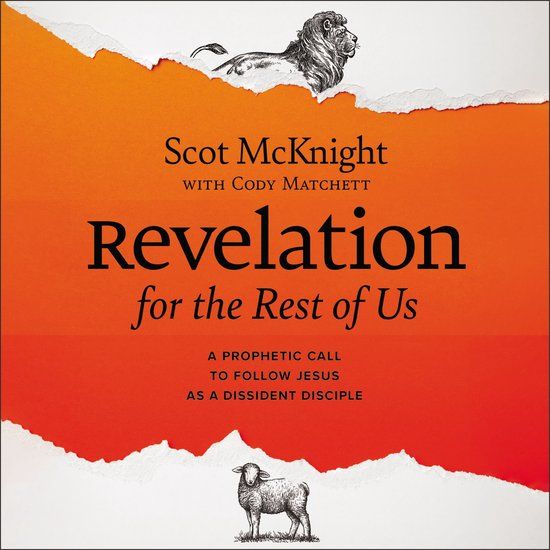
Bestselling author Rosaria Butterfield addresses 5 lies modern culture has embraced about sexuality and spirituality, using the word of God to help illuminate each topic. 

Lie #2: Being a spiritual person is kinder than being a biblical Christian.

Unbiblical spirituality welcomes people exactly as they are or, at least, makes this promise. This is a religion that elevates being a “good” person over giving your life to Christ. To the unbiblically spiritual person, everything is one. Distinctions and hierarchies are called abusive, and true spirituality is supposedly found inside ourselves. This sort of spirituality, unbiblical spirituality, believes that everything in the universe supposedly shares in this divine power and unifying balance. Rules, divisions, and distinctions are violent, or so says the unbiblically spiritual person.

In contrast, for the biblical Christian, there are two kinds of reality: God and creation. God is eternal, triune, personal, holy, loving, and separate from his creation. According to biblical spirituality, there are two kinds of people: those who love God and those who defy God. Even though we create our own problems by refusing to live by his laws, God provides the only solution through the Lord Jesus Christ. Pastor and theologian Peter Jones, founder of TruthXchange, offers the most helpful paradigm for comparing unbiblical spirituality to biblical spirituality. While unbiblical spirituality self-promotes as kind and inclusive, it is in reality narcissistic and damning.

Lie #3: Feminism is good for the world and the church.

Feminism began in 1792 with Mary Wollstonecraft’s A Vindication of the Rights of Woman. As its title suggests, it sought to “vindicate,” which means “to assert one’s right to possession.” And what rights needed possessing? Women needed to possess the rights to citizenship. Wollstonecraft sought rights for education and voting for women. Feminism has gone through four “waves” or phases since 1792, with the most recent wave so tied to the LGBTQ+ movement that now, in 2023, we cannot even define what a woman is or defend her right to exist—least of all to be noted as a citizen. Feminism in the world is passè—it has been displaced by transgenderism. Feminism in the evangelical church, however, is alive and well. When the church sets itself up to follow the world and not to lead it, it necessarily lingers long with discarded trends and affections.

We don’t need to be all-knowing, because God is. Christ alone can solve the problems we face today.

Adherents of feminism believe the Bible has no bearing on gender roles, responsibilities, or requirements because the idea of men and women being made by God’s design for God’s purposes on earth is old-fashioned, silly, dangerous, abusive, and culturally driven. Some professing Christian feminists believe that Adam’s headship is a consequence of the fall—and thus a sin. They claim that there is no biblical warrant for a married woman’s submission to her husband and elders or for elders and pastors to be qualified men. Bible verses that call for a wife to obey her husband in the Lord, such as Titus 2:4–51 Peter 3:1, 5–6, and Colossians 3:18, are “contextualized” and then dismissed. Such feminists believe that feminism offers a corrective to Christianity because, without it, misogyny (the hatred of women) will run rampant with biblical support. Without feminism to the rescue, they argue, the church will unwittingly promote sexual abuse by giving perpetrators extreme and unchecked power and spiritual abuse by prohibiting a woman from using her gifts of teaching from the pulpit and assuming the roles of pastor and elder. This is a lie.

Lie #4: Transgenderism is normal.

People who believe in what is called “gender fluidity” also believe that sexual difference has no biological or ontological (original and eternal) integrity. Transgenderism is supposedly as normal for some people as freckles and a blue sky on a North Carolina summer day. Transgenderism maintains that there are more than two biological sexes and even more genders. The year 2022 boasts seventy-two genders and seventy-eight gender pronouns. In time there may be ten thousand. What does this all mean? How did we get to a place in the United States where someone can walk into Planned Parenthood and, forty-five minutes later, leave with a prescription for powerful hormones that will leave her sterilized for life if taken over time? We got here by believing the lie that transgenderism is normal—at least for some people.

Lie #5: Modesty is an outdated burden that serves male dominance and holds women back.

People who believe this lie dismiss the virtue of modesty for Christian women. Having denied that men and women are different, with different responsibilities, callings, and boundaries, those who reject modesty believe that calling women to a different standard of dress, speech, and conduct is oppressive. They deny that women owe their brothers the kindness of modesty. At the bottom of this is a feminist belief that it is not fair that women are different from men and that asking women to dress and behave with biblical modesty serves male dominance and holds women back. In the contemporary church climate, modesty has been replaced by exhibitionism.

Cling to Christ with Courage

When it seems like we are living at ground zero of the Tower of Babel, when the whole world seems to have gone mad, we need to cling to Christ with courage, read and memorize our Bible with fervency, be active members of a faithful Bible-believing church with passion, sing psalms with joy, and pray for our enemies with humility. We need to be humble people, remembering that we were not created to be all-knowing. We don’t need to be all-knowing, because God is. Christ alone can solve the problems we face today.

God calls us to live our Christian lives with courage, tell the truth, and fear God and not man. Can we with Jesus sing Psalm 118:6: “The Lord is on my side; I will not fear. What can man do to me?” I know. You can think of a long list of things the world can do to you. Your son, who calls himself Julie, won’t talk to you. You will be fired from your job if you don’t put a rainbow sticker on your door. Your neighbors will hate you when they learn that you believe in the God of the Bible. All of this may be true, and still this verse calls us to put things in perspective, specifically the Lord’s perspective as seen in Hebrews 11, where we see firsthand that God uses our faith whether we live or die.

This is the faith story we like:

And what more shall I say? For time would fail me to tell of Gideon, Barak, Samson, Jephthah, of David and Samuel and the prophets—who through faith conquered kingdoms, enforced justice, obtained promises, stopped the mouths of lions, quenched the power of fire, escaped the edge of the sword, were made strong out of weakness, became mighty in war, put foreign armies to flight. (Heb. 11:32–34)

This is the faith story that terrifies:

Others suffered mocking and flogging, and even chains and imprisonment. They were stoned, they were sawn in two, they were killed with the sword. They went about in skins of sheep and goats, destitute, afflicted, mistreated—of whom the world was not worthy. (Heb. 11:36–38)

God records that both life and death, if done in faith, advance the gospel and give glory to God. Christians ought never despise suffering for Christ. And as we are seeing today and have seen throughout church history, all true Christians will suffer for the truth of Christ.

This article is adapted from Five Lies of Our Anti-Christian Age by Rosaria Butterfield.