The Slippery Slope of Euthanasia Laws: Brian Pickering

From The Daily Declaration

euthanasia

The Slippery Slope of Euthanasia Laws

28 DECEMBER 2023

2 MINS

ACT Set to Implement Most Permissive Euthanasia Laws in Australia

The Australian Capital Territory (ACT) is on the brink of implementing the most permissive euthanasia laws in the country, perpetuating a concerning culture of death.

Unlike other states, the ACT is moving forward without requiring terminally ill patients to have a predicted time of death to access euthanasia. This approach deviates from the rest of the nation, where patients are generally required to have a life expectancy of 6 to 12 months to be eligible for assisted suicide.

While the Federal Government paved the way for euthanasia in the ACT in 2022, the Territory’s continued exploration of expanding its scope is deeply troubling.

The earlier consideration of allowing teenagers as young as 14 to access euthanasia underscores a growing and distressing trend. The Government may have abandoned that specific proposal, but it remains committed to exploring even more controversial paths by considering the inclusion of terminally ill minors and individuals with dementia in the euthanasia framework.

This reflects a stark reality in which the sanctity of life and the value of compassionate palliative care are being overshadowed by an increasing focus on providing state-sanctioned suicide as an alternative. The ACT’s eagerness to push these laws forward neglects the potential negative consequences on the vulnerable, sending a disconcerting message about the worth of human life and the culture it is fostering. The sanctity of life should be protected and cherished, not undermined by a rush towards more permissive euthanasia legislation.

Tragic Euthanasia Choice for Palliative Patient When NDIS Funding Cut

The recent tragedy of James “Jim” Mills is a troubling reminder of the tragic effects of legalised assisted suicide on our society’s most vulnerable. Diagnosed with brain cancer in 2021, Jim’s reliance on repurposed NDIS funding led to a brutal choice when it was abruptly cut, pushing him to opt for euthanasia rather than stay in hospital.

Reinstated funding came too late, illustrating how the existence of euthanasia fundamentally alters incentives for government agencies, healthcare providers, and patients. This scenario also highlights the impact on palliative care, which faces a significant challenge when assisted suicide appears a simpler option.

Jim’s heartbreaking story emphasises that even stringent safeguards around euthanasia and assisted suicide are inadequate, leaving room for individuals to fall through the cracks and experience heartbreaking outcomes for themselves and their families.

Netherlands Euthanising People Just Because They Have Autism

A recent report on euthanising people with autism and intellectual disabilities in the Netherlands is deeply troubling. Cases mentioned in the report, including people with autism aged under 30, set concerning precedents that go beyond the law’s original intent.

It’s distressing that some with autism view euthanasia as a solution, reflecting society’s failure to support vulnerable individuals and hints at a form of eugenics.

We must consider the broader implications and the risk of pressuring our vulnerable into ending their lives. The media’s portrayal of euthanasia as empowerment should not overshadow the ethical, moral and scriptural questions raised by these practices. This report reminds us of the need for a critical examination of these policies.


Reflection on Isaiah 16

Scripture

But now the lord says, ”Three years, counting each day, the glory of Moab will be ended. From its great population, only a few of the people will be left live.”

Observation

Isaiah continues his prophecy regarding Moab.

Women cry out for protection against their enemies and their relentless attacks.

When the oppression and destruction end, God will appoint one of David’s descendants as King over the Moabites. He will rule with mercy, truth, justice, and righteousness.

In three years, the Lord says, the glory of Moab will be ended, and only a portion of the population will remain alive.

Application

Moab and Israel were often at war with each with each other. Many prophecies were spoken against Moab, but now the date for destruction is stated – within three years.

It is inconceivable to us that a nation that was big enough to trouble Israel over centuries could be destroyed as thoroughly as Moab was going to be. Yet this was the fate of many nations in that era. A war might not directly kill many, but the side effects of famine and disease that often follow war could do this. Policies of taking people into captivity as slaves could also depopulate a country.

When God’s grace turns to judgement, the result can be catastrophic. I must walk in the grace of the Lord in order to maintain his favour.

Prayer

Lord, I approach your throne in humility and with respect. Thank you for adopting me into your family. May I always walk in your favour. Amen.

The Twelve Days of Christmas

Selina Maycock explains the significance of the 12 Days of Christmas

You’ll probably know the famous Christmas song already, but do you know when the 12 days of Christmas start -or what the tradition is behind the celebration?

Children have lots of questions at Christmas, including how many reindeer does Santa have – and why do we have a Christmas tree? They may also been wondering about the 12 days of Christmas.

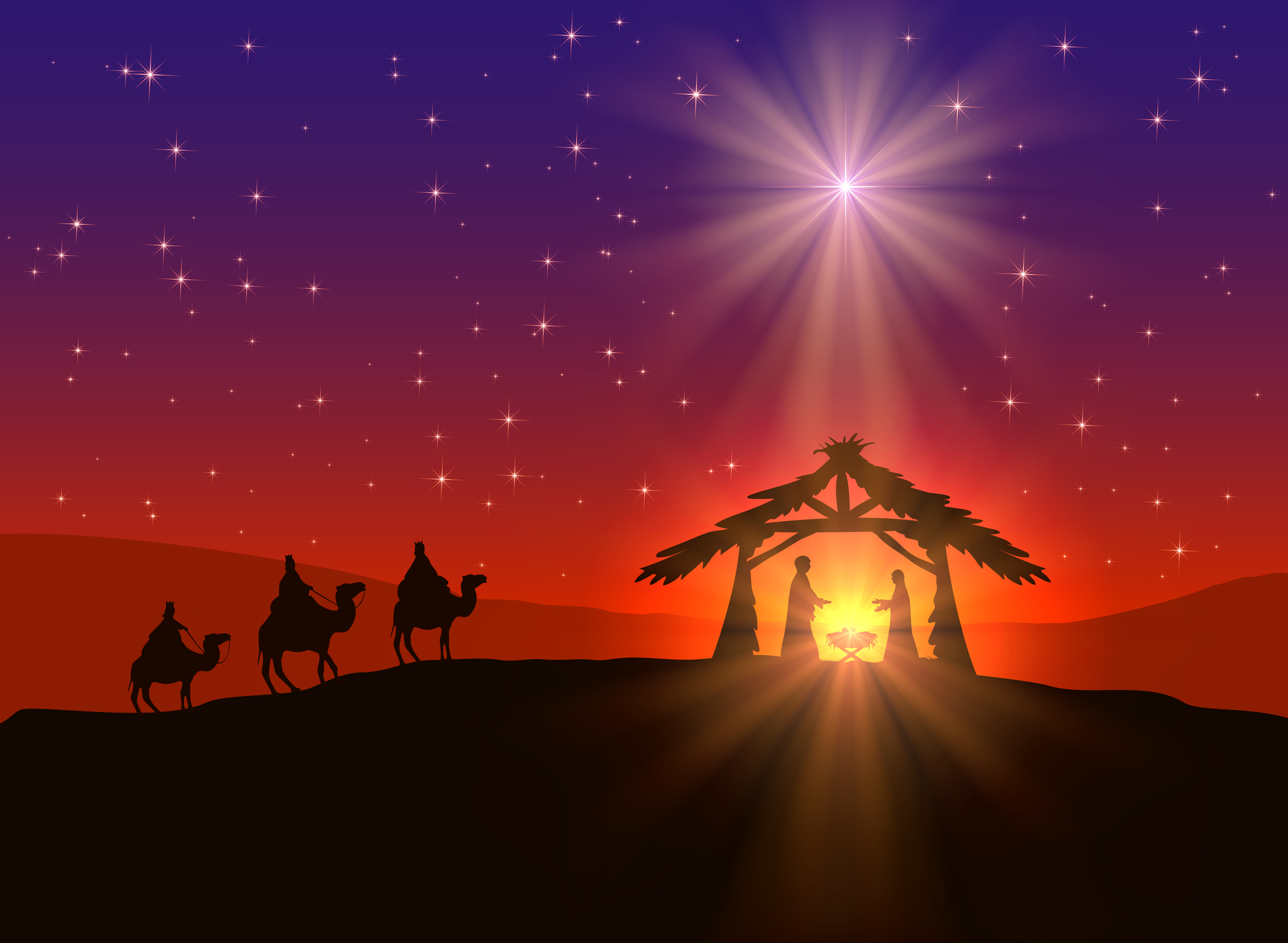
The event, otherwise known as Twelvetide, is a Christian religious celebration that’s based around the Nativity of Jesus. Christians believe that the 12 days signify the amount of time that it took the wise men to travel to Bethlehem for the Epiphany after Jesus was born, when recognised him as the son of God. Keep reading to find out when the 12 days of Christmas start and what each of the gifts are…

When does the 12 days of Christmas start?

The 12 days of Christmas begin on Christmas Day, December 25, and last right through until January 6 – also known as Three Kings’ Day or Epiphany. The period has been celebrated since before the Middle Ages but was updated over time to include prominent figures in Christian history.

Most people know the 12 days of Christmas from the song- and the odd Christmas joke – that lists the different gifts. The first printed appearance of the song was in the English children’s book Mirth With-out Mischief, which was published in 1780 – though some of the lyrics were slightly different. Most historians believe the Christmas Carol started as a memory game.

What are the 12 gifts of the 12 days of Christmas?

  1. One partridge in a pear tree
  2. Two turtle doves
  3. Three French hens
  4. Four calling birds
  5. Five gold rings
  6. Six geese a-laying
  7. Seven swans a-swimming
  8. Eight maids a-milking
  9. Nine ladies dancing
  10. Ten lords a-leaping
  11. Eleven pipers piping
  12. Twelve drummers drumming

But how does the song connect to the origin of the 12 days of Christmas and Christianity? Rumour has it that the ’12 days of Christmas’ song was used by worshippers when Christians were being punished for their religion as a way to discreetly pass on the message of Christianity.

The theory is that each of the gifts symbolise a different aspect of the Christian religion with the partridge in the pear tree representing Jesus and the two turtle doves signifying the Old and New Testament. The three French hens are Faith, Hope and Charity, while the four calling birds are the four gospels. The five golden rings are reportedly the first five books of the Old Testament. The six geese represent the six days of creation. The seven swans are the gifts of the Holy Spirit, while the eight maids are the eight blessings given by Jesus in the Sermon on the Mount in the Gospel of Matthew. The nine ladies dancing are the nine different fruits of the Holy Spirit – the ten lords represent the Ten Commandments, the eleven pipers represent the eleven faithful apostles and finally…the twelve drummers drumming are the twelve points of the doctrine in the Apostle’s Creed.

(Image credit: Alamy)

According to PNC financial services groups’ annual Christmas Prince Index, to buy all of the gifts in the song would set you back over £36,000. Or if you want to be very specific and work out the total cost of all the gifts when you count each repetition of the song – that’s 364 individual items – it would come to a huge £165,188.18 with the latest dollar to pound conversion rates. The most expensive item would be the seven swans at roughly £11,000.

What do each of the 12 days of Christmas mean?

  • Day One (Christmas Day): Celebrating the birth of Jesus Christ.
  • Day Two (Boxing Day or St Stephen’s Day): Remembering the first martyr of Christianity, St Stephen.
  • Day Three: Celebrates St John the Apostle who is the patron saint of love, loyalty, friendships, authors, booksellers, burn victims, poison-victims, art dealers, editors, publishers, scribes, examinations, scholars and theologians. He also wrote the Book of Revelation.
  • Day Four (Feast of the Holy Innocents): The day to remember all the babies killed by King Herod in his attempt to murder baby Jesus.
  • Day Five: Remembers the Archbishop of Canterbury, St Thomas Becket, who was murdered because he challenged the king’s authority over the church.
  • Day Six: Celebrates St Egwin of Worcester who is known as the protector of orphans and the widowed and died in 717.
  • Day Seven (New Year’s Eve): Pope Sylvester I is celebrated on this day as he saw in the beginning of the Christian Roman Empire.
  • Day Eight (New Year’s Day): Celebrates Mary, the mother of Jesus.
  • Day Nine: Honours two important Christians, St Basil the Great and St Gregory Nazianzen from the 4th century.
  • Day Ten (Feast of the Holy Name of Jesus): This day celebrates when Jesus was named in the Jewish Temple.
  • Day Eleven: Celebrates St Elizabeth Ann Seton, the first American saint who lived during the 1700s. It also celebrates the Feast of Saint Simeon Stylites, who lived on a small platform on top of a pillar for 37 years to escape unwanted attention.
  • Day Twelve (Epiphany Eve): So called because it’s January 5, the day before Epiphany.

How are the 12 days of Christmas celebrated?

Much like other seasonal traditions, such as giving chocolate eggs at Easter in the UK, the event is celebrated all around the world in many wonderfully different ways.

For example, in Italy on January 6 – one of the most important days of the celebration – markets are set up in cities around the country selling small presents, snacks, fruits and other festive foods.

In Tudor England, when the tradition first started, people would fast for the four weeks leading up to Christmas and then enjoy 12 days of religious celebrations, feasting and entertainment.