Maintaining and stridently asserting the organisation’s Christian identity and purpose is not simply a matter of being organisationally faithful, it is strategically smart. Stephen Judd et al
Maintaining and stridently asserting the organisation’s Christian identity and purpose is not simply a matter of being organisationally faithful, it is strategically smart. Stephen Judd et al
I didn’t expect to ride to the telescope this morning, but here we are 😂 It is like riding through a park, with mobs of kangaroos watching you ride, and a huge variety of bird sounds. A great way to start my day. 😀🚲
#cycling #Narrabri #Biketooter

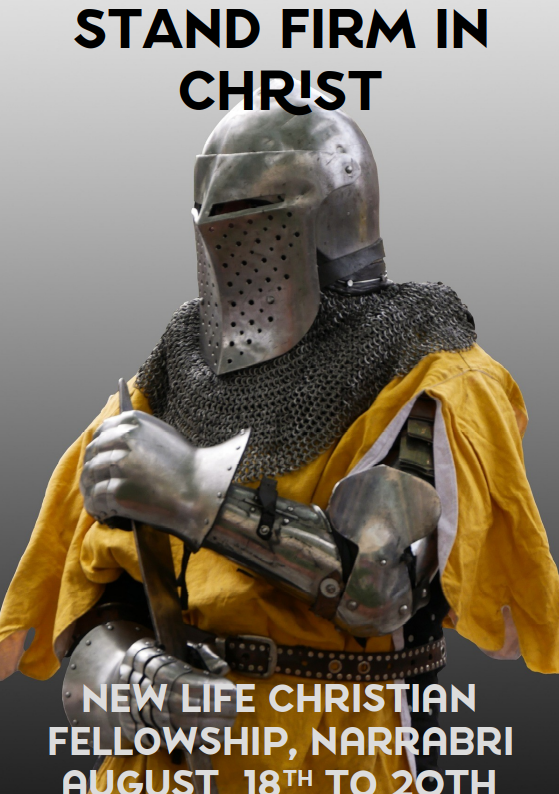
The recordings of the “Stand Firm In Christ” conference are now available on the New Life web-site.
| Session | Listen in Browser | Download |
| 1 | Click here | Click here |
| 2 | Click here | Click here |
| 3 | Click here | Click here |
| 4 | Click here | Click here |
| 5 | Click here | Click here |
Scripture
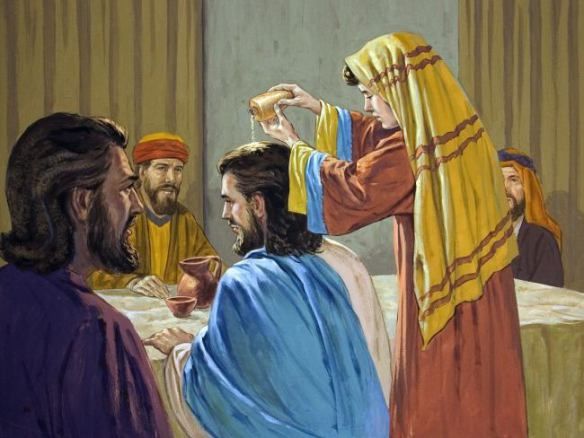
“She has poured perfume on the me to prepare my body for burial. I tell you the truth, wherever the Good News is preached throughout the world, this woman’s deeds will be remembered and discussed.”
Observation
The leading priests and elders start plotting to capture and kill Jesus. But they don’t want to do it during the Passover for fear of a riot.
Jesus is in Bethany, where a woman comes in with an alabaster jar of expensive perfume which she pours over Jesus’ head. The disciples are indignant at this extravagant waste. Jesus tells them that she has done a good thing, effectively preparing his body for burial. What she has done will be remembered all over the world.
Judas then goes to the priests to offer to betrayed Jesus.
Application
Everything is coming together for the crucifixion. The priests are plotting. Judas is ready to hand Jesus over. This woman, in an active extravagant worship, is preparing Jesus’ body for burial.
There are always people who want to limit how the church may worship the Lord. They see expressions of love as a waste of limited resources.
Other people don’t count the cost. They just want to love on Jesus without restraint.
The fact is that God will supply all that we need to express our love for Him. If he calls you to donate generously, even recklessly, to a mission or to a church, you can be sure that he will look after you and provide more than enough for you.
I experienced this when we first started our church. We literally had nothing, but we were able to feed our family, furnish our building, and give generously to other ministries. I have seen this pattern reproduced in other people over the years .
Prayer
Father, thank you so much for your provision and for the great gift of salvation. Please help me to give back to you as generously and as extravagantly as this woman in Bethany. Amen .
A focus on money rather than mission leads a Christian organisation into unfaithfulness. Stephen Judd et al

Scripture
“All the nations will be gathered before him, and he will separate the people from one another as a shepherd separates the sheep from the goats. He will put the sheep on the right and the goats on the left.”
Observation
When the Son of Man comes in glory with the angels – at the end of the world – Jesus will judge all people (“all the nations”).
People will be separated into goats and sheep. The sheep are those people who, motivated by Christ’s love, cared for the hungry, thirsty, prisoners, orphans, and so on. When they did something for the least of his brothers, it was as if they did it directly for Christ.
The goats, on the other hand, are rejected because they ignored the needs of the least of Christ’s brothers and sisters.
The goats will go into eternal punishment, while the sheep will go to eternal life.
Application
In this passage, Jesus clearly shows that judgement will be on the basis of our works, that is, deeds done to serve christian brothers and sisters.
But what about salvation by faith? Yes, we are saved by our faith in Christ, but we are saved to do good works in Him (Ephesians 2:10).
It is not enough to declare that we have asked for God’s forgiveness. The reality of the new birth comes out in a changed lifestyle. Anybody who professes Christ but is still living for themselves is not a true Christian.
We will be judged by our actions, because our actions reveal the true state of our heart.
To be born again means that our whole life is surrendered to Christ. We see ourselves no longer as masters of our own destiny, but as slaves to Christ.
Prayer
Thank you Jesus for dying for me. Please show me the “least of these” whom you are asking me to serve. Amen.
From the ABC, some excellent news after all the mud slinging
Hillsong founder Brian Houston has been found not guilty of concealing his father’s sexual abuse of a child.
The 69-year-old has previously told a Sydney court he was left “speechless” in 1999 when he first learned of Frank Houston’s abuse of a seven-year-old boy decades earlier.
But Brian Houston insisted he did not go to the police because he was respecting the wishes of the victim, Brett Sengstock, who by that time was aged in his 30s.
He pleaded not guilty to concealing a serious indictable offence.
Magistrate Gareth Christofi on Thursday found Brian Houston not guilty, after concluding he had a “reasonable excuse” for not reporting the matter.
In his judgement, Magistrate Christofi found Mr Houston knew or reasonably believed that Mr Sengstock did not want the matter reported to police.
The court heard Mr Sengstock gave evidence that his abuse at the hands of Frank Houston was a “hideous secret”, and one he did not wish for others to know.
At a hearing last year, he gave evidence of feeling “betrayed” by his mother when she raised the allegations with a member of their local church in Sydney’s west.
Magistrate Christofi found it would have been consistent with all the evidence that Mr Sengstock would have expressed that sentiment to Brian Houston during a phone call about the abuse in 1999.
“There is little doubt in my view that the accused knew or believed on reasonable grounds that Brett Sengstock did not want the matter reported to police,” the magistrate said.
He also found that a $10,000 payment arranged by Frank Houston to Mr Sengstock could not be proven to be “hush money”, or that Brian Houston had intended it to be so.
The court heard Mr Sengstock, then in his 30s, met with Frank Houston and another member of the Hills Christian Life Centre — the precursor to Hillsong — at Thornleigh McDonalds in 1999.
He signed a napkin and told the court Frank Houston said: “You’ll get your money we can keep this between ourselves.”
Mr Sengstock told the court he believed the money was to “buy his silence”, and that he did not see the money until he chased up the deal with Brian Houston.
Magistrate Christofi found, however, that the terms of the agreement were “entirely unclear” and there was insufficient evidence that it was intended to stop Mr Sengstock from going to the police.
The Crown’s case was also contradicted by Mr Sengstock’s own evidence that he had not considered going to authorities, he found.
“[Mr Sengstock] did not need to be silenced.”
Magistrate Christophi rejected the Crown’s case that Brian Houston facilitated a “cover up” to protect the church’s reputation, saying the Hillsong founder spoke openly about his father’s crimes.
During the special fixture hearing last year, Brian Houston described his father as a “serial paedophile”.
He said that in 1999 and 2000, more victims had come forward from his father’s time in New Zealand and steps were taken to remove Frank Houston from the ministry.
The court heard Brian Houston told “many people at various levels” of the church about Frank Houston’s predatory behaviour and referenced it in sermons delivered to churchgoers.
Brian Houston also discussed it during an interview with a reporter for the Sydney Morning Herald in 2002, Magistrate Christofi noted.
“That is the very opposite of a cover up,” the magistrate found.
“He spoke widely and freely about the matter in public settings.”
Speaking outside court, Mr Sengstock said regardless of today’s outcome he had been handed a “life sentence” having endured a 45-year battle.
“Today I’ve received some recognition for a seven-year-old child who was brutally abused at the hands of a self-confessed child rapist and coward, Frank Houston,” he said.
“Frank Houston was no pioneer for Christianity, his legacy remains a faded memory of a paedophile.”
He thanked prosecutors, police and his family for their support, and all those who worked to give survivors of clergy child sexual abuse “a voice in this country”.
“Blaming the victim is as repulsive as the assaults themselves,” Mr Sengstock said.
“It should not be this hard.”
During last year’s hearing, he gave evidence that in one of their 1999 phone calls an “angry” Brian Houston claimed his father had been “tempted” by a young Mr Sengstock.
Mr Houston denied this while being cross-examined, saying it was “absurd” to suggest he would blame someone who was abused as a child.
“It’s nonsense. I mean, who would say that about a seven-year-old boy, or a 10-year-old boy … it’s just an absurd notion.”
Knowing who you are is the first line of defence against drift; it allows you to determine if change and adjustments are equipping you to better accomplish your mission or slowly moving you away from your foundation. Stephen Judd et al
Scripture
“Now throw this useless servant into the outer darkness, where there will be weeping and gnashing of teeth.”
Observation
Jesus tells the parable of three servants.
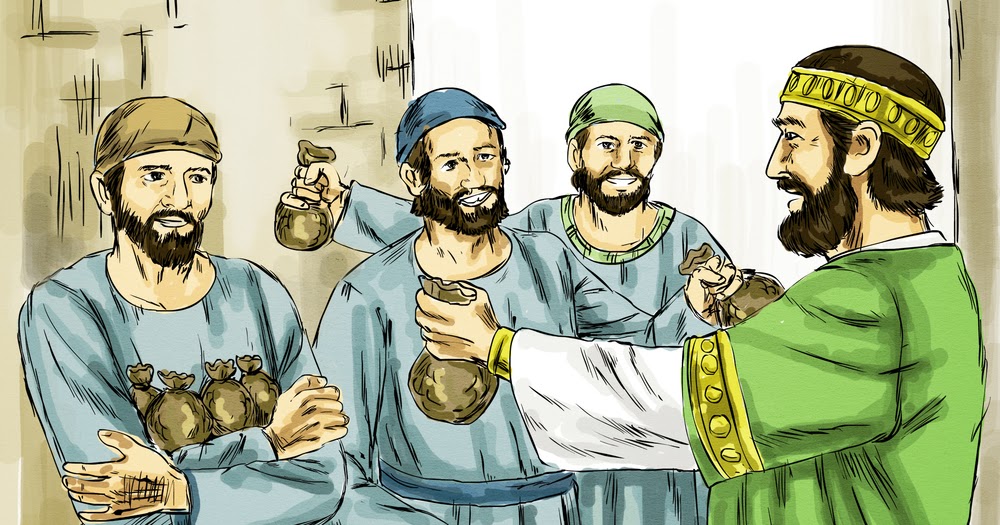
A man going on a long trip entrusts money to three servants, according to their ability. To one he gives five bags of silver, to another two bags, and to the third one bag. Two of the three servants invest the money and double their investment, while the third servant buries his treasure in a hole in the ground .
The master returns. He is delighted with the efforts of the servants to whom he had given five and two bags. The third servant said to his master, “I know you are a harsh man and I was afraid I would lose the money you gave me.”
The money given to this third servant is given to one of the other servants. The useless servant is thrown into the outer darkness where there is weeping and gnashing of teeth.
Application
Jesus often spoke about the judgement coming upon those who are opposed to God. People who think that Jesus was just about warm fuzzies and pretty unicorns have never read what He said. Much of his teaching is a warning to escape judgement from the Father.
In this case, the judgement fell on a man who was fearful of punishment. He saw the master as harsh and unforgiving. In his fear, he failed to live up to what was expected of him. There are people who refuse to have anything to do with God because of a false perception that He is harsh and waiting to smite those who earn His displeasure. Because they refuse to see that God is love, then they bring upon themselves the judgement they feared.
Hell is real! Judgement is real! The only way to be put right with God is to receive the forgiveness bought on the cross by Jesus. There is no other way to the Father. But the way is open to everyone who comes to Him.
Prayer
Father, thank you for your great love and never ending grace. Thank you for the assurance that you welcome all who come to you in Jesus. Amen
From Jo Nova:
No changes in global droughts since 1902 when horses and carts were common
Any which way you look at global drought measures in the last 120 years this is not the CO2 doom scenario of the IPCC prophesies either in rainfall patterns or in water supplies. The graphs below show rainfall trends shifting slightly due to unknown forces and looking for all the world, like CO2 is irrelevant. Despite the scare campaigns about floods and droughts, and the threats of climate wars over dwindling rivers, there has been no trend in hydrological droughts since the Wright Brothers first flew a plane.
Kenneth Richards at NoTricksZone reported on Shi et al, a paper which looked at trends from 1902 to 2014 in all nine climate zones of the world.
The first graph shows a mixed bag of trends in Meteorological Droughts, none of which are obviously linked to human emissions of CO2. Remember, half of all human emissions since we crawled out of caves has been emitted after 1995. According to CDIAC fully 250,000 Mt of CO2 was emitted up to that year, then we have doubled that in the years since then. If CO2 was a planet transforming molecule, surely we’d see something in the last 25 years?
The bottom line is that if we had climate models with any understanding of rainfall they would be able to predict wet and dry seasons, and trends in droughts, floods, streamflow, and rivers. Instead, like stone-age heathen victims, we wail and lament any time a flood or a drought happens anywhere. We blame camels or cows, trucks and planes. We change our light globes and hope our houses don’t get washed away on the same floodplains that were inundated 100 years ago.
The first graphs show Meteorological Droughts trends in the nine climate regions (a lack of rain):
The regions codes are on the map below. (Click to enlarge).
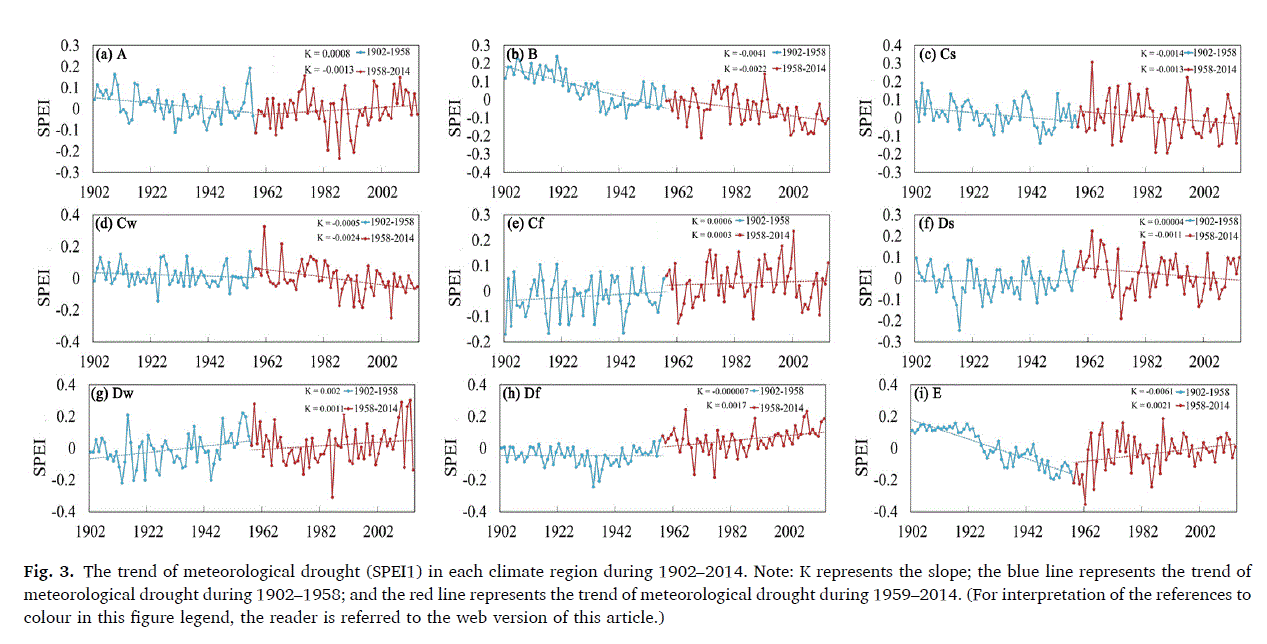
Meteorological Drought trends. (Click to Enlarge) Shi et al 2023
The second set of graphs are the hydrological drought trends (a lack of water supply):
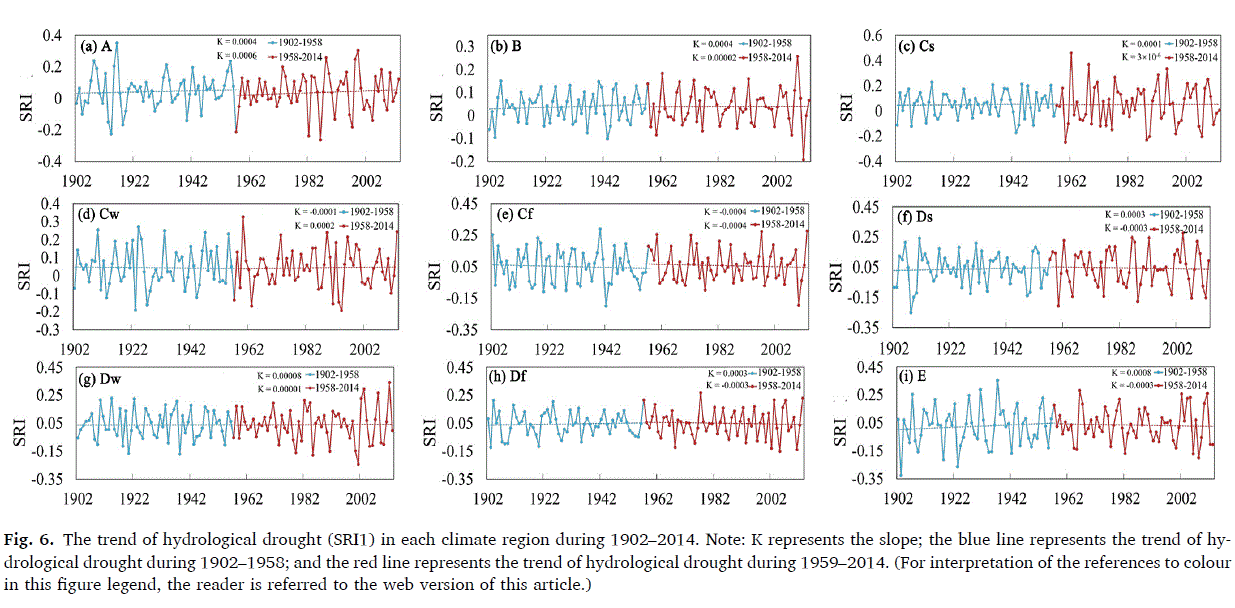
Hydrological Drought trends. (Click to Enlarge) Shi et al 2023
These are the climate zones the study used:
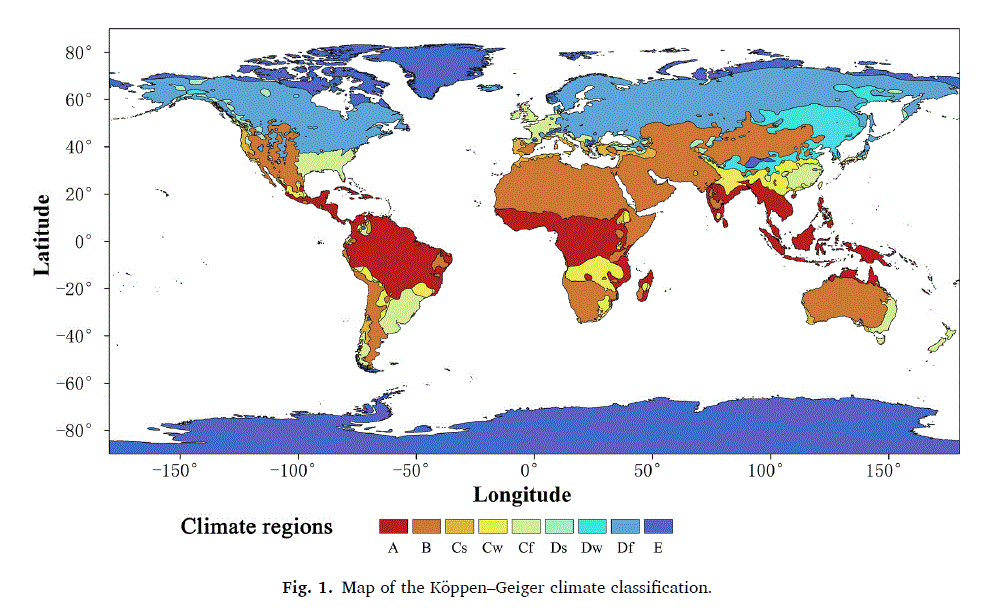
Classification of different drought regions of the world. Shi et al 2023
(Essentially Australia is B, Cf and A, The USA is B, Cf and Df. The UK, France, Germany and NZ are Cf).
According to NOAA, a Meteorological Drought is a lack of rain suffered for an extended time, whereas a Hydrological Drought is a lack of water supply such as stream flow, reservoir and lake levels, and ground water.
Haiyun Shi et al (2023) A global perspective on propagation from meteorological drought to hydrological drought during 1902–2014, Atmospheric Research
Volume 280, 15 December 2022, 106441, https://doi.org/10.1016/j.atmosres.2022.106441

 New Life Narrabri